
Comprar una led headlamp automotive product looks easy until you compare suppliers. One factory promotes extreme lumens. Another focuses on wattage. Another promises a long lifespan, instant installation, CANbus compatibility, and universal fit. For professional buyers, these claims create more noise than clarity.
The better question is not, “Which LED headlamp has the biggest number?”
It is, “Which lighting system can deliver a repeatable beam, stable thermal performance, reliable electronics, correct vehicle fit, and an acceptable warranty rate across thousands of installations?”
This guide is written for distributors, automotive wholesalers, purchasing managers, and retrofit chains that need to evaluate led automotive headlight bulbs as a commercial product rather than a one-time consumer purchase.
1. What Makes a Good LED Headlamp Automotive Product?
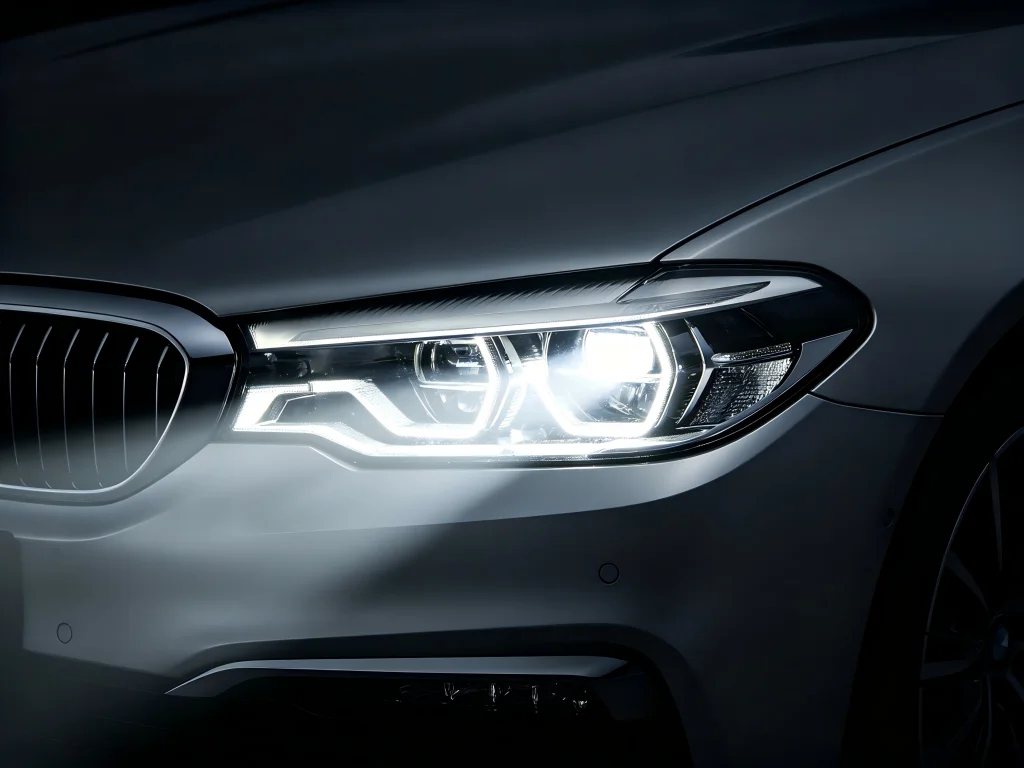
A good automotive LED headlamp combines accurate emitter geometry, controlled beam distribution, stable output, effective thermal management, reliable driver electronics, correct vehicle fit, and consistent manufacturing. Professional buyers should evaluate the complete system instead of choosing products mainly by advertised lumens, watts, color temperature, or price.
That distinction protects your margin.
A cheap bulb with a high return rate can be more expensive than a premium bulb with a higher factory price.
For B2B buyers, the real equation is:
Total Product Cost = Purchase Price + Freight + Installation Problems + Returns + Warranty + Technical Support + Brand Damage.
Once purchasing is viewed this way, supplier comparison changes completely.
2. LED vs. Halogen vs. HID: Which Technology Should You Buy?
LED tends to offer the strongest balance of efficiency, instant startup, compact system design, service life, and product flexibility. Halogen remains simple and inexpensive, while HID can provide strong projector performance. The best choice still depends on optics, vehicle architecture, regulations, installation requirements, and target customer expectations.
| Factor | Halogen | HID/Xenón | LED |
|---|---|---|---|
| Startup | Instantaneous | Requires warm-up | Instantaneous |
| Electrical efficiency | Lower | Mayor que el halógeno | Alta |
| System complexity | Low | Ballast/igniter required | Driver and thermal system required |
| Thermal challenge | High radiant heat | High-voltage system considerations | Semiconductor heat must be managed |
| Design flexibility | Limited | Moderado | Alta |
| Instant high beam | Bueno | Less suitable for some standalone HID designs | Excellent |
| Retrofit risk | Low with correct specification | Optical and electrical compatibility required | Optical, electrical and thermal compatibility required |
| B2B aftermarket potential | Price-driven replacement | Application-specific | Strong premium and performance opportunity |
LED wins many purchasing comparisons, but that does not mean every LED product is better than halogen or HID.
A poorly engineered LED installed in the wrong optical system could perform worse than the original halogen lamp.
That is the first major procurement trap.
3. Buying Trap #1: Choosing by Lumens
Huge lumen numbers are attractive because they make product comparison simple.
Unfortunately, the road does not measure marketing claims.
A professional buyer should distinguish between:
- LED chip theoretical output
- Initial lamp output
- Stabilized output after heating
- Optical efficiency
- Useful beam intensity
- Road illumination distribution
A product can claim enormous raw output yet lose part of its performance through heat, inefficient optics, incorrect emitter placement, or aggressive electronic driving.
3.1. Ask Your Supplier This Instead
“Can you show me the beam pattern and stabilized performance after the lamp reaches operating temperature?”
That question is far more useful than asking for the biggest lumen figure.
4. Buying Trap #2: Comparing Wattage Instead of Efficiency
Some buyers still assume that a 100W LED must outperform a 50W LED.
It may not.
Higher electrical power creates more heat. More heat requires stronger thermal management. If the cooling system cannot keep up, increasing power may produce diminishing returns.
The better product is the one that turns electrical input into controlled, stable road illumination efficiently.
4.1. Evaluate Stable Output
During supplier evaluation, consider testing samples after:
- Initial startup
- 15 minutes
- 30 minutes
- 60 minutes
- Repeated hot/cold cycles
If output changes sharply as the product warms up, ask why.
Thermal behavior often reveals engineering quality that packaging cannot.
5. Buying Trap #3: Ignoring LED Emitter Geometry
This is one of the most important technical differences between low-cost and well-engineered led car headlamp bulbs.
The reflector or projector does not simply need “light.”
It needs light from the correct position.
When an LED replaces a halogen filament, the LED emitting surfaces should approximate the optical position required by the housing as closely as the design allows.
Pay attention to:
- Emitter width
- Emitter length
- PCB thickness
- Distance from mounting reference point
- Two-sided LED alignment
- Bulb rotational orientation
A small error here may become a large beam-pattern error several meters down the road.
6. Buying Trap #4: Mistaking Whiter Light for Better Light
Color temperature is easy to sell.
A cool white led vehicle headlamp can make an older car look more modern immediately.
But pushing the product toward a very blue appearance can reduce practical appeal for some driving conditions and markets.
Professional buyers should consider the customer use case.
| Buyer Priority | What to Evaluate | Common Mistake |
|---|---|---|
| Modern appearance | Clean, consistent white output | Choosing excessively blue light |
| Wet-weather driving | Contrast and usable road visibility | Buying by Kelvin number alone |
| Premium retrofit | Color consistency between lamps | Ignoring batch variation |
| Commercial distribution | Market preference and regulations | Using one specification globally |
7. Buying Trap #5: Ignoring the Driver
The LED chip gets most of the attention because it produces the light.
The driver deserves equal respect.
Automotive electrical environments are not perfectly clean laboratory power supplies. Voltage can vary. Control systems may use pulse-width modulation. Vehicles may perform lamp diagnostics. Electrical noise matters.
A weak driver can turn a good LED chip into a poor product.
When sourcing led headlamp auto products, ask about:
- Input voltage range
- Current regulation
- Over-temperature protection
- Over-voltage protection
- Reverse-polarity protection where applicable
- Electromagnetic compatibility strategy
- Compatibilidad con CANbus
- PWM behavior
Do not assume “CANbus ready” means universal compatibility.
Vehicle electronics differ.
8. Buying Trap #6: Treating Cooling as a Cosmetic Feature
Large heat sinks look impressive in product photos.
But thermal performance depends on material, surface area, heat-transfer path, airflow, ambient temperature, LED loading, driver design, and installation environment.
In our engineering testing, we care more about stabilized thermal behavior than the visual size of the cooling system.
8.1. Active Cooling
A fan can move heat away from a compact LED assembly effectively. This allows higher performance in a smaller package.
But the fan becomes part of the reliability chain.
Fan bearing quality, dust resistance, operating temperature, and airflow restriction therefore matter.
8.2. Passive Cooling
A passive heat sink removes the moving part, which can improve mechanical simplicity.
However, it requires enough surface area and a suitable thermal path.
Neither system automatically wins.
The correct question is:
Does this cooling design keep the LED and electronics within their intended thermal operating range under realistic conditions?
Automotive lighting engineers can review additional thermal-management principles through HELLA technical documentation.
9. Buying Trap #7: “H7” Does Not Mean “Fits Every H7 Vehicle”
This issue creates expensive B2B returns.
The bulb base may match, yet the complete installation may fail because of:
- Vehicle-specific retainers
- Insufficient rear clearance
- Large heat sinks
- External drivers
- Decoder modules
- Dust-cap interference
- Connector differences
- Vehicle electronics
This applies to common applications such as H4, H7, H11, 9005, and 9006.
For distributors, a detailed vehicle application database can therefore become a competitive advantage.
10. How to Compare LED Headlamp Suppliers
A professional supplier should be evaluated on engineering support, optical performance, quality consistency, electronics, thermal design, application coverage, customization, production control, and after-sales response. Price matters, but a lower quotation has little value if installation problems and warranty claims consume the savings.
| Supplier Factor | Low-Level Evaluation | Professional Evaluation |
|---|---|---|
| Brillo | Advertised lumens | Stable output + beam distribution |
| LED chip | Chip brand only | Emitter geometry + binning + thermal loading |
| Refrigeración | Large fan or heat sink | Measured thermal stability |
| Compatibility | “Fits most cars” | Application-specific fitment validation |
| CANbus | “Error free” claim | Vehicle-specific compatibility testing |
| Quality | Sample appearance | Batch consistency and QC process |
| Warranty | Long warranty claim | Clear warranty process and response time |
| OEM | Logo printing | Product, packaging and market customization |
| Supplier value | Lowest FOB price | Lowest total commercial risk |
11. A 10-Step LED Automotive Headlight Procurement Checklist
- Define the target market. Regulations, vehicle mix, climate, and customer expectations vary by country.
- Define target vehicles. Start with the applications that generate most of your sales.
- Confirm bulb types. Build the range around actual demand rather than the largest possible SKU count.
- Evaluate beam patterns. Test products in relevant housings.
- Test thermal stability. Compare cold and stabilized performance.
- Evaluate electronics. Test representative vehicles for warnings, flicker, and PWM issues.
- Check physical installation. Confirm retainers, adapters, driver space, and dust-cap clearance.
- Review production QC. A perfect sample means little if mass-production variation is high.
- Calculate warranty cost. Include freight and labor, not only replacement product value.
- Evaluate supplier support. Ask a difficult technical question before placing the order.
12. What Should Distributors Test Before a Large Order?
Do not approve a product because one sample looks bright.
Build a small validation program.
12.1. Optical Test
Compare cutoff shape, hotspot position, foreground distribution, glare control, and distance performance.
12.2. Thermal Test
Run the product long enough to reach a stable operating condition.
12.3. Vehicle Test
Install samples in representative vehicles from your target market.
12.4. Fitment Test
Confirm that the bulb locks correctly and that the rear cover can close without crushing cables or blocking cooling.
12.5. Electrical Test
Check startup, low/high beam switching where applicable, dashboard warnings, flicker, radio interference, and other compatibility issues.
12.6. Batch Test
Do not test only one hand-selected sample. Request units from different production batches when possible.
13. What About Legal Compliance?
Automotive lighting is regulated differently across markets.
For example, U.S. vehicle lighting requirements involve NHTSA and FMVSS No. 108, while many international markets use regulations based on UNECE vehicle lighting requirements.
The key procurement lesson is simple:
Do not confuse a component marking, marketing statement, or laboratory document with approval of every possible bulb-and-headlamp combination.
If road legality matters in your market, ask the supplier exactly what was tested, which product configuration was tested, which standard was used, and what the document actually certifies.
14. How to Read Certification Claims Like a Professional Buyer
Suppose a supplier says:
“Our LED headlights have certification.”
That statement is not enough.
Ask:
- Which certification or test standard?
- Which model number appears on the report?
- Does the report cover the current production version?
- Which laboratory performed the test?
- Does it apply to a component or complete headlamp system?
- For which target market is the document relevant?
These questions can quickly reveal whether a supplier understands automotive compliance or simply uses certificates as sales material.
15. Why Experienced Buyers Look Beyond Alibaba Pricing
Online B2B platforms make price comparison extremely easy.
Engineering comparison is harder.
Two led headlamp auto supply quotations can appear to describe nearly identical products:
Same bulb type.
Same claimed wattage.
Same color temperature.
Similar LED chips.
Similar aluminum body.
Yet their field performance may differ substantially.
The differences are often hidden inside optical tolerances, PCB design, thermal interfaces, driver components, fan quality, assembly processes, and QC standards.
This is why procurement teams should avoid reducing an engineered automotive product to a spreadsheet containing only watts, lumens, and FOB price.
16. Searching for LED Headlamp Auto Supply Sdn Bhd?
A buyer searching led headlamp auto supply sdn bhd may be trying to identify a Malaysian company or regional automotive lighting supplier.
If your actual objective is sourcing LED lighting for distribution, compare local availability against direct manufacturer capabilities.
A local supplier may provide faster delivery and easier communication.
A specialized manufacturer may offer stronger customization, direct technical support, broader product development, or better scalability.
The right sourcing model depends on order volume, market position, inventory strategy, and how much product differentiation your business needs.
17. When OEM/ODM Capability Becomes Important
At low volume, a standard product may be enough.
As your distribution business grows, differentiation becomes more important.
You may need:
- Your own brand
- Custom packaging
- Market-specific product combinations
- Private model numbers
- Application-focused kits
- Dealer display materials
- Technical documentation
- Customized product specifications
This is where the relationship with your manufacturer begins to influence your brand.
18. Por qué GTR está diseñado para compradores profesionales de iluminación automotriz
GTR focuses on automotive aftermarket lighting and works from the perspective of real installation and distribution requirements.
For us, a successful led headlamp car product is not simply one that looks impressive during a five-minute sales demonstration.
It should make sense through the entire commercial chain:
Factory → Importer → Distributor → Installer → Vehicle → Driver.
If the product fails at any point in that chain, someone pays for the failure.
Often, that person is the distributor.
Our goal is therefore to help professional buyers evaluate products around optics, thermal design, electronics, application compatibility, manufacturing consistency, and market requirements.
18.1. For Large Wholesalers
Consistency and scalable supply are critical. A product must perform predictably across repeat orders, not only during sample approval.
18.2. For Modification Chains
Installation efficiency and repeatability matter. Products that reduce fitment uncertainty and technical complaints can improve shop productivity.
18.3. For Brand Owners
OEM/ODM capability can help turn a generic LED product into a differentiated product line designed around your market.
19. FAQ: LED Headlamp Automotive Buying Questions
19.1. What is the best LED headlamp automotive product?
The best product depends on the vehicle, housing, market, and use case. Evaluate optical performance, thermal stability, driver quality, installation fit, electronics, manufacturing consistency, and compliance before comparing maximum brightness.
19.2. How many lumens should LED automotive headlight bulbs have?
There is no universal lumen number that guarantees good road performance. Beam distribution and optical intensity matter more than a large theoretical lumen claim.
19.3. Is a higher-watt LED headlamp better?
Not necessarily. Higher wattage increases thermal load. A lower-power design with efficient LEDs, strong optics, and effective cooling could outperform a higher-power product after thermal stabilization.
19.4. Should I buy fan or fanless LED headlight bulbs?
Both designs can work. Fan-cooled products may provide strong cooling in a compact package, while passive systems remove a moving component. Compare stabilized temperatures, size, airflow, reliability, and application requirements.
19.5. Why do some LED headlight bulbs cause CANbus errors?
The LED system may draw or respond to electrical signals differently from the original bulb. Vehicle monitoring systems can interpret this difference as a lamp failure. Compatibility depends on both the LED driver and vehicle architecture.
19.6. What are the most important tests before importing LED headlights?
Prioritize beam-pattern testing, thermal testing, electrical compatibility, physical fitment, environmental testing relevant to your market, and batch-level quality evaluation.
19.7. How can I compare two LED headlight factories?
Send both suppliers the same application requirements and test their samples under the same conditions. Compare beam quality, stabilized performance, electronics, fitment, QC, documentation, technical response, warranty handling, and total landed commercial risk.
19.8. Are LED retrofit bulbs legal everywhere?
No. Requirements differ by market and by headlamp configuration. Verify applicable national or regional regulations before importing or marketing a retrofit product for public-road use.
20. Do Not Buy Your Next LED Headlamp by the Box Specification
The easiest LED headlamp to sell is the one with the biggest number printed on the package.
The easiest LED headlamp to build a business around is different.
It produces a controlled beam. It stays stable when hot. It fits the intended vehicles. Its driver works reliably. Its production quality is repeatable. And when your technical team encounters a difficult application, the manufacturer understands the problem.
That difference becomes more valuable with every container you import.
If you are evaluating a new automotive LED headlamp supplier, preparing a private-label range, replacing an unstable existing product, or expanding your retrofit chain, send GTR your target market, bulb applications, expected volume, and performance requirements.
Instead of comparing another spreadsheet full of lumen claims, build a product range around the vehicles and customers you actually serve.
Explore GTR automotive lighting solutions through the official GTR website and discuss your next wholesale, distribution, OEM, or ODM project with our team.