
การซื้อ ไฟหน้า LED สำหรับยานยนต์ ผลิตภัณฑ์อาจดูง่ายจนกว่าคุณจะเปรียบเทียบซัพพลายเออร์ โรงงานแห่งหนึ่งโปรโมตความสว่างสูงสุด อีกแห่งเน้นที่วัตต์ อีกแห่งสัญญาว่าอายุการใช้งานยาวนาน ติดตั้งทันที เข้ากันได้กับ CANbus และพอดีกับรถยนต์ทุกรุ่น สำหรับผู้ซื้อมืออาชีพ ข้อกล่าวอ้างเหล่านี้สร้างเสียงรบกวนมากกว่าความชัดเจน
A better question is not “Which LED headlight has the most numbers?”
But “What kind of lighting system can provide a consistent beam, stable thermal performance, reliable electronics, correct vehicle fit, and an acceptable warranty rate across thousands of installations?”
This guide is written for distributors, automotive wholesalers, purchasing managers, and retrofit installation networks that need to evaluate Automotive LED Headlight Bulbs It is more of a commercial product than a one-time consumer purchase.
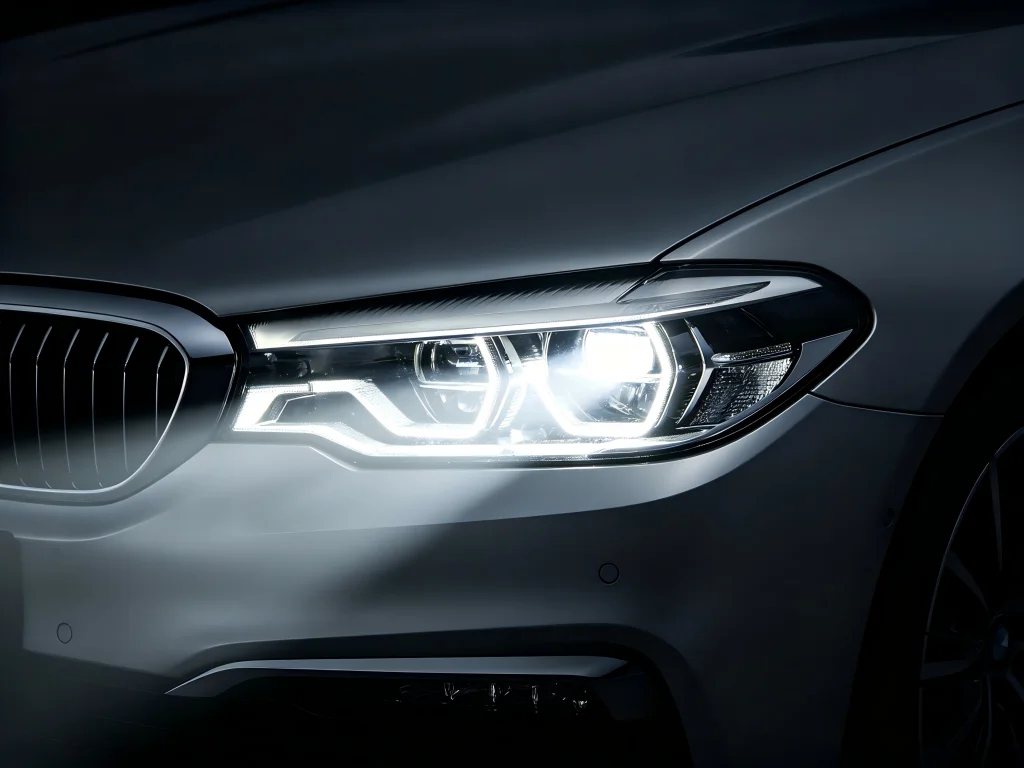
1. What makes a good automotive LED headlight product?
A good automotive LED headlight integrates precise LED chip geometry, controlled beam distribution, stable power output, efficient thermal management, reliable driver electronics, proper vehicle fitment, and consistent manufacturing. Professional buyers should evaluate the entire system rather than selecting products primarily based on advertised lumens, wattage, color temperature, or price.
That difference protects your profit margins.
Cheap bulbs with high return rates can be more expensive than premium bulbs with a higher factory price.
For B2B buyers, the real equation is:
Total product cost = purchase price + freight + installation issues + returns + warranty + technical support + brand damage.
Looking at procurement this way completely changes supplier comparisons.
2. LED vs. Halogen vs. HID: Which technology should you buy?
LEDs tend to offer the best balance of efficiency, instant start, compact system design, lifespan, and product flexibility. Halogen remains simple and inexpensive, while HID can provide strong projector performance. The best choice still depends on optics, vehicle architecture, regulations, installation requirements, and target customer expectations.
| Factor | Halogen | HID/Xenon | LED |
|---|---|---|---|
| Start-up | ทันที | Requires warm-up time | ทันที |
| Electrical efficiency | Lower | Higher than halogen | สูง |
| System complexity | ต่ำ | Requires ballast/igniter | Requires driver and cooling system |
| Thermal challenges | High radiant heat | High voltage system considerations | Must manage semiconductor heat |
| Design flexibility | Limited | Moderate | สูง |
| Instant high light | Good | Less suitable for some standalone HID designs | Excellent |
| Risk of reinstallation | Low when specifying correct properties | Must have optical and electrical compatibility | Must have optical, electrical, and thermal compatibility |
| B2B replacement parts market potential | Price-driven replacement | Application-specific | Strong opportunity for premium and performance |
LED wins many purchase comparisons, but that does not mean every LED product is better than halogen or HID
A poorly designed LED installed in the wrong optical system can perform worse than the original halogen bulb
That is the first major purchasing trap.
3. Purchasing Trap #1: Choosing Based on Lumens
High lumen numbers are attractive because they make product comparison easy
Unfortunately, the road does not measure marketing claims
Professional buyers should distinguish between:
- Theoretical output of LED chips
- Initial output of the lamp
- Stable output after heating
- Optical efficiency
- Useful beam intensity
- Light distribution on the road
Products may claim huge raw output values, but lose some efficiency to heat, inefficient lenses, incorrect positioning of light emitters, or aggressive electronic driving.
3.1. Ask your supplier this instead
“Can you show the beam pattern and stable performance after the lamp reaches operating temperature?”
That question is more useful than asking for the maximum lumen value.
4. Buying trap #2: Comparing watts instead of efficiency
Some buyers still assume that a 100W LED must be more efficient than a 50W LED
That may not be the case
Higher wattage generates more heat, and more heat requires stronger thermal management. If the cooling system cannot cope, increasing power may yield diminishing returns
A better product is one that efficiently converts input electrical energy into controlled, stable street illumination.
4.1. Evaluate stability
During supplier evaluation, consider testing samples after:
- First start-up
- 15 minutes
- 30 minutes
- 60 minutes
- Repeated hot/cold cycles
If output changes rapidly as the product warms up, ask why
Thermal behavior often reveals engineering quality that packaging cannot.
5. Buying trap #3: Ignoring LED emitter geometry
This is one of the most important technical differences between cheap lamps and well-designed ones LED headlights for cars.
The reflector or projector doesn't just need “light”
It needs light from the correct position
When LED replaces halogen filament, the light-emitting surface of the LED should be as close to the optical position required by the housing as the design allows.
Pay attention to:
- Emitter width
- Emitter length
- PCB thickness
- Distance from mounting reference point
- Two-sided LED alignment
- Rotational orientation of the bulb
A small error here can become a multi-meter beam pattern error on the road.
6. Buying trap #4: Mistaking whiter light for better light
Color temperature is an easy sell.
Cool white LED headlights for cars Can instantly make older cars look more modern.
But pushing products with too much blue tint can reduce practical appeal for certain driving conditions and markets.
Professional buyers should consider the customer's use case.
| Buyer priorities | What to evaluate | Common mistakes |
|---|---|---|
| Modern appearance | Consistent and clean white light | Choosing too much blue light |
| Driving in wet road conditions | Practical clarity and road visibility | Buying based only on Kelvin value |
| Premium upgrade | Color consistency between lamps | Ignoring production model variations |
| Commercial distribution | Market preferences and regulations | Using a single spec globally |
7. กับดักการซื้อ #5: ไม่สนใจไดรเวอร์
ชิป LED ได้รับความสนใจมากที่สุดเพราะมันสร้างแสง
ไดรเวอร์สมควรได้รับความเคารพเท่าเทียมกัน
สภาพแวดล้อมทางไฟฟ้าของยานยนต์ไม่ใช่แหล่งจ่ายไฟในห้องปฏิบัติการที่สะอาดสมบูรณ์แบบ แรงดันไฟฟ้าอาจผันผวน ระบบควบคุมอาจใช้การมอดูเลตความกว้างพัลส์ ยานพาหนะอาจทำการวินิจฉัยหลอดไฟ สัญญาณรบกวนทางไฟฟ้ามีความสำคัญ
ไดรเวอร์ที่อ่อนแอสามารถทำให้ชิป LED ที่ดีกลายเป็นผลิตภัณฑ์ที่แย่ได้
เมื่อจัดหา ผลิตภัณฑ์ไฟหน้ารถยนต์ LED โปรดสอบถามเกี่ยวกับ:
- ช่วงแรงดันไฟฟ้าขาเข้า
- การควบคุมกระแสไฟฟ้า
- การป้องกันอุณหภูมิเกิน
- การป้องกันแรงดันเกิน
- การป้องกันขั้วกลับในกรณีที่เกี่ยวข้อง
- กลยุทธ์ความเข้ากันได้ทางแม่เหล็กไฟฟ้า
- ความเข้ากันได้กับ CANbus
- พฤติกรรม PWM
Don't think that “CANbus ready” means universal compatibility
Vehicle electronics differ.
8. Buying trap #6: Treating cooling as an aesthetic feature
Large heat sinks look impressive in product images
But thermal performance depends on material, surface area, heat transfer paths, airflow, ambient temperature, LED load, driver design, and installation environment
In our engineering tests, we are interested in stable thermal behavior rather than the visible size of the cooling system.
8.1. Active cooling
Fans can effectively dissipate heat from compact LED units, enabling higher performance in smaller sizes
But fans become part of the reliability chain
Fan bearing quality, dust resistance, operating temperature, and airflow restrictions are therefore critical.
8.2. Passive cooling
Passive heat sinks eliminate moving parts, which can improve mechanical simplicity
However, they require sufficient surface area and proper thermal paths
No system wins automatically
The right question is:
Does this thermal design keep the LED and electronics within the intended operating temperature range under real-world conditions?
Automotive lighting engineers can review additional thermal management principles from HELLA technical documentation.
9. The #7 purchasing trap: “H7” does not mean “fits all H7 vehicles”
This issue leads to costly B2B returns
The bulb base may be compatible, but the entire installation may fail due to:
- Vehicle-specific retainers
- Insufficient rear clearance
- Large heat sinks
- External drivers
- Decoding modules
- Dust cover interference
- Connector differences
- Automotive electronics
This applies to common applications such as H4, H7, H11, 9005, and 9006
For distributors, a detailed vehicle application database can become a competitive advantage.
10. How to Compare LED Headlight Suppliers
A professional supplier should be evaluated on engineering support, optical performance, quality consistency, electronics, thermal design, application coverage, customization, production control, and after-sales response. Price matters, but a lower quote is worth little if installation issues and warranty claims eat up the savings.
| Supplier Factors | Low-Level Assessment | Professional-Level Assessment |
|---|---|---|
| Brightness | Advertised Lumens | Stable Output + Beam Distribution |
| LED Chips | Specific Chip Brands | Emitter Geometry + Binning + Thermal Loading |
| การระบายความร้อน | Large Fan or Heatsink | Measured Thermal Stability |
| Compatibility | “Fits Most Vehicles” | Vehicle-specific fit inspection |
| CANbus | “No-error” claim” | Vehicle-specific compatibility testing |
| Quality | Sample characteristics | Production batch consistency and quality control processes |
| การรับประกัน | Long-term warranty claims | Clear warranty process and response time |
| OEM | Logo printing | Product, packaging, and market customization |
| Supplier value | Lowest FOB price | Lowest overall trade risk |
11. 10-step LED car headlight procurement checklist
- Define target group. Regulations, vehicle types, weather conditions, and customer expectations vary from country to country.
- Define the target vehicle. Start with the application that generates most of your sales.
- Confirm the bulb type. Build a product range based on actual needs, rather than the largest possible number of SKUs.
- Evaluate the beam pattern. Test the product in the relevant housing.
- Test thermal stability. Compare performance in cold conditions and after stable operation.
- Evaluate the electronics. Test representative vehicles for warning, flicker, and PWM issues.
- Check physical installation. Confirm brackets, adapters, space for drivers, and dust cover clearance.
- Review production quality control. Perfect samples mean little if the variation in mass production is high.
- Calculate warranty costs. Include shipping and labor costs, not just the replacement product value.
- Assess supplier support. Ask difficult technical questions before ordering.
12. What should the distributor test before a large order?
Do not approve a product just because one sample looks bright.
Create a small inspection program.
12.1. Optical testing
Compare beam pattern shape, hotspot position, foreground light distribution, glare control, and long-range performance.
12.2. Thermal testing
Run the product long enough to reach stable operating conditions.
12.3. In-vehicle testing
Install samples in a representative vehicle from your target market.
12.4. Installation testing
Verify that the bulb locks correctly and the rear cover can close without pinching wires or obstructing heat dissipation.
12.5. การทดสอบทางไฟฟ้า
ตรวจสอบการสตาร์ท การสลับไฟต่ำ/ไฟสูงตามความเหมาะสม คำเตือนบนแผงหน้าปัด การกะพริบ การรบกวนวิทยุ และปัญหาความเข้ากันได้อื่นๆ.
12.6. การทดสอบแบบกลุ่ม
อย่าทดสอบเพียงตัวอย่างเดียวที่เลือกด้วยมือ ขอชิ้นส่วนจากหลายๆ รุ่นการผลิตที่แตกต่างกันเมื่อเป็นไปได้.
13. แล้วเรื่องการปฏิบัติตามกฎหมายล่ะ?
ไฟส่องสว่างยานยนต์ถูกควบคุมแตกต่างกันในแต่ละตลาด
ตัวอย่างเช่น ข้อกำหนดไฟส่องสว่างยานยนต์ของสหรัฐอเมริกาเกี่ยวข้องกับ NHTSA และ FMVSS หมายเลข 108, ในขณะที่ตลาดต่างประเทศจำนวนมากใช้กฎระเบียบตาม ข้อกำหนดไฟส่องสว่างยานยนต์ของ UNECE.
บทเรียนสำคัญในการจัดซื้อนั้นง่ายมาก:
อย่าสับสนระหว่างเครื่องหมายบนชิ้นส่วน ข้อความทางการตลาด หรือเอกสารจากห้องปฏิบัติการ กับการอนุมัติสำหรับทุกๆ การผสมผสานระหว่างหลอดไฟและโคมไฟหน้า.
หากความถูกต้องตามกฎหมายบนท้องถนนมีความสำคัญในตลาดของคุณ ให้ถามซัพพลายเออร์อย่างชัดเจนว่าทดสอบอะไรบ้าง ทดสอบการกำหนดค่าผลิตภัณฑ์ใด ใช้มาตรฐานใด และเอกสารนั้นรับรองอะไรจริงๆ.
14. วิธีอ่านข้อความรับรองคุณภาพอย่างมืออาชีพ
สมมติว่าซัพพลายเออร์กล่าวว่า:
“Our LED headlights are certified.”
That statement is not sufficient.
Ask:
- Which certification or test standard?
- Which model numbers appear in the report?
- Does the report cover the current production version?
- Which laboratory conducted the testing?
- Does it apply to the component or the entire headlight assembly?
- Which target market does this documentation relate to?
These questions can quickly reveal whether a supplier understands automotive requirements or is simply using certificates as sales material.
15. Why do experienced buyers look beyond the price on Alibaba
Online B2B platforms make price comparison very easy.
Engineering comparison is more difficult.
Quotations led headlamp auto supply Two quotes may seem to describe nearly identical products:
Same lamp type
Same claimed wattage
Same color temperature
Similar LED chips
Similar aluminum housing
But real-world performance can differ significantly
The differences are often hidden in optical tolerances, PCB design, thermal interfaces, driver components, fan quality, assembly processes, and QC standards
This is why procurement teams should avoid reducing engineered automotive products to a spreadsheet of watts, lumens, and FOB prices.
16. Searching for LED Headlamp Auto Supply Sdn Bhd?
Buyers searching for led headlamp auto supply sdn bhd may be trying to identify a Malaysian company or regional automotive lighting supplier
If your actual goal is to source LED lights for distribution, compare local availability with direct manufacturer capabilities
Local suppliers may offer faster delivery and easier communication
Specialized manufacturers may offer stronger customization, direct technical support, broader product development, or better scalability
The right sourcing model depends on your order volume, market positioning, inventory strategy, and the level of product differentiation your business requires.
17. เมื่อความสามารถ OEM/ODM มีความสำคัญ
ในปริมาณต่ำ ผลิตภัณฑ์มาตรฐานอาจเพียงพอ
เมื่อธุรกิจจัดจำหน่ายของคุณเติบโต ความแตกต่างมีความสำคัญมากขึ้น
คุณอาจต้องการ:
- แบรนด์ของคุณเอง
- บรรจุภัณฑ์ที่กำหนดเอง
- การรวมผลิตภัณฑ์เฉพาะตลาด
- หมายเลขรุ่นส่วนตัว
- ชุดอุปกรณ์ที่เน้นการใช้งาน
- วัสดุจัดแสดงสำหรับตัวแทนจำหน่าย
- เอกสารทางเทคนิค
- ข้อกำหนดผลิตภัณฑ์ที่ปรับแต่ง
นี่คือจุดที่ความสัมพันธ์กับผู้ผลิตของคุณเริ่มมีอิทธิพลต่อแบรนด์ของคุณ.
18. ทำไม GTR ถูกสร้างขึ้นสำหรับผู้ซื้อไฟยานยนต์มืออาชีพ
GTR มุ่งเน้นไปที่ไฟยานยนต์หลังการขายและทำงานจากมุมมองของความต้องการในการติดตั้งและจัดจำหน่ายจริง
For us, success LED car headlights A product is not just something that looks impressive in a five-minute sales demo.
It should make sense across the entire commercial chain:
Factory → Importer → Distributor → Installer → Vehicle → Driver.
If a product fails at any point in that chain, someone has to pay for the failure.
Often, that someone is the distributor.
Our goal, therefore, is to help professional buyers evaluate products in terms of optics, thermal design, electronics, application compatibility, manufacturing consistency, and market requirements.
18.1. For large wholesalers
Consistency and scalable supply are key. Products must perform predictably in repeat orders, not just during sample approval.
18.2. For vehicle modification networks
Installation efficiency and repeatability are important. Products that reduce installation uncertainty and technical complaints can increase shop productivity.
18.3. For brand owners
OEM/ODM capabilities can help turn generic LED products into a differentiated product line tailored to your market.
19. FAQ: LED car headlight purchasing questions
19.1. ผลิตภัณฑ์ไฟหน้ารถยนต์ LED ที่ดีที่สุดคืออะไร?
ผลิตภัณฑ์ที่ดีที่สุดขึ้นอยู่กับยานพาหนะ ตัวครอบไฟ ตลาด และการใช้งาน ประเมินประสิทธิภาพทางแสง ความเสถียรทางความร้อน คุณภาพของไดรเวอร์ ความพอดีในการติดตั้ง อิเล็กทรอนิกส์ ความสม่ำเสมอในการผลิต และการปฏิบัติตามข้อกำหนดก่อนเปรียบเทียบความสว่างสูงสุด.
19.2. หลอดไฟหน้า LED สำหรับรถยนต์ควรมีกี่ลูเมน?
ไม่มีจำนวนลูเมนสากลที่รับประกันประสิทธิภาพบนถนนที่ดี การกระจายลำแสงและความเข้มทางแสงสำคัญกว่าการอ้างค่าลูเมนตามทฤษฎีที่มาก.
19.3. ไฟหน้า LED วัตต์สูงดีกว่าหรือไม่?
ไม่จำเป็นเสมอไป วัตต์ที่สูงขึ้นจะเพิ่มภาระความร้อน การออกแบบที่ใช้พลังงานต่ำแต่มี LED ที่มีประสิทธิภาพ เลนส์ที่แข็งแรง และระบบระบายความร้อนที่มีประสิทธิภาพ อาจให้ประสิทธิภาพดีกว่าผลิตภัณฑ์ที่ใช้พลังงานสูงกว่าหลังจากอุณหภูมิคงที่แล้ว.
19.4. ฉันควรซื้อหลอดไฟหน้า LED แบบมีพัดลมหรือแบบไม่มีพัดลม?
การออกแบบทั้งสองแบบสามารถทำงานได้ ผลิตภัณฑ์ที่ระบายความร้อนด้วยพัดลมอาจให้การระบายความร้อนที่แข็งแกร่งในขนาดที่กะทัดรัด ในขณะที่ระบบพาสซีฟจะกำจัดชิ้นส่วนที่เคลื่อนไหว เปรียบเทียบอุณหภูมิที่คงที่ ขนาด การไหลของอากาศ ความน่าเชื่อถือ และข้อกำหนดการใช้งาน.
19.5. ทำไมหลอดไฟหน้า LED บางรุ่นทำให้เกิดข้อผิดพลาด CANbus?
ระบบ LED อาจดึงหรือตอบสนองต่อสัญญาณไฟฟ้าต่างจากหลอดไฟเดิม ระบบตรวจสอบของรถยนต์สามารถตีความความแตกต่างนี้ว่าเป็นความล้มเหลวของหลอดไฟ ความเข้ากันได้ขึ้นอยู่กับทั้งไดรเวอร์ LED และสถาปัตยกรรมของรถยนต์.
19.6. การทดสอบที่สำคัญที่สุดก่อนนำเข้าไฟหน้า LED คืออะไร?
ให้ความสำคัญกับการทดสอบรูปแบบลำแสง การทดสอบความร้อน ความเข้ากันได้ทางไฟฟ้า การติดตั้งทางกายภาพ การทดสอบสิ่งแวดล้อมที่เกี่ยวข้องกับตลาดของคุณ และการประเมินคุณภาพในระดับชุดการผลิต.
19.7. ฉันจะเปรียบเทียบโรงงานไฟหน้า LED สองแห่งได้อย่างไร?
ส่งข้อกำหนดการใช้งานเดียวกันให้ซัพพลายเออร์ทั้งสองรายและทดสอบตัวอย่างภายใต้เงื่อนไขเดียวกัน เปรียบเทียบคุณภาพลำแสง ประสิทธิภาพที่คงที่ อิเล็กทรอนิกส์ การติดตั้ง QC เอกสาร การตอบสนองทางเทคนิค การจัดการการรับประกัน และความเสี่ยงทางการค้าโดยรวม.
19.8. หลอดไฟ LED รีโทรฟิตถูกกฎหมายทุกที่หรือไม่?
No, requirements vary by market and headlight configuration. Check relevant national or regional regulations before importing or marketing retrofit products for public road use.
20. Don't buy your next LED headlight from the specs on the box
The easiest LED headlights to sell are the ones with the biggest numbers printed on the packaging
The LED headlights that are easiest to build a business around are different
They produce a controlled beam, they stay stable when hot, they fit the vehicles that need them, the drivers work reliably, the manufacturing quality is repeatable, and when your technical team encounters a difficult application, the manufacturer understands the problem
The difference becomes more valuable every time you import a container.
If you are evaluating a new automotive LED headlight supplier, preparing a private label product line, replacing unstable existing products, or expanding your retrofit network, send your target market, bulb applications, expected volumes, and performance requirements to GTR.
Instead of comparing another spreadsheet full of lumen claims, build a product line based on the vehicles and customers you actually serve.
Explore GTR automotive lighting solutions through GTR's official website and discuss your next wholesale, OEM, or ODM distribution project with our team.