
Hai superato la domanda “dovrei aggiornare?”. Sai di volerlo lampadine per fari a LED H4. Ora stai fissando dozzine di opzioni con prezzi enormemente diversi, affermazioni sui lumen e liste di funzionalità. Ogni marca dice di essere la più luminosa. Ogni inserzione promette installazione plug-and-play. Ogni recensione sembra contraddittoria.
This guide cuts through the noise. Based on our engineering analysis and real-world testing of H4 LED bulbs across multiple vehicle platforms, we'll show you exactly what separates a $40 bulb from a $150 one — and why the expensive one is often cheaper in the long run.
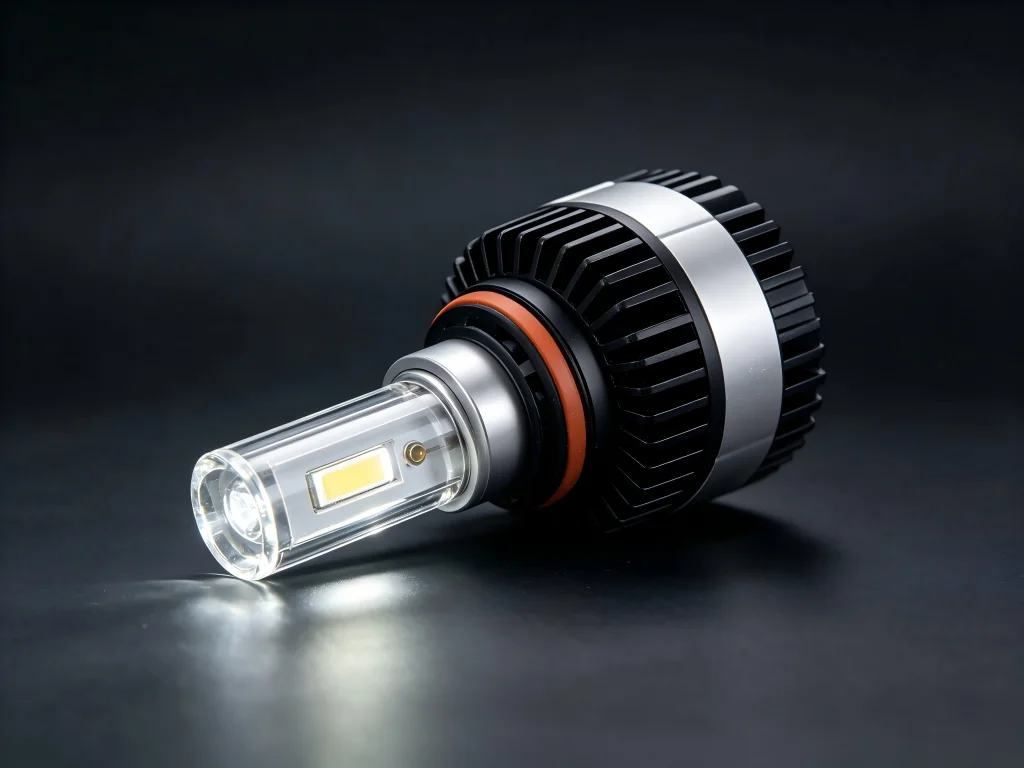
1. Understanding the H4 Platform: Why It's Different
An H4 bulb is a dual-beam unit. It contains both low beam and high beam functions in a single bulb. This is fundamentally different from H7 (low beam only), H11 (low beam only), or 9005 (high beam only) bulbs.
Risposta diretta: The dual-beam design of the H4 bulb creates unique engineering challenges. The LED chips must replicate two filament positions — one for low beam and one for high beam — within a compact housing. If the chip placement is wrong, you lose the beam pattern on both low and high beam.
This is why H4 LED bulbs are harder to design than single-beam bulbs. And it's why most cheap H4 LED bulbs perform poorly.
The H4 bulb uses a dual-filament design. One filament for low beam, one for high beam. The reflector or projector housing in your headlight is designed around the exact position of these filaments. Move the light source even slightly, and the beam pattern breaks down.
2. Critical Factor #1: LED chip position and beam pattern replication
This is the single most important factor in any H4 LED headlight bulb. The optics of your headlight housing — whether reflector or projector — were designed around the precise position of a halogen filament. The filament is a narrow, linear light source. The optics shape that light into a specific beam pattern.
LED chips are flat and directional. If they are not located exactly where the filament was, the beam pattern breaks down. Light scatters. Glare increases. Usable light on the road decreases.
What to look for: Premium H4 LED bulbs use a 1:1 filament replication design. The LED chips are positioned precisely where the halogen filament was, in both low beam and high beam positions.
Some manufacturers advertise “1:1 halogen size” but miss the critical chip position. Ask: does this bulb replicate the filament position, or just the overall size?
A forum member perfectly summarized the challenge: “Modern quality H4 replacement LED systems use emitters very close in size, shape, and position to the original filaments.”.
3. Critical Factor #2: LED chip quality and type
The LED chip is the heart of the bulb. Not all chips are created equal.
| Chip type | Advantages | Disadvantages | Ideale per |
|---|---|---|---|
| Philips ZES (Luxeon Z ES) | Gold standard for beam accuracy. 1.6 mm x 2.0 mm — closely matches the halogen filament width. Low defect rate. Excellent color consistency | Moderate brightness per watt | Drivers who prioritize beam pattern over maximum lumens |
| CSP (Chip Scale Package) | Higher brightness per watt than ZES. More compact. Cheaper to produce | Next-generation chips required for good beam quality | Drivers who want high brightness with good beam quality |
What to look for: Established brands reveal their chip supplier. Philips, Osram, and Seoul Semiconductor's premium CSP chips indicate quality. Generic “automotive-grade” chips without brand indication are a red flag.
4. Critical factor #3: Thermal management and cooling system
LEDs generate significant heat. If that heat is not dissipated, the chips degrade. Brightness decreases. Color shifts. Eventually, the bulb fails.
The cooling system is the most common failure point in H4 LED bulbs. Cheap bulbs use undersized heat sinks or noisy, low-quality fans that fail within months.
4.1. Active Cooling (Fans)
Effective but introduces moving parts that can fail or become noisy. Quality fans use sealed bearings and operate silently. Cheap fans are noisy and short-lived. One reviewer noted: “The main drawback is the cooling fans — once they spin … the car is off.”.
4.2. Passive Cooling (Heat Sinks)
No moving parts, completely silent. Requires sufficient surface area to dissipate heat. Works well for low-power bulbs. One user reported: “Heat dissipation seems excellent, despite the lack of a fan or large heat sink.”.
What to look for: Bulbs that specify the cooling method and provide thermal data. Avoid bulbs where the cooling system seems like an afterthought.
5. Critical Factor #4: CANBUS Compatibility
Modern vehicles monitor electrical loads to detect bulb failures. An H4 halogen draws about 55 watts. An H4 LED bulb draws significantly less. If the vehicle's computer sees the lower consumption, it assumes the bulb is burned out and turns on a warning light.
Some bulbs solve this problem with built-in CANBUS drivers that simulate the halogen load. Others require external decoders or resistors. External solutions introduce additional failure points and complicate installation.
What to look for: Bulbs with “built-in CANBUS” or “error-free” capability. Avoid bulbs that require separate decoders unless you love troubleshooting electrical problems.
6. Critical Factor #5: Physical Fit
Your headlight housing has limited space behind the bulb. Some H4 LED bulbs have bulky heat sinks or fan assemblies that don't fit — requiring you to modify or remove the dust covers.
What to look for: Bulbs that advertise “1:1 size” or “mini design”. Check dimensions against your vehicle's dust cover space before purchase.
7. H4 LED Bulb Comparison: Budget vs. Premium
| Caratteristica | Budget H4 LEDs (<$50) | Mid-Range H4 LEDs ($50–$100) | Premium H4 LEDs ($100+) |
|---|---|---|---|
| Precisione del fascio | Poor — scattered light, dark spots | Good — some scatter, acceptable cutoff | Excellent — sharp cutoff, even distribution |
| LED chip quality | Generic, not declared | Mid-range CSP | Philips ZES or premium CSP |
| Gestione termica | Undersized and noisy fans | Adequate cooling | Cooling designed with thermal data |
| CANBUS compatibility | Often requires external decoders | Integrated or external | Integrated, without errors |
| Physical adaptation | Bulky, may not fit | Fits most vehicles | 1:1 size, fits tight housings |
| Durata della vita | 6–18 months | 2–3 years | 30,000–50,000 hours |
| Garanzia | 30–90 days | 1 year | 2–5 years |
8. Real-World Testing: What Users Actually Experience
We analyzed feedback from thousands of real installations. Here's what the data shows:
8.1. Budget Bulbs: Common Complaints
- “Ha iniziato a dare problemi dopo 3 mesi. Le lampadine hanno iniziato a lampeggiare in luminosità e occasionalmente non funzionavano affatto”
- “Dopo alcuni mesi di utilizzo… una delle lampadine ha iniziato a spegnersi in modo intermittente”
- “Molta dispersione e punti luminosi, fuori dal suo schema del fascio luminoso”
- “Luce molto brillante ma il peggior schema del fascio possibile, ha molte zone scure”
- “Le luci sono notevolmente più fioche rispetto alle lampadine alogene originali”
8.2. Lampadine Premium: Cosa Riferiscono gli Utenti
- “Lo schema del fascio è eccellente. Taglio netto ancora più definito rispetto all’alogeno OEM”
- “Niente ventole, scatole esterne/connettori che possono guastarsi”
- “Taglio molto migliore, luce uniforme sulla strada e ventole davvero silenziose”
- “Dopo quasi 2 anni dall’installazione, questi fari funzionano ancora come previsto”
9. Domande frequenti sulle lampadine LED H4 per fari
9.1. Quali veicoli utilizzano lampadine LED H4 per fari?
Le lampadine H4 si trovano comunemente in veicoli come Toyota, Honda, Jeep, Suzuki, Subaru e motociclette come Yamaha e Royal Enfield. Verifica sempre la dimensione della tua lampadina nel manuale del proprietario prima dell’acquisto.
9.2. Quanto costano le lampadine LED H4 per fari in Sudafrica?
Presso rivenditori come Midas, le lampadine LED H4 per fari vanno da R395 a R525. Piattaforme online come Takealot e Bobshop offrono prezzi simili.
9.3. Quanto costano le lampadine LED H4 per fari in Pakistan?
I prezzi vanno da Rs.1.100 per set base a Rs.20.000 per marchi premium. Le LED H4 Novsight costano circa 20k, mentre le Aux LEDs Pro 55W sono intorno ai 14k.
9.4. Le lampadine LED H4 per fari funzionano sulle motociclette?
Sì, se la tua moto utilizza un sistema elettrico a 12V DC. Le lampadine LED H4 per moto sono ampiamente disponibili e molti motociclisti riportano risultati eccellenti. Conferma che la tua moto utilizzi una lampadina alogena H4 e funzioni a corrente continua (non 6V o AC).
9.5. Perché le mie lampadine LED H4 per fari sfarfallano?
Lo sfarfallio indica tipicamente che il sistema CANBUS del veicolo rileva un assorbimento di corrente inferiore, un sistema elettrico AC su una moto, o lampadine di scarsa qualità con driver inadeguati.
9.6. Dove posso acquistare lampadine LED H4 per fari vicino a me?
Rivenditori come Autozone hanno in stock lampadine LED H4. Tuttavia, molte lampadine dei grandi magazzini mancano di sofisticate schermature EMI necessarie per prevenire interferenze radio e interferenze con la centralina. Per opzioni di livello professionale, considera fornitori specializzati.
9.7. I bulbi fari LED H4 sono più luminosi degli alogeni?
I bulbi LED H4 di qualità possono essere significativamente più luminosi — fino al 230% in più rispetto al minimo legale per i bulbi alogeni. Tuttavia, alcuni LED economici non sono in realtà più luminosi degli alogeni; sono solo più bianchi.
9.8. Qual è la migliore temperatura di colore per i bulbi fari LED H4?
6000K fornisce una luce bianca fredda che molti conducenti preferiscono. 5700K offre un aspetto più naturale di bianco diurno. 6500K è comunemente disponibile ma può apparire leggermente blu. Scegli in base alle tue preferenze e alle normative locali.
10. Il Vantaggio GTR: Ingegneria di cui puoi fidarti
GTR ha trascorso anni progettando bulbi fari LED H4 che risolvono ogni problema descritto in questa guida. Ecco cosa li distingue:
- Precisione 1:1 replica del filamento — I nostri bulbi LED H4 posizionano i chip esattamente dove si trovava il filamento alogeno, preservando il fascio di luce di fabbrica. Questo è il fattore più importante nelle prestazioni dei LED H4.
- Chip LED premium — Utilizziamo chip Philips ZES — lo standard di riferimento per l’accuratezza del fascio — e chip CSP premium di Seoul Semiconductor.
- Gestione termica avanzata — Sistemi di raffreddamento ingegnerizzati con dati termici verificati, non dissipatori sottodimensionati o ventole rumorose.
- Compatibilità CANBUS integrata — Nessun decoder esterno. Nessuna spia di avviso sul cruscotto. Nessun problema elettrico.
- Design dimensioni 1:1 — Si adatta in alloggiamenti dei fari stretti senza modificare i coperture antipolvere.
- Certificazioni di settore — Le nostre lampadine soddisfano rigorosi standard di qualità che i marchi economici non possono eguagliare.
Smetti di rischiare con lampadine LED H4 economiche che compromettono la tua sicurezza e ti fanno sprecare denaro. Fai la scelta giusta al primo colpo con GTR.
Pronto a passare a lampadine LED H4 che funzionano davvero? Visita https://www.rhgtr.com per esplorare le nostre soluzioni LED H4 ingegnerizzate. Ogni lampadina è progettata per la tua sicurezza — non solo per una scheda tecnica..