Scegliere i giusti fendinebbia gialli non significa scegliere la lampadina più luminosa. Si tratta di capire cosa funziona davvero nella nebbia—ed evitare le trappole di marketing che ti lasciano cieco quando la visibilità diminuisce.
Se stai cercando fendinebbia gialli, probabilmente hai notato una cosa: le opzioni sono travolgenti. Centinaia di marchi. Prezzi estremamente diversi. Affermazioni contrastanti su lumen, temperature di colore e “300% più luminosi dell’alogeno.”
Questa guida taglia il rumore. Abbiamo analizzato le recensioni dei fendinebbia gialli più quotati, i forum e i test di settore. Abbiamo identificato ciò che conta davvero—e ciò che è solo fuffa di marketing. Alla fine, saprai esattamente cosa cercare e quali prodotti offrono prestazioni reali.
1. Fendinebbia gialli vs. bianchi: la decisione che conta per prima
Prima di scegliere un prodotto specifico, devi decidere: gialli o bianchi?
I fendinebbia gialli usano luce con una lunghezza d’onda più lunga rispetto alla luce bianca. Questo significa che la luce si disperde meno quando colpisce nebbia o umidità, riducendo l’abbagliamento e migliorando il contrasto in condizioni di densa nebbia.
Ecco la ripartizione pratica:
| Condizione | Fari fendinebbia gialli | Fari fendinebbia bianchi |
|---|---|---|
| Nebbia fitta (visibilità <100m) | Excellent – Abbagliamento ridotto, migliore contrasto | Scarso – Aumento del backscatter, abbagliamento |
| Pioggia forte o neve | Excellent – Taglia attraverso le precipitazioni | Moderato – Alcuni problemi di abbagliamento |
| Nebbia leggera o foschia | Buono | Buono – Più luminoso, più dettaglio |
| Condizioni limpide | Funzionale | Best – Natural look, more light |
| Off-road / dusty conditions | Excellent – Cuts through dust | Moderate |
The verdict: If you regularly drive in fog, heavy rain, or snow, yellow is the clear winner. If you drive mainly in clear conditions and want a modern look, white might be enough. There is no universal “best” — the choice depends on where and how you drive.
2. What to Look for in Yellow Fog Lights: The Critical Specifications
Not all yellow fog lights work the same way. Here are the specifications that really matter:
2.1. Color temperature (Kelvin rating)
Look for 3000K-3500K. This is the scientific sweet spot for yellow fog lights.
Values below 3000K (amber/amber-yellow) reduce brightness too much. Values above 3500K shift towards warm white and lose the fog-cutting advantage. Some brands advertise “cold yellow 5000K” — that's marketing nonsense. For fog, you want 3000K-3500K, period.
2.2. Lumen output vs. beam pattern
This is where most buyers are fooled.
Many brands advertise huge lumen numbers — 14,000, 17,000, even 20,000 lumens. Raw lumens don't tell you how well a fog light performs. The beam pattern matters more than total output.
A 14,000-lumen bulb with poor focusing scatters light everywhere, creating glare without improving road visibility. A well-designed 6,000-lumen bulb with a precise beam illuminates the road surface exactly where needed.
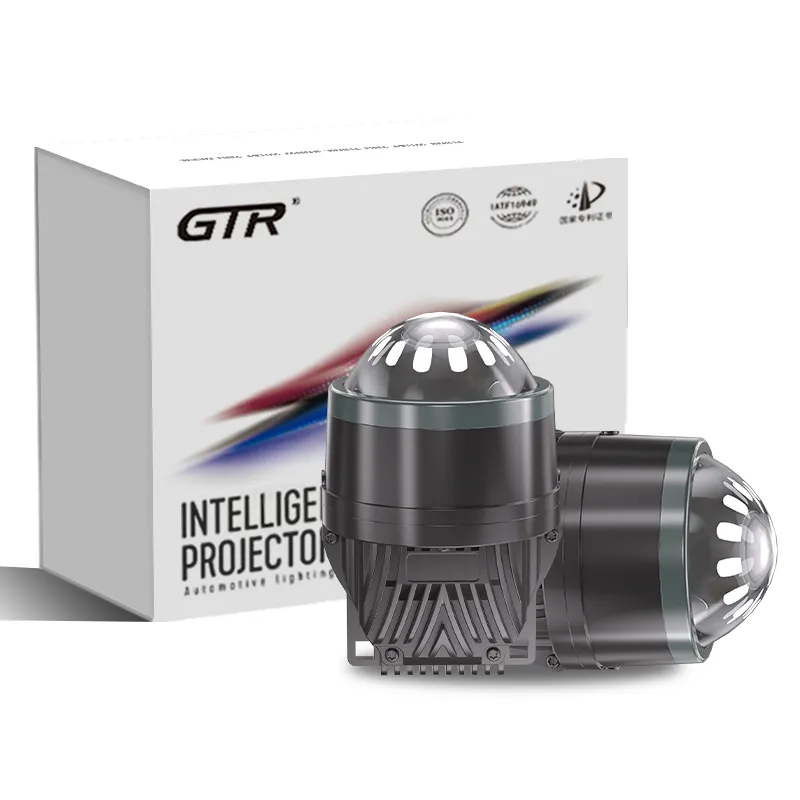
In independent comparative tests, the GTR Ultra 2.0 demonstrated superior beam focus compared to competitors with higher claimed lumen outputs. This is the difference between marketing numbers and real performance.
2.3. Build quality and thermal management
LEDs generate heat. If that heat isn't managed properly, bulbs lose brightness over time — a phenomenon called lumen degradation.
Look for aircraft-grade aluminum construction with active cooling (fans or heat sinks).
Cheap bulbs use plastic housings and passive cooling that can't withstand prolonged use. Premium bulbs from manufacturers like GTR use advanced thermal management to maintain consistent output throughout the bulb's life.
2.4. Water resistance rating
Fog lights are positioned low on the vehicle, directly exposed to water, mud, and road debris. IP67 or IP68 rating is essential.
IP67 means the bulb is dust-tight and can survive immersion in water up to 1 meter for 30 minutes. IP68 offers even greater protection. Anything less and you risk failure exactly in the conditions where you need the lights most.
2.5. Legal certification for road use
SAE, DOT, or ECE certification ensures your fog lights are legal for road use.
Products labeled “off-road use only” may not meet legal requirements in your area. Always check for appropriate certification marks.
3. Yellow fog light options: bulbs vs. complete housings
You have two main paths for yellow fog lights:
3.1. Option A: Yellow LED replacement bulbs
This is the most common and economical approach. You replace your existing halogen or white LED fog light bulbs with yellow LED bulbs that fit the factory housing.
Pros: Inexpensive ($30-$100 per pair), easy plug-and-play installation, works with existing housings
Cons: Performance depends on the housing's optics; some housings are not optimized for LED light distribution
3.2. Option B: Complete yellow fog light housings (modules/kits)
These replace the entire fog light assembly, including housing, optics, and bulbs.
Pros: Optimized light beam, superior performance, often include advanced features like amber backlighting
Cons: More expensive ($150-$700+), more complex installation, requires specific vehicle fitment
Which should you choose? If your factory housings are decent and you want a quick upgrade, start with yellow LED bulbs from a quality manufacturer. If you want maximum performance and your budget allows, complete housing replacement offers superior results.
4. Comparison of the Best Yellow Fog Light Brands
Based on independent testing, forum discussions, and real reviews:
| Brand | Type | Main Strengths | Considerations |
|---|---|---|---|
| GTR Lighting | Bulbs and housings | Superior beam pattern, true 3000K output, SAE/DOT certified | Premium price, professional-grade performance |
| Diode Dynamics | Bulbs and housings | SAE compliant, excellent optics, made in the USA | Higher price, limited vehicle fitment |
| Morimoto | Complete housings | 10-year warranty, SAE/ECE compliant, dual-color options | Expensive, vehicle-specific |
| SEALIGHT | Bulbs | Cheap, high lumen claims, plug-and-play | Beam pattern varies by model, some CANBUS issues |
| AUXITO | Bulbs | Cheap, 3000K output, 30,000 hour lifespan | May require decoders for some vehicles |
5. Real World Testing: What the Comparisons Reveal
In a controlled head-to-head test comparing the yellow fog LED bulbs from Diode Dynamics, Morimoto, S-V.4, and GTR Lighting, researchers measured the Lux output and beam pattern of each bulb at 25 feet.
The OEM halogen bulb served as a baseline at 110 Lux maximum. The Diode Dynamics SLF matched OEM output but with a yellow color variation. The high-performance options from all brands showed variable improvements.
The key takeaway: Raw Lux numbers don't tell the whole story. The GTR Ultra 2.0 demonstrated superior beam focus and more usable light distribution—the kind of performance that translates into real-world visibility.
The tests also revealed that many cheap “yellow” LEDs use cheap filters that produce a washed-out color that doesn't match true selective yellow 3000K. This is important: the wrong shade of yellow loses the fog-cutting advantage.
6. Common Mistakes When Buying Yellow Fog Lights
- Chasing lumens rather than beam pattern. A 17,000 lumen bulb with poor optics is worse than a 6,000 lumen bulb with precision optics.
- Ignoring CANBUS compatibility. Many vehicles require CANBUS-compatible bulbs to avoid error codes and flickering.
- Buying “off-road only” products for road use. These products may not meet legal requirements and may result in fines.
- Choosing the wrong color temperature. “Amber yellow“ (2000K-2500K) is for turn signals, not fog lights. You want selective yellow 3000K-3500K.
- Skipping compatibility research. Not all bulbs fit all vehicles. Check your bulb size (H11, H8, H16, 9006, etc.) before purchasing.
7. Yellow fog lights: legal considerations by region
Yellow fog lights are legal for road use in most regions, provided they meet certification standards.
North America: SAE/DOT-compliant yellow fog lights are legal on the road. Products must produce a proper fog beam and not dazzle oncoming traffic.
Europe: ECE R19 regulations allow selective yellow fog lights. Many European vehicles come standard with yellow fog lights.
Australia: Front fog lights must emit white or yellow light. However, they may only be used in reduced visibility conditions. The Australian Road Rules (Rule 217) restrict fog light use to fog or inclement weather. Using fog lights in clear conditions can result in fines.
Important: Local regulations vary. Always check the specific requirements of your state or territory before purchasing and installing yellow fog lights. If in doubt, look for SAE, DOT, or ECE certification on the product.
8. Frequently Asked Questions about Yellow Fog Lights
8.1. Are yellow fog lights legal in all 50 states?
Generally yes, as long as they are SAE/DOT certified and produce an adequate fog beam. Some states have specific restrictions on color and intensity. Check local regulations before installation.
8.2. Do yellow fog lights really work better than white ones?
In dense fog, heavy rain, and snow, yes. Yellow light scatters less than white light, reducing glare and improving contrast. In clear weather or light fog, white lights may offer better overall visibility.
8.3. Can I use yellow fog lights with LED headlights?
Yes. Many drivers pair yellow fog lights with white or cool white LED headlights for a modern and functional lighting setup. The contrast between the warm yellow fog light and the cool white headlight can actually improve depth perception.
8.4. What is the difference between selective yellow and amber yellow?
Selective yellow refers to the 3000K-3500K range optimized for fog penetration. Amber yellow refers to the 2000K-2500K range used for turn signals and parking lights. For fog lights, choose selective yellow.
8.5. How do I know if my vehicle needs CANBUS-compatible bulbs?
Most modern vehicles (post-2010) use CANBUS systems that monitor bulb operation. If your vehicle shows a “bulb out” warning after installing LEDs, you need CANBUS-compatible bulbs or resistors. Check the owner's manual or consult the manufacturer.
8.6. How long does it take to install yellow fog light bulbs?
Most plug-and-play yellow LED bulbs install in 10-30 minutes with basic hand tools. Complete housing replacement may take 1-2 hours. Always check compatibility before purchasing.
8.7. Are yellow fog lights suitable for off-road?
Excellent. Yellow fog lights cut through dust and improve terrain contrast, making them popular among off-road enthusiasts and rally drivers. They also reduce eye strain during long off-road sessions.
9. Your next step: choose the right yellow fog lights for your vehicle
Now you know what to look for: 3000K-3500K color temperature, correct beam pattern over raw lumens, aerospace-grade build quality, IP67/IP68 waterproofing, and legal road certification. You know to avoid cheap filters, CANBUS compatibility issues, and “off-road only” products for street use.
Now it's time to make a decision. Your stock fog lights were not designed for real fog conditions. They were designed to meet minimum requirements. You deserve better.
GTR Lighting offers professional-grade yellow fog lights designed to outperform the competition — with superior beam patterns, true 3000K output, and SAE/DOT certification for legal street use. Every product is backed by years of manufacturing experience and real-world testing.
Visita GTR Lighting today. Find the yellow fog light solution for your vehicle. Drive with confidence in any condition..