
について best rated LED headlight bulbs are not necessarily the products with the highest lumens, wattage, marketplace rating, or price. For a serious buyer, the winning bulb is the one that combines correct optical geometry, strong road illumination, stable thermal performance, vehicle compatibility, practical installation, and dependable manufacturing quality.
This distinction becomes even more important for distributors, automotive wholesalers, retrofit shops, and private-label brands.
A consumer might buy one pair.
A distributor could buy 5,000.
A specification mistake at that scale is no longer an inconvenience. It becomes inventory risk.
This guide gives you a technical framework for comparing the best LED headlight bulbs without falling for specifications that look impressive but say little about real performance.
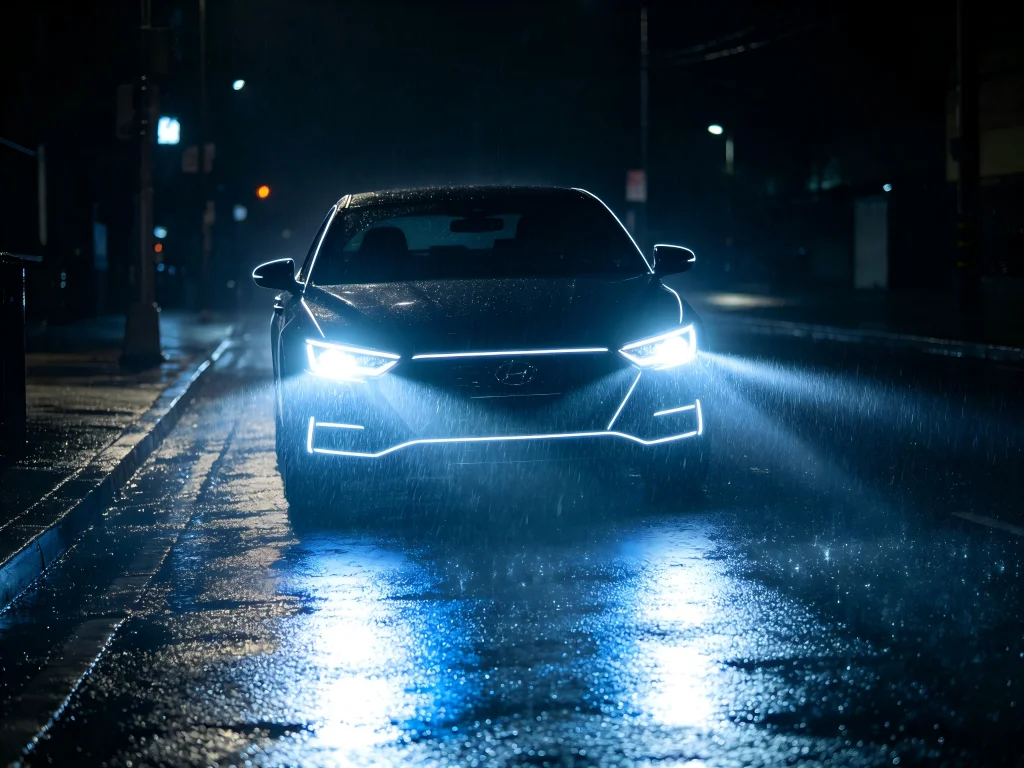
1. What Are the Best Rated LED Headlight Bulbs?
The best rated LED headlight bulbs combine accurate emitter positioning, controlled beam distribution, strong sustained illumination, efficient thermal management, stable driver electronics, correct vehicle fitment, and dependable manufacturing. Buyers should evaluate these factors together rather than ranking bulbs solely by advertised lumen output or online review scores.
Most product comparisons begin with brightness.
Professional sourcing should begin with application.
Ask four questions first:
- Which vehicle uses the bulb?
- Which headlight housing is installed?
- What optical result is required?
- What electrical system must the LED work with?
Only then should you compare power, color temperature, cooling, and price.
2. LED Headlight Comparison: The Specifications That Matter
| Buying Factor | Budget LED | Better Engineered LED | Professional Buyer Priority |
|---|---|---|---|
| Advertised lumens | Often heavily emphasized | Supported by broader optical evaluation | Medium-Low |
| エミッタの形状 | May use larger emitting surfaces | Designed around controlled focal positioning | Very high |
| Beam pattern | May create scatter or excessive foreground light | Designed for controlled distribution | Critical |
| Thermal management | Basic aluminum structure | Engineered heat path and cooling system | Very high |
| Driver | Basic current control | Stable regulated electronics | 高 |
| CANbus support | Generic claim | Application-tested compatibility | 高 |
| Physical fitment | Bulky assembly possible | Compact application-focused design | 高 |
| Batch consistency | 可変 | Controlled manufacturing and QC | Critical for B2B |
| Supplier support | Transactional | Technical/OEM support | Critical for distributors |
3. Lumens vs. Lux: Which Number Should Buyers Trust?
Lumens measure total emitted light, while lux measures illumination reaching a defined surface. For automotive headlights, neither number should be used alone. Buyers should evaluate lux at controlled measurement points together with beam distribution, cutoff quality, hotspot location, test distance, voltage, and operating temperature.
This is where many reviews of the best LED headlight bulbs become misleading.
A specification such as “50,000 lumens” sounds easy to compare.
But without a test method, it tells a professional buyer very little.
You need to know:
- Was output measured per bulb or per pair?
- Was it measured immediately after startup?
- What voltage was supplied?
- Was the LED inside a headlight housing?
- What happened after the bulb reached operating temperature?
- Where was road illuminance measured?
- How much light fell outside the useful beam?
Without those answers, comparing lumen numbers can become an exercise in comparing marketing departments rather than headlights.
4. Beam Pattern vs. Raw Brightness
This is arguably the most important comparison in this entire guide.
Imagine two bulbs.
Bulb A produces more total light but spreads a significant amount into uncontrolled areas.
Bulb B produces somewhat less total light but concentrates more illumination inside the useful road zone.
Which is better?
For road use, Bulb B may deliver the superior driving experience.
4.1. Why LED Chip Position Matters
Headlight reflectors and projectors depend on focal geometry.
Moving the light source even slightly can change how the housing distributes illumination.
That is why premium LED replacement design increasingly focuses on compact emitting surfaces and accurate positioning.
In our engineering testing, we do not consider a bulb successful simply because a light meter shows a high peak value.
We examine where that intensity appears inside the beam.
5. CSP vs. Other LED Chip Designs
You will frequently see terms such as CSP, flip-chip, customized LED packages, and high-density emitters when comparing the best LED headlight bulbs brand options.
The brand name of the semiconductor alone does not determine the final headlight performance.
What matters is how the package is integrated into the optical system.
A compact emitting surface can help designers approximate the position of a halogen filament more accurately. However, PCB thickness, emitter spacing, orientation, thermal path, and mounting precision also influence the result.
Therefore, never select an automotive LED bulb solely because the supplier advertises a famous chip architecture.
6. Fan vs. Fanless: Which LED Headlight Design Is Better?
| 特徴 | Fan-Cooled | Fanless |
|---|---|---|
| Heat removal | Can be strong in compact packages | Depends heavily on heat-sink surface area |
| Noise | Some fan noise possible | Silent |
| Moving components | Yes | いいえ |
| Package size | Can support compact high-output designs | May require larger passive cooling area |
| High-power applications | Often advantageous | Depends on available thermal capacity |
The simplistic answer—“fanless is more reliable”—is not always correct.
Removing the fan eliminates one potential failure point.
But if the passive heat sink cannot remove enough heat, the LEDs may operate at higher temperatures.
Likewise, a poorly made fan is a reliability concern, while a properly engineered fan and bearing system may provide effective cooling for years.
Judge the thermal system, not the label.
7. 6000K vs. 6500K vs. Warmer White
Color temperature changes visual character more than it changes fundamental optical quality.
Approximately 6000K tends to provide a crisp white appearance that has become common in aftermarket LED headlights.
Higher color temperatures can appear increasingly cool or bluish.
However, do not confuse whiter light with more light.
A higher Kelvin number does not mean a brighter headlight.
For markets with frequent rain, fog, or wet pavement, buyers should also consider how color temperature affects perceived contrast under local driving conditions.
8. Best Rated H7 LED Headlight Bulb vs. H11 vs. 9005
These bulb families should never be treated as interchangeable inventory simply because their LED technology looks similar.
| Bulb Type | Common Consideration | Major Buying Risk |
|---|---|---|
| H7 | Compact single-beam application | Adapter and retaining-clip compatibility |
| H11 | Common low-beam/fog applications | Housing and beam compatibility |
| 9005/HB3 | Common high-beam applications | Output and rear clearance |
| 9006/HB4 | Common low-beam applications | Correct base and optical application |
| H4/9003 | Dual high/low beam source | More complex high/low optical geometry |
について best rated H7 LED headlight bulb, therefore, should not simply be the brightest H7.
It should fit the retaining mechanism, fit behind the dust cover, work with the vehicle electronics, and reproduce an appropriate beam inside the target housing.
9. Built-In Driver vs. External Driver
Integrated designs can simplify installation.
External drivers can provide designers with more space for electronic components and thermal isolation.
Neither configuration is inherently superior.
For B2B sourcing, evaluate:
- driver operating temperature;
- input voltage stability;
- water and dust protection;
- EMC behavior;
- connector quality;
- cable strain relief;
- flicker behavior;
- vehicle compatibility.
A premium LED chip connected to a weak driver is still a weak product.
10. CANbus Ready vs. Truly Vehicle Compatible
This distinction can save distributors a great deal of money.
“CANbus ready” is often treated as a universal compatibility label.
It is not.
Different vehicles monitor bulbs differently. Some use pulse-width modulation. Some check electrical resistance. Others have sensitive lamp-out detection systems.
A product that operates perfectly in one vehicle may trigger a dashboard warning in another.
Professional suppliers should therefore build compatibility data around actual applications instead of relying entirely on a generic CANbus statement.
11. The Problem With “Best LED Headlight Bulbs 2025” Lists
Older lists can still provide useful information, but the LED headlight market evolves quickly.
Chip packaging improves.
Driver electronics change.
Cooling systems become smaller.
Vehicle electronics become more complex.
Products can also change internally without the marketplace listing changing significantly.
For this reason, sourcing decisions in 2026 should be based on current samples and current specifications rather than assuming a best LED headlight bulbs 2025 recommendation remains unchanged.
12. What About Best LED Headlight Bulbs on Amazon?
Amazon and similar marketplaces are excellent for observing consumer demand.
They are less useful as your only engineering qualification system.
Reviews may help identify recurring issues. For example, repeated comments about installation difficulty, flickering, noisy fans, or premature failure deserve investigation.
But marketplace ratings mix many vehicles, climates, installation methods, and customer expectations.
A 4.8-star product installed in thousands of different housings is not automatically optically correct for your specific vehicle.
13. What Can “Best LED Headlight Bulbs Reddit” Research Tell You?
Community discussions are valuable because enthusiasts often discuss details that polished product pages omit.
Typical patterns include drivers saying that one bulb looked incredibly bright but produced excessive scatter, while another lower-output product delivered a cleaner beam.
Installers also frequently focus on practical details such as retaining clips, dust covers, decoder requirements, fan noise, and whether performance changes after prolonged operation.
These discussions can help identify questions worth testing.
They should not replace controlled testing.
14. How Professional Buyers Should Test LED Headlight Samples
A professional LED headlight sample test should compare fitment, beam geometry, illuminance at repeatable points, thermal stability, electrical behavior, installation clearance, and prolonged operation. Testing several samples from different production batches provides much more useful sourcing information than comparing supplier specification sheets alone.
Here is a practical qualification sequence:
- Verify dimensions. Measure the base, LED position, PCB thickness, rear heat sink, and connector.
- Install the bulb correctly. Confirm seating and emitter orientation.
- Capture the beam. Use identical housing, distance, voltage, camera settings, and wall position.
- Measure illuminance. Record repeatable points rather than one convenient peak value.
- Run a thermal test. Compare startup output with stabilized output after prolonged operation.
- Check driver temperature. Excessive electronic temperature can affect long-term reliability.
- Test electrical compatibility. Check flicker, warning lights, startup behavior, and PWM-sensitive vehicles.
- Inspect mechanical clearance. Verify dust covers, retaining clips, wiring, and fan airflow.
- Repeat across samples. One excellent prototype does not prove batch consistency.
15. B2B Buyers Need a Different Definition of “Best”
A retail buyer asks:
Which bulb should I put in my car?
A distributor should ask:
Which product platform can I sell repeatedly without creating excessive installation complaints, warranty claims, inventory complexity, and brand damage?
This changes the purchasing equation.
| Retail Decision | B2B Decision |
|---|---|
| 明るさ | Repeatable optical performance |
| Price per pair | Total landed cost and return cost |
| Fits my car | Application coverage |
| Online rating | Batch consistency |
| 保証 | RMA structure and supplier response |
| Packaging | Private label and market positioning |
| One purchase | Long-term supply stability |
16. Why GTR Is Built for Professional Automotive Lighting Buyers
GTR comes from a manufacturing background rather than a marketplace-listing-first model.
Dongguan Ronghai’s automotive lighting operations date to 2007. The manufacturing organization focuses on LED automotive lighting including LED headlights, bi-LED projector lenses, fog lighting, and related retrofit solutions.
The production operation includes approximately 30,000 square meters of manufacturing facilities and supports product development, manufacturing, quality control, and customized lighting projects.
Our international business has expanded across multiple markets, with products and partners serving customers around the world.
For distributors, wholesalers, retrofit chains, and automotive brands, GTR can also support OEM and customization requirements rather than limiting buyers to a fixed retail catalog.
16.1. Manufacturing Control Matters More Than a Beautiful Sample
Anyone can send a strong sample.
The real test begins with repeat orders.
Based on our years of manufacturing expertise, we view production consistency as part of product performance.
If LED position shifts between batches, beam behavior may change.
If thermal materials change, sustained output may change.
If drivers change, compatibility may change.
So supplier qualification should include the manufacturing system behind the product.
Ronghai’s published quality and environmental management framework includes ISO9001 and ISO14001, while applicable products and operations include certifications such as CE, FCC, and RoHS.
17. LED Headlight Supplier Checklist for Distributors
Before placing a significant order, ask the supplier for answers to these questions:
- What is the actual bulb power after thermal stabilization?
- How is beam performance tested?
- Can you provide application-specific beam photos?
- What LED package is used?
- How is emitter position controlled during production?
- What is the thermal protection strategy?
- Which vehicles have been checked for electrical compatibility?
- Which models require additional decoders?
- What quality-control steps occur before shipment?
- What is the warranty and RMA procedure?
- Can packaging and branding be customized?
- Can the supplier support exclusive or market-specific products?
- What certifications are available for the target product and market?
- How are engineering changes controlled between production batches?
If the only answers you receive are “super bright,” “plug and play,” and “100% CANbus,” keep evaluating.
18. FAQ: Buying the Best Rated LED Headlight Bulbs
18.1. Which LED headlight bulb is the brightest?
There is no meaningful universal answer without a controlled test. Compare stabilized output and road illuminance using the same housing, voltage, measurement distance, and beam points.
18.2. What wattage is best for LED headlights?
Higher wattage can support higher output, but it also creates more heat. The best power level depends on LED efficiency, thermal design, housing space, electrical system, and desired performance.
18.3. Is 6000K or 6500K better?
Both create cool white light. Around 6000K tends to look slightly more neutral, while 6500K may appear cooler. Neither rating guarantees greater road illumination.
18.4. What is the best LED headlight bulbs brand?
Evaluate brands by optical engineering, thermal management, driver quality, manufacturing consistency, compatibility support, warranty, and application knowledge rather than marketing visibility alone.
18.5. What should I look for in an H7 LED?
Check emitter geometry, retaining mechanism, adapter requirements, rear clearance, beam pattern, cooling, electrical compatibility, and road-use requirements for your market.
18.6. Do more lumens mean better headlights?
No. Higher total output can be useful only when the headlight optics place that light effectively on the road. Poor distribution can waste additional output and increase glare.
18.7. Are LED headlight bulbs legal?
Rules vary by jurisdiction, vehicle, housing, and approval status. Buyers should check the regulations that apply in their target market before using or distributing retrofit LED bulbs for public-road applications.
18.8. Should distributors test samples before bulk ordering?
Yes. Sample qualification should include optical, thermal, electrical, mechanical, and installation testing. For larger programs, testing multiple production samples is preferable to approving one prototype.
19. The Best LED Bulb Is the One Your Customers Want to Buy Again
There is a major difference between selling brightness and building an automotive lighting brand.
Brightness can win the first click.
Beam quality can win the first drive.
Reliability wins the second order.
For professional buyers, that second order is what matters.
If you are comparing the best rated LED headlight bulbs for a distribution business, retrofit chain, private-label brand, or national automotive aftermarket program, send GTR your target bulb list and vehicle applications before committing to another generic LED catalog.
We can work from your market backward: vehicle applications, target performance, installation requirements, positioning, packaging, and OEM needs. That approach could prevent expensive compatibility problems before thousands of units reach your customers.
Visit GTR and discuss your LED headlight sourcing or OEM project with our automotive lighting team.。