
もしお探しなら ハロゲンランプ, 、おそらく選択に直面しているでしょう:慣れ親しんだものを使い続けるか、LEDに切り替えるか。このガイドはマーケティングの誇大広告を排除し、必要なデータを提供します。 ハロゲンランプ vs LED を、エネルギー、寿命、光質、安全性、コスト、規制適合性など、重要なすべての側面で比較します。最後には、どのソリューションがあなたの用途に最適かが正確にわかります。.
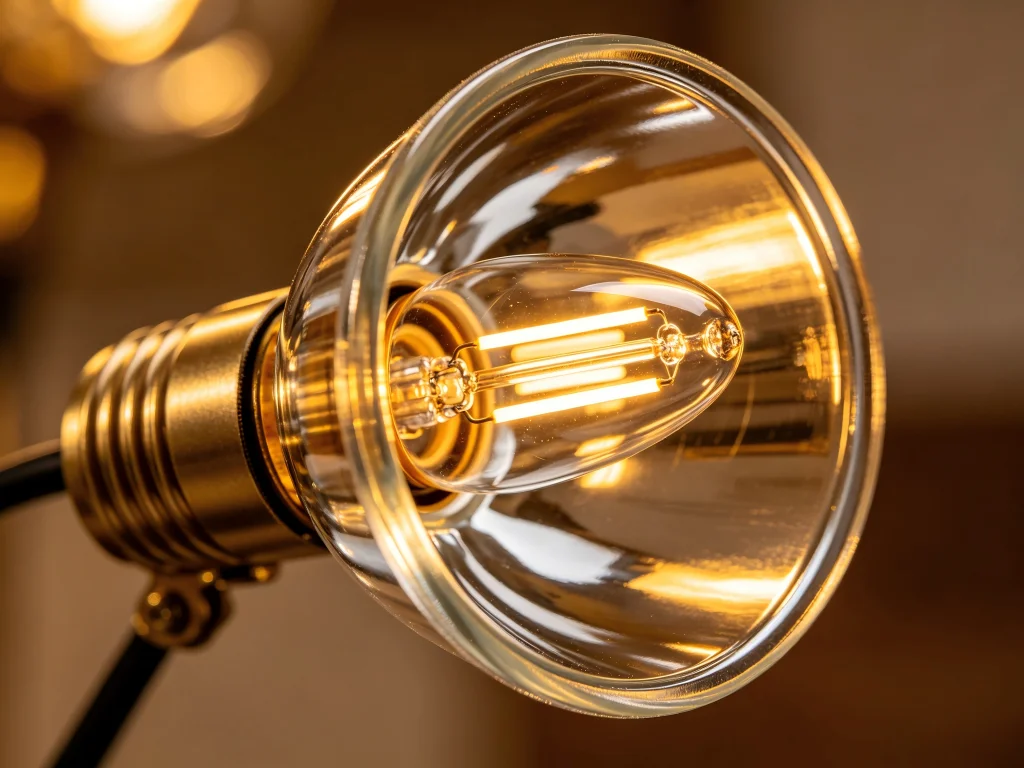
1. ハロゲンランプ vs LED:直接比較
Here is the direct answer: LEDs outperform halogen lamps in energy efficiency (80-85% less energy), lifespan (up to 25,000+ hours vs 1,000-4,000 hours), heat generation (minimal vs extreme), and regulatory compliance, but halogens still have lower initial cost and offer CRI 100.
| 比較項目 | ハロゲンランプ | LEDランプ |
|---|---|---|
| 平均寿命 | 1,000~4,000時間 | 10,000~25,000時間以上 |
| Energy consumption | 80-90W (at standard brightness) | 8-15W (equivalent output) |
| Energy savings compared to halogen | Baseline | 80-85% energy savings |
| Heat output | Extremely high (up to 370°C / 1,200°F) | Minimal |
| Color temperature range | 2,700K – 3,200K | 1,500K – 9,000K (wide range) |
| Color Rendering Index (CRI) | 100 (maximum, matches sunlight) | 70-98+ (premium models match halogen) |
| Initial cost | Low ($10-$40 per unit) | High initial cost |
| Long-term cost | High (frequent replacement + energy) | Low (minimal replacement + energy savings) |
| Durability | Fragile (glass tube, prone to breakage) | Impact-resistant, robust |
| Heat/fire risk | Significant fire hazard | Minimal risk |
| Dimmability | Inherently dimmable | Requires compatible dimmer |
| Regulatory status (2026) | 多くの地域で禁止/制限 | 完全準拠 |
2. When Halogen Still Makes Sense (And When It Doesn't)
正直に言うと、ハロゲンはすべてが悪いわけではありません。特定の用途では正当な利点があります。以下は、当社のエンジニアリングテストと業界の専門知識に基づくバランスの取れた評価です。.
2.1. ハロゲンの利点:現状維持の根拠
- 初期費用が低い: ハロゲン電球は購入コストが安い。予算が限られている場合や一時的な設置の場合、初期費用の節約は魅力的です。.
- 優れた演色性(CRI 100): ハロゲンは自然光に匹敵する完全で連続的なスペクトルを生成します。そのため、歯科、医療、色の正確さが重要な用途で今も人気があります。.
- 瞬時のスムーズな調光: ハロゲンはちらつきや互換性の問題なしに、本来の調光が可能です。.
- 広く全方向への光の分布: ハロゲンは自然に全方向へ光を放射するため、一般的なエリア照明に有益です。.
2.2. ハロゲンの欠点:現状維持の実際のコスト
- 極端な発熱: Downlights at 370°C, torchère style at 1,200°F. This is a serious fire hazard.
- Short lifespan: 1,000 to 4,000 hours, requiring replacement every few months with continuous use.
- High energy consumption: 80-85% more energy than LEDs. For a workshop using 10 bulbs for 10 hours a day, this wastes hundreds of dollars in electricity annually.
- Fragility: Glass tubes break easily upon impact, causing safety hazards and downtime.
- Regulatory uncertainty: Bans are expanding in the UK, EU, Australia, and parts of the US. Supply chains are shrinking.
- Lumen depreciation: Halogen bulbs lose light output as the filament degrades. At 75% of their lifespan, they may produce significantly less light than when new.
3. Advantages of LEDs: Why switching is inevitable
- Significant energy savings: Consumes 80-85% less energy than halogen. For commercial and industrial users, this directly reduces operating costs.
- Exceptional lifespan: 10,000~25,000時間以上。交換までの期間は数年。数か月ごとに梯子に登る必要はもうありません。.
- 最小限の発熱: LEDはほとんど熱を発しません。作業者にとって安全で、作業場は涼しく、冷却コストも削減できます。.
- 優れた耐久性: 耐衝撃性に優れたソリッドステート構造。壊れやすいガラスはありません。.
- 規制への準拠: LEDは、現在および将来のすべてのエネルギー効率基準を満たすか、それを上回ります。.
- 一貫した光品質: ちらつきがなく、寿命を通じてルーメン減退がありません。.
- 広い色温度範囲: 暖かい白(2,700K)から冷たい昼光(6,500K)まで、用途に合わせて正確な光品質を選択できます。.
4. ハロゲンの隠れたコスト:価格タグに表示されないもの
ここでほとんどの購入者がつまずきます。ハロゲン電球の低い表示価格は、莫大な長期的コストを隠しています:
- 交換労力: ハロゲン電球の交換には毎回時間がかかります。1つのLED電球の寿命(25,000時間)の間に、ハロゲン電球を6〜25回交換することになります。それはかなりの労力コストです。.
- Energy waste: 80Wのハロゲンを1日10時間使用すると、電気代は年間約90〜120ドル(1kWhあたり0.15ドル)かかります。同じスケジュールで15WのLEDを使用すると、年間18〜24ドルです。電球1個あたりです。器具の数で掛け算してください。.
- Cooling costs: ハロゲンの熱出力により、HVACシステムはより激しく動作する必要があります。これはしばしば見落とされる運用コストです。.
- Downtime: Every bulb failure means business interruption. In critical applications, this can be costly.
- Safety incidents: Burns from hot bulbs. Fires from contact with insulation. Injuries from broken glass. These are real risks with real costs.
- Supply risk: ハロゲン生産の縮小に伴い、交換品の入手可能性が不確実になっています。プレミアム価格と長期化するリードタイムがすでに現れ始めています。.
5. Featured snippet: 5 key factors in choosing between halogen and LED
ハロゲンランプとLEDのどちらを選ぶかは、以下を評価してください:1)稼働時間(長時間の使用はLEDに有利)、2)お住まいの地域のエネルギーコスト、3)環境の熱感受性、4)管轄区域の規制要件、5)予算のタイムライン(初期費用とライフサイクルコスト)。.
- Operating hours – If lighting is used more than 4 hours per day, the energy savings and lifespan advantages of LED become compelling.
- Energy costs – In regions with high electricity rates, LED investment payback is faster.
- Heat sensitivity – For climate-controlled spaces or heat-sensitive materials, LED's low-temperature operation is important.
- Regulatory compliance – If halogens are banned or restricted in your area, that decision is automatically made.
- Budget period – For short-term projects requiring the lowest possible initial cost, halogen may win. For long-term installations, LED wins on lifecycle costs.
6. Recommendations by application
6.1. Automotive lighting
Halogen lamps have been the standard for headlights, taillights, and fog lights. However, upgrading to LED now offers superior brightness and lifespan. Important note: In the UK, it is not legal to replace halogen headlight units with LED bulbs in most vehicles. Always check local regulations. Halogen headlights must not exceed a color temperature of 4,200K.
6.2. Industrial workshops
LED wins decisively. Halogen work lights generate excessive heat, consume large amounts of energy, and frequently fail in high-vibration environments. LEDs are impact-resistant, operate at low temperatures, and last several years longer.
6.3. Retail and display lighting
Halogen's CRI 100 has become the gold standard for displays where color accuracy is critical. However, premium LEDs now offer CRI 95 or higher, with all the efficiency advantages. For most retailers, LEDs are the better choice—lower operating costs, less heat, and comparable light quality.
6.4. Medical and Dental
Halogen continues to be widely used in medical and dental examination lights due to its CRI 100 and broad light distribution. However, LEDs are gaining share with improved CRI, cooler operation, and longer lifespan. The choice depends on specific clinical requirements and budget.
7. FAQ: Answers to the Most Pressing Questions
7.1. Will Halogen Bulbs Be Banned in 2026?
In the EU and UK, halogen bulb bans have been phased in from 2018 to 2021. The new regulations in 2026 focus on lamps containing mercury, but the momentum against halogen continues. California's Title 24 standards take effect in January 2026, effectively eliminating most halogen products.
7.2. Are Halogen Bulbs More Dangerous Than LEDs?
Yes, halogen bulbs pose significantly higher safety risks. They operate at extreme temperatures (up to 370°C / 1,200°F), creating fire hazards. They also contain pressurized quartz that can shatter dangerously. LEDs emit minimal heat and have no pressurized envelope.
7.3. What Is the Spectrum of a Halogen Bulb?
Halogen lamps produce a full, continuous spectrum with CRI 100.—This is the same as natural sunlight, meaning they reproduce all colors accurately. This full-spectrum output is one of the few remaining advantages of halogen over lower-quality LEDs.
7.4. What Are Halogen Bulbs Used For?
Halogen lamps are used in automotive headlights, taillights, and fog lights.; Industrial workshops and work lights; 小売およびディスプレイ照明; Stage and studio lighting; Medical and dental equipment; and/or Scientific/spectral applications.
7.5. How to choose the right halogen lamp?
Match wattage, voltage, and base type to the fixture. For typical household use, 35-50W is common. For automotive use, use the specified bulb type (H7, H11, 9005, etc.). Check brightness in lumens and light quality in color temperature (measured in Kelvin).
7.6. Are halogen lamps still available nearby?
Availability is decreasing as regulations tighten and manufacturers reduce production. . Some retailers still stock halogen bulbs, but supply is becoming unstable. Many users are switching to LED to avoid future supply issues.
7.7. How much can you save by switching from halogen to LED?
LEDs use 80-85% less energy than halogen. For a typical 10 bulbs used 10 hours a day, you can save $500-800 or more per year on electricity alone, plus savings on replacement bulbs and labor.
8. Your decision: Choose wisely, choose GTR
We have presented the facts. ハロゲンランプ It has low initial cost and offers excellent color rendering, but at a high cost of energy waste, frequent replacement, safety risks, and regulatory uncertainty. LED offers superior efficiency, lifespan, safety, and compliance, and the initial cost is quickly recouped.
If you are looking for new lighting or considering an upgrade, GTR offers premium LED solutions designed for demanding automotive and industrial applications. Our products are trusted by professionals who demand the best in performance, reliability, and value.
Don't make decisions based on outdated assumptions. Get the facts, get the data. And when you're ready to switch, choose a partner with the expertise to do it right.
Visit https://www.rhgtr.com To explore the product range, request a quote, or talk to our lighting specialists. Your perfect lighting solution is just a click away.
GTR – Engineering the future of automotive and industrial lighting.。