
Se stai cercando lampade alogene, probabilmente stai affrontando una decisione: restare con ciò che conosci, o passare ai LED. Questa guida taglia il rumore di marketing e ti fornisce i dati di cui hai bisogno. Confronteremo lampade alogene vs LED su ogni dimensione che conta: energia, durata, qualità della luce, sicurezza, costo e conformità normativa. Alla fine, saprai esattamente quale soluzione si adatta alla tua applicazione.
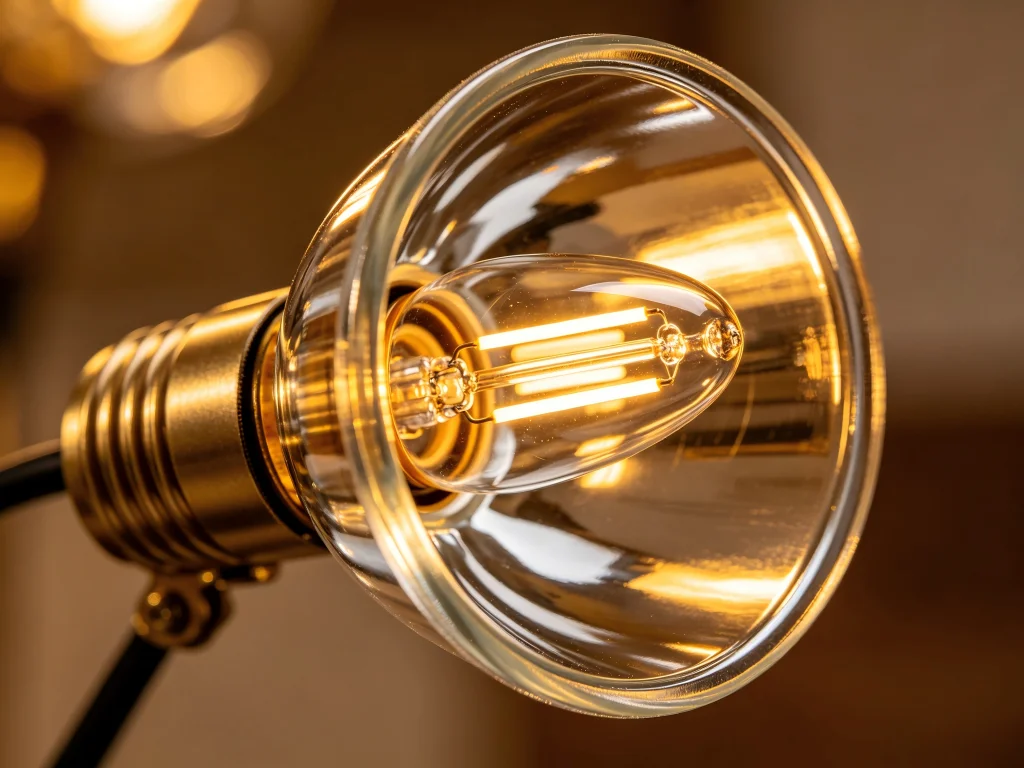
1. Halogen lamps vs LED: the direct comparison
Here is the direct answer: LEDs outperform halogen lamps in energy efficiency (80-85% less energy), lifespan (up to 25,000+ hours vs 1,000-4,000 hours), heat emission (minimal vs extreme), and regulatory compliance—but halogens still offer a lower initial cost and a CRI of 100.
| Comparison factor | Halogen lamps | LED lamps |
|---|---|---|
| Average lifespan | 1,000 – 4,000 hours | 10,000 – 25,000+ hours |
| Energy consumption | 80-90W (for typical brightness) | 8-15W (equivalent output) |
| Energy savings compared to halogen | Baseline | 80-85% less energy |
| Potenza termica | Extreme (up to 370°C / 1,200°F) | Minimum |
| Color temperature range | 2,700K – 3,200K | 1,500K – 9,000K (wide range) |
| Color rendering index (CRI) | 100 (maximum, corresponds to sunlight) | 70-98+ (premium models match halogen) |
| Initial cost | Low (10-40 per bulb) | Higher initial cost |
| Long-term cost | High (frequent replacements + energy) | Low (minimal replacements + energy savings) |
| Durata | Fragile (glass envelope, breaks easily) | Impact-resistant, robust |
| Heat/fire risk | Significant fire hazard | Minimal risk |
| Dimmer compatibility | Intrinsically dimmable | Requires compatible dimmers |
| Regulatory status (2026) | Banned/restricted in many regions | Fully compliant |
2. When Halogen Still Makes Sense (And When It Doesn't)
Let's be honest: halogen isn't all bad. It has legitimate advantages in specific applications. Here's a balanced assessment based on our engineering tests and industry expertise.
2.1. Advantages of Halogen: Reasons to Stay
- Lower initial cost: Halogen bulbs are cheaper to purchase. For tight budgets or temporary installations, the initial savings can be attractive.
- Superior color rendering (CRI of 100): Halogen produces a full, continuous spectrum that matches natural sunlight. This is why it remains popular in dental, medical, and color-critical applications.
- Instant and smooth dimming: Halogen dims natively without flicker or compatibility issues.
- Wide, omnidirectional light distribution: Halogen naturally emits light in all directions, which can be advantageous for general area lighting.
2.2. Disadvantages of Halogen: The Real Cost of Staying
- Extreme heat emission: 370°C for recessed spotlights, 1,200°F for torchiere lamps. This is a real fire hazard.
- Short lifespan: 1,000-4,000 hours means frequent replacements—every few months in continuous operation.
- High energy consumption: 80-85% more energy than LEDs. For a workshop with 10 bulbs running 10 hours a day, that's hundreds of dollars in wasted electricity every year.
- Fragility: Glass enclosures break easily when bumped, creating safety hazards and downtime.
- Regulatory uncertainty: Bans are expanding in the UK, EU, Australia, and parts of the US. Supply chains are shrinking.
- Luminous flux depreciation: Halogen lamps lose light output as the filament ages—at 75% of life, they can produce significantly less light than new ones.
3. Advantages of LEDs: Why the Switch is Inevitable
- Massive energy savings: 80-85% less energy than halogen. For commercial and industrial users, this directly translates to lower operating costs.
- Exceptional lifespan: 10,000-25,000+ hours—years of operation between replacements. No more climbing ladders every few months.
- Minimum heat emission: LEDs emit very little heat. Safer for workers, cooler for workspaces, lower cooling costs.
- Superior durability: Solid-state construction resistant to impact. No fragile glass to break.
- Regulatory compliance: LEDs meet or exceed all current and future energy efficiency standards.
- Consistent light quality: No flicker, no decrease in luminous flux over time.
- Wide range of color temperatures: From warm white (2,700K) to cool white (6,500K)—choose the exact light quality for your application.
4. The hidden costs of halogen: what the price doesn't show
This is where most buyers get fooled. The low price of a halogen bulb hides enormous long-term costs:
- Replacement labor: Each halogen replacement takes time. During the life of an LED bulb (25,000 hours), you would replace a halogen bulb 6-25 times. That is significant labor cost.
- Energy waste: Un alogeno da 80W che funziona 10 ore/giorno costa circa €90-120/anno in elettricità (a €0,15/kWh). Un LED da 15W con lo stesso programma costa €18-24/anno. Per bulbo. Moltiplica per il numero di apparecchi.
- Costi di raffreddamento: Il calore emesso dagli alogeni costringe i sistemi HVAC a lavorare di più. Questa è una spesa operativa spesso trascurata.
- Tempi di inattività: Ogni guasto di una lampadina significa operazioni interrotte. In applicazioni critiche, questo può essere costoso.
- Incidenti di sicurezza: Ustioni da lampadine calde. Incendi da contatto con l’isolamento. Ferite da vetro frantumato. Questi sono rischi reali con costi reali.
- Rischio di approvvigionamento: Con la riduzione della produzione di alogeni, la disponibilità di ricambi diventa incerta. Prezzi premium e tempi di consegna estesi stanno già emergendo.
5. Snippet in evidenza: I 5 fattori critici per scegliere tra alogeno e LED
Quando si sceglie tra lampade alogene e LED, valutare: 1) ore di funzionamento (ore più elevate favoriscono il LED), 2) costi energetici nella propria regione, 3) sensibilità al calore dell’ambiente, 4) requisiti normativi nella propria giurisdizione e 5) orizzonte di budget (costo iniziale vs costo del ciclo di vita).
- Ore di funzionamento – Se le luci funzionano più di 4 ore al giorno, i vantaggi di risparmio energetico e durata del LED diventano convincenti.
- Costo energetico – Nelle regioni con prezzi elevati dell’elettricità, il LED si ripaga più velocemente.
- Heat Sensitivity – For air-conditioned spaces or heat-sensitive materials, the LED's cool operation is essential.
- Regulatory Compliance – If halogen is banned or restricted in your area, the decision is already made.
- Budget Horizon – If you need the lowest possible initial cost for a short-term project, halogen might win. For any long-term installation, LED wins on lifecycle cost.
6. Application-Specific Recommendations
6.1. Automotive Lighting
Halogen lamps have been the standard for headlights, taillights, and fog lights. However, LED upgrades now offer superior brightness and longevity. Critical Note: In the UK, replacing halogen headlights with LED bulbs is not legal for most vehicles. Always check local regulations. Halogen headlights must not exceed 4,200K color temperature.
6.2. Industrial Workshops
LED wins decisively. Halogen work lights generate excessive heat, consume enormous amounts of energy, and fail frequently in vibration-prone environments. LEDs are shock-resistant, operate at low temperatures, and last years longer.
6.3. Retail and Display Lighting
The halogen's CRI of 100 made it the gold standard for color-critical displays. However, premium LEDs now offer CRI of 95+ with all the efficiency benefits. For most retailers, LED is the better choice: lower operating costs, less heat, and comparable light quality.
6.4. Medical and Dental
Halogen remains widely used in medical and dental surgical lights thanks to its CRI of 100 and broad light distribution. However, LEDs are gaining ground with improved CRI, cooler operation, and longer lifespan. The choice depends on specific clinical requirements and budget.
7. FAQ: Your Most Urgent Questions Answered
7.1. Will halogen lamps be banned in 2026?
Halogen lamps have been gradually banned from 2018-2021 in the EU and UK. The new 2026 regulations focus more on mercury-containing lamps, but the trend against halogen continues. California's Title 24 standards, in effect from January 2026, effectively eliminate most halogen products.
7.2. Are halogen lamps more dangerous than LEDs?
Yes, halogen lamps pose significantly higher safety risks. They operate at extreme temperatures (up to 370°C / 1,200°F), creating fire hazards. They also contain pressurized quartz that can shatter dangerously. LEDs emit minimal heat and have no pressurized envelope.
7.3. What is the spectrum of a halogen lamp?
Halogen lamps produce a full, continuous spectrum with a CRI of 100—the same as natural sunlight. This means they render all colors accurately. This full-spectrum emission is one of the few remaining advantages of halogen over lower-quality LEDs.
7.4. What are halogen lamps used for?
Halogen lamps are used in automotive headlights, taillights, and fog lights; in industrial laboratories and work lights; nell’illuminazione per vendita al dettaglio e per esposizioni; nell’illuminazione scenica e da studio; nelle apparecchiature mediche e dentistiche; e applicazioni scientifiche/spettrali.
7.5. Come scelgo la lampada alogena giusta?
Abbina potenza, tensione e tipo di attacco al tuo apparecchio. Per uso domestico generale, 35-50W è comune. Per uso automobilistico, usa il tipo di lampadina specificato (H7, H11, 9005, ecc.). Controlla i lumen per la luminosità e la temperatura di colore (misurata in Kelvin) per la qualità della luce.
7.6. Posso trovare lampade alogene vicino a me?
La disponibilità sta diminuendo poiché le normative si inaspriscono e i produttori riducono la produzione. Mentre alcuni rivenditori hanno ancora lampadine alogene in magazzino, la fornitura sta diventando irregolare. Molti utenti stanno passando a LED per evitare futuri problemi di approvvigionamento.
7.7. Quanto posso risparmiare passando da alogeno a LED?
I LED consumano 80-85% in meno di energia rispetto all’alogeno. Per un tipico impianto di 10 lampadine che funziona 10 ore al giorno, il risparmio annuale può superare 500-800€ solo in elettricità—più risparmi su lampadine di ricambio e manodopera.
8. La tua decisione: scegli saggiamente, scegli GTR
We have presented the facts. Halogen lamps offer a lower initial cost and excellent color rendering—but at a high price in terms of energy waste, frequent replacements, safety risks, and regulatory uncertainty. LEDs offer superior efficiency, longevity, safety, and compliance—with initial costs that quickly pay for themselves.
If you are looking for new lights or considering an upgrade, GTR offers premium LED solutions designed for demanding automotive and industrial applications. Our products are valued by professionals who require the best in performance, reliability, and value.
Don't make a decision based on outdated assumptions. Get the facts. Get the data. And when you're ready for the change, choose the partner with the experience to do it right.
Visita https://www.rhgtr.com to explore our product range, request a quote, or speak with our lighting specialists. Your perfect lighting solution is just a click away.
GTR – Designing the future of automotive and industrial lighting..