
만약 당신이 찾고 있다면 할로겐 램프, 아마도 결정의 기로에 서 있을 것입니다: 익숙한 것을 고수할지, 아니면 LED로 전환할지. 이 가이드는 마케팅 과대광고를 걷어내고 필요한 데이터를 제공합니다. 우리는 할로겐 램프 vs LED 를 에너지, 수명, 빛 품질, 안전, 비용, 규제 준수 등 모든 중요한 측면에서 비교할 것입니다. 마지막에는 어떤 솔루션이 귀하의 응용 분야에 적합한지 정확히 알게 될 것입니다.
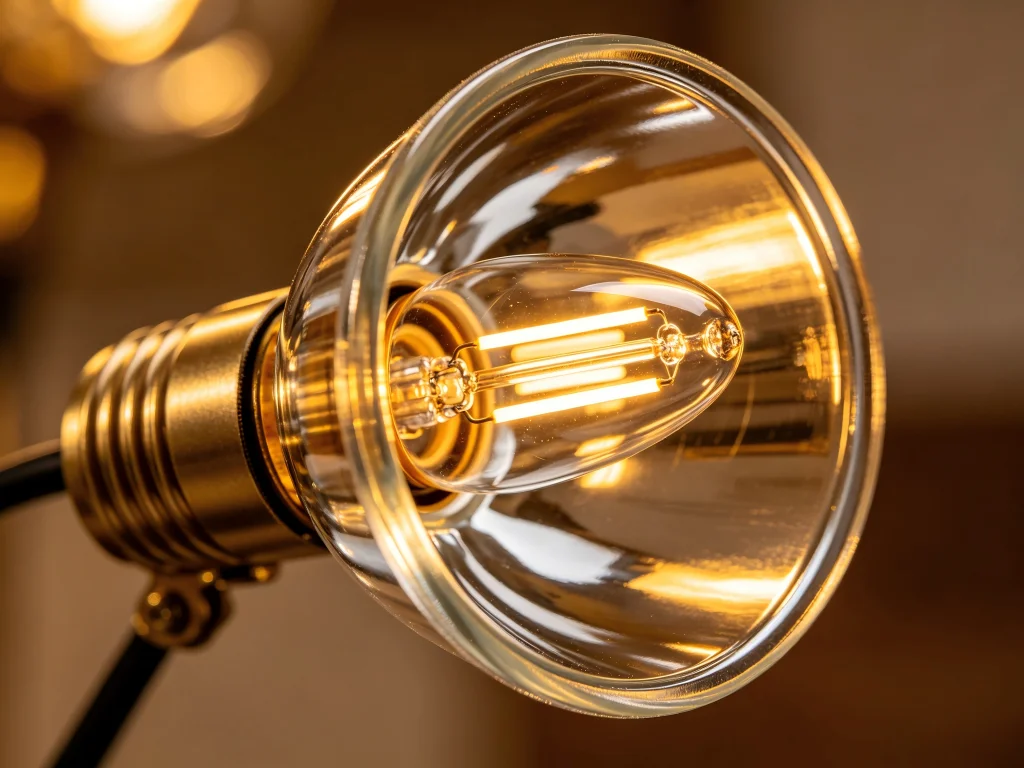
1. Halogen lamps vs LEDs: a head-to-head comparison
Here is the direct answer: LEDs are superior to halogen lamps in energy efficiency (80-85% less energy), lifespan (up to 25,000+ hours vs 1,000-4,000 hours), heat generation (minimal vs extreme), and regulatory compliance—but halogens still offer lower initial cost and a CRI of 100.
| Comparison factor | Halogen lamp | LED lamp |
|---|---|---|
| Average lifespan | 1,000 – 4,000 hours | 10,000 – 25,000+ hours |
| Energy Consumption | 80-90W (based on typical brightness) | 8-15W (equivalent output) |
| Energy savings compared to halogen | 기준선 | 80-85% less energy |
| 열 출력 | Extreme (up to 370°C / 1,200°F) | Minimum |
| Color temperature range | 2,700K – 3,200K | 1,500K – 9,000K (wide range) |
| Color Rendering Index (CRI) | 100 (maximum, matches sunlight) | 70-98+ (premium models match halogen) |
| 초기 비용 | Low ($1-40 per bulb) | High initial cost |
| Long-term cost | High (frequent replacement + energy) | Low (minimal replacement + energy savings) |
| 내구성 | Fragile (glass appearance, easily broken) | Impact-resistant and sturdy |
| Heat/fire risk | Significant fire risk | Minimal risk |
| Dimming compatibility | Inherently dimmable | Compatible dimmer required |
| Regulatory status (2026) | Banned/restricted in several regions | Fully compliant |
2. When halogen is still suitable (and when it isn't)
To be honest, halogen isn't all bad. It has legitimate advantages in certain applications. Here is a balanced assessment based on our engineering tests and industry expertise.
2.1. Advantages of halogen: reasons to keep it
- Low initial cost: Halogen bulbs are cheaper to purchase. For tight budgets or temporary installations, the upfront savings can be attractive.
- Excellent color rendering (CRI 100): Halogen produces a full, continuous spectrum that matches natural light. This is why it remains popular in dental, medical, and color-critical applications.
- Instant and smooth dimming: Halogen is inherently dimmable without flicker or compatibility issues.
- Wide, omnidirectional light distribution: Halogen naturally emits light in all directions, which can be useful for general area lighting.
2.2. Disadvantages of halogen: The real cost of maintenance
- Extreme heat: 370°C for downlights, 1,200°F for torchère styles. This is a real fire hazard.
- Short lifespan: 1,000–4,000 hours means frequent replacements every few months with continuous operation.
- High energy consumption: Consumes 80–85% more energy than LED. For a 10-bulb workshop operating 10 hours a day, this results in hundreds of dollars in wasted electricity annually.
- Vulnerability: Glass exteriors shatter easily on impact, leading to safety hazards and downtime.
- Regulatory uncertainty: Bans are expanding in the UK, EU, Australia, and parts of the US. Supply chains are shrinking.
- Lumen depreciation: Halogen bulbs lose light output as the filament ages—at 75% of life, they can emit significantly less light than when new.
3. LED advantages: Why the switch is inevitable
- Massive energy savings: Uses 80-85% less energy than halogen. For commercial and industrial users, this translates directly to lower operating costs.
- Exceptional lifespan: 10,000-25,000+ hours—years of operation between replacements. No more climbing ladders every few months.
- Minimal heat generation: LEDs produce very little heat. Safer for workers, keeps workspaces cooler, and reduces air conditioning costs.
- Superior durability: Solid-state construction that resists impact. No fragile glass to break.
- 규정 준수: LED는 현재 및 향후 모든 에너지 효율 기준을 충족하거나 초과합니다.
- 일관된 광질: 수명 동안 깜박임 없음, 광속 저하 없음.
- 넓은 색온도 범위: 따뜻한 백색(2,700K)에서 차가운 주광색(6,500K)까지—애플리케이션에 맞는 정확한 광질을 선택하세요.
4. 할로겐의 숨은 비용: 가격표에 표시되지 않는 것
대부분의 구매자가 여기서 실수합니다. 할로겐 전구의 저렴한 표시 가격은 막대한 장기 비용을 숨깁니다:
- 교체 인건비: 각 할로겐 교체에는 시간이 걸립니다. LED 전구 하나의 수명(25,000시간) 동안 할로겐 전구를 6~25회 교체해야 합니다. 이는 상당한 인건비입니다.
- 에너지 낭비: 80W 할로겐을 하루 10시간 사용하면 전기 요금이 연간 약 90~120달러(1kWh당 0.15달러 기준)입니다. 동일한 일정으로 작동하는 15W LED는 연간 18~24달러입니다. 전구당 기준이며, 조명기구 수에 곱하세요.
- 냉방 비용: 할로겐의 열 출력으로 HVAC 시스템이 더 열심히 작동해야 합니다. 이는 종종 간과되는 운영 비용입니다.
- 다운타임: All lamp failures mean work stoppage. In critical applications, the cost of this can be significant.
- Safety accidents: Burns from hot lamps. Fires from contact with insulation materials. Injuries from broken glass. These are real risks with real costs.
- Supply risks: As halogen production is scaled down, the availability of replacement parts becomes uncertain. Premium prices and long lead times are already appearing.
5. Recommended snippet: 5 key factors for choosing between halogen and LED
When choosing between halogen lamps and LEDs, evaluate the following: 1) Operating hours (the longer the hours, the more advantageous LED is), 2) Energy costs in your region, 3) Heat sensitivity of the environment, 4) Regulatory requirements in your jurisdiction, 5) Budget period (initial cost vs. lifecycle cost).
- Operating hours – If the lighting operates for more than 4 hours a day, the energy savings and lifespan benefits of LED become compelling.
- Energy costs – In regions with high electricity rates, LED will recoup the investment cost faster.
- Heat sensitivity – For climate-controlled spaces or heat-sensitive materials, the low heat operation of LED is important.
- Regulatory compliance – If halogens are banned or restricted in your area, the decision is already made.
- Budget period – For short-term projects where the lowest possible initial cost is needed, halogen may be advantageous. For long-term installations, LED prevails in lifecycle cost.
6. Recommendations by application
6.1. Automotive lighting
Halogen lamps have been the standard for headlights, taillights, and fog lights. However, LED upgrades now offer superior brightness and longevity. Important note: In the UK, it is not legal to replace halogen headlight units with LED bulbs in most vehicles. Always check local regulations. Halogen headlights must not exceed a color temperature of 4,200K.
6.2. Industrial workshops
LED clearly prevails. Halogen work lights generate excessive heat, consume a lot of energy, and frequently fail in high-vibration environments. LEDs are impact-resistant, operate at lower temperatures, and last years longer.
6.3. Retail and display lighting
Halogen's CRI of 100 has been the gold standard for color-critical displays. However, premium LEDs now offer CRI 95+ with all the efficiency benefits. For most retailers, LED is the better choice—lower operating costs, less heat, and comparable light quality.
6.4. Medical and dental
Halogen is still widely used in medical and dental surgical lights due to its CRI of 100 and broad light distribution. However, LED is gaining ground with improved CRI, cooler operation, and longer lifespan. The choice depends on specific clinical requirements and budget.
7. FAQ: Answers to the most asked questions
7.1. In what year will halogen lamps be banned?
In the EU and UK, halogen lamp bans have been phased in since 2018-2021. The new regulations in 2026 focus more on mercury-containing lamps, but the trend against halogens continues. California's Title 24 standards, effective January 2026, effectively eliminate most halogen products.
7.2. Are halogen lamps more dangerous than LEDs?
Yes, halogen lamps pose significantly higher safety risks. They operate at extreme temperatures (up to 370°C / 1,200°F), creating fire hazards. They also contain pressurized quartz that can shatter dangerously. LEDs emit minimal heat and have no pressurized envelope.
7.3. What is the spectrum of halogen lamps?
Halogen lamps produce a full, continuous spectrum with a CRI of 100—identical to natural sunlight. This means they render all colors accurately. This full-spectrum output is one of the few remaining advantages halogens have over low-quality LEDs.
7.4. What are halogen lamps used for?
Halogen lamps are used in automotive headlights, taillights, and fog lights; industrial work lights and task lighting; 소매 및 전시 조명; stage and studio lighting; medical and dental equipment; and scientific/spectroscopic applications.
7.5. How do I choose the correct halogen lamp?
Match the wattage, voltage, and base type to your fixture.. For general household use, 35-50W is common. For automotive use, use the specified bulb type (H7, H11, 9005, etc.). Check lumens for brightness and color temperature (in Kelvin) for light quality.
7.6. Can I find halogen lamps nearby?
Availability is decreasing as regulations tighten and manufacturers scale back production. Some retailers still stock halogen bulbs, but supply is becoming erratic. Many users are switching to LED to avoid future supply issues.
7.7. How much can I save by switching from halogen to LED?
LEDs use 80-85% less energy than halogens.. For a typical 10-bulb setup operating 10 hours a day, you can save over $500-800 per year on electricity alone, plus savings on replacement bulbs and labor.
8. Your decision: Choose wisely, choose GTR
We have presented the facts. Halogen lamps have low initial cost and excellent color reproduction, but they come at a high price: energy waste, frequent replacement, safety hazards, and regulatory uncertainty. LEDs offer superior efficiency, lifespan, safety, and compliance, with the initial cost quickly recouped.
If you are purchasing new lighting or considering an upgrade, GTR offers premium LED solutions designed for demanding automotive and industrial applications. Our products are trusted by professionals who demand the best in performance, reliability, and value.
Don't make decisions based on outdated assumptions. Check the facts. Secure the data. And when you're ready to convert, choose a partner with the expertise to do it right.
방문 https://www.rhgtr.com Explore the product range, request a quote, or consult with a lighting expert. The perfect lighting solution is just a click away.
GTR – Designing the future of automotive and industrial lighting.