
지금 조명을 구매하려고 한다면, 10년 전에는 존재하지 않았던 결정에 직면하게 될 것입니다. 한때 유일하게 합리적인 선택이었던 할로겐 램프는 이제 심각한 경쟁 상대를 맞이했습니다. 그리고 그 중요성은 대부분의 구매자가 인식하는 것보다 더 큽니다.
Choosing between halogen lamps and LEDs is not just about initial cost. It's about total cost of ownership, application requirements, safety considerations, and long-term reliability. This guide cuts through the marketing hype and provides the factual comparison you need.
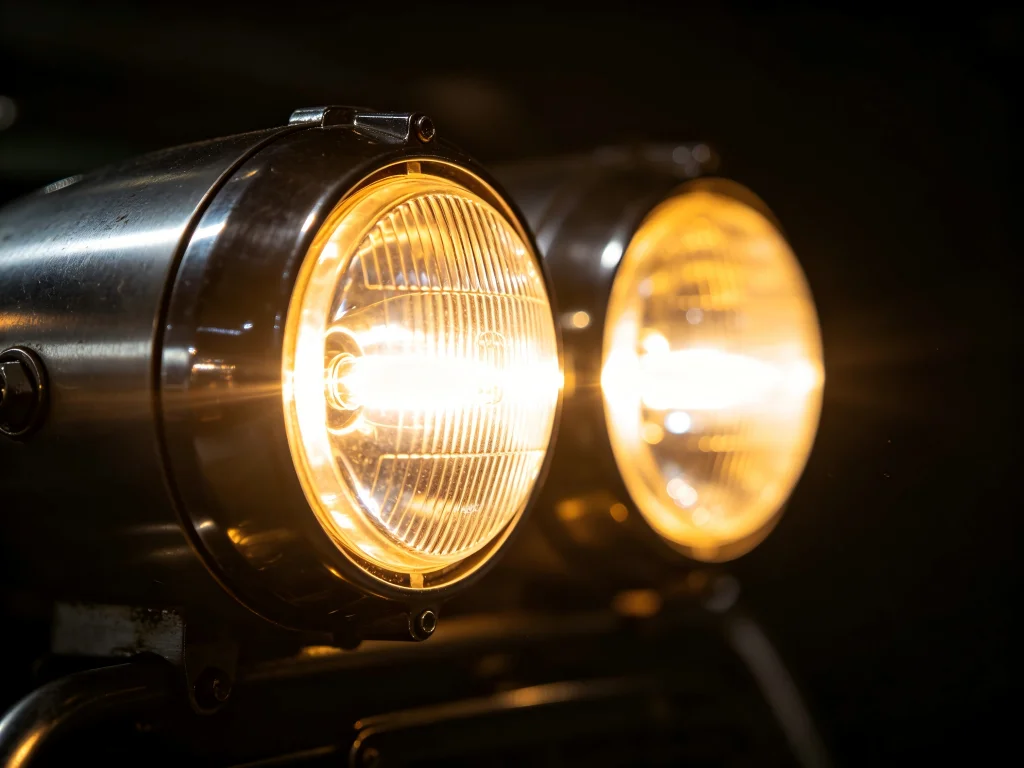
1. Understanding what you're actually buying
Before comparing, let's understand what each technology actually does.
1.1. How halogen lamps work
Halogen lamps are an improved incandescent bulb. Inside a quartz envelope, a tungsten filament heats up to produce light. The envelope contains halogen gas (typically iodine or bromine) along with an inert gas.
The halogen gas enables the halogen cycle. As tungsten evaporates from the hot filament, the halogen gas captures these particles and redeposits them onto the filament. This self-cleaning mechanism allows the filament to operate at higher temperatures than standard incandescent bulbs, producing brighter, whiter light.
Halogen lamps produce continuous spectrum light with excellent color rendition – a color rendering index (CRI) of 100, identical to natural sunlight. This is one area where halogen technology still excels.
However, the halogen cycle is temperature-sensitive and fragile. Contamination, vibration, and voltage fluctuations can disrupt the cycle and accelerate failure.
1.2. Operating Principle of LED Technology
LED stands for light-emitting diode. Unlike halogen lamps, which generate light through heat, LEDs generate light through electroluminescence – electrons pass through a semiconductor material, releasing energy as photons.
No filament. No fragile glass envelope. No halogen cycle to maintain. LEDs convert approximately 80-90% of electrical energy into visible light.
Modern LEDs offer adjustable color temperature, instant-on functionality, and significantly longer lifespan. They also have no fragile components that can fail due to vibration.
2. Head-to-Head Comparison – Halogen Lamps vs. LEDs
Let's compare these technologies side by side based on metrics that actually matter to buyers.
| Metric | Halogen lamp | LED | Winner |
|---|---|---|---|
| 수명 | 1,000 – 3,000 hours | 25,000 – 50,000+ hours | LED (10-25 times longer) |
| Energy Efficiency | 16 – 24 lm/W | 80 – 100+ lm/W | LED |
| Energy as Heat | ~95% | ~10-20% | LED |
| Color Rendering Index (CRI) | 100 (Perfect) | 80-95+ (Excellent) | Halogen (Slight) |
| Color temperature range | 2,700K – 3,400K | 1,500K – 9,000K | LED |
| Instant full brightness | 예 | 예 | Tie |
| Dimming function | Full 0-100% | Various (compatible dimmer required) | Halogen (Simpler) |
| Vibration resistance | Poor – filament breaks easily | Excellent – no filament | LED |
| Heat generation | Extreme – up to over 200°C | Minimal – cool to touch | LED |
| Safety concerns | Fire hazard, burn hazard, explosion hazard | Minimum | LED |
| Upfront cost | 낮음 | 높음 | 할로겐 |
| Total cost of ownership | High (frequent replacement + energy waste) | Low (long lifespan + energy savings) | LED |
3. Areas where halogen lamps still have an edge
Despite LED's overwhelming advantages in most areas, halogen lamps are not obsolete. There are specific applications where halogen is the better choice.
For applications where color matters, halogen lamps are still preferred. Halogen's CRI 100 provides perfect color reproduction that even premium LEDs struggle to match. Photography, film production, dental curing, medical imaging – in fields where color accuracy is essential, halogen remains the gold standard.
Halogen lamps also offer simpler dimming. Standard dimmer switches are compatible with halogen, whereas LED dimming requires compatible dimmers and can sometimes cause flickering or reduced lifespan.
In extremely cold environments, halogen's heat output can actually be an advantage. The heat generated by halogen headlights melts ice and snow off the lens – a feature LEDs lack.
For applications where vibration is not an issue and replacement access is easy, halogen's low initial cost can still be reasonable for budget-constrained projects.
4. Where LED dominates – and why most buyers should choose LED
In most automotive, industrial, and commercial applications, LED is the superior choice. Here's why:.
LEDs last 10 to 25 times longer than halogen lamps. A single LED installation can replace 10 to 25 halogen replacements. That's not an incremental improvement. It's a fundamental change in the face of lighting maintenance.
Energy savings are equally dramatic. LEDs use about 80-85% less energy than halogen lamps for the same light output. For facilities with dozens or hundreds of light fixtures, annual electricity savings can reach thousands of dollars.
Next is safety. Halogen lamps operate at extreme temperatures up to 200°C. There are fire risks, burn risks, and in some cases, explosion risks. LEDs remain cool to the touch, completely eliminating these hazards.
Durability is another decisive factor. The tungsten filament in halogen lamps is fragile and susceptible to vibration damage. LEDs have no filament – there is nothing to break from impact or vibration. In vehicles, machinery, and any application with movement, this is a critical advantage.
5. The Hidden Costs of Choosing the Wrong Technology
Buyers often focus only on the sticker price and miss the bigger picture. Here is what you actually pay for each option.
5.1. Total Cost of Ownership – Halogen Lamps
- Initial bulb cost: Low
- Replacement cycle: Every 1,000–3,000 hours (often shorter in real conditions)
- Replacement labor costs: Repeated throughout the fixture's lifespan
- Energy costs: High (95% of energy wasted as heat)
- Downtime costs: Each failure means interruption
- Safety risks: Fire, burn, and explosion hazards
- Total over 50,000 hours: 10–25 bulb replacements + high energy costs + labor costs + risks
5.2. Total Cost of Ownership – LED
- Initial bulb cost: Higher
- Replacement frequency: once every 25,000-50,000 hours
- Replacement labor cost: minimal over the luminaire's lifetime
- Energy cost: low (80-90% of energy converted to light)
- Downtime cost: negligible
- Safety risk: minimal
- Over 50,000 hours total: 1 purchase + low energy cost + minimal labor + peace of mind
The calculation is clear. Halogen lamps have a low initial cost, but LEDs are far less expensive over the installed lifetime.
6. What to check at purchase – buyer's checklist
Whether you prefer halogen or LED, here are the key factors to evaluate before making a purchase decision.
- Application requirements – Is color accuracy more important than lifetime? Is vibration a factor? Will the luminaire be installed in a cold environment where heat could be useful?
- Fixture compatibility – Will the bulb physically fit? Does the fixture support the wattage and voltage requirements?
- Dimming needs – Do you need to dim the lighting? If so, check compatibility with your existing dimmer system.
- Installation Environment – Is the fixture enclosed or well-ventilated? Halogen lamps require adequate cooling.
- Replacement Accessibility – How difficult and costly is it to replace a burned-out bulb? If access is difficult, a longer lifespan is more valuable.
- Total cost of ownership – Calculate the total cost over the expected lifespan of the installation. Don't just look at the initial price.
- Regulatory compliance – Is halogen still legal in your area? Many regions are restricting or phasing out halogen sales.
7. Expert Buying Advice – What the Industry Doesn't Tell You
Based on years of manufacturing and testing experience, here's what we've learned about making the right choice.
Don't buy halogen lamps based on wattage alone. A 500W halogen and a 1000W halogen have very different uses and very different lifespans. High-wattage halogen lamps often have dramatically shorter lifespans than lower-wattage lamps.
If you continue to use halogen, pay attention to filament quality. The position and precision of the filament determine the beam pattern and performance. Cheap bulbs with loose filament placement scatter light and create glare.
If you're considering LED, don't just trust the lumen figures. Check color temperature, CRI, and beam pattern. Not all LEDs are the same, and cheap LEDs can produce harsh, unnatural light that causes eye strain.
And always, always check the warranty. A manufacturer that backs its product with a meaningful warranty is a reliable manufacturer.
8. Frequently Asked Questions About Halogen Lamps vs. LED
8.1. Is it worth replacing halogen lamps with LED?
In most cases, yes. Energy savings alone typically cover the cost of an LED upgrade within 1-2 years, and the much longer lifespan eliminates most replacement labor costs and downtime.
8.2. Can I simply replace halogen lamps with LED bulbs?
Often possible, but not always. Before replacing, check the fixture's compatibility, voltage requirements, and dimmer compatibility. Some fixtures are designed specifically for halogen and may require modification for LED replacement.
8.3. Which is brighter – halogen or LED?
LEDs produce significantly more lumens per watt. A 10W LED can match the brightness of an 85W halogen. However, actual brightness depends on the specific products being compared.
8.4. Do LED headlights perform in fog like halogen?
Halogen's warmer color temperature (around 3200K) can penetrate fog better than cooler LED light in some conditions. However, modern LEDs with warmer color temperatures can match halogen's fog performance while offering better efficiency and lifespan.
8.5. How much can I save by switching from halogen to LED lighting?
Energy savings of 80-85% are common. For a facility with 50 fixtures operating 10 hours a day, annual savings can exceed $1,000 in electricity alone, plus eliminating replacement labor costs and downtime.
8.6. Do halogen lamps contain hazardous materials?
Halogen lamps contain small amounts of halogen gas (iodine or bromine) and tungsten. Unlike CFLs, they do not contain mercury. However, the high-pressure quartz envelope can shatter, posing a safety hazard.
8.7. Why are halogen lamps being banned?
Energy efficiency regulations in many regions are phasing out halogen lamps because they waste about 95% of energy as heat. This change is part of broader efforts to reduce energy consumption and carbon emissions.
8.8. What wattage of halogen lamp do I need?
Wattage determines brightness and heat output. Common wattages include 20W, 50W, 100W, 500W, and 1000W. Higher wattage means more light = more heat = shorter lifespan. Choose the lowest wattage that meets your lighting needs.
9. Making the Right Choice for Your Application
The halogen vs. LED decision is not a one-size-fits-all solution. In applications where color is critical, halogen may still be justified. In budget-constrained projects with easy access, halogen may be acceptable. However, for most automotive, industrial, and commercial applications, LED offers superior performance, lower total cost, and better safety.
At GTR, we help buyers make this decision with confidence. Our engineering team understands the nuances of both technologies and can recommend the optimal solution for your specific application.
Whether you need halogen-compatible replacements, high-performance LED upgrades, or custom lighting solutions, GTR delivers reliable quality. Our products are backed by rigorous testing, industry certifications, and a commitment to differentiated reliability.
지금 바로 GTR을 방문해 보세요 Explore our full range of lighting solutions. Our experts will help you select the right product for your needs, ensuring you don't overpay for lighting.
Don't guess when it comes to lighting. Get the facts, make an informed decision, and choose GTR for lighting that delivers performance and longevity.