
You have decided to upgrade your vehicle’s H11 halogen bulbs to LED. Smart move. But now you are staring at hundreds of options ranging from $20 to $200, and every single one claims to be “the brightest,” “the easiest to install,” and “the most reliable.” They cannot all be telling the truth. Here is the reality: the H11 LED market is dominated by marketing hype, and most buyers make their decision based on the wrong metrics. This guide cuts through the noise and gives you the engineering-backed criteria that actually separate a great H11 LED bulb from an expensive paperweight.
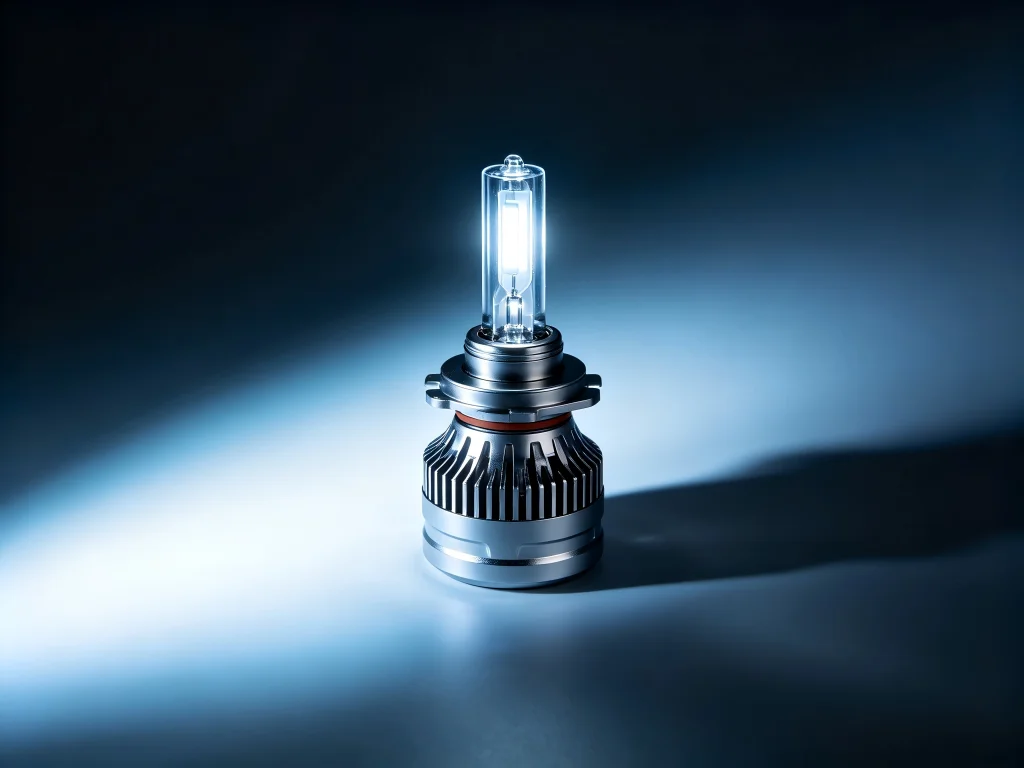
1. What the Spec Sheet Does Not Tell You About H11 LED Bulbs
The lumen count on the box is almost certainly a lie — or at best, misleading. Many budget H11 LED bulbs claim 20,000, 30,000, or even 60,000 lumens. Yet a standard halogen H11 produces about 1,350 lumens. If a $30 LED bulb was truly 40 times brighter than a halogen, every car on the road would already have one. The reality is that raw lumen claims are often measured at the LED chip level, not at the beam level. What matters is usable light — the lumens that actually reach the road in a controlled beam pattern.
Here is what you should actually evaluate when comparing H11 LED bulbs.
1.1. LED Chip Type — The Foundation of Performance
The LED chip is the heart of the bulb. It determines brightness, beam pattern, and how well the bulb mimics the halogen filament position. This last point is critical. If the LED chips are not positioned exactly where the halogen filament was, the beam pattern will scatter light everywhere — reducing your visibility and blinding oncoming drivers.
There are three chip types you will encounter:
- Philips ZES (Luxeon Z ES): The gold standard for beam accuracy. Each chip measures 1.6mm x 2.0mm, closely matching halogen filament width. Low defect rate. Excellent color consistency. Moderate brightness per watt, but the beam pattern is razor-sharp. Best for projector housings.
- CSP (Chip Scale Package): Higher brightness per watt than ZES. More compact. Cheaper to manufacture. Newer-generation CSP chips have closed the beam quality gap significantly. Best for reflector housings where raw brightness matters more.
- Generic unbranded chips: Found in most budget kits. No quality control. Inconsistent color. High failure rates. Avoid.
The GTR Lighting Ultra 3 uses custom TST 7045 chips — a premium CSP variant engineered specifically for thermal performance and beam accuracy.
1.2. Thermal Management — The Silent Killer of LED Bulbs
Heat is the number one cause of LED failure and dimming. An H11 LED bulb that cannot manage heat effectively will lose brightness within minutes of turning on and may fail completely within months.
Evaluate thermal management using these criteria:
- Heat sink material: Aluminum or copper heat sinks dissipate heat far better than plastic. Die-cast aluminum is the industry standard.
- Heat sink design: Passive heat sinks (fin designs) are silent and reliable. Active cooling fans move more air but can fail — and when they do, your bulb overheats. Fanless designs with advanced heat sinks are generally more reliable in the long term.
- Thermal separation technology: This advanced approach places the LED die on a separate thermal plane from the driver circuit. The result is cooler operation and more consistent light output. The GTR Ultra 3 uses TST technology that attaches LED chips directly to the bulb’s shaft, increasing surface area for heat dissipation.
Test data confirms the difference: the GTR Ultra 3 retains 87% of its initial brightness after a 27-minute drive. Budget bulbs may lose 30-50% of their brightness in the same timeframe as heat builds up.
1.3. Beam Pattern — What You Actually See on the Road
A bulb that produces 10,000 lumens but scatters half of them into the trees is worse than a bulb that produces 4,000 lumens and puts every single one on the road. Beam pattern is determined by chip placement, reflector design, and the bulb’s overall geometry.
For projector housings, you need a bulb that produces a sharp cutoff line. The GTR Ultra 3 delivers this, with testing showing “the beam pattern retains the sharp cutoff line that the projector housing is designed to produce”. For reflector housings, you need even light distribution without dark spots or hotspots.
One reviewer noted that on their LED upgrade, “the beam pattern on the LED bulbs had a clear cut off at the same height as the halogens but it was not as consistent as the halogen bulbs”. That is the difference between a well-engineered bulb and an average one.
1.4. CANbus Compatibility — No Error Codes, No Flicker
Modern vehicles use CANbus systems to monitor electrical loads. When you install an LED bulb that draws less power than a halogen, the system may trigger an error code or cause flickering. Some bulbs require external decoders or resistors to solve this.
A truly compatible H11 LED bulb has CANbus compatibility built in. No external boxes to hide. No additional wiring. No dashboard warning lights. The GTR Ultra 3 is CANbus ready out of the box.
1.5. Fitment — Will It Actually Fit Your Vehicle?
This sounds basic, but it is where many H11 LED purchases go wrong. Even when a bulb is labeled “H11,” it may not fit your specific vehicle.
Common fitment issues:
- H11 vs H11B: Standard H11 bulbs will not replace H11B bulbs found in Hyundai, Kia, and some Ford vehicles.
- Bulb thickness: Some LED bulbs are thicker than the halogen they replace and physically will not fit through the socket opening.
- Bulb length: If the bulb is longer than the halogen, the locking mechanism may not engage.
- Connector orientation: Some vehicles require a specific pin orientation that not all bulbs support.
Look for bulbs that emphasize “1:1 mini size design”. The GTR Ultra 3 is specifically engineered to limit fitment issues with its compact design.
2. H11 LED Headlight Bulb Comparison — What Matters Most
| Evaluation Criteria | What to Look For | What to Avoid |
|---|---|---|
| LED Chip | Philips ZES or premium CSP (like TST 7045) | Unbranded or “proprietary” chips with no details |
| 熱管理 | Die-cast aluminum heat sink with thermal separation | Plastic housing, passive cooling only, no thermal specs |
| Beam pattern | Matches halogen filament position, sharp cutoff | Scattered light, dark spots, inconsistent pattern |
| CANbus対応 | Built-in CANbus ready | Requires external decoder or resistor |
| Compatibility | 1:1 mini size, clear vehicle compatibility | Vague fitment claims, no specific vehicle data |
| 保証 | Lifetime or 4+ years | 30-90 days, limited coverage |
| Real-World Testing | Independent reviews with lux measurements | Marketing claims with no verifiable data |
3. The GTR Lighting Ultra 3 — Where Engineering Meets Performance
When you apply the criteria above to every H11 LED bulb on the market, one product consistently rises to the top. The GTR Lighting Ultra 3 is not the cheapest H11 LED bulb you can buy. It is the best value — because value is about what you get for what you pay, not just the price tag.
3.1. Specifications That Matter
The Ultra 3 delivers 4,700 raw lumens at 5750K pure white, drawing only 43 watts. It uses custom TST 7045 chips with thermal separation technology. The die-cast aluminum housing with integrated heat sinks ensures consistent performance. It is CANbus compatible. It fits most vehicles with its compact 1:1 design. And it is backed by a lifetime warranty.
In independent testing on a Honda Civic, the Ultra 3 delivered 475% more brightness than stock while retaining the factory beam pattern’s sharp cutoff. Experts have called it “the best H11 LED headlight on the market right now” and “the strongest all-around performer in reflector applications”.
3.2. What Real Users Say
Forum discussions confirm the real-world performance. One user reported: “They are extremely bright and I have not been flashed by oncoming traffic once”. Another review noted that the Ultra 3 “strikes a perfect balance between raw brightness and responsible beam control”.
These are not paid testimonials. They are the voices of drivers who made the switch and experienced the difference that proper engineering makes.
4. H11 LEDヘッドライトバルブに関するよくある質問
4.1. Are H11 and H8 LED bulbs interchangeable?
Yes, H11, H8, and H9 bulbs share the same physical base and are often interchangeable. However, always verify your vehicle’s specific requirements. The GTR Ultra 3 is compatible with H8, H9, and H11 applications.
4.2. What color temperature is best for H11 LED headlights?
Most drivers prefer 5000K to 6000K for a pure white light that provides excellent contrast. The GTR Ultra 3 produces 5750K — a pure white that is neither too yellow nor too blue. For fog light applications in inclement weather, some prefer 3000K yellow, which is less reflective off wet surfaces.
4.3. How much brighter are H11 LED bulbs than halogen?
A quality H11 LED bulb can be 300% to 500% brighter than a halogen. The GTR Ultra 3 delivered 475% more brightness than stock in independent testing. Claims of 800% or 900% brightness are typically exaggerated or measured under non-standard conditions.
4.4. Will H11 LED bulbs fit my vehicle?
Most vehicles with H11 halogen sockets can accept H11 LED bulbs, but fitment varies. Check for H11 vs H11B compatibility, bulb thickness, and length. The GTR Ultra 3’s compact 1:1 design limits most fitment issues.
4.5. Do H11 LED bulbs require a CANbus decoder?
Only if the bulb lacks built-in CANbus compatibility. Premium bulbs like the GTR Ultra 3 are CANbus ready and do not require external decoders. Budget bulbs often require additional resistors or decoders, which add cost and complexity.
4.6. H11 LEDヘッドライトバルブの寿命はどのくらいですか?
Quality H11 LED bulbs last 30,000 to 50,000 hours. That is 30 to 50 times longer than a halogen bulb. The GTR Ultra 3 is rated for 50,000+ hours and backed by a lifetime warranty.
4.7. Are H11 LED bulbs legal?
LED replacement bulbs are not DOT/FMVSS108 compliant for headlight use in halogen housings in the USA. They are legal for fog lights, off-road, and powersport applications. Always check your local regulations before purchasing.
5. Make an Informed Decision
You now know what separates a great H11 LED bulb from a disappointing one. You understand that lumen claims are often misleading. You know that thermal management is the key to long-term performance. You can evaluate beam pattern, CANbus compatibility, and fitment like a professional.
Do not let marketing hype convince you to buy a bulb that will flicker, dim, or fail within months. Do not compromise on safety to save a few dollars. The GTR Lighting Ultra 3 delivers the performance you actually need — consistent, reliable, perfectly aimed light that makes every night drive safer and more enjoyable.
Explore the GTR Lighting Ultra 3 H11 LED collection at rhgtr.com and upgrade to the bulb that experts recommend and drivers trust. Your vehicle deserves lighting that performs as promised.。