
どの自動車部品店に入っても、またはAmazonをスクロールしても、何百もの LEDヘッドライト自動 $20から$400までのオプションが見つかります。スペックはすべて似ています—高ルーメン、長寿命、プラグアンドプレイ取り付け。しかし、$20バルブと$200バルブの運転体験はまったく異なる場合があります。.
直接的な回答: Four Factors That Determine LED Headlight Performance: Emitter Placement, Thermal Management, Electrical Compatibility, and Manufacturing Quality. Everything else—lumens, color temperature, price—is secondary to these fundamentals.
This guide cuts through the marketing noise and provides a framework for evaluating LED headlight bulbs based on engineering fundamentals rather than advertising claims. By the end, you'll know exactly what separates premium LED headlight conversion kits from budget disappointments.
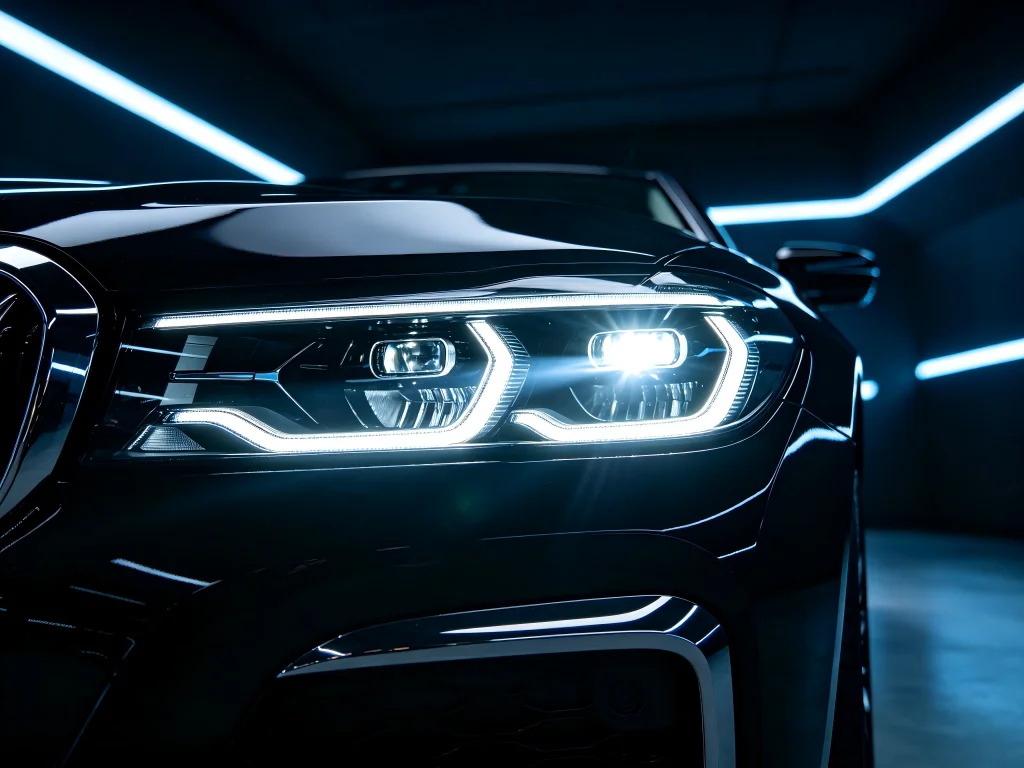
1. Factor 1: Emitter Placement and Optical Geometry—The Most Overlooked Specification
This is the most critical factor in LED headlight performance and where most manufacturers get it wrong. Your headlight housing—reflector or projector—is designed around a halogen filament placed at a precise focal point. When replacing that filament with an LED emitter, the emitter must be positioned in exactly the same location and oriented in the same direction. Even a 1mm deviation can disrupt the focus and create scattered light.
The gold standard for beam precision is the Philips ZES (Luxeon Z ES) chip, measuring 1.6mm×2.0mm—nearly matching the width of a halogen filament. This chip produces an extremely sharp beam pattern with minimal scattering. CSP (chip-scale package) chips are more common in budget bulbs. While they offer higher brightness per watt, the bond between the silicone layer and the chip substrate is weaker, making them more susceptible to thermal stress over time.
| 特徴 | Premium LED (GTR Ultra 3) | Budget LED | ハロゲン |
|---|---|---|---|
| Emitter Placement Accuracy | ±0.1mm from filament position | ±2mm or more | N/A (filament is the reference) |
| Beam pattern | Sharp cutoff, minimal scattering | Scattered, dark spots, glare | Factory-spec but dim |
| Brightness (Lumens per Bulb) | 2,400–4,700 | 1,500–2,500 | 700–1,500 |
| Lifespan (Hours) | 30,000–50,000 | 5,000–15,000 | 450–1,000 |
In independent testing, premium LEDs with proper emitter placement achieved 74% higher lux measurements than standard halogen bulbs in reflector housings. It's not just brighter—it's usable light where you need it.
2. Element 2: Thermal Management — The Silent Performance Killer
LEDs generate heat at the semiconductor level. If that heat isn't efficiently dissipated, the bulb reduces output to prevent damage—a process called thermal throttling. This means bright new LED headlight bulbs often dim progressively over time, sometimes within months of use.
LED chips lose 20–30% of their output for every 20°C above their rated junction temperature. Without proper cooling, you're not just losing brightness—you're dramatically shortening the bulb's lifespan.
2.1. What Premium Thermal Management Looks Like
- Active cooling fan — High-speed fans that actively pull heat away from the emitters
- Aircraft-grade aluminum heat sinks — Large surface area for passive heat dissipation
- Copper core heat pipe — Maximum heat transfer from chip to heatsink
- Real-time temperature control circuit — Automatically adjusts output when overheating is detected
Low-cost valves often rely solely on passive cooling with a small heatsink and no fan. This works for low-power LEDs but cannot withstand the sustained heat of nighttime driving. If a valve lacks an active cooling fan, consider it a red flag for anything other than occasional use.
In premium systems like the GTR Ultra 3, cooling is designed to fit behind the OEM dust cap without modification, maintaining consistent thermal performance during prolonged operation.
3. Element 3: Electrical Design and CANbus Compatibility
Modern vehicles use CANbus networks to monitor valve status. LEDs consume significantly less power than halogens, typically 15-20 watts per valve compared to 55 watts. The vehicle's computer interprets this lower power draw as a valve failure and responds by cutting power or triggering a dashboard warning.
直接的な回答: Premium LED headlight conversion kits include drivers that properly communicate with the vehicle's CANbus network. This eliminates flickering, dashboard warnings, and the need for additional resistors or decoders.
A high-quality LED driver:
- Maintains constant current output
- Absorbs transient voltage spikes
- Filters electrical noise from the alternator
- Protects LED chips from voltage fluctuations
In low-cost kits, the internal driver is often undersized or poorly designed. Over time, repeated exposure to automotive voltage spikes causes components to overheat, weakening solder joints and eventually leading to LED driver failure. When the driver fails, symptoms manifest as random flickering, sudden shutdowns, or complete burnout.
4. 要素4:製造品質と環境保護
最も明るいヘッドライトでも、雨、ほこり、振動などの実際の条件に耐えられなければ失敗します。次の点に注意してください:
- IP67以上の防水等級 — 粉塵および水没に対する保護
- 耐食性コーティング — 道路塩や湿気に対する保護
- 耐衝撃試験済みコンポーネント — 悪路の振動に耐える
- ポッティングされた電子機器 — 湿気や異物から密閉
GTR Ultra 3のようなプレミアムキットは100%ポッティングされ防水仕様で、あらゆる課題に立ち向かう準備ができています。コネクタとシールを点検してください。露出または不適切に取り付けられたジョイントは、将来の故障ポイントです。.
5. ヘッドライト技術比較: LED vs. HID vs. ハロゲン
| 特徴 | ハロゲン | HID/キセノン | LED (プレミアム) |
|---|---|---|---|
| 光出力 (バルブあたりのルーメン) | 700–1,500 | 2,500–3,500 | 2,400–4,700 |
| Life (hours) | 450–1,000 | 2,000–5,000 | 30,000–50,000 |
| Power consumption | 55W | 35W | 15–20W |
| Warm-up time | Instant | 5–10 seconds | Instant |
| Cost per pair | $15–$50 | $60–$200 | $150–$400 |
| ハウジング互換性 | Factory specifications | プロジェクターハウジングが必要 | Depends on emitter placement accuracy |
LEDs offer an excellent overall balance of brightness, efficiency, and durability. Recommended for vehicles manufactured after 2015, environmentally conscious drivers prioritizing energy efficiency, and modern vehicles with appropriate electronics.
6. Common mistakes to avoid when purchasing LED headlights
- Buying based on lumens alone — Lumens measure total light output at the source. Lux measures usable light on the road. Always check lux measurements or independent test results.
- Ignoring housing type — Reflector housings require a different emitter shape than projector housings. A bulb that works well in one may perform poorly in the other.
- Overlooking thermal management — Without an active cooling fan, thermal throttling can occur during extended use.
- Assuming all CANbus-compatible bulbs are equal — Some bulbs use resistors to fool the computer, but premium bulbs use intelligent drivers that communicate properly.
- Blocking airflow during installation — Sealing the housing without airflow traps heat inside, dramatically increasing junction temperature.
7. Real-world test results: what the numbers actually mean
Independent testing shows significant differences between premium and budget LED headlights. In projector housing tests, the GTR Ultra 3 achieved 709% brighter output than the stock halogen bulb. In reflector housing tests, it produced the highest lux measurement ever recorded — 742% brighter than stock.
One tester stated: “The GTR Ultra 3 is one of the best LED headlight kits we've tested. Strong reflector results with high measured output”.
These results aren't just about raw brightness — it's about usable light. A bulb with high lumens but poor focus provides less usable light than a bulb with moderate lumens and perfect focus.
8. LED headlight auto upgrade FAQ
8.1. アフターマーケットのLEDヘッドライトは公道で合法ですか?
工場装着のLEDヘッドライトはどこでも合法です。ハロゲンハウジングに後付けするLED交換用バルブは、FMVSS 108に基づき連邦基準に適合していません。製品に「DOT」または「SAE」のマークを探してください。完全なDOT承認済みアセンブリのみが、真にリスクのないアップグレードです。.
8.2. 私の車両にはどのバルブサイズが必要ですか?
車両のバルブサイズは、メーカー、モデル、年式によって異なります。一般的なサイズには、H11(ロービーム)、9005(ハイビーム)、H4(デュアルビーム)があります。購入前に、取扱説明書を確認するか、オンラインのバルブファインダーツールを使用して正しいサイズを確認してください。.
8.3. リフレクターハウジングにLEDヘッドライトを取り付けることはできますか?
はい、ただしLEDはハロゲンフィラメントの位置を模倣した適切なエミッター配置が必要です。リフレクターハウジング用に特別に設計され、±0.1mmの配置精度を持つバルブを探してください。リフレクターハウジングに設計の悪いLEDを使用すると、光の散乱やグレアが発生します。.
8.4. LEDヘッドライトがダッシュボードの警告を引き起こすのはなぜですか?
車両のCANバスシステムは、LEDの低い消費電力を検出し、バルブの故障として解釈します。高品質なLEDには、システムと適切に通信するインテリジェントドライバーが含まれており、追加の抵抗器やデコーダーを必要としません。.
8.5. 色温度はどのくらい重要ですか?
色温度は視認性と目の疲れに影響します。4300K〜5000Kはバランスの取れた明るさを提供し、ほとんどのドライバーに推奨されます。5750Kは自然な日光を模倣した明るい白色光を放射します。より高いケルビン定格(6000K以上)は青みがかった光を生成し、雨天時の視認性を低下させる可能性があります。.
8.6. アクティブ冷却とパッシブ冷却の違いは何ですか?
アクティブ冷却はファンを使用してエミッターから熱を逃がします。パッシブ冷却はヒートシンクのみに依存します。アクティブ冷却は、特に長時間の夜間運転中に持続的なパフォーマンスのために不可欠です。.
9. 意思決定フレームワーク:適切なLEDヘッドライトの選び方
- バルブサイズを特定する — 取扱説明書を確認するか、オンラインツールを使用してください。.
- Determine the housing type — Reflector or projector? This determines the required emitter shape.
- Check CANbus compatibility — Ensure the kit includes an intelligent driver, not just resistors.
- Check thermal management — Look for active cooling fans and aviation-grade heat sinks.
- Check independent tests — Verify lux measurements, not just lumen claims.
- Check certifications — DOT/SAE markings indicate compliance with safety standards.
Premium LED headlights may have a higher upfront cost, but they offer consistent performance, a longer lifespan, and fewer headaches. Cheap LEDs often fail within months, costing more in the long run not only in replacement bulbs but also in frustration and reduced safety.
The GTR Lighting Ultra 3 series features precise emitter placement, active thermal management, CANbus compatibility, and waterproof construction, with independent tests demonstrating 742% brighter output than OEM halogen. This is the difference between a temporary fix and a permanent solution.