
Bước vào bất kỳ cửa hàng phụ tùng ô tô nào hoặc lướt qua Amazon, bạn sẽ tìm thấy hàng trăm đèn pha LED ô tô tùy chọn từ $20 đến $400. Thông số kỹ thuật trông đều giống nhau — độ sáng lumen cao, tuổi thọ dài, lắp đặt cắm và chạy. Tuy nhiên, trải nghiệm lái xe giữa bóng đèn $20 và bóng đèn $200 lại khác biệt hoàn toàn.
Direct answer: Four factors determine LED headlight performance: light-emitting chip placement, thermal management, electrical compatibility, and build quality. Everything else — lumens, color temperature, price — is secondary to these fundamentals.
This guide cuts through the marketing noise and gives you a framework to evaluate LED headlight bulbs based on engineering principles, not advertising claims. By the end, you'll know exactly what separates a premium LED headlight conversion from a cheap, disappointing product.
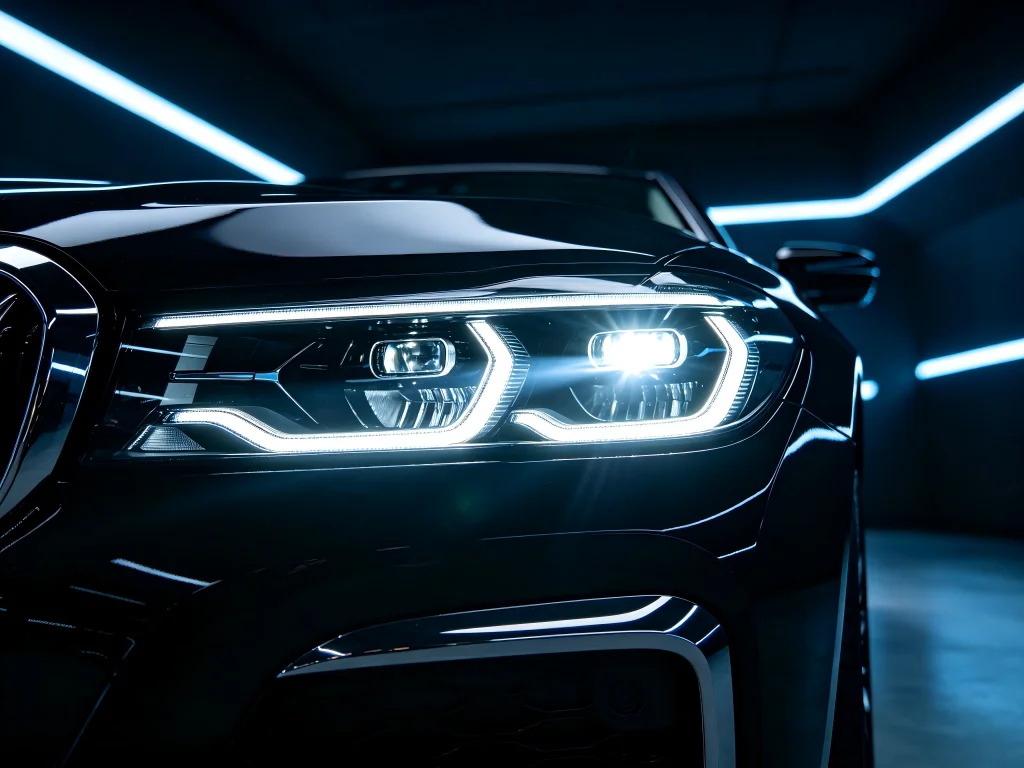
1. Factor 1: Light-emitting chip placement and optical geometry — The most overlooked specification
This is the most critical factor in LED headlight performance, and it's the one most manufacturers get wrong. Your headlight housing — whether reflector or projector type — is designed around a halogen filament positioned at a precise focal point. When you replace that filament with an LED chip, the light-emitting chip must be placed at the same location and oriented in the same way. Even a 1mm offset breaks the focus and creates scattered light.
The gold standard for beam precision is the Philips ZES chip (Luxeon Z ES), measuring 1.6mm x 2.0mm — closely matching the halogen filament width. This chip produces sharp beam patterns with minimal scatter. CSP (Chip Scale Package) chips are more common in budget bulbs. They produce higher brightness per watt but have weaker bonds between the silicone layer and the chip substrate, making them prone to thermal stress over time.
| Tính năng | Premium LED (GTR Ultra 3) | Budget LED | Halogen |
|---|---|---|---|
| Light-emitting chip placement accuracy | ±0.1mm relative to filament position | ±2mm or more | N/A (filament is the reference) |
| Beam shape | Sharp cutoff, minimal scatter | Scatter, dark spots, glare | Correct manufacturer specifications but dim |
| Brightness (lumens per bulb) | 2,400–4,700 | 1,500–2,500 | 700–1,500 |
| Lifespan (hours) | 30,000–50,000 | 5,000–15,000 | 450–1,000 |
In independent testing, premium LED bulbs with proper emitter positioning delivered 74% higher lux readings than standard halogen in reflector housings. That's not just brighter — it's useful light where you need it.
2. Factor 2: Thermal Management — The Silent Performance Killer
LEDs generate heat at the semiconductor level. If that heat isn't efficiently dissipated, the bulb will reduce power to prevent damage — a process called thermal throttling. This means your bright new automotive LED bulb will gradually dim over time, often within the first few months of use.
LED chips lose 20-30% of their output for every 20°C increase above rated junction temperature. Without proper cooling systems, you're not just losing brightness — you're significantly shortening the bulb's lifespan.
2.1. What Premium Thermal Management Looks Like
- Active cooling fans — Active high-speed fan drawing heat away from the emitter
- Aerospace-grade aluminum heat sink — Large surface area for passive heat dissipation
- Copper heat pipe core — Maximum heat transfer from chip to heatsink
- Real-time temperature control circuit — Automatically adjusts power when overheating is detected
Cheap bulbs often rely only on passive cooling — a small heatsink without a fan. This works with low-power LED bulbs but fails under sustained heat when driving at night. If the bulb has no active cooling fan, consider it a warning sign for any application other than occasional use.
In premium systems like the GTR Ultra 3, the cooling system is designed to fit under the OEM dust cap without modification while maintaining stable thermal performance over hours of operation.
3. Factor 3: Electrical design and CANbus compatibility
Modern vehicles use a CANbus network to monitor bulb status. LEDs draw significantly less power than halogen bulbs — typically 15-20 watts versus 55 watts per bulb. The vehicle's computer interprets this lower power draw as a burned-out bulb and responds by cutting power or triggering a dashboard warning.
Direct answer: A premium LED bulb kit includes a driver that communicates properly with the vehicle's CANbus network. This eliminates flickering, dashboard warnings, and the need for additional resistors or decoders.
A high-quality LED driver:
- Maintains constant current
- Absorbs voltage spikes
- Filters electromagnetic interference from the alternator
- Protects the LED chip from voltage fluctuations
In cheap kits, the internal driver is often designed too small or of poor quality. Over time, repeated exposure to the car's voltage spikes overheats components, weakens solder joints, and eventually causes LED driver failure. When the driver fails, symptoms appear as random flickering, sudden shutdown, or complete burnout.
4. Factor 4: Build Quality and Environmental Protection
Even the brightest headlights fail if they can't withstand real-world conditions like rain, dust, or vibration. Look for:
- IP67 water resistance rating or higher — Protection against dust and immersion in water
- Anti-corrosion coating — Protection against road salt and moisture
- Shock-tested components — Withstands vibration from rough roads
- Potting compound encapsulated electronics — Sealed against moisture and debris
Premium kits like the GTR Ultra 3 are 100% potted and waterproof, ready to conquer any challenge. Check the connectors and gaskets — any open joint or poor fit is a future failure point.
5. Headlight Technology Comparison: LED vs. HID vs. Halogen
| Tính năng | Halogen | HID/Xenon | LED (Cao cấp) |
|---|---|---|---|
| Light output (lumens per bulb) | 700–1,500 | 2,500–3,500 | 2,400–4,700 |
| Service life (hours) | 450–1,000 | 2,000–5,000 | 30,000–50,000 |
| Power consumption | 55W | 35W | 15–20W |
| Start-up time | Instant | 5–10 seconds | Instant |
| Cost per pair | $15–$50 | $60–$200 | $150–$400 |
| Housing compatibility | Factory specifications | Projector housing requirements | Depends on emitter positioning accuracy |
LED bulbs offer the best balance of brightness, efficiency, and durability. They are recommended for vehicles manufactured from 2015 onwards, for environmentally conscious drivers who value energy efficiency, and for modern vehicles with appropriate electrical systems.
6. Common mistakes when buying LED headlights
- Relying only on lumens — Lumens measure the total amount of light emitted at the source. Lux measures useful light on the road. Always look for lux figures or independent test results.
- Ignoring the housing type — Reflector housings require a different emitter shape than projector housings. A bulb that works well in one type may perform poorly in the other.
- Ignoring thermal management — If the bulb does not have an active cooling fan, it is likely to suffer performance degradation due to heat during prolonged use.
- Assume all CANbus-compatible bulbs are the same — Some bulbs use resistors to fool the computer; premium bulbs use smart drivers that communicate properly.
- Blocking airflow during installation — Sealing the housing without airflow traps heat inside, significantly increasing junction temperature.
7. Real-World Test Results: What the Numbers Really Mean
Independent testing has shown significant differences between premium and budget LED headlights. In projector housing tests, the GTR Ultra 3 delivered 71% higher brightness than the original halogen bulb. In reflector housing tests, it produced the highest lux readings ever recorded — 74% brighter than the stock bulb.
One tester commented: “The GTR Ultra 3 is one of the best LED headlight kits we have tested. Strong reflector results with high measured output”.
These results aren't just about raw brightness — they're about useful illumination. A bulb with high lumens but poor focus delivers less usable light than a bulb with moderate lumens and perfect focus.
8. Frequently Asked Questions about LED Headlight Upgrades
8.1. Are aftermarket LED headlights legal for street use?
Factory-installed LED headlights are legal everywhere. Aftermarket LED replacement bulbs in halogen housings are not federally compliant under FMVSS 108. Look for “DOT” or “SAE” markings on the product. Complete DOT-approved assemblies are the only truly risk-free upgrade option.
8.2. What bulb size do I need for my vehicle?
The bulb size for your vehicle depends on the make, model, and year of manufacture. Common sizes include H11 (low beam), 9005 (high beam), and H4 (dual beam). Check your owner's manual or use an online bulb finder tool to confirm the correct size before purchasing.
8.3. Can I install LED headlights in reflector housings?
Yes, but the LED must have a light-emitting position that mimics the halogen filament position. Look for bulbs specifically designed for reflector housings with position accuracy of ±0.1mm. Poorly designed LEDs in reflector housings will cause scattering and glare.
8.4. Why do my LED headlights trigger a dashboard warning?
Your vehicle's CANbus system detects the lower power consumption of LEDs and mistakenly interprets it as a burnt-out bulb. Premium LEDs include smart drivers that communicate properly with the system, eliminating the need for additional resistors or decoders.
8.5. How important is color temperature?
Color temperature affects visibility and eye strain. 4300K-5000K provides balanced brightness and is recommended for most drivers. 5750K emits bright white light, simulating natural light. Higher Kelvin ratings (6000K+) produce bluer light that can reduce visibility in wet conditions.
8.6. What is the difference between active and passive cooling?
Active cooling uses fans to dissipate heat away from the light-emitting chip. Passive cooling relies solely on heat sinks. Active cooling is necessary for sustained performance, especially during extended night driving.
9. Your decision framework: How to choose the right LED headlights
- Determine your bulb size — Check your owner's manual or use an online tool.
- Determine your housing type — Reflector or projector? This determines the light-emitting chip shape you need.
- Verify CANbus compatibility — Ensure the product set includes a smart driver, not just a resistor.
- Check thermal management — Look for active cooling fans and aviation-grade heat sinks.
- Consider independent testing — Look for lux measurements, not just lumen claims.
- Verify certifications — DOT/SAE marks indicate compliance with safety standards.
Premium LED headlights may cost more upfront, but they deliver consistent performance, longer lifespan, and fewer headaches. Cheap LEDs often fail within months, costing you more in the long run — not just in replacement bulbs, but in frustration and compromised safety.
GTR Lighting's Ultra 3 series offers precise light-emitting chip positioning, active thermal management, CANbus compatibility, and waterproof construction — all backed by independent testing showing brightness 742% brighter than standard halogen. That's the difference between a temporary fix and a permanent solution.