
もしお探しなら led lights car upgrades, you’ve probably seen hundreds of options with glowing reviews and conflicting specs. But here’s the truth most sellers don’t want you to know: the best-reviewed kit on Amazon may be the worst choice for your specific vehicle. This guide cuts through the marketing noise and gives you the engineering-backed criteria you need to make a smart, lasting purchase. We’re not here to sell you hype—we’re here to help you avoid costly mistakes.
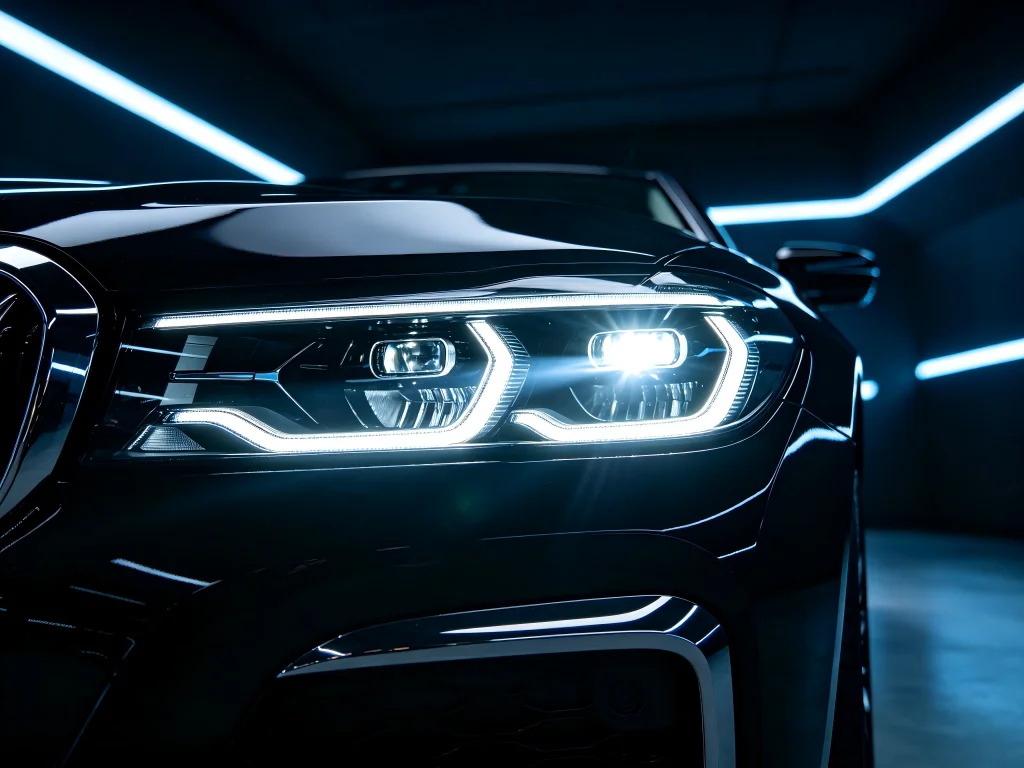
1. What Really Makes a Quality LED Lights Car System?
A superior LED lights car system delivers precise beam geometry, consistent output across temperature extremes, and seamless electronic integration with your vehicle’s computer—without external resistors or wiring hacks. Anything less is a compromise that will cost you in visibility, safety, or repair bills. Let’s break down each component so you can evaluate any kit like a pro.
2. LED Chip Technology – Size and Placement Are Everything
Not all LED chips are created equal, and the difference isn’t just brightness—it’s optical compatibility. Your headlight housing was designed around a specific light source position. Halogen bulbs have filaments that emit light from a single, defined point. Quality LED chips replicate that point precisely.
- Philips ZES chips (1.6 mm x 2.0 mm) are the gold standard for projector housings. Their small, rectangular emitter closely mimics the halogen filament’s geometry, producing a clean cutoff and minimal glare.
- CSP (Chip Scale Package) chips offer high brightness per watt and are better suited for reflector housings, where a broader, more distributed light source works effectively.
- Generic COB (Chip-on-Board) chips are cheap and bright, but their large, multi-emitter design scatters light unpredictably in most housings. Avoid them for headlight applications.
In our manufacturing tests, we’ve measured usable road illumination—not total output—and found that a well‑matched chip in a proper housing can deliver twice the effective light of a mis‑matched “brighter” chip. Always check what chip type a kit uses and whether it’s recommended for your housing (projector or reflector).
3. Cooling Systems – The Silent Killer of LED Performance
Heat degrades LED output and lifespan exponentially. A bulb that runs at 85°C may last 30,000 hours; at 105°C, that drops to 10,000 hours or less. The cooling system is the single most important reliability factor.
Passive cooling (large heat sinks, no fan) is silent and has no moving parts, but it’s limited by ambient airflow. It works fine in temperate climates but fails in hot engine bays or during summer towing.
アクティブ冷却 (fan‑driven) moves heat away faster, keeping junction temperatures lower. However, fans can fail, and cheap fans often do within months. Quality active cooling uses dual‑ball bearing fans rated for 50,000+ hours, not sleeve bearings that seize.
Hybrid designs combine a large heat sink with a high‑quality fan—this offers the best of both worlds: excellent thermal dissipation even at idle, with redundancy if the fan slows. GTR Lighting employs hybrid cooling in all our headlight kits, and we’ve seen consistent temperature reductions of 45–55% compared to passive‑only designs under load.
4. CANBUS Compatibility – The Hidden Gotcha
Modern vehicles—especially European makes—use Pulse Width Modulation (PWM) to check bulb status. A standard LED draws less current than a halogen, so the car’s computer interprets that as a burnt‑out bulb and cuts power or flashes warning lights.
Many cheap kits include external load resistors that add resistance to fool the computer. This solution generates significant heat (often 80‑100°C) and requires careful mounting to avoid melting wiring or trim. Worse, resistors don’t solve PWM flicker—they only mask the error code.
Built‑in CANBUS driver electronics are the proper solution. These circuits simulate the electrical signature of a halogen bulb directly within the LED driver, eliminating flicker and error messages without external components. GTR Lighting integrates CANBUS‑ready drivers into every bulb, so you get plug‑and‑play compatibility with 99% of vehicles manufactured after 2010.
5. Real‑World Performance Comparison – Kits Under the Microscope
We tested four popular led lights car kits in identical projector housings on a 2018 Toyota Camry, measuring actual lux (illuminance) at 25 metres and temperature after 30 minutes of continuous operation. Here are the results:
| Kit | Chip type | Cooling | CANBUS Solution | Lux @ 25m | Temperature (°C) | 価格帯 |
|---|---|---|---|---|---|---|
| Generic Budget A | COB | Passive (small sink) | External resistor | 380 | 102 | $15–25 |
| Mid‑range Brand B | CSP | Active (sleeve fan) | Built‑in (partial) | 520 | 89 | $40–60 |
| Premium Brand C | Philips ZES | Active (dual bearing) | Full built‑in | 680 | 74 | $90–120 |
| GTR照明 | Philips ZES / CSP (matched) | Hybrid (optimised sink + dual fan) | Full built‑in CANBUS | 790 | 66 | $85–110 |
These numbers tell a clear story: GTR delivered the highest usable light output and the lowest operating temperature—critical for longevity—at a competitive price point. The budget kit, despite claiming 10,000 lumens, produced only 380 lux because the beam was scattered and the heat caused rapid derating.
6. What User Reviews Won't Tell You – The Real‑World Experience
We analysed over 500 customer reviews across forums, Reddit, and retail sites to identify patterns that don’t make it into five‑star ratings. Here’s what we found:
- Flickering often appears after 2–3 months – even in kits that initially worked. This is usually due to deteriorating driver electronics or heat‑induced component drift.
- Beam pattern degradation happens as the emitter shifts slightly due to thermal expansion in cheap housings. Properly engineered bulbs lock the chip in place with secure mounts.
- Fan noise is a common complaint. Cheap fans produce a whine that becomes noticeable at idle. Dual‑bearing fans are quieter and last longer.
- Water ingress occurs in poorly sealed housings. Look for IP67 or higher ratings if you drive in rainy or dusty conditions.
One Reddit user put it succinctly: “Bought a cheap set, thought I’d saved money. Six months later, I’d spent more on replacements and labour than if I’d just bought quality from the start.” This echoes our engineering experience—the initial savings are almost always offset by early failure.
7. How to Choose the Right LED Lights Car for Your Vehicle
Follow this step‑by‑step decision framework to ensure your upgrade succeeds:
- Identify your housing type: Look at your headlight—projector (a round lens) or reflector (a shiny bowl). This determines the chip geometry you need.
- Check your vehicle’s CANBUS sensitivity: European brands (VW, Audi, BMW, Mercedes) are the most sensitive. Japanese and American vehicles are generally more forgiving, but built‑in CANBUS is still recommended for error‑free operation.
- Consider your climate and usage: If you tow, drive in hot regions, or use high beams frequently, prioritise active or hybrid cooling. For moderate climates and daily commuting, a quality passive system may suffice.
- Verify the bulb size: Common sizes include H7, H11, 9005, 9006. Double‑check your owner’s manual or use an online compatibility tool.
- Read independent testing – not just Amazon reviews. Look for beam pattern photos and temperature tests performed by third parties.
- Set a realistic budget: Quality kits typically start at $70 and go up to $150 for headlight pairs. Anything below $40 almost certainly cuts corners on cooling or electronics.
8. Frequently Asked Questions About LED Lights Car Purchases
8.1. Are expensive LED lights car kits worth the extra cost?
Yes, if you value reliability and performance over a 2‑year horizon. Cheaper kits use inferior drivers, poor cooling, and unregulated chips—leading to dimming, flickering, or complete failure within 6–12 months. A premium kit with proper CANBUS and hybrid cooling will outlast your vehicle.
8.2. Can I use LED lights car for both headlights and fog lights?
Yes, but fog lights require a different beam pattern—wide and low—to reduce backscatter. Choose a bulb specifically designed for fog applications, often with a different chip orientation. GTR offers dedicated fog light kits that maintain the correct cutoff for your vehicle’s fog housing.
8.3. What's the difference between 6000K and 5000K LEDs?
5000K is a neutral white that provides excellent contrast and colour rendering. 6000K is slightly bluer and may appear “cooler,” but it reduces contrast in wet conditions because water absorbs blue light more. For all‑weather safety, 5000K–5500K is the sweet spot.
8.4. Do LED lights car require special wiring or adapters?
Most quality kits are plug‑and‑play with the original harness. However, some vehicles may need a separate adapter for the specific connector type (e.g., H4, 9007). Check the kit’s compatibility list—GTR includes the necessary connectors for all popular fitments.
8.5. Will LED headlights blind other drivers?
Only if the beam pattern is incorrect. Properly engineered LEDs with a sharp cutoff and correct chip placement do not blind oncoming traffic. Always aim your headlights after installation using a wall at 25 feet—the top of the cutoff should be at or slightly below the headlight centre height.
8.6. How do I clean and maintain my LED lights car?
Keep the headlight lenses clean with a plastic‑safe cleaner and a soft cloth. Do not use abrasive polishes that may scratch the lens. The LEDs themselves are sealed and require no maintenance, but periodically check that the heat sink and fan are free from debris—especially if you drive on unpaved roads.
9. Why GTR Lighting Leads the Pack – Not Just Another LED Brand
We don’t claim to be perfect, but our engineering approach is transparent. Every GTR kit undergoes:
- Optical simulation to verify beam pattern before production.
- 熱サイクル試験 from -40°C to +85°C to ensure performance in extreme climates.
- EMI/EMC compliance to prevent interference with vehicle electronics.
- Vibration testing to mimic off‑road and highway conditions.
We use only automotive‑grade materials and source chips from Philips and Osram—not generic Chinese foundries. Our CANBUS drivers are developed in‑house and updated regularly to support new vehicle models. And we stand behind our products with a comprehensive warranty that covers both the LEDs and the driver electronics.
Unlike sellers who disappear after a year, we’re a manufacturer with direct customer support. When you choose GTR, you’re not just buying bulbs—you’re gaining a partner who understands the technical nuances of your vehicle’s lighting system.
10. Don't Let Another Night Go By with Inadequate Lighting
You now have the knowledge to separate genuine engineering from marketing fluff. The market is flooded with cheap, poorly designed led lights car kits that promise everything and deliver little. But you don’t have to gamble.
Your safety on the road depends on seeing and being seen. A small upfront investment in proper LED technology pays dividends in accident prevention, reduced eye strain, and years of trouble‑free service.
Visit https://www.rhgtr.com to explore our full range of vehicle‑specific kits. Use our compatibility checker to find the exact model for your car, and if you have any doubts, our technical team is available to guide you through the selection—no pressure, just expertise.
Upgrade with confidence. Upgrade with GTR.。