
Escolher um farol de nevoeiro LED pelo preço ou lúmens anunciados é uma das formas mais rápidas de comprar o produto errado. Compradores sérios devem comparar qualidade do feixe, geometria do chip LED, desempenho térmico, temperatura de cor, compatibilidade elétrica, dimensões físicas, vedação e cobertura de aplicação. Para compradores B2B, consistência de lote e risco de garantia importam ainda mais.
Este guia adota uma abordagem de compra, não promocional.
Instead of asking: “Which LED is the brightest?”, we will ask a better question:
Which LED fog light produces the most useful and reliable performance for the intended vehicle and market?
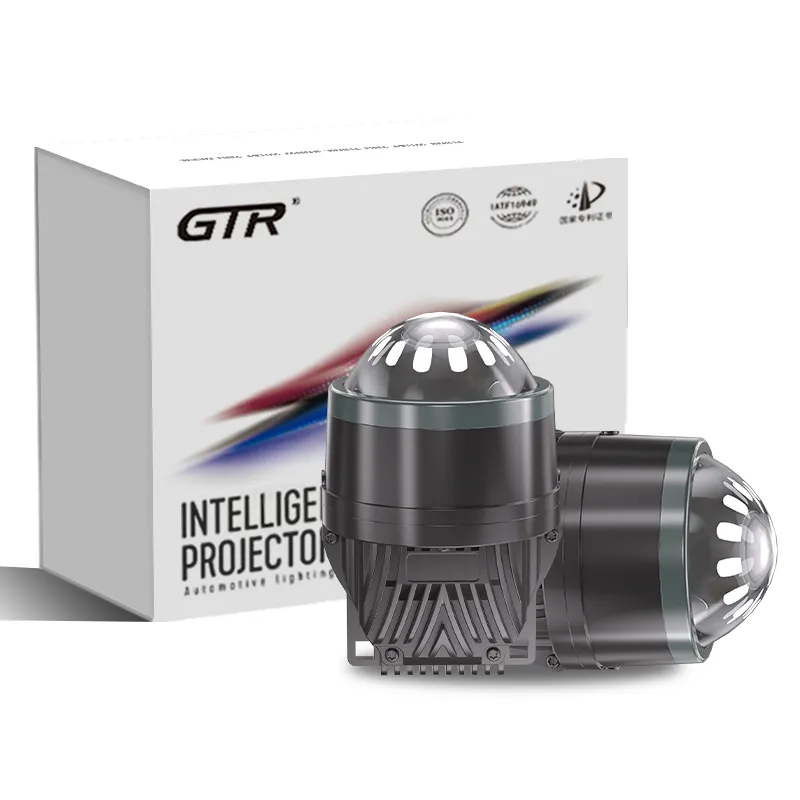
1. What should you look for in an LED fog light?
A quality LED fog light should combine correct vehicle fit, controlled beam distribution, stable thermal management, appropriate color temperature, reliable driver electronics, and weather resistance. Buyers should compare sustained performance rather than advertised maximum lumens, because useful road illumination depends on the complete optical system of the lamp and housing.
Start with seven criteria:
- Correct lamp/socket type
- Optical geometry
- Sustained light output
- Thermal management
- Temperatura de cor
- Electrical compatibility
- Manufacturing consistency
These factors separate an attractive online listing from a product suitable for long-term aftermarket sales.
2. LED fog lights vs. halogens: which is the better buy?
LED fog lamps can offer lower power consumption, potentially longer lifespan, faster response, compact light sources, and multiple color temperature options. Halogen lamps remain attractive for simple compatibility and predictable optical behavior. The best upgrade depends on housing design, local regulations, electrical compatibility, and the quality of the LED replacement.
| Purchase Factor | LED Fog Light Bulb | Halogen Fog Light Bulb | Buyer's Verdict |
|---|---|---|---|
| Energy Efficiency | High | Lower | LED Advantage |
| Potential Lifespan | Long when properly cooled | Shorter filament lifespan | LED Advantage |
| Initial Cost | Higher | Lower | Halogen Advantage |
| OEM Optical Match | Depends on LED geometry | Generally predictable | Depends on the application |
| Color options | Wide | Limited | LED Advantage |
| CANBUS issues | Possible | Less common | Halogen Advantage |
| Thermal sensitivity | Driver/chip temperature matters | High filament temperature | Different engineering challenge |
| B2B product differentiation | High | Baixa | LED Advantage |
3. Buyer Trap #1: Buying Lumens Instead of Beam Performance
Suppose Supplier A advertises 20,000 lumens while Supplier B advertises 8,000.
Which one should you buy?
There is not enough information to answer.
The first product may generate higher gross output while wasting a large percentage outside the useful beam area. The second can position its LED emitters more precisely and put more effective illumination on the road.
This distinction matters because a fog lamp is an optical device.
The reflector or projector collects light from a specific focal region. Move the light source away from that intended location and the projected pattern changes.
For purchasing teams, request beam images and, when possible, photometric data instead of relying only on lumen claims.
3.1. Questions to Ask a Supplier
- Are lumen values measured per lamp or per pair?
- Are they theoretical chip lumens or measured lamp output?
- What happens to output after 30–60 minutes?
- Can the supplier provide beam pattern comparisons?
- How close is the LED emitter position to the intended optical focal point?
4. Buyer Trap #2: Ignoring Sustained Output
An LED lamp can be extremely bright when first turned on and significantly dimmer after heat builds up.
This makes cold-start measurements incomplete.
In our engineering evaluations, thermal stability is one of the first areas we examine because the driver doesn't use a fog lamp for thirty seconds. Real-world operation can continue for hours.
Heat must move efficiently from the LED junction to the PCB, heat sink, and surrounding environment.
4.1. Fanless vs. Fan-Cooled LED Fog Lamps
| Característica | Fanless Design | Fan-Cooled Design |
|---|---|---|
| Moving Parts | None | Cooling Fan |
| Noise | Very low | Possible fan noise |
| Compactness | Often good | Depends on fan structure |
| Cooling potential | Depends on the passive heatsink | Potentially strong active cooling |
| Failure points | Fewer mechanical components | The fan adds a moving component |
| Best choice | Compact designs of moderate power | Higher thermal loads where space allows |
No design wins automatically.
A well-designed passive system can outperform a cheap fan design. Thermal architecture matters more than the presence or absence of a fan.
5. Buyer Trap #3: Assuming H11 Means Universal Compatibility
H11 is a common automotive bulb family, but an H11 label alone does not guarantee proper fit. Buyers must check the vehicle year, trim, original bulb type, connector geometry, mounting tabs, available housing depth, electrical monitoring, and whether the application is a headlight or a fog light.
This is particularly relevant when purchasing an H11 LED fog light bulb.
H8, H9, H11, and H16 products are often grouped together in aftermarket catalogs. Some LED designs support several of these applications, but buyers should avoid treating each related socket as universally interchangeable.
An application of H8 fog light LED bulb must therefore be confirmed against the original vehicle specification, rather than being selected solely by appearance.
6. Ford F-150: A Perfect Fit Warning
Research data often includes buyers specifically looking for a 2019 ford f150 fog light LED bulb.
This is a useful example of why vehicle-specific verification beats generic keyword matching.
Several aftermarket fitment references identify a 9140/H10 type fog light application for certain 2019 F-150 configurations, while H11 commonly appears in other lighting positions. Equipment may vary with trim and factory lighting packages.
For a distributor, the lesson is simple:
Do not build an application database from keyword assumptions.
Verify year, model, trim, original lighting configuration, bulb number, and regional specification.
7. Buyer Trap #4: Choosing Color Temperature by Appearance Alone
6000K white LEDs have a modern look. This makes them commercially attractive.
But appearance and visibility in adverse weather conditions are not identical goals.
| Temperatura de cor | Visual Character | Typical Application Preference |
|---|---|---|
| 2700K–3000K | Golden yellow | Fog, rain, snow, classic selective yellow appearance |
| 3500K–4300K | Warm/neutral white | Balanced visibility |
| 5000K–6000K | Clean white | Modern appearance and general nighttime use |
| 6500K+ | Cool white / bluish-white | Style-focused applications; evaluate visibility carefully |
A premium catalog can therefore benefit from more than one color option.
For markets with frequent rain or fog, yellow can become a functional product category, rather than just a style alternative.
8. Buyer's Trap #5: Forgetting CANBUS and Driver Electronics
A replacement bulb can physically fit and still result in an unsatisfied customer.
Why?
The vehicle may monitor the electrical load.
Como os LEDs geralmente consomem menos energia do que a lâmpada halógena original, certos veículos podem interpretar a mudança como uma falha de lâmpada. Dependendo da plataforma, os sintomas podem incluir mensagens de aviso, oscilação ou comportamento anormal.
Um bom desenvolvimento de produto, portanto, considera o driver eletrônico tão seriamente quanto o chip de LED.
Para veículos europeus e outras plataformas eletronicamente monitoradas, os compradores B2B devem testar a compatibilidade em veículos reais sempre que possível.
9. Armadilha do Comprador #6: Tratar Carros e Motocicletas como o Mesmo Mercado
9.1. Lâmpada de LED para Neblina para Aplicações Automotivas
Um programa forte de lâmpada de LED para neblina automotiva geralmente precisa de ampla cobertura de aplicação, conectores estáveis, geometria de feixe controlada, dimensões compactas e compatibilidade eletrônica.
Os atacadistas também devem considerar a clareza da embalagem, pois devoluções relacionadas ao encaixe podem destruir a margem obtida com um preço de compra mais barato.
9.2. Aplicações de Lâmpada de LED para Neblina em Bicicletas
A A lâmpada de LED para neblina de bicicleta muitas vezes opera sob vibração mais severa e exposição ambiental direta.
Para compradores de motocicletas, a estabilidade da montagem pode ser tão importante quanto a saída da lâmpada.
Uma lâmpada de LED para neblina de moto or a complete auxiliary fog lamp should be evaluated for vibration, sealing, connector protection, bracket strength, power consumption, and beam direction.
A 40-watt lamp that moves every time the motorcycle hits a rough road is not a 40-watt lighting solution. It is a source of uncontrolled glare.
10. Replacement Bulb vs. Complete LED Fog Lamp
These products solve different problems.
10.1. Choose a Replacement LED Fog Light Bulb When:
- The original housing is in good condition.
- You want a quick upgrade.
- The correct replacement socket is available.
- The existing optics work well with the LED source.
- You want to preserve the original equipment appearance.
10.2. Choose a Complete LED Fog Light When:
- The original housing is damaged or outdated.
- You need integrated optics designed around LEDs.
- You require a different beam pattern.
- The vehicle is being extensively customized.
- You need a specific integrated solution for the application.
Uma LED bulb replacement for fog light tends to be easier to sell because installation is familiar. A complete lamp, however, gives engineers more control over reflector, lens, LED source, cooling, and sealing as a single system.
11. What should B2B buyers test before placing a bulk order
For distributors and private label buyers, sample brightness is just the beginning.
We recommend evaluating:
- Initial photometric performance: Confirm useful beam output.
- Thermal stabilization: Run the product long enough to reach stable operating temperature.
- Color consistency: Compare multiple samples from the same batch.
- Voltage behavior: Test across the expected automotive operating range.
- Connector fit: Check clamping force and tolerances.
- Housing clearance: Check actual installation space.
- Moisture resistance: Evaluate sealing and environmental protection.
- Vehicle compatibility: Test representative target vehicles.
- Packaging accuracy: Confirm lamp and vehicle information.
- Batch repeatability: Compare production units with approved samples.
12. Why GTR is made for professional automotive lighting buyers
GTR works from a manufacturing perspective, rather than simply a retail listing perspective.
For us, the question is not whether a sample can look bright in a photograph.
The question is whether the product can deliver repeatable performance in production, shipping, installation, and real-world use.
Based on our manufacturing experience, professional automotive lighting buyers typically care about four outcomes:
- Fewer fitment complaints
- Consistent product quality
- Competitive product positioning
- Reliable long-term supply
GTR supports automotive lighting distributors, wholesalers, retrofit chains, importers, and brands with product development and OEM/ODM cooperation. Depending on project requirements, this may include application planning, product configuration, packaging, branding, and market-driven product selection.
For automotive lighting regulations and standards, buyers should also consult relevant authorities and organizations, such as SAE International and the applicable regulations in the target market before selling retrofit products for on-road use.
13. FAQ: LED Fog Light Purchasing Decisions
13.1. What is the best LED fog light bulb?
The best bulb is one that fits the vehicle correctly, produces a controlled beam, maintains stable output when hot, works with the vehicle's electrical system, and meets the requirements of the intended market. Maximum advertised lumens alone are not sufficient.
13.2. Is an H11 LED bulb good for fog lights?
Yes, when the vehicle uses a compatible H11 fog light application and the LED design works properly with the housing. Always check fitment before purchasing.
13.3. Can H11 LED bulbs replace H8 fog lights?
Some LED replacement products are designed for H8/H11/H16 applications, but compatibility should not be assumed. Check the original bulb number, locking tabs, connector, dimensions, electrical requirements, and supplier fitment data.
13.4. Qual cor de farol de neblina LED é melhor?
Amarelo em torno de 2700K–3500K é popular para dirigir em mau tempo, enquanto branco 5000K–6000K é popular para aparência moderna e visibilidade geral. A qualidade do feixe continua sendo o fator mais importante.
13.5. Quantos lúmens um farol de neblina LED deve ter?
Não há um número de lúmens ideal universal. A eficiência do alojamento, a distribuição do feixe, a posição do LED, o método de medição e a estabilidade térmica determinam quanto da saída anunciada se torna iluminação útil na estrada.
13.6. Os faróis de neblina LED precisam de CANBUS?
Nem todo veículo exige isso. Alguns veículos monitorados eletronicamente podem exibir erros ou produzir cintilação quando LEDs de menor potência substituem lâmpadas halógenas. O teste específico do veículo é a abordagem mais segura.
13.7. As lâmpadas de neblina LED sem ventoinha são melhores?
Designs sem ventoinha eliminam um componente móvel e podem ser compactos e confiáveis. Designs com refrigeração por ventoinha podem lidar com cargas térmicas mais altas. A qualidade da engenharia importa mais do que o tipo de refrigeração sozinho.
13.8. As lâmpadas de neblina LED de reposição são legais?
As regras variam por país, veículo, alojamento da lâmpada e aprovação do produto. Uma lâmpada ser fisicamente compatível não torna automaticamente a substituição legal para uso em vias públicas. Verifique os regulamentos locais antes da instalação ou distribuição.
14. Compre o Sistema, Não a Folha de Especificações
A compra mais inteligente de farol de nevoeiro LED raramente vem de escolher o maior número de lúmens ou o menor preço unitário.
Olhe para o sistema como um todo.
A óptica determina para onde a luz vai. A engenharia térmica determina se a saída dura. A eletrônica determina se o veículo aceita a lâmpada. O design mecânico determina se ela se encaixa. O controle de fabricação determina se a 5.000ª unidade tem o desempenho da amostra que você aprovou.
Essa diferença se torna especialmente importante quando você está comprando para milhares de clientes em vez de um único veículo.
Se você está construindo uma linha de produtos de faróis de neblina de LED para um negócio de atacado, distribuição, retrofit ou marca própria, explore GTR Automotive Lighting.
Envie à GTR suas aplicações de veículos-alvo, tipos de lâmpadas, mercado, volume de pedidos esperado e posicionamento do produto. Em vez de adivinhar qual farol de neblina de LED venderá, construa um programa de produtos baseado em ajuste, desempenho e qualidade repetível desde o início.