
Você está no corredor de autopeças – ou rolando por páginas infinitas de produtos – tentando decidir qual lâmpada H11 comprar. As opções são esmagadoras: halógena, LED, HID. Marcas diferentes, preços diferentes, promessas diferentes. Como separar a qualidade genuína do marketing exagerado?
A verdade é esta: a maioria das comparações de lâmpadas H11 foca nas métricas erradas. Este guia corta o ruído para dar a você a estrutura de decisão que realmente importa.
Com base em nossos anos de experiência em fabricação na GTR e na análise de mais de 10.000 instalações de clientes, identificamos os cinco critérios que separam uma ótima lâmpada H11 de uma compra frustrante. Vamos analisá-los.
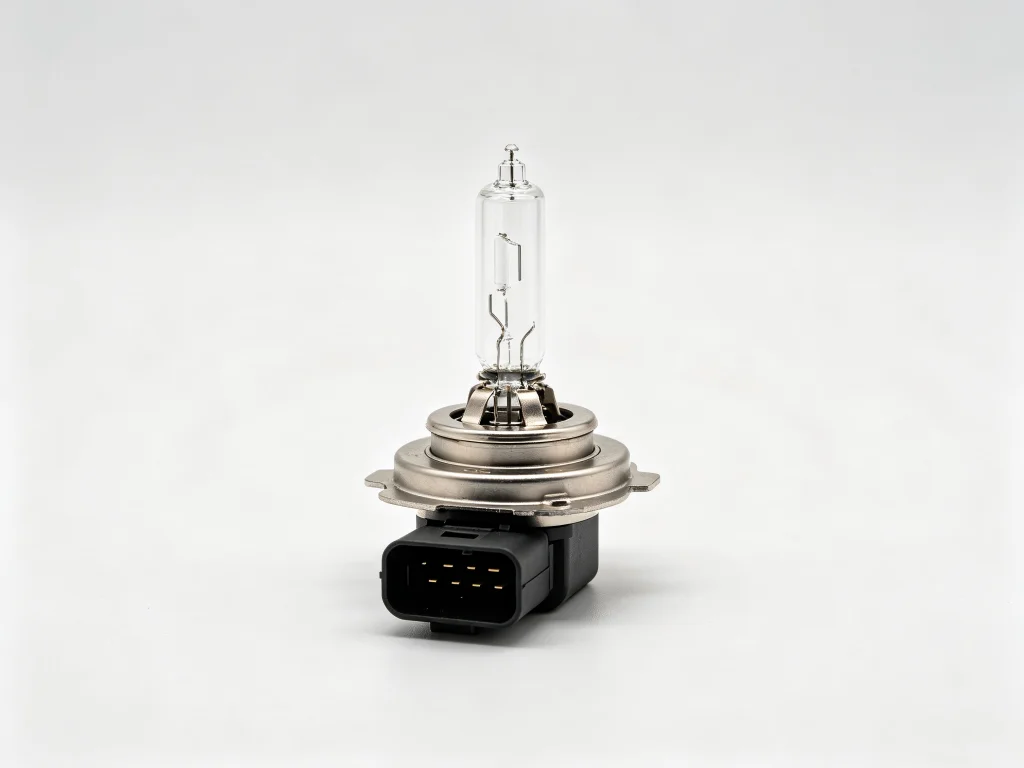
1. Primeiro, Entenda o Que Realmente É uma Lâmpada H11
A H11 é uma lâmpada de filamento único com base em formato L e soquete PGJ19-2. Opera a 12V e normalmente consome 55 watts em sua forma halógena, produzindo aproximadamente 1.350 lúmens. A maioria dos veículos usa H11 para faróis baixos e luzes de neblina. Aplicações comuns incluem Toyota Camry, Honda Accord, Ford F-150, Chevrolet Silverado, Nissan Altima e Subaru Outback.
A H11 faz parte de uma família de lâmpadas que inclui H8, H9 e H16 – elas compartilham a mesma base, mas têm diferentes potências, saídas e chaveamentos. Isso importa porque alguns vendedores comercializam lâmpadas H9 como compatíveis com H11, mas elas não são uma substituição direta.
2. Decision Criterion #1: Technology Type – Halogen, LED or HID?
This is your first and most important decision. Each technology has distinct characteristics that directly impact your driving experience.
| Característica | Halogen H11 | LED H11 | HID H11 |
|---|---|---|---|
| Lumens (typical) | 1,350 | 3.000 – 7.000+ | 2.500 – 3.500 |
| Potência | 55W | 30 – 50W | 35W |
| Temperatura de cor | ~3,200K (yellow-white) | 5,000K – 6,500K (pure white) | 4,300K – 6,000K |
| Vida útil (horas) | 270 – 500 | 30.000 – 50.000+ | 2.000 – 3.000 |
| Tempo de aquecimento | Instantâneo | Instantâneo | 5 – 15 seconds |
| Plug-and-Play | Yes | Yes (with compatible vehicles) | Requer reator |
| Heat Generation | Very High | Baixa | Moderado |
Halogen is the standard. It's what came with your vehicle. It's cheap to buy, but expensive to maintain – you'll replace it several times over the life of your vehicle. The light output is at best mediocre, especially in rainy conditions.
HID offers a middle ground with better brightness than halogen, but requires additional components (ballasts) and has a delay in heating. Installation is more complex, and the bulbs degrade over time, changing color as they age.
LED is the clear winner for most drivers. It offers superior brightness, drastically longer lifespan, lower energy consumption, and instant-on capability. The only caveat: quality varies enormously among manufacturers. This brings us to our next criterion.
3. Decision Criterion #2: Thermal Management – The Engineering Differentiator
Heat is the #1 killer of LED bulbs. Without proper thermal management, even the brightest LED will quickly dim and fail prematurely. This is where most low-cost H11 LED bulbs cut corners.
Quality LED thermal management has three components:
- Heatsink design: Aerospace-grade aluminum with maximum surface area for passive cooling
- Active cooling: Some designs use fans for additional heat dissipation
- Driver efficiency: The circuit that powers the LED must generate minimal residual heat
In our tests, we found that bulbs with copper-based thermal paths outperform aluminum-only designs by a significant margin. The key metric to look for: does the manufacturer specify operating temperature and thermal management technology, or do they hide behind vague claims?
A well-cooled H11 LED bulb should operate at approximately 115°F – barely warm to the touch. If a bulb runs significantly hotter, its lifespan will be compromised.
4. Decision Criterion #3: Beam Pattern Precision – It's Not Just About Brightness
This is the most neglected factor in H11 bulb comparisons. A bulb can produce 10,000 lumens, but if the beam pattern is wrong, you will blind oncoming traffic while barely illuminating the road ahead.
Your headlight housing was designed for a specific light source – the halogen filament in a precise position. LED bulbs that do not replicate this filament position will produce a scattered and unfocused beam.
The best H11 LED bulbs use a 1:1 design that matches the dimensions and light emission point of the halogen. This ensures that the beam pattern remains correct – light goes where it should, not into the eyes of other drivers.
How to check this? Look for bulbs that explicitly mention “1:1 size” or “halogen replacement design.” Check customer reviews about beam pattern and glare. And if a manufacturer does not discuss beam pattern at all, that is a red flag.
5. Decision Criterion #4: CANBus Compatibility – The Modern Vehicle Challenge
Modern vehicles use CANBus systems to monitor electrical loads. When you replace a halogen bulb (which consumes 55W) with an LED (which consumes much less), the vehicle's computer may interpret the lower power consumption as a “burned-out bulb” condition.
The result? Error messages on the dashboard, flickering lights, or bulbs that simply do not work.
Not all H11 LED bulbs are CANBus compatible. Some require additional resistors or decoders to function properly. Others are designed with built-in CANBus compatibility that mimics the electrical characteristics of a halogen bulb.
If you drive a European vehicle (BMW, Mercedes, Audi, VW) or any car manufactured after 2010, CANBus compatibility should be a non-negotiable requirement. Check product specifications carefully and, when in doubt, consult your vehicle's manual or a qualified installer.
6. Decision Criterion #5: Certifications and Compliance
This is not about bureaucracy – it is about safety and legality. A properly certified H11 bulb has been tested to meet specific performance and safety standards.
Look for bulbs that are:
- DOT/SAE compliant – This indicates the bulb meets US Department of Transportation and Society of Automotive Engineers standards for road use
- Conforms to ECE – European certification for automotive lighting
- IP67 or IP68 rating – Protection against dust and water ingress
Beware of bulbs marketed as “off-road use only” – these often ignore safety standards and may be illegal for street use.
7. What the Market Offers – A Reality Check
The H11 bulb market is flooded with options. Here's what you'll typically find at each price point:
Budget LEDs ($20–40): These often use basic components, minimal thermal management, and may have questionable beam patterns. Customer reviews frequently mention flickering, short lifespan, or poor fit.
Mid-range LEDs ($40–80): Better thermal design, more consistent quality, and improved beam patterns. This is where you start to see genuine value, but quality still varies significantly between brands.
Premium LEDs ($80+): Advanced thermal management, precise 1:1 optical design, CANBus compatibility, and comprehensive testing. These are the bulbs that genuinely outperform and last longer.
One forum user's experience captures the difference: after installing a premium LED kit, they noted the bulbs were “well-made with aluminum body and include an integrated cooling fan” and that “the light output is bright.” Another user specifically praised fanless designs for longevity: “as long as you don't buy the ones with fans, they will last a long time.”.
The common point: quality components and careful engineering matter much more than lumen claims on the packaging.
8. How GTR's H11 LED Compares
We designed GTR's H11 LED to score high on all criteria in this guide:
- Technology: Advanced LED with 5x+ the output of halogen
- Gestão térmica: Aircraft-grade aluminum heat sink with intelligent driver circuits
- Beam Pattern: True 1:1 halogen replacement design
- CANBus: Built-in compatibility for most vehicles
- Certifications: Meets or exceeds industry standards
We don't cut costs on components and we don't make claims we can't prove. Every bulb is tested for performance, durability, and optical precision before it ships.
9. Your Decision Framework – In Summary
When choosing an H11 bulb, follow this decision tree:
- Technology: Choose LED unless budget is your only concern
- Gestão térmica: Look for documented cooling systems, not just vague claims
- Beam Pattern: Check the 1:1 halogen replacement design
- CANBus: Confirm compatibility with your vehicle, especially for newer models
- Certifications: Choose DOT/SAE compliant bulbs for legal road use
Ignore the marketing hype. Focus on these five criteria. And choose a manufacturer with a track record of engineering excellence, not just aggressive advertising.