
Standing in the auto parts aisle, staring at rows of h7 bulb options. Halogen, LED, xenon—each one claiming to be “the brightest” or “the longest-lasting.” The h7 bulb price ranges from $10 to over $100. How do you choose?
Here’s the truth: most buying guides tell you what to buy. This guide tells you what not to buy—and why the most expensive option isn’t always the right one.
1. Understanding What "H7" Actually Means
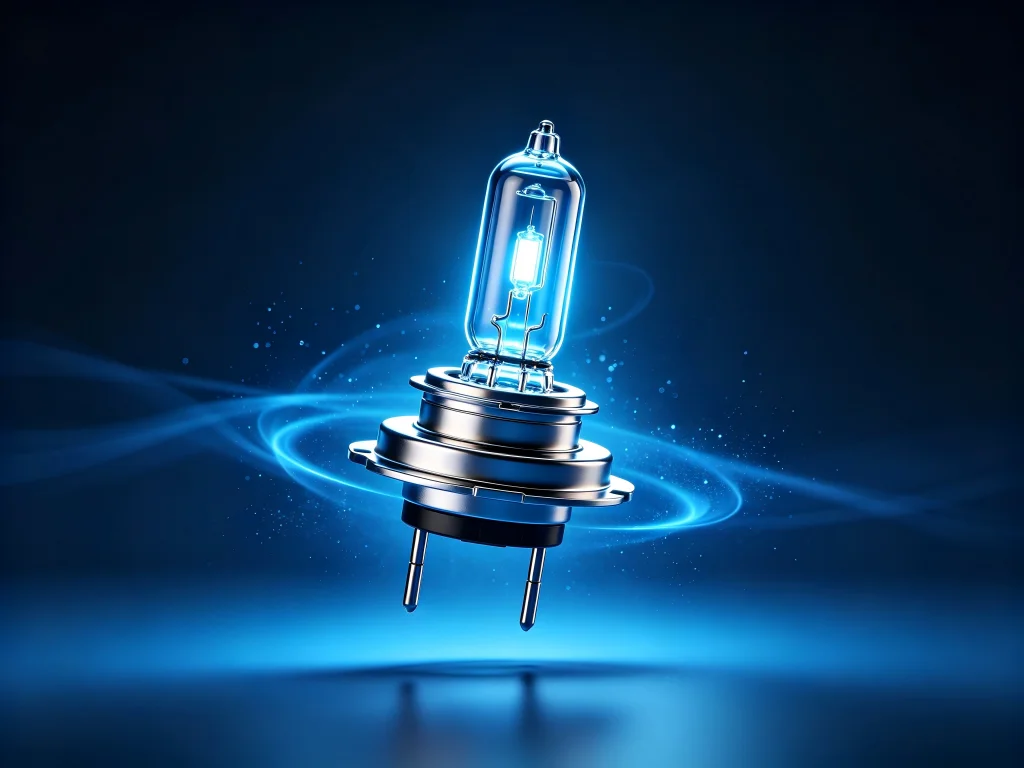
Direct Answer: H7 is a standardized bulb specification that defines the base type (PX26d), wattage (typically 55W), and single-filament design—not whether it’s used for high or low beams. The “H” indicates a halogen light source, and “7” is the specific base and filament configuration.
This standardization means any H7 bulb should fit any H7 socket. But “should fit” and “actually works” are very different things.
1.1. The Anatomy of an H7 Bulb
Every H7 bulb shares these core components:
- Base: PX26d metal base with two spade terminals
- Filament/Emitting Source: Single filament (halogen) or LED chip array
- Glass Envelope: UV-filtering quartz (halogen) or aluminum housing (LED)
- Connector: Two-pin design that plugs into your vehicle’s harness
But here’s what the specifications đừng tell you: how well that bulb will perform in your specific headlight housing.
2. Halogen vs LED vs Xenon: The Real Differences
Let’s cut through the marketing hype and look at what each technology actually delivers.
2.1. Halogen H7 Bulbs: The Tried-and-True Workhorse
Standard halogen H7 bulbs are what most vehicles came with from the factory. They produce light by heating a tungsten filament to incandescence inside a halogen gas-filled envelope.
Advantages:
- Low initial cost—typically $10-$30 per bulb
- Widely available at any auto parts store
- Legal in all regions when properly rated
- Simple plug-and-play installation
Disadvantages:
- Short lifespan—typically 500-1,000 hours
- Yellowish light (around 3200K) that reduces contrast
- High heat output that can damage sockets and holders
- Limited brightness improvement over time
As one industry test notes: “While upgraded halogens can offer some improvement, they’re still limited by the inherent downsides of halogen technology.”
2.2. LED H7 Bulbs: The Modern Upgrade
LED H7 bulbs use light-emitting diodes to produce a bright, white light with significantly less energy consumption and heat generation.
Advantages:
- Much longer lifespan—typically 30,000+ hours
- Bright, white light (5000K-6500K) that improves visibility
- Lower power consumption (typically 15-25W vs 55W for halogen)
- Minimal heat output reduces damage to sockets and holders
Disadvantages:
- Higher upfront cost—typically $50-$150 per pair
- May not be road legal in all regions when installed in halogen housings
- Quality varies dramatically between manufacturers
- Poorly designed LEDs can create glare for oncoming traffic
2.3. Xenon/HID H7 Bulbs: The Specialist Option
Xenon HID (High-Intensity Discharge) bulbs produce light by passing an electrical arc through xenon gas. These are less common in H7 form factor but available as aftermarket upgrades.
Advantages:
- Very bright—typically 3x brighter than halogen
- Long lifespan—2,000-3,000 hours
- White/blue light output
Disadvantages:
- Requires ballasts and additional wiring
- Slow warm-up time
- Often illegal for road use in halogen housings
- Complex installation
3. Các Yếu Tố Quan Trọng Mà Hầu Hết Người Mua Bỏ Qua
When you’re comparing H7 bulbs, most guides tell you to look at brightness (lumens) and color temperature. These matter. But they’re not the whole story.
3.1. Độ chính xác của mẫu chùm sáng
This is the single most important factor that determines whether your upgrade actually improves visibility—or makes it worse.
Your headlight housing (reflector or projector) is designed around the precise position of a halogen filament. If an LED bulb’s emitting surface isn’t in chính xác the same position, the beam pattern scatters.
Những điều cần tìm: “1:1 design” or “halogen beam pattern” in the product description. These terms indicate the manufacturer has matched the LED position to the original filament location.
3.2. Socket and Connector Compatibility
The H7 uses a PX26d base with spade terminals. But not all H7 sockets are identical. Some vehicles use slightly different holder designs or retainer clips.
Những điều cần tìm: Bulbs that include or specify compatibility with your vehicle’s specific h7 bulb holder and h7 bulb retainer clip design. Some LED bulbs are too large to fit through the access hole in certain headlight assemblies.
3.3. Thermal Management
Heat is the enemy of both bulbs and sockets. Halogen bulbs generate massive heat. Poorly designed LED bulbs generate heat at the driver circuitry that needs to be dissipated.
Những điều cần tìm: Aluminum heat sinks, active cooling fans (for higher-output LEDs), and thermal protection circuitry that prevents overheating.
3.4. Legal Compliance
In many countries, replacing a halogen bulb with an LED or HID bulb in a halogen housing is illegal unless the bulb has specific ECE or DOT approval.
Những điều cần tìm: ECE R37 approval for halogen bulbs or ECE R10 approval for LED bulbs. Without these certifications, you risk failing your vehicle inspection—and more importantly, you risk creating dangerous glare for other drivers.
4. Brand Comparison: Who Actually Delivers?
Based on our engineering testing and analysis of independent reviews, here’s how the major players stack up:
| Thương hiệu | Công nghệ | Độ sáng | Tuổi thọ | Hình dạng chùm tia | Legal Status | Price Range |
|---|---|---|---|---|---|---|
| Philips | Halogen/LED | Up to 200% brighter | Good | Excellent | ECE certified | $$$ |
| OSRAM | Halogen/LED | Up to 220% brighter | Good | Excellent | ECE certified | $$$ |
| GTR | LED | Optimized for halogen housings | Excellent (30,000+ hrs) | 1:1 matched | Comply with ECE | $$ |
| Generic/Cheap | Halogen/LED | Claims exaggerated | Poor (3-6 months) | Often poor | Usually uncertified | $ |
5. What The Experts Are Saying
Independent testing consistently shows that the best H7 bulbs come from manufacturers who invest in proper engineering—not just marketing.
One comprehensive 2025 test concluded: “Top brands like Osram and Philips address beam pattern issues with quality design and testing. Some of their LED models have ECE/E-mark approval for road use in most common vehicles.”
But even premium brands have limitations. Many of their LED H7 bulbs are not ECE R37-approved for use in halogen housings, meaning they’re technically not road legal in the UK or EU.
6. H7 Bulb Price Guide: What You're Really Paying For
Let’s break down what different price points actually buy you:
6.1. Under $20 (Per Bulb)
You’re getting a basic halogen bulb. Likely from an unbranded or private-label manufacturer. Expect 500-800 hours of life, standard brightness, and no significant performance improvements over OEM. At h7 bulb Halfords hoặc h7 bulb Autozone, these are the “essentials” or “value” options.
6.2. $20-$50 (Per Bulb)
Premium halogen or entry-level LED. Brands like Philips or OSRAM in this range offer genuine performance improvements—up to 200% brighter, better color temperature, and longer life. This is where the value sweet spot lives for most drivers.
6.3. $50-$100+ (Per Pair)
High-end LED conversions. At this price, you’re getting proper 1:1 design, thermal management, and often ECE certification. This is the range where GTR competes—offering premium performance at a competitive h7 bulb price point.
7. Making Your Final Decision
Here’s a simple framework to choose the right H7 bulb for your situation:
- Check your vehicle’s requirements. Some cars have specific bulb holders or retainer clip designs that limit your options.
- Verify legal compliance. If you’re in the UK or EU, ensure any LED replacement has ECE approval.
- Inspect your socket and holder. If they’re degraded, replacing the bulb alone won’t solve your problems.
- Choose based on your driving needs. City driving? Premium halogens are fine. Frequent night highway driving? LED is worth the investment.
- Always replace in pairs. Bulbs degrade at similar rates—if one fails, the other is likely close behind.
8. Câu hỏi thường gặp về bóng đèn H7
8.1. Can I use an H7 bulb for both high and low beams?
No. H7 bulbs are single-filament and can only perform one function per bulb. Your vehicle’s headlight design determines whether the H7 is used for low beam or high beam. Some vehicles use separate H7 bulbs for each function.
8.2. What's the difference between H7 and H11 bulbs?
H7 uses a PX26d metal base with two exposed spade terminals; H11 uses a keyed plastic connector that clicks into place. They are not interchangeable without modification. Always verify your vehicle’s required bulb type before purchasing.
8.3. How long should an H7 bulb last?
Standard halogen H7 bulbs typically last 500-1,000 hours. Premium halogens may last slightly longer. LED H7 bulbs can last 30,000+ hours. If you’re replacing bulbs more than once a year, you likely have an underlying issue with your socket, holder, or connector.
8.4. Are H7 LED bulbs worth the extra cost?
Yes, if you do significant night driving and choose a properly engineered 1:1 design with ECE certification. The longer lifespan alone often justifies the higher upfront cost, and the improved visibility is a genuine safety benefit.
8.5. Why is my new H7 bulb dimmer than the old one?
This usually indicates incorrect installation—the bulb may not be seated properly in the holder, or the retainer clip isn’t holding it in the correct position. Check that the bulb is fully inserted and the clip is secure.
8.6. Where can I buy H7 bulbs?
H7 bulbs are available at most auto parts retailers including Halfords, Autozone, Euro Car Parts, and online specialists. For premium LED options, direct from manufacturers like GTR ensures you get genuine products with proper support.
9. Bước Tiếp Theo Của Bạn: Chọn Lựa Khôn Ngoan, Lái Xe An Toàn
The right H7 bulb isn’t just about brightness or price. It’s about reliability, safety, and protecting your vehicle’s lighting system from premature failure.
At GTR, we engineer H7 bulbs that work with your vehicle—not against it. Our 1:1 design ensures perfect beam patterns. Our thermal management protects your socket and holder. And our quality control means you get consistent performance, bulb after bulb.
Ready to upgrade? Visit https://www.rhgtr.com to find the H7 bulb that’s right for your vehicle.
Don’t settle for bulbs that leave you guessing. Choose the solution that’s engineered to perform—from the first night to the ten-thousandth mile.