
Choosing the right lorry lighting is not about picking the brightest bulb or the cheapest option. It is about matching the right technology, certification, and durability to your specific operation. This guide breaks down everything you need to know.
If you are shopping for lorry lighting, you have probably noticed the overwhelming number of options. Prices range from under $20 to several hundred dollars. Some lights claim incredible brightness. Others promise legendary durability. Sorting fact from marketing hype is difficult.
We have analysed the top lorry lighting resources, spoken to fleet operators, and tested products across real-world conditions. Here is what we found.
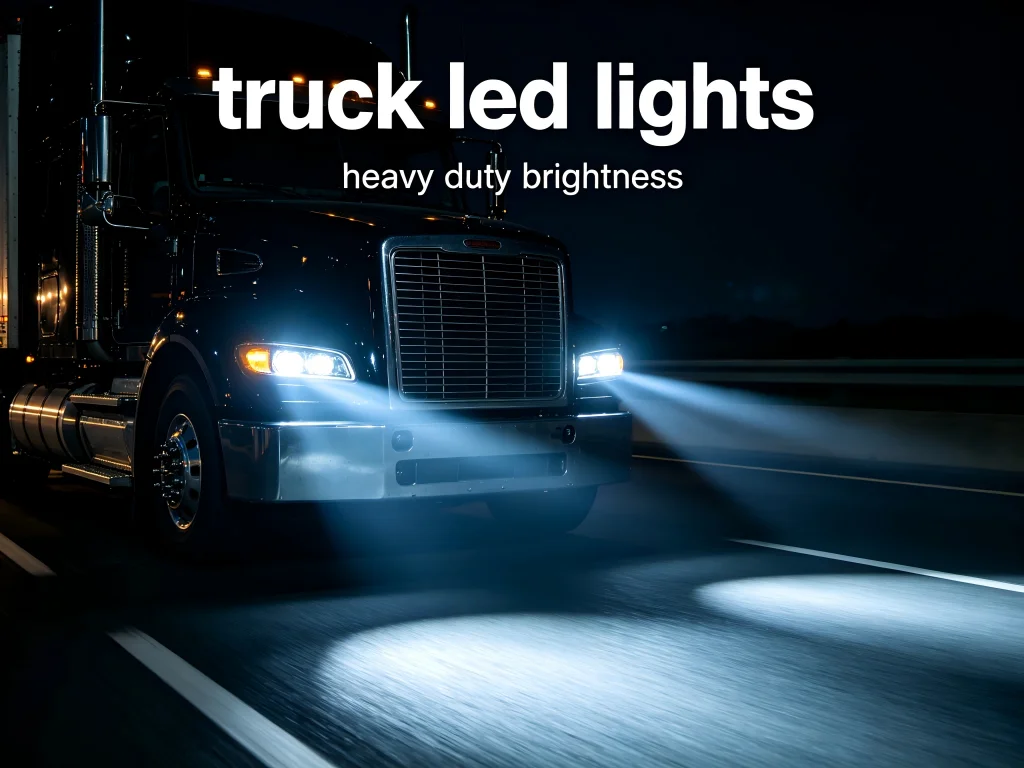
1. LED vs Halogen: The Real-World Comparison
This is the most fundamental decision you will make. And the data is clear.
| Tính năng | Halogen | LED (Quality Grade) |
|---|---|---|
| Tuổi thọ | 500–1.000 giờ | 25,000+ hours |
| Brightness degradation | Up to 25% drop in first 100 hours | ~7% drop over 25,000 hours |
| Energy Consumption | Higher (more strain on electrical system) | Lower (up to 75% less than halogen) |
| Khả năng chống rung | Poor – filament breaks easily | Excellent – solid-state construction |
| Độ sáng tối đa tức thì | No – takes time to reach full output | Yes – full output immediately |
| Initial cost | Thấp | Higher |
| Total cost of ownership | Higher (frequent replacements + labour + downtime) | Lower (one purchase, years of service) |
The choice is not really about upfront cost. It is about total cost of ownership. A halogen bulb may cost less today, but you will replace it 25 to 50 times before a single quality LED reaches end of life. Each replacement costs labour and downtime. The math does not favour halogen.
One fleet manager we spoke with put it bluntly: “I switched my entire fleet to LED three years ago. I have not changed a single bulb since. The fuel savings from reduced alternator load alone paid for the upgrade.”
2. The Certification Checklist: What Every Lorry Light Must Have
Certification is not optional for road-legal lorry lighting. But not all certifications are equal. Here is what to look for.
2.1. DOT / FMVSS 108 (US)
Federal Motor Vehicle Safety Standard 108 governs all vehicle lighting in the US. It requires:
- Amber clearance lamps on the front of vehicles 80 inches or wider
- Red clearance lamps on the rear
- Side marker lamps: amber to the front, red to the rear
- Specific visibility angles and mounting heights
Products without DOT certification are not legal for on-road use in the US.
2.2. ECE R148 (Europe)
ECE R148 is the European standard for signal lighting. It gradually replaces older regulations including R4, R6, R7, R23, R38, R50, R77, R87, and R91. Products with ECE R148 approval bear an E-mark and are legal for on-road use in Europe.
ECE R149 applies to forward-facing lighting such as headlights and driving lights. ECE R48 governs how lights are installed and positioned on the vehicle.
2.3. IP Ratings (Durability)
IP (Ingress Protection) ratings tell you how well a light resists dust and water. For lorry lighting, look for:
- IP67: Dust-tight and protected against temporary immersion in water
- IP68: Dust-tight and protected against continuous immersion
- IP69K: Dust-tight and protected against high-pressure water jets – ideal for vehicles that see regular washing
One operator told us: “I bought cheap lights with no IP rating. After one winter, water got inside and they failed. I replaced them with IP69K-rated lights and they have been perfect for two years.”
3. What to Look For in Lorry Interior Lighting
Interior lighting is often overlooked, but it matters more than you think. Proper lorry interior lighting improves driver comfort, makes loading and unloading safer, and reduces errors in the dark.
Key considerations:
- Voltage: Most lorries use 12V or 24V systems. Verify compatibility before purchase.
- Brightness: Measured in lumens. A cargo area needs more lumens than a cab.
- Beam pattern: Flood patterns work best for cargo areas. Diffused light works best for cabs.
- Mounting: Flush-mounted, surface-mounted, or strip lights – choose what fits your space.
GTR offers interior lighting solutions designed for the demanding environment of commercial vehicles. Our lights deliver consistent output, low power draw, and long service life.
4. Common Buying Mistakes and How to Avoid Them
4.1. Mistake 1: Chasing Brightness Without Checking Beam Pattern
Many buyers focus only on “how bright” a light is. But LED output is not useful if the beam does not aim correctly. Poor alignment causes scattered light, reduced effective reach, and extra glare for other road users. Always check the beam pattern for your specific application.
4.2. Mistake 2: Ignoring Environmental Durability
Lorries face vibration, rain, condensation, and road grit. Lighting must be built for these conditions. If a product is not designed for outdoor use, you will see early dimming or water ingress.
4.3. Mistake 3: Using Mismatched Components
Headlight upgrades, work lights, and beacons work best when they are compatible in wiring, mounting, and intended function. A “one-size-fits-all” approach leads to uneven lighting, flicker, or incomplete coverage.
4.4. Mistake 4: Overloading the Electrical System
Some upgrades draw more current than expected, especially when combined with additional lighting. Verify power needs and ensure your system can handle the load.
4.5. Mistake 5: Buying by Appearance Instead of Function
A stylish lamp may not be the one your lorry actually needs. Marker lights, rear lights, and utility lamps solve different problems. Decide what function you need first, then choose the product.
5. What Are the Orange Lights on Trucks Called?
They are called clearance lamps, marker lamps, or identification lamps. Clearance lamps mark the width of the vehicle at its outer edges. Identification lamps are three closely positioned amber lights at the centre front that signal the vehicle is wider than 80 inches.
6. Why Do Trucks Have Amber Lights?
Amber lights are required by law for vehicles wider than 80 inches. Amber is used for front and side positions because it provides high visibility without the glare of white light. Red is reserved for rear positions.
7. Can I Have Amber Lights on My Lorry?
Yes, but only in the correct positions. Amber is required for front clearance, side marker, and identification lights. Using amber where red is required (rear positions) will fail compliance inspections. Always verify colour requirements before installation.
8. What Are Light Truck Examples?
Light trucks include pickup trucks, vans, minivans, and sport utility vehicles. Examples include Chevrolet Colorado, Ford Ranger, Toyota Tacoma, Honda Ridgeline, and Ford F-150. Light trucks typically have a gross vehicle weight rating under 8,500 pounds.
9. How GTR Lighting Stands Apart
After reviewing the landscape of lorry lighting, one thing becomes clear: most products are built to a price, not a standard. GTR Lighting is different.
We engineer our lights for the conditions lorries actually face. That means:
- Superior thermal management: Copper substrates and aluminium housings dissipate heat efficiently, preventing performance degradation
- Rigorous testing: We test to failure, not to minimum standards
- Full certification: DOT, ECE R148, and E-mark compliance across our range
- Real-world durability: Built to withstand vibration, moisture, and temperature extremes
Our lights are not the cheapest. But they are among the most reliable. And in the world of lorry lighting, reliability is what actually saves you money.
One fleet operator told us: “I used to keep spare bulbs in every truck. Since switching to GTR, I do not even carry spares anymore. Nothing fails.”
That is the GTR difference.
10. Các bước tiếp theo của bạn
You now have the information to make an informed decision. You know the difference between LED and halogen. You understand certifications. You know what to avoid.
Now it is time to act. Every day you delay is another day of compromised visibility, higher maintenance costs, and unnecessary risk.
Ghé thăm www.rhgtr.com to browse our full range of lorry lighting solutions. Whether you need headlights, marker lights, interior lighting, or work lights, we have the engineered solution your lorry deserves.
Do not settle for less. Choose lighting that works as hard as your lorry does.