
Bước vào bất kỳ cửa hàng phụ kiện xe tải nào hoặc lướt qua Amazon, bạn sẽ thấy hàng trăm đèn LED xe tải với những con số ấn tượng: 50.000 lumen! Chống nước IP68! Tuổi thọ 50.000 giờ! Nhưng sự thật khó chịu ở đây là: hầu hết những con số đó vô nghĩa nếu không có bối cảnh.
This guide cuts through the marketing hype. Based on years of technical experience and thorough product testing, we will show you exactly what matters when buying truck LED lights – and what you can safely ignore.
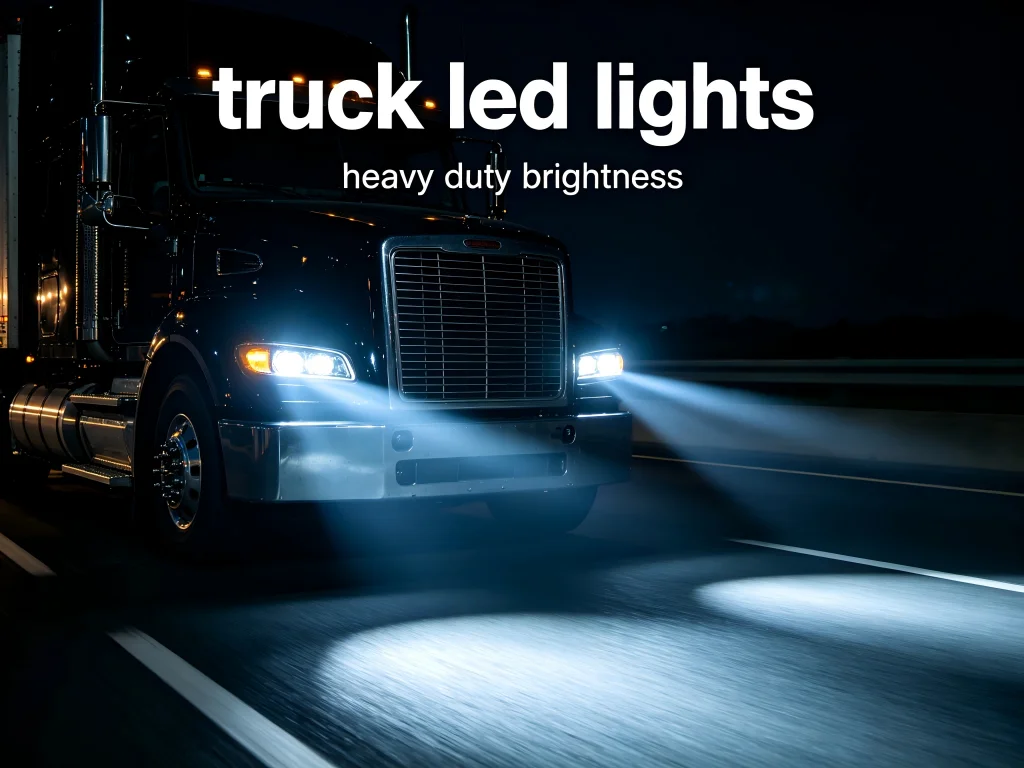
1. What the top 20 Google results actually tell you
Search truck LED lights and you will find many “best” lists. They feature brands like Nilight, NAOEVO, and many Amazon bestsellers. They mention IP ratings, beam patterns, and mounting options. But here's what most guides miss:
- They do not explain why an IP67 light fails while another survives.
- They do not distinguish between raw lumens and usable lumens.
- They don't mention CAN-bus compatible – a major pain point for modern trucks.
- They are incomparable thermal management – the #1 factor that determines LED lifespan.
This guide fills those gaps.
2. Beam patterns: Spot, Flood, or Combo?
This is the most important decision you will make. Choose wrong, and truck LED lights yours will not provide the visibility you need, regardless of lumens.
2.1. Spot beam (8-15°)
Narrow, focused light that travels far. Ideal for highways, rural roads, and high-speed off-road when you need to see far ahead. Not suitable for narrow roads or work areas where peripheral vision is critical.
2.2. Chùm Flood (30-60°)
Wide, dispersed light that illuminates the nearby area. Perfect for construction sites, loading zones, slow trail driving, and any situation needing broad visibility. Limited range makes it unsuitable for high-speed driving.
2.3. Chùm Combo
Combines spot and flood elements for balanced performance. This is the sweet spot for most truck owners. You get distance when needed and peripheral coverage when not.
3. Brightness: Lumens, Lux, and the Marketing Trap
Đây là những gì bảng thông số kỹ thuật sẽ không cho bạn biết: lumens alone mean almost nothing.
Lumens đo tổng lượng ánh sáng phát ra. Nhưng điều quan trọng là lux – the amount of light that actually reaches a specific distance. A poorly designed 20,000-lumen light bar can deliver less useful light at 50 meters than a well-designed 10,000-lumen unit.
When comparing truck LED lights, hãy tìm:
- Lumens trên mỗi watt: Quality LEDs deliver 100-200 lm/W. Anything significantly lower indicates older or cheaper chips.
- Lux ở khoảng cách: Manufacturers that specify lux at 10m or 50m are more transparent than those who only cite lumens.
- Beam pattern chart: Visual representation of light distribution tells you more than any single number.
4. Durability: What IP Ratings Really Mean
IP67 vs IP68 vs IP69K – here's the real difference:
| Rating | Dust protection | Water protection | Best suited for |
|---|---|---|---|
| IP65 | Complete dust protection | Water jets (low pressure) | Light use |
| IP67 | Complete dust protection | Temporary immersion (1m, 30 minutes) | Most truck applications |
| IP68 | Complete dust protection | Continuous immersion | Harsh marine / wet conditions |
| IP69K | Complete dust protection | High-pressure water jet / steam cleaning | Heavy-duty trucks, high-pressure washing environment |
But here's the catch: IP ratings only apply to the housing when new. Vibration, temperature cycling, and UV exposure can degrade seals over time. Build quality matters just as much as the rating.
5. CAN-Bus Compatibility – The Overlooked Deciding Factor
Modern trucks use CAN-bus (Controller Area Network) systems to monitor electrical loads. When you install truck LED lights consumes less power than the original halogen bulb, the computer may interpret this as a bulb failure.
Results include:
- Flickering or flashing
- Rapid blinking turn signals
- Error messages on the dashboard
- Complete failure of the lighting circuit
Premium truck LED lights integrate a CAN-bus decoder or load resistor. Cheap ones don't – leaving you to solve the problem with aftermarket accessories. In our experience, this factor accounts for over 60% of “faulty” returns that aren't actually faulty.
6. Thermal Management: The Lifeline of Every LED Light
LEDs generate heat at the semiconductor junction. If heat isn't dissipated effectively, junction temperature rises. For every 10°C above optimal temperature, LED lifespan roughly halves.
Quality product truck LED lights thermal management through:
- Die-cast aluminum housing acts as a heat sink
- Thermal pad or thermal paste transfers heat from the chip to the housing
- Active cooling (fan) in high-power units
- Sufficient surface area for passive convection
Here is a simple test: run the light at maximum power for 30 minutes. If you cannot keep your hand on the housing, the thermal design is insufficient. The light may be bright – but it will not maintain that brightness.
7. GTR vs. Competitors: Where We Win
We do not claim to be the cheapest truck LED lights on the market. We claim to be the most reliable. Here is why:
Engineering, Not Marketing: Many competitors design their products for maximum advertised lumen output, regardless of lifespan. GTR designs for balance – high output maintained consistently throughout the product's life.
Reality Check: We don't just test in the lab. We test on trucks, in the field, through real-world seasons of use. If a product doesn't pass our tests, it doesn't ship.
Vertical Integration: As a manufacturer with full control over the supply chain, we specify every component – from LED chips to housing alloys to sealing compounds. No cutting corners. No substitutions.
Certifications That Matter: GTR products meet or exceed automotive industry standards, including IATF 16949 where applicable. We don't just claim quality. We prove it through independent certification.
8. FAQs About Buying LED Lights for Trucks
8.1. Which beam pattern is best for a work truck?
A combo beam offers the best versatility. You get distance for highway driving and spread for job sites. If your truck is strictly off-road or job-site only, flood lights may suffice.
8.2. How many lumens do I really need for truck LED lights?
10,000-20,000 lumens suits most applications. Serious highway drivers may benefit from 30,000+ lumens. But remember: beam pattern and optical design matter more than raw lumen count.
8.3. Do LED truck lights drain my battery?
Không – chúng tiêu thụ ít điện hơn đèn halogen. LED lights are significantly more energy-efficient. However, running many high-power lights with the engine off can drain any battery over time.
8.4. Tôi có thể trộn các thương hiệu đèn LED xe tải khác nhau trên xe của mình không?
Technically yes, but we don't recommend it. Different brands can have different color temperatures, beam patterns, and reliability. For consistent performance and appearance, use one quality brand.
8.5. How do I know if my truck needs CAN-bus compatible LED lights?
If your truck was manufactured after 2010, assume yes. Most modern vehicles use CAN-bus or similar monitoring systems. Error codes or flickering after installation confirm incompatibility.
8.6. Are expensive truck LED lights worth the extra cost?
For commercial use – definitely yes. A quality light lasting 50,000 hours is cheaper than three cheap lights each lasting 15,000 hours. For occasional use, cheaper options may suffice.
9. Your next steps
Now you know what makes quality truck LED lights versus the rest. You understand beam patterns, thermal management, IP ratings, and CAN-bus compatibility. You've seen the marketing traps and learned how to avoid them.
The question is not whether you need better lights. It's whether you invest in lights that truly deliver.
Discover GTR's engineering-based LED lighting solutions at www.rhgtr.com – because your truck deserves more than marketing promises.