
If you’re in the market for lighting—whether for your vehicle, your workshop, or your commercial operation—you’ve probably noticed the options have exploded. Halogen, LED, HID, laser—the list goes on. And if you’re like most buyers, you’re wondering: which one is actually right for you?
We’ve been manufacturing professional lighting solutions for years, and we’ve seen firsthand how confusion leads to poor purchasing decisions. This guide cuts through the marketing hype to give you the real, actionable information you need. By the end, you’ll know exactly what to look for—and what to avoid.
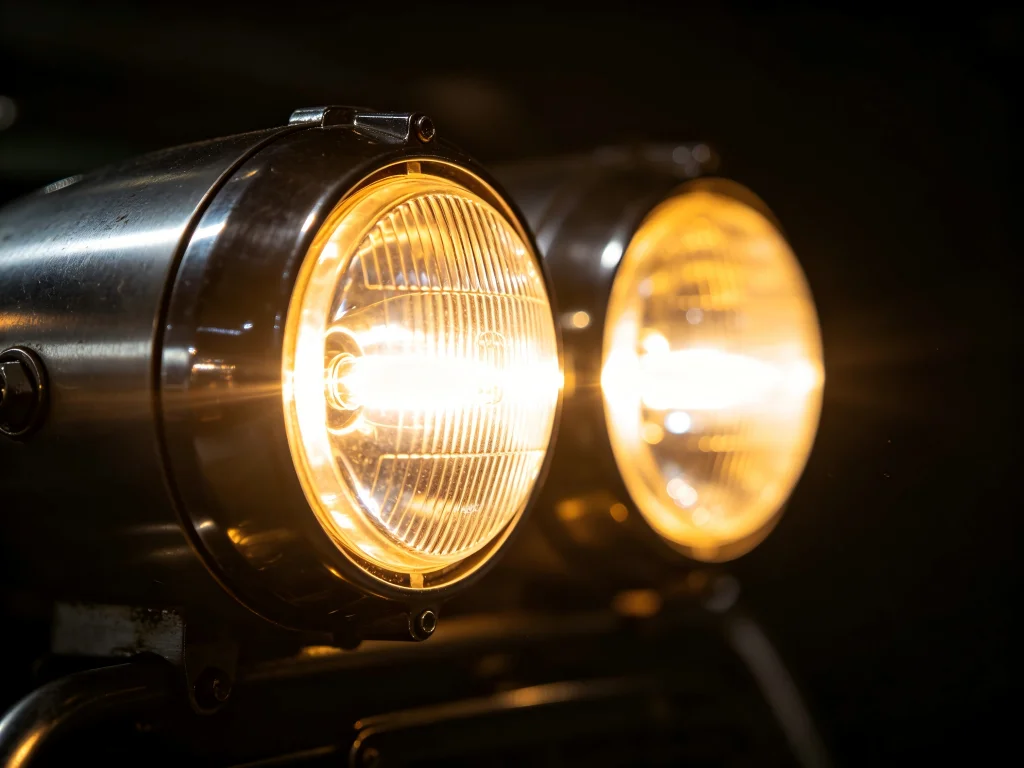
1. Understanding the Three Main Lighting Technologies
Halogen, LED, and HID each use fundamentally different methods to produce light—and those differences translate directly into real-world performance, cost, and longevity. Let’s break down what actually matters.
1.1. How Halogen Lights Work
Halogen is essentially an evolution of the traditional incandescent bulb. An electric current passes through a tungsten filament inside a glass capsule filled with halogen gas (usually iodine or bromine). The filament heats up and glows, producing light. The halogen gas helps redeposit evaporated tungsten back onto the filament through the halogen cycle, extending the bulb’s life compared to standard incandescents.
Key halogen specs:
- Lifespan: 450–1,000 hours typical (automotive); up to 2,000 hours in some applications
- Efficiency: 15–25 lumens per watt
- 色溫: 2,700K–3,200K (warm, yellowish light)
- Cost: Low upfront ($20–$30 per bulb)
1.2. How LED Lights Work
LED (Light Emitting Diode) technology uses semiconductors that emit light when an electrical current passes through them. Unlike halogen, LEDs don’t rely on heat to produce light—they generate light through electroluminescence. This fundamental difference explains why LEDs are dramatically more efficient and longer-lasting.
Key LED specs:
- Lifespan: 10,000–25,000 hours (5–15× longer than halogen)
- Efficiency: 80–100 lumens per watt
- 色溫: 1,500K–9,000K (wide range available)
- Cost: Higher upfront, lower total cost of ownership
1.3. How HID (Xenon) Lights Work
HID (High-Intensity Discharge) lights, also known as xenon lights, pass electricity through a gas-filled tube containing xenon gas. This creates an arc of light that is significantly brighter than halogen. HID bulbs don’t have a filament—they use electrodes and a gas discharge to produce light.
Key HID specs:
- Lifespan: 2,000–3,000 hours
- Efficiency: Better than halogen, less than LED
- 色溫: 4,000K–6,000K (bright white/blue-white)
- Cost: Moderate to high; requires ballasts and professional installation
2. Head-to-Head Comparison: Halogen vs LED vs HID
| Factor | 鹵素 | LED | HID (Xenon) |
|---|---|---|---|
| 壽命 | 450–1,000 hours | 10,000–25,000 hours | 2,000–3,000 hours |
| Energy efficiency | 15–25 lm/W | 80–100 lm/W | 中度 |
| Energy use vs halogen | 基準 | 75–85% less | ~33% less |
| 熱輸出 | Very high (85% heat) | 低 | 中度 |
| 色溫 | 2,700K–3,200K (warm) | 1,500K–9,000K (customizable) | 4,000K–6,000K (cool white) |
| Initial cost | Low ($20–$30 per bulb) | 中等至偏高 | 中等至偏高 |
| 更換頻率 | Frequent (every 1–2 years typical) | Rare (every 5–15 years) | Infrequent (every 3–5 years) |
| Installation Complexity | Simple | Moderate (may require professional) | Complex (professional required) |
| Durability | Fragile—can fail if knocked | Shock-resistant | Vibration-resistant |
3. What the Top Search Results Don't Tell You
Most online guides stop at the basic comparison above. They tell you LEDs last longer and use less energy—and they’re right. But they leave out the nuances that actually matter when you’re making a purchasing decision. Here’s what they miss.
3.1. Color Temperature Isn't Just About Preference
Many guides suggest color temperature is purely aesthetic. It’s not. Warmer light (halogen’s 2700K–3200K range) can be more comfortable for night driving in some conditions, but cooler light (LED’s 4000K–6000K range) improves contrast and makes it easier to spot obstacles. The “right” choice depends on your specific use case—not just what looks good.
And here’s a critical point most guides ignore: halogen headlight bulbs with color temperatures exceeding 4200K are not road-legal in many jurisdictions. That blue-tinted “upgrade” you’re considering? It might be illegal.
3.2. Total Cost of Ownership Tells a Different Story
Yes, halogen bulbs are cheaper upfront. But let’s do the math honestly. A $30 halogen bulb that lasts 1,000 hours costs you $0.03 per hour of use. An $80 LED that lasts 25,000 hours costs you $0.003 per hour—one-tenth the cost. And that’s before you factor in the energy savings of 75-85% less electricity consumption.
Over five years of typical use, the halogen user has replaced bulbs multiple times, paid higher electricity bills, and dealt with the inconvenience of unexpected failures. The LED user has replaced nothing and paid less to run their lights. Which one is really cheaper?
3.3. The Heat Factor Nobody Talks About
Halogen bulbs run extremely hot. That heat doesn’t just waste energy—it can damage surrounding components over time. In vehicles, heat from halogen headlights can degrade wiring, connectors, and even the headlight housing itself. In industrial settings, heat buildup can affect nearby equipment or create uncomfortable working conditions.
LEDs generate dramatically less heat. HID falls somewhere in between. If heat management matters in your application—and it almost always does—this is a factor worth considering carefully.
4. Regulatory Considerations: What's Legal and What's Not
This is one area where most consumer guides are dangerously vague. Here’s what you actually need to know.
Halogen headlight bulbs are manufactured and approved in accordance with legal requirements like ECE R37. These standards specify allowable wattages, color temperatures, and beam patterns. Modifications that deviate from these standards may be illegal.
LED replacement bulbs for vehicles are subject to complex regulations that vary by jurisdiction. In many places, retrofitting LED bulbs into halogen housings is technically illegal because the different light source characteristics change the beam pattern. Some jurisdictions are now prohibiting the import of incandescent lamps while explicitly exempting automotive halogen bulbs of 6, 12, or 24 volts not exceeding 75 watts.
Before making any lighting change, verify the regulations in your area. The safest approach is to use products specifically designed and certified for your application.
5. Five Questions to Ask Before You Buy
- What’s my actual use case? Daily commuting? Off-road use? Industrial workspace? The answer dramatically changes what you need.
- Am I factoring in total cost of ownership? Upfront price is only the beginning. Consider lifespan, energy costs, and replacement frequency.
- What are the local regulations? Ignorance of the law is not a defense. Verify what’s legal in your area before purchasing.
- Is the product certified for my application? “Works with” is not the same as “certified for.” Look for proper certifications like ECE, DOT, or SAE where applicable.
- What’s the warranty and support? Quality manufacturers stand behind their products. If the warranty is vague or non-existent, that’s a red flag.
6. Why GTR Stands Apart in Professional Lighting
在 GTR, we don’t just sell lighting components—we engineer complete solutions. Our approach combines three elements that set us apart from the competition:
Engineering excellence: We design for real-world conditions, not laboratory perfection. Our products undergo extensive testing that simulates the vibrations, temperature extremes, and electrical variations you’ll actually encounter.
Quality without compromise: We use premium materials and maintain rigorous quality control throughout manufacturing. Every product that leaves our facility has been verified against strict performance standards.
Application expertise: We understand that lighting isn’t one-size-fits-all. Our team works with customers to match the right solution to the right application—no more guessing, no more settling.
7. Your Next Step: Make the Informed Choice
The lighting market is full of options, but not all options are created equal. Now that you understand the real differences between halogen, LED, and HID—and the hidden costs and considerations most guides ignore—you’re equipped to make a decision that actually serves your needs.
Whether you’re upgrading your vehicle’s headlights, outfitting a workshop, or sourcing lighting for a commercial operation, GTR has the expertise and products to deliver the results you’re looking for. We’ve been in this industry long enough to know what works—and what doesn’t.
立即造訪 GTR to explore our full range of professional lighting solutions. Our team is ready to help you find the perfect match for your application.
8. Frequently Asked Questions About Halogen vs LED vs HID
8.1. Are LED lights really better than halogen?
For most applications, yes. LEDs last 5–15 times longer, use 75–85% less energy, and produce less heat than halogen. However, the initial cost is higher, so the “better” choice depends on your budget and use case.
8.2. Can I just replace my halogen bulbs with LED bulbs?
Physically, often yes—but legally and practically, it’s more complicated. LED bulbs have different light distribution characteristics that may not work properly in halogen-designed housings. Always verify compatibility and legal compliance for your specific application.
8.3. Why are halogen bulbs being banned?
Halogen bulbs are being phased out in many regions due to their poor energy efficiency and higher carbon emissions. The UK government estimated a reduction of 1.26 million tonnes of CO2 per year from its halogen ban.
8.4. 從鹵素燈改用 LED 可以省下多少錢?
You’ll save on both energy costs and replacement costs. LEDs use 75–85% less electricity and last 5–15 times longer. Over the life of a single LED bulb, you could save hundreds of dollars compared to repeatedly replacing halogen bulbs.
8.5. Which is brighter: halogen, LED, or HID?
HID typically produces the highest raw light output, followed by LED, then halogen. However, LEDs produce more usable lumens per watt and can be engineered for better beam focus, making them more effective in many real-world applications.
8.6. Do halogen lights get hotter than LEDs?
Yes, significantly. Halogen bulbs convert up to 85% of their energy into heat, while LEDs generate much less heat because they produce light through electroluminescence rather than thermal radiation.
8.7. Are HID lights legal for road use?
Yes, when properly installed and aligned. HID systems must include automatic headlamp leveling to prevent glare to other drivers. Retrofitting HID into halogen housings without proper components is often illegal and dangerous.
8.8. What's the best lighting for night driving?
LED headlights offer an excellent balance of brightness, efficiency, and longevity. They produce a clean, white light that improves visibility of road markings and obstacles while using less energy and lasting far longer than halogen.