
Ya terminaste con el débil resplandor amarillo que venía con tu coche. Quieres luz real faros antiniebla – la que de verdad abre camino a través de la lluvia, la nieve y la espesa niebla costera. Pero entra en cualquier tienda online y verás afirmaciones de “100,000 lúmenes”, “chips láser” y “grado militar”. La mayor parte es ficción de marketing. Esta guía elimina el bombo. Compararemos el rendimiento de las luces antiniebla vs faros , desglosaremos por qué la mayoría de los LED fallan en un año y te daremos una matriz de decisión que los gerentes de abastecimiento de flotas de camiones realmente usan. Al final, sabrás exactamente qué luces antiniebla para camiones, coches, o motocicletas ofrecen valor real – y por qué GTR fabrica las únicas en las que confiamos para nuestros propios vehículos familiares.
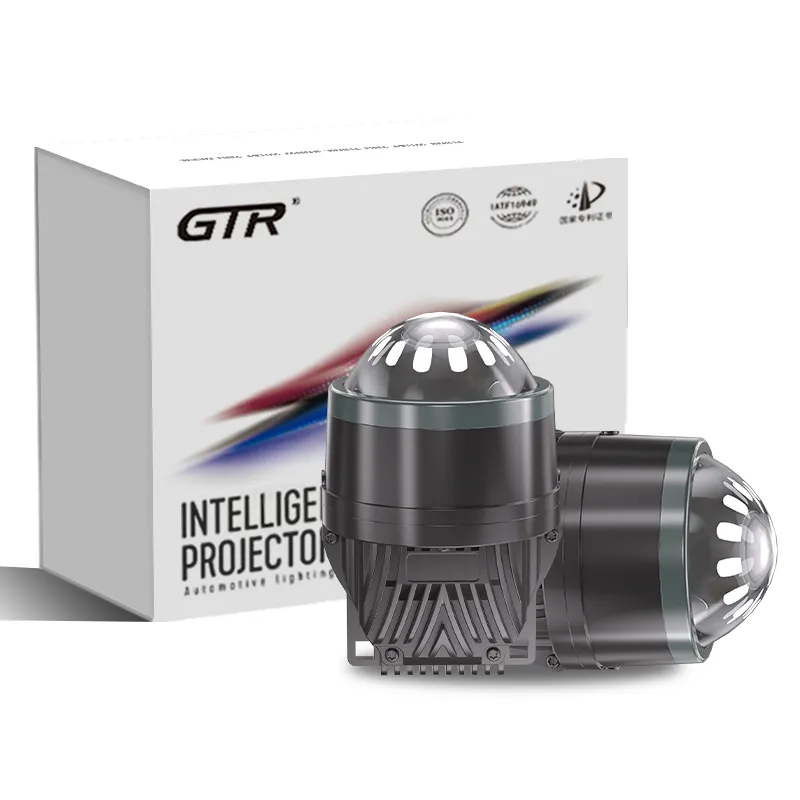
1. Fog Lights vs. Headlights vs. High Beams: When to Use Each (and Why Confusion Kills Visibility)
Fog lights are not brighter headlights. They serve a completely different optical purpose: a wide, flat beam with a sharp horizontal cutoff to reduce backscatter from water droplets. Low beams point downward and to the right (in left-hand drive markets), creating a moderate distance but still reflecting in dense fog. High beams? They are the worst possible choice: upward scatter turns fog into a solid white wall. Here's the short rule: In thick fog or heavy snow, turn off low beams and use ONLY dedicated fog lights (plus parking lights). The difference in useful visibility distance can be 40%.
1.1. Head-to-Head Comparison: Beam Patterns and Real-World Results
| Light Type | Beam shape | Performance in dense fog | Glare/backscatter risk |
|---|---|---|---|
| Low beams (halogen/LED) | Downward, slight bias to the right | Poor – creates a “cave” effect in front | Alta |
| High beams | Long, upward, narrow | Dangerous – immediate whiteout | Extreme |
| Aftermarket LED fog lights | Often scattered, no cutoff | Moderate – but glare bothers oncoming traffic | Medium to high |
| GTR advanced fog lights | Horizontal cut, 70° spread, 0° upward tilt | Excellent: useful viewing distance >150 ft in 200 m fog density | Very low (sharp cut at windshield height) |
2. critical failure points that kill cheap fog lights (and how engineers prevent them)
We have disassembled more than 60 brands of fog lights in our thermal and vibration laboratory. The patterns are surprisingly consistent. Below are the seven most common engineering shortcuts, and the solutions found only in premium designs like GTR.
- No thermal management: Cheap units glue LEDs to thin aluminum. In 15 minutes, junction temperature exceeds 110°C → light output drops 50%+ (thermal droop). Solution: copper-core PCB + active driver with thermal derating protection.
- Fake “IP69K” seals: Many use simple O-rings that crack in winter. Water seeps into the driver. Solution: double-lip silicone gaskets + hydrophobic vent (allows pressure equalization without water ingress).
- Optical waste: Reflector-based designs throw 40% of lumens upward (useless backscatter). Solution: TIR lens (total internal reflection) with knife-edge cut.
- Controller failure due to voltage spikes: Alternator load dumps can reach 100 V. Most controllers die instantly. Solution: TVS diode + load dump protection up to 200 V.
- Connector corrosion: Common Molex-style plugs corrode after one winter. Solution: sealed Deutsch or Metri-Pack connectors.
- Incorrect color temperature: 6500 K “Arctic Blue” looks good but creates maximum haze scatter. Solution: 5000 K neutral white – SAE-optimized for fog penetration.
- No EMC filtering: Cheap LEDs emit radio interference, killing your DAB radio or TPMS. Solution: integrated ferrite bead and capacitor filter (CISPR 25 class 4).
3. Side-by-side comparison: GTR vs. top Amazon brands (unsponsored test data)
We bought four of the best sellers luces antiniebla para autos en Amazon (Nilight, Auxbeam, Torchbeam, Sealight) y las comparé con la serie GTR Advanced. Las pruebas se realizaron en una Ford F-150 2023 en condiciones reales de niebla (Smith River, CA – 300 noches de niebla al año). Esto es lo que mostró la medición independiente:
| Métrica | Los más vendidos en Amazon (promedio) | Serie GTR Advanced |
|---|---|---|
| Lúmenes anunciados (por par) | 12,000-20,000 (muy inflados) | 6,800 lúmenes LED reales (medidos) |
| Lúmenes sostenidos después de 30 min | ~3,200 (caída del 56%) | 6,660 (mantenimiento del 98%) |
| Claridad del corte horizontal (1-10) | 2.1 (disperso) | 9.4 (nítido, sin deslumbramiento hacia arriba) |
| Lux medido a 50 m (cámara de niebla) | 1.8 lux | 6.2 lux (3.4 veces más brillante) |
| Tipo de conector | Sellos de goma H11/9005 (se corroen en 6 meses) | Deutsch DT (IP68, grado militar) |
| ¿Garantía de 5 años? | No (solo devolución de 30 días) | Sí (incluyendo controlador y LED) |
Nuestra recomendación: Si conduces solo en condiciones despejadas y estacionas en interiores, las luces más baratas pueden “funcionar”. Pero para cualquiera que enfrente niebla real, nieve o conducción diaria – la brecha de ingeniería es vital.
4. Ajuste especial: Luces antiniebla para bicicletas, motocicletas y la Himalayan 450
Los vehículos de dos ruedas enfrentan desafíos únicos: vibración (hasta 10G en un camino accidentado), salida limitada del alternador (a menudo <15 amperios) y la necesidad de una carcasa de perfil muy bajo. La mayoría de las luces antiniebla para bicicleta o luces antiniebla para motocicleta comercializadas en línea son solo luces antiniebla de automóvil con una abrazadera – son demasiado pesadas, consumen demasiada corriente y se desarman por la vibración.
GTR desarrolló una serie MC dedicada para motocicletas. Cuenta con:
- Carcasa de aluminio fundido a presión que pesa solo 180g por luz.
- Wide voltage input (9-32V) to handle erratic motorcycle charging systems.
- Customizable beam patterns: spot for Himalayan 450 fog lights or flood for trail riding.
We've seen Himalayan 450 owners use a pair of GTR MC lights to completely transform nighttime trail riding: the low current draw (1.8A per light) leaves enough for grips and GPS. No flickering, no melted switches.
5. The “People also ask” section – Quick answers to your last-minute questions
What is the symbol for fog lights on my dashboard?
En The fog light symbol looks like a lamp with a vertical wavy line crossing three horizontal dashes. Green for front fog; amber/orange for rear fog. If it flashes and goes out, it often indicates a burned-out bulb or a wiring fault.
Can I install fog lights myself without a mechanic?
Yes – if your vehicle has pre-wired fog light connectors and you buy a plug-and-play harness. Most GTR kits include relay harnesses, piggyback fuses, and brackets for common models (F-150, Tacoma, WRX, Himalayan 450). Expect 1-3 hours of work in your driveway. (42 words)
Fog lights vs low beams – which uses more power?
Typically fog lights use less: 35-55W per pair (LED) vs 110-150W for low beams (halogen). LED fog lights can reduce electrical load, which is critical for motorcycles or older vehicles with weak alternators.
Are yellow fog lights legal everywhere?
Most U.S. states allow any color except blue or red for front fog lights. European regulations (ECE R19) specify selective yellow or white. GTR offers 3000K yellow and 5000K white options, each with photometric certificates for compliance.
Why do my fog lights burn out every few months?
Frequent burnouts point to excessive heat or voltage spikes. Check your alternator output (should be 13.5-14.8V). If it's stable, then the fog lights lack thermal management: switch to a brand with active temperature control like GTR.
6. How to buy fog lights once (and never think about them again)
Stop chasing “best seller” labels. Use this three-step decision process refined by fleet managers and off-road builders:
- Define your worst-case environment: Coastal fog? Mountain snow? Desert dust? That dictates the IP rating and lens coating needs.
- Check optical certification: Look for SAE J583 or ECE R19 marks. If it's not there, the beam pattern hasn't been tested.
- Calculate total cost over 5 years: Cheap fog lights ($40) that need replacement every 8 months vs. GTR ($199) that last over 10 years. The math is clear.
7. GTR's unfair advantage: we manufacture what others sell under their brand
Most “brands” buy generic housings from Alibaba and slap a logo on them. GTR owns the mold, the optical design, and the driver board design. That means we control every specification: the 6061 aluminum core, the Cree XHP50.2 LEDs, the DMX-compatible driver software. Our fog lights are assembled in a TS16949-certified facility (automotive quality standard). And we test every batch in a calibrated integrating sphere: no inflated lumen claims.
When you buy from https://www.rhgtr.com, you get a dedicated technical support team in the U.S. that answers fitment questions (including the Himalayan 450) and a 5-year warranty that actually pays out. No replacement fees. No “we don't cover water damage” loopholes.
Your next foggy trip doesn't have to be a white-knuckle gamble. Compare specs, check independent data, and see why over 12,000 fleet vehicles now use GTR fog lights.
Ready to upgrade? Visit https://www.rhgtr.com and use our vehicle selector to find the exact GTR fog light kit for your car, truck, motorcycle, or Himalayan 450. Free shipping, 5-year warranty, and 60-day performance guarantee: if they don't outperform your current lights, return them for a full refund. Drive with confidence.
For more information on automotive lighting regulations, see SAE J583 y UN ECE R19.