
Vous en avez fini avec la faible lueur jaune de votre voiture. Vous voulez du vrai feux de brouillard – le genre qui trace réellement un chemin à travers la pluie, la neige et l’épais brouillard côtier. Mais entrez dans n’importe quelle boutique en ligne et vous verrez des affirmations de “ 100 000 lumens ”, “ puces laser ” et “ qualité militaire ”. La plupart sont des fictions marketing. Ce guide dissipe le battage. Nous comparerons les performances des feux antibrouillard par rapport aux phares , nous expliquerons pourquoi la plupart des LED échouent en moins d’un an, et nous vous donnerons une matrice de décision que les responsables des achats des flottes de camions utilisent réellement. À la fin, vous saurez exactement quels feux antibrouillard pour camions, voitures, ou motos offrent une réelle valeur – et pourquoi GTR fabrique les seuls en lesquels nous avons confiance pour nos propres véhicules familiaux.
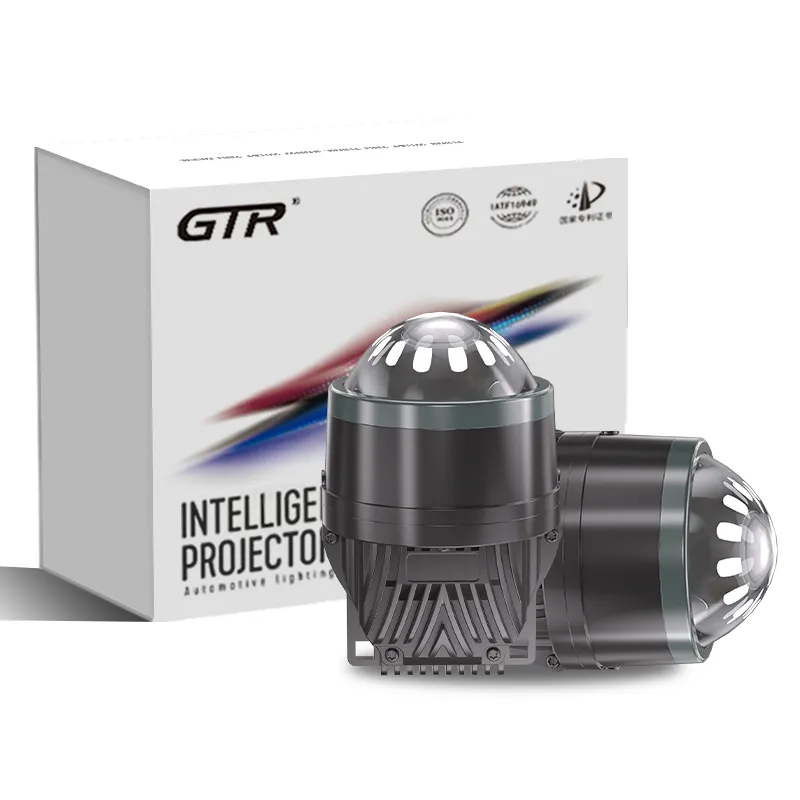
1. Feux antibrouillard vs Phares vs Feux de route : Quand utiliser quoi (et pourquoi la confusion tue la visibilité)
Les feux antibrouillard ne sont pas des phares plus lumineux. Ils servent un objectif optique complètement différent : un faisceau large et plat avec une coupure horizontale nette pour réduire la rétrodiffusion des gouttelettes d’eau. Les feux de croisement visent vers le bas et la droite (dans les marchés à conduite à gauche), créant une distance modérée mais réfléchissant toujours le brouillard dense. Les feux de route ? Ils sont le pire choix possible – la diffusion vers le haut transforme le brouillard en un mur blanc solide. Voici la règle courte : En cas de brouillard épais ou de fortes chutes de neige, éteignez vos feux de croisement et utilisez UNIQUEMENT les feux antibrouillard dédiés (plus les feux de stationnement). La différence de distance de visibilité utilisable peut être de 400%.
1.1. Comparaison directe : motifs de faisceau et résultats réels
| Type de lumière | Forme du faisceau | Performance dans le brouillard dense | Risque d’éblouissement/rétrodiffusion |
|---|---|---|---|
| Feux de croisement (halogène/LED) | Vers le bas, légère déviation à droite | Mauvais – crée un effet de “cave” au premier plan | Haut |
| Feux de route | Long, vers le haut, étroit | Dangereux – voile blanc immédiat | Extrême |
| Feux antibrouillard LED standard du marché secondaire | Souvent diffus, sans coupure | Modéré – mais l’éblouissement gêne le trafic venant en sens inverse | Moyen à élevé |
| GTR Advanced Fog Lights | Horizontal cut-off, 70° spread, 0° upward tilt | Excellent – useful visibility distance >150 ft in 200m fog density | Very low (sharp cut-off at windshield height) |
2. critical failure points that kill cheap fog lights (and how engineers prevent them)
We have disassembled more than 60 brands of fog lights in our thermal and vibration laboratory. The patterns are surprisingly consistent. Here are the seven most common engineering shortcuts – and the solutions found only in premium designs like GTR.
- No thermal management: Cheap units glue LEDs onto thin aluminum. In 15 minutes, the junction temperature exceeds 110°C → light output drops by 50%+ (thermal sag). Solution: Copper-core PCB + active driver with thermal foldback protection.
- Fake “IP69K” seals: Many use simple O-rings that crack in winter. Water seeps into the driver. Solution: Double-lip silicone seals + hydrophobic vent (allows pressure equalization without water ingress).
- Optical waste: Reflector designs project 40% of lumens upward (useless backscatter). Solution: total internal reflection (TIR) lens with a sharp cutoff.
- Driver failure due to voltage spikes: Alternator load dumps can reach 100 V. Most drivers die instantly. Solution: TVS diode + load dump protection up to 200 V.
- Connector corrosion: Common Molex-type plugs corrode after one winter. Solution: waterproof Deutsch or Metri-Pack connectors.
- Incorrect color temperature: “Arctic blue” 6500 K looks cool but creates maximum haze diffusion. Solution: neutral white 5000 K – SAE-optimized for fog penetration.
- No EMC filtering: Cheap LEDs emit radio interference, killing your DAB radio or TPMS. Solution: integrated ferrite bead and capacitor filter (CISPR 25 class 4).
3. Side-by-side: GTR vs. major Amazon brands (unsponsored test data)
We bought four best-sellers car fog lights on Amazon (Nilight, Auxbeam, Torchbeam, Sealight) and compared them to the GTR Advanced series. The tests were conducted on a 2023 Ford F-150 in real fog conditions (Smith River, California – 300 foggy nights per year). Here is what independent measurements showed:
| Metric | Amazon best-sellers (average) | GTR Advanced series |
|---|---|---|
| Advertised lumens (per pair) | 12,000 to 20,000 (heavily inflated) | 6,800 real LED lumens (measured) |
| Sustained lumens after 30 min | ~3,200 (56% drop) | 6,660 (98% retention) |
| Horizontal cutoff clarity (1-10) | 2.1 (diffuse) | 9.4 (sharp, no upward glare) |
| Lux measured at 50 m (fog chamber) | 1.8 lux | 6.2 lux (3.4x brighter) |
| Connector type | Rubber gaskets H11/9005 (corrode in 6 months) | Deutsch DT (IP68, military grade) |
| 5-year warranty? | No (30-day return only) | Yes (including driver and LED) |
Our recommendation: If you only drive in clear weather and park your vehicle indoors, cheaper headlights may “work.” But for anyone facing real fog, snow, or daily driving – the engineering gap can save lives.
4. Special adaptation: Fog lights for bicycles, motorcycles, and the Himalayan 450
Two-wheelers face unique challenges: vibrations (up to 10G on rough trails), limited alternator power (often <15 amps), and the need for a very compact housing. Most bicycle fog lights ou motorcycle fog lights sold online are just car fog lights with a clamp – they are too heavy, draw too much current, and fall apart under vibration.
GTR has developed an MC series dedicated to motorcycles. It includes:
- Die-cast aluminum housing weighing only 180 g per light.
- Wide input voltage range (9-32V) to handle irregular motorcycle charging systems.
- Customizable beam patterns: spot for fog lights for himalayan 450 or flood for off-road riding.
We have seen Himalayan 450 owners use a pair of GTR MC lights to completely transform nighttime off-road riding – low current draw (1.8 A per light) leaving enough for heated grips and GPS. No flicker, no melted switches.
5. The “People also ask” section – Quick answers to your latest doubts
What is the symbol for fog lights on my dashboard?
Les The fog light symbol looks like a lamp with a vertical wavy line crossing three horizontal dashes. Green for front lights; amber/orange for rear lights. If it flashes and then goes off, it often indicates a burnt-out bulb or a wiring fault.
Can I install fog lights myself without a mechanic?
Yes – if your vehicle has pre-wired fog light connectors and you buy a plug-and-play harness. Most GTR kits include harnesses with relays, fuse taps, and vehicle-specific brackets for common models (F-150, Tacoma, WRX, Himalayan 450). Allow 1-3 hours of work in your driveway. (42 words)
Fog lights vs low beams – which ones consume more energy?
In general, fog lights consume less: 35-55 W per pair (LED) versus 110-150 W for low beams (halogen). LED fog lights can reduce electrical load, which is crucial for motorcycles or older vehicles with weak alternators.
Are yellow fog lights legal everywhere?
Most US states allow all colors except blue or red for front fog lights. European regulations (ECE R19) specify selective yellow or white. GTR offers options in 3000K yellow and 5000K white, each with photometric certificates for compliance.
Why do my fog lights burn out every few months?
Frequent burnouts indicate excessive heat or voltage spikes. Check your alternator output (should be 13.5 to 14.8 V). If it's stable, then the fog lights themselves lack thermal management – switch to a brand with active temperature control like GTR.
6. How to buy fog lights once (and never think about them again)
Stop chasing “best seller” labels. Use this three-step decision process perfected by fleet managers and off-road vehicle builders:
- Define your worst-case environment: Coastal fog? Mountain snow? Desert dust? This determines the IP rating and lens coating requirements.
- Check optical certification: Look for SAE J583 or ECE R19 markings. If they're not there, the beam hasn't been tested.
- Calculate the total cost over 5 years: Cheap fog lights ($40) that need replacement every 8 months versus GTR ($199) that lasts over 10 years. The math is clear.
7. GTR's unfair advantage: we manufacture what others white-label
Most “brands” buy generic housings on Alibaba and slap a logo on them. GTR owns the tooling, optical design, and driver board layout. This means we control every specification: 6061 aluminum core, Cree XHP50.2 LEDs, DMX-compatible driver software. Our fog lights are assembled in a TS16949-certified facility (automotive quality standard). And we test every batch in a calibrated integrating sphere – no inflated lumen claims.
When you buy from https://www.rhgtr.com, you get a dedicated US-based technical support team that answers fitment questions (including for the Himalayan 450) and a 5-year warranty that actually pays out. No restocking fees. No “we don't cover water damage” loopholes.
Your next foggy ride shouldn't be a white-knuckle gamble. Compare the specs, check the independent data, and see why over 12,000 fleet vehicles now use GTR fog lights.
Ready to upgrade? Visit https://www.rhgtr.com and use our vehicle selector to find the exact GTR fog light kit for your car, truck, motorcycle, or Himalayan 450. Free shipping, 5-year warranty, and a 60-day performance guarantee – if they don't outperform your current lights, return them for a full refund. Drive with confidence.
To learn more about automotive lighting regulations, see SAE J583 et UN ECE R19.