
Choisir la bonne ampoule de phare H11 signifie comprendre les véritables différences entre les options halogène, LED basique et LED haut de gamme. Ce guide élimine le battage marketing pour vous montrer exactement ce qui compte pour votre véhicule spécifique et vos conditions de conduite.
Basé sur nos années d’expertise en fabrication et nos tests approfondis en laboratoire, nous avons créé la comparaison d’ampoules de phare H11 la plus complète disponible. Vous apprendrez pourquoi certaines ampoules tombent en panne en quelques semaines tandis que d’autres durent des années, comment repérer les motifs de faisceau dangereux avant d’acheter, et quelles caractéristiques offrent réellement une meilleure visibilité nocturne.
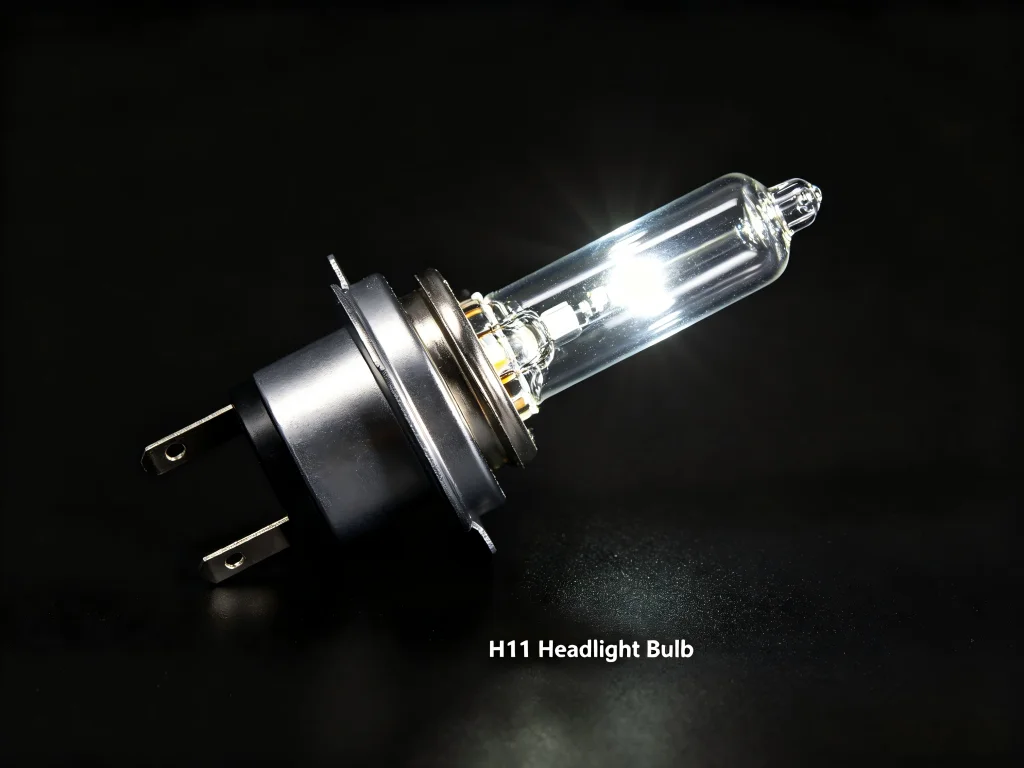
1. Types d'ampoules H11 comparés : ce que vous devez savoir avant d'acheter
La norme de connecteur H11 couvre plusieurs technologies d’ampoules, chacune avec des caractéristiques de performance distinctes, des attentes de durée de vie et des considérations de compatibilité.
CaractéristiqueHalogène H11LED basique H11LED haut de gamme H11Sortie lumineuse (lumens)~1 0003 000-5 0004 000-6 000+Durée de vie (heures)~320-50015 000-25 00030 000-50 000+Consommation (watts)55W30-50W16-25WQualité du faisceauRéférence d’usineSouvent incohérenteCorrespondance de précisionCompatible CANbusOui (usine)Nécessite un décodeur externeSolution intégréeTempérature de couleur~3 000K (jaune)6 000-6 500K (bleu-blanc)6 000K (blanc pur)
Comme le montre le tableau, les options d’ampoules de phare H11 LED haut de gamme offrent des performances nettement meilleures que les alternatives halogènes et LED économiques. Cependant, la qualité du faisceau et la compatibilité varient considérablement, même au sein de la catégorie haut de gamme.
Une analyse de l’industrie a noté qu”‘ une bonne LED H11 produit 3 000-6 000 lumens (contre 2 100 pour la H9), dure 30 000+ heures (contre 320), et consomme moins d’énergie que même l’halogène H11 d’origine[reference:37]. ” L’écart entre le bon et l’excellent se résume souvent à des détails d’ingénierie plutôt qu’à des spécifications brutes.
2. L'erreur #1 lors de l'achat d'une ampoule de phare H11 : ignorer le motif de faisceau
La plupart des acheteurs se concentrent entièrement sur la sortie en lumens tout en ignorant complètement la qualité du motif de faisceau. Une ampoule plus lumineuse avec une mauvaise mise au point délivre moins de lumière utilisable qu’une ampoule modérément lumineuse avec une géométrie de faisceau parfaite.
Voici pourquoi cela compte tellement. Votre boîtier de phare est un système optique conçu autour d’une position et d’une longueur de source lumineuse spécifiques. Les ampoules halogènes émettent de la lumière à 360 degrés à partir d’un point de filament unique. Les puces LED sont des surfaces plates émettant une lumière directionnelle. Si les puces LED ne sont pas positionnées exactement là où se trouverait le filament halogène, le motif de faisceau devient déformé.
Les résultats d’une mauvaise géométrie de faisceau vont d’ennuyeux à dangereux. Des taches sombres apparaissent directement sur votre trajectoire, vous laissant aveugle dans des zones critiques. La lumière se disperse au-dessus de la ligne de coupure, aveuglant les conducteurs venant en sens inverse. Le motif projeté devient irrégulier et incohérent.
Les tests ont montré que les ampoules LED bon marché peuvent créer des motifs de faisceau ” pires que l’halogène d’origine[reference:38]. ” Dans des cas extrêmes, des évaluateurs ont signalé des ampoules où ” il n’y a pas de feux de route/croisement, juste des feux de route tout le temps, et l’alignement est terrible. Ces choses sont un danger pour tous les autres véhicules sur la route[reference:39]. ”
Les fabricants haut de gamme résolvent cela grâce à une ingénierie de précision. Ils mesurent la position exacte du filament de l’ampoule halogène H11 d’usine. Ils positionnent les puces LED avec une précision au micron pour correspondre à cet emplacement. Ils testent les motifs de faisceau dans de véritables boîtiers de phares, pas seulement sur des bancs d’essai.
GTR utilise de véritables puces LED de style ” CSP ” Philips Z ES avec des cotes de résistance à la chaleur supérieures aux alternatives standard[reference:40]. Ces puces sont positionnées pour reproduire l’apparence du filament traditionnel, projetant ” un faisceau lumineux précis qui vous donnera une visibilité accrue, un angle de vision plus large[reference:41]. ”
3. Compatibilité CANbus : pourquoi votre tableau de bord pourrait vous mentir
Les véhicules modernes utilisent des systèmes CANbus pour surveiller chaque composant électrique, y compris vos phares. Le système s’attend à voir une charge électrique spécifique de chaque ampoule. Lorsque vous installez une ampoule de phare H11 LED qui consomme moins d’énergie qu’une halogène, l’ordinateur interprète cela comme une ampoule grillée.
Le résultat est un avertissement classique ” ampoule grillée ” sur votre tableau de bord, même si vos LED fonctionnent parfaitement. Certains véhicules vont plus loin, faisant clignoter constamment les LED ou s’éteindre complètement après quelques secondes de fonctionnement.
Le spécialiste populaire des HID et LED The Retrofit Source confirme que les véhicules dotés de systèmes CANbus sensibles peuvent connaître un clignotement ou une défaillance complète après l’installation de LED, nécessitant des composants supplémentaires pour résoudre le problème[reference:42].
Les fabricants d’ampoules économiques ignorent entièrement ce problème, expédiant des produits qui fonctionnent sur banc d’essai mais échouent dans de véritables véhicules. Ils peuvent mentionner ” compatible CANbus ” dans leur marketing, mais cela signifie souvent simplement que l’ampoule s’allumera, pas qu’elle fonctionnera sans erreurs.
Les solutions haut de gamme abordent cela différemment. Au lieu d’ajouter des décodeurs externes qui créent des points de défaillance supplémentaires, ils conçoivent le circuit de commande pour communiquer correctement avec le système électrique de votre véhicule. Cette approche intégrée élimine le clignotement et les codes d’erreur sans composants externes encombrants.
Philips, un nom de confiance dans l’éclairage automobile, confirme que ” lors de la mise à niveau des ampoules de feux de brouillard vers LED, les fabricants recommandent d’installer un adaptateur d’ampoule LED CANBus, pour éviter le clignotement/scintillement des LED et les témoins d’avertissement au tableau de bord[reference:43]. ” Cependant, les meilleures solutions intègrent cette compatibilité directement, supprimant le besoin d’adaptateurs supplémentaires.
Pour les véhicules dotés de systèmes particulièrement sensibles, des décodeurs anti-clignotement externes peuvent résoudre les problèmes. Ces dispositifs normalisent la tension vers les LED et arrêtent le clignotement en assurant une alimentation continue[reference:44]. Cependant, même ces solutions nécessitent une installation appropriée et peuvent ajouter des points de défaillance au fil du temps.
4. Dissipation thermique : le facteur caché qui détermine la durée de vie
Les puces LED produisent une chaleur importante au niveau de leur point de jonction. Si cette chaleur n’est pas évacuée efficacement, les puces réduisent leur puissance thermique pour éviter l’autodestruction. Cela réduit la sortie lumineuse. Des cycles thermiques répétés finissent par provoquer une défaillance complète de la puce.
C’est pourquoi la technologie de refroidissement compte plus que presque toute autre spécification lors de l’évaluation d’une ampoule de phare H11.
4.1. Refroidissement actif (ventilateurs)
Les ampoules refroidies par ventilateur utilisent de petits ventilateurs à haut régime pour évacuer la chaleur des puces LED. Cette approche fonctionne bien lorsqu’elle est correctement mise en œuvre. Cependant, les ventilateurs peuvent tomber en panne. Lorsque le ventilateur s’arrête, l’ampoule surchauffe et meurt rapidement. Les ventilateurs génèrent également du bruit, bien que les ventilateurs haut de gamme fonctionnent assez silencieusement pour être imperceptibles à l’intérieur de l’habitacle.
Certains fabricants revendiquent des ” ventilateurs remplaçables sans bruit de 10 000 tr/min ” avec des durées de vie allant jusqu’à 30 000 heures[reference:45]. Le défi est que le ventilateur lui-même est une pièce mobile avec son propre taux de défaillance. Lorsqu’un ventilateur tombe en panne, l’ampoule entière devient inutile.
4.2. Refroidissement passif (dissipateurs thermiques)
Le refroidissement passif utilise de grands dissipateurs thermiques métalliques pour rayonner la chaleur loin des puces LED. Cette approche n’a aucune pièce mobile, ce qui signifie que rien ne peut échouer mécaniquement. Cependant, les dissipateurs thermiques passifs nécessitent un espace suffisant à l’intérieur de votre boîtier de phare. Dans les assemblages très compacts, une ampoule de phare H11 à refroidissement passif peut ne pas s’adapter correctement.
Les solutions passives haut de gamme utilisent des dissipateurs thermiques en ” aluminium de qualité aéronautique ” avec une surface optimisée pour une dissipation thermique maximale sans pièces mobiles[reference:46].
4.3. Technologie de séparation thermique
L’approche la plus avancée sépare la puce LED du circuit de commande sur différents plans thermiques. Cela empêche la chaleur des composants du circuit de commande d’affecter les puces LED, et vice versa.
Des tests industriels ont confirmé que la technologie de séparation thermique crée des solutions d’ampoules de phare H11 qui ” fonctionnent plus froides que les concurrents consommant la même puissance[reference:47]. ” Un fonctionnement plus froid signifie une sortie plus constante et une durée de vie considérablement plus longue.
La série Ultra de GTR utilise des puces TST 7045 personnalisées avec cette architecture de séparation thermique exacte. La puce LED repose sur un plan thermique séparé du circuit de commande, garantissant que la chaleur d’aucun composant n’affecte l’autre[reference:48].
5. Ce que rapportent les vrais utilisateurs à propos des options d'ampoules de phare H11 haut de gamme par rapport aux options économiques
Dépasser les affirmations des fabricants pour examiner les expériences réelles des utilisateurs révèle les véritables différences de performance entre les options.
Un utilisateur qui a comparé plusieurs marques haut de gamme a noté que, bien que les ampoules Diode Dynamics SL1 offraient une fabrication américaine, des clients utilisaient avec succès les ” GTR Lighting Ultra 2’s ” avec d’excellents résultats[reference:49]. Le point clé ? La réputation de la marque et la qualité d’ingénierie comptent plus que les affirmations marketing.
Une comparaison détaillée entre GTR Lighting et Morimoto a révélé que ” GTR Lighting propose des options compétitives axées sur la performance, tandis que Morimoto excelle dans le design haut de gamme et les fonctionnalités avancées[reference:50]. ” La série GTR Ultra 2 a été spécifiquement remarquée pour son efficacité et son flux lumineux élevé, conçue pour la performance plutôt que pour l’esthétique.
Le plus révélateur est peut-être le propriétaire d’un Toyota 4Runner qui est passé des ampoules Morimoto 2Stroke 2.0 aux ampoules GTR Ultra 2.0. Leur évaluation était que les ampoules GTR représentaient une ” amélioration considérable ” par rapport à l’option haut de gamme précédente[reference:51]. Ils ont estimé que les ampoules GTR délivraient environ 60-70% de la puissance totale des LED OEM d’usine d’un Lexus GX460, ce qui est exceptionnel pour une mise à niveau aftermarket.
Un autre utilisateur a confirmé que l’installation des ampoules LED GTR Ultra 2.0 H11 ne nécessitait ” aucune modification ” de son véhicule, tout s’adaptant sous les caches anti-poussière d’origine[reference:52].
Ces expériences réelles soulignent qu’une ingénierie haut de gamme se traduit directement par de meilleures performances et une installation plus facile.
6. Questions fréquentes sur les mises à niveau d'ampoules de phare H11
6.1. Le H11 est-il un feu de croisement ou un feu de route ?
Le H11 est principalement utilisé comme ampoule de feu de croisement dans la plupart des véhicules. Cependant, le H11 peut également servir d’ampoule de feu antibrouillard ou de DRL selon la configuration de votre véhicule. Vérifiez toujours votre manuel du propriétaire pour les applications spécifiques.
Un propriétaire a rapporté qu’un kit LED H11 acheté s’adaptait correctement à ses feux de croisement, mais que ” les feux de route n’ont pas le même corps, la même fixation ou le même connecteur électrique “, soulignant l’importance de confirmer l’application spécifique avant l’achat[reference:53].
6.2. Puis-je remplacer un H11 halogène par une LED sans modification ?
Le remplacement direct est possible lorsque l’ampoule LED correspond aux dimensions physiques et aux exigences électriques de votre véhicule. Cependant, ” s’adapter ” ne signifie pas toujours ” fonctionner correctement et rester conforme à la loi[reference:54]. ” Vous avez besoin d’un motif de faisceau approprié, d’un refroidissement adéquat et d’une compatibilité CANbus pour un fonctionnement sans erreur.
6.3. Pourquoi mon ampoule LED H11 clignote-t-elle après l'installation ?
Le clignotement indique généralement une incompatibilité CANbus ou un problème de polarité. Si l’ordinateur de votre véhicule détecte la consommation d’énergie plus faible des LED, il peut tenter de vous alerter en faisant pulser les ampoules. Essayez d’abord de faire pivoter le connecteur de l’ampoule de 180 degrés, car les problèmes de polarité causent ce problème plus de la moitié du temps[reference:55]. Si cela ne résout pas le problème, vous pourriez avoir besoin de décodeurs CANbus[reference:56].
6.4. Quelle devrait être la luminosité d'une bonne ampoule LED H11 ?
Les ampoules LED H11 haut de gamme produisent entre 3 000 et 6 000 lumens par ampoule. Cela représente 300-600% de flux lumineux en plus par rapport à l’halogène d’origine tout en consommant nettement moins d’énergie[reference:57]. Cependant, les chiffres bruts de lumens ne racontent pas toute l’histoire. La qualité du motif de faisceau détermine la quantité de cette lumière qui atteint réellement la route.
6.5. Les ampoules LED H11 s'adapteront-elles à mon véhicule spécifique ?
La compatibilité du véhicule dépend du dégagement physique à l’intérieur du boîtier de votre phare. Certains véhicules ont des ensembles entièrement fermés avec des protections en caoutchouc qui nécessitent des ampoules compactes. Vérifiez toujours la profondeur de votre boîtier avant l’achat. Les fabricants d’ampoules de qualité spécifient les dimensions exactes et fournissent des guides de compatibilité par véhicule.
6.6. Combien de temps durent les ampoules LED H11 par rapport aux halogènes ?
Les ampoules LED haut de gamme sont conçues pour fonctionner entre 30 000 et 50 000 heures. Les ampoules halogènes standard durent environ 320 à 500 heures. À raison de 2 heures de conduite nocturne par jour, une ampoule LED pourrait durer plus de 40 ans, tandis qu’une ampoule halogène devrait être remplacée tous les 6 à 8 mois[reference:58].
Cependant, ces durées de vie supposent une gestion thermique adéquate. Une ampoule LED bon marché avec un refroidissement inadéquat peut tomber en panne en quelques semaines. La conception thermique détermine la longévité plus que tout autre facteur.
6.7. Les ampoules LED H11 nécessitent-elles un câblage spécial ?
La plupart des ampoules LED H11 sont conçues comme des remplacements prêts à l’emploi, ce qui signifie qu’elles se connectent directement à votre câblage d’origine. Cependant, les véhicules équipés de systèmes CANbus peuvent nécessiter des décodeurs supplémentaires pour éviter les codes d’erreur. Les ampoules haut de gamme intègrent cette compatibilité en interne, éliminant ainsi les composants externes[reference:59].
Une remarque importante : si vos ampoules LED ne s’allument pas après l’installation, vous devrez peut-être ” inverser le connecteur mâle de la fiche de 180 degrés et réessayer “, car la sensibilité à la polarité est courante avec les LED[reference:60].
6.8. Quelle température de couleur dois-je choisir pour les ampoules LED H11 ?
6000K produit une lumière blanc pur qui imite la lumière du jour, offrant un excellent contraste sans teinte bleue excessive. 6500K tire légèrement vers le blanc bleuté, ce que certains conducteurs préfèrent esthétiquement mais qui peut réduire le contraste par temps humide. Des températures plus basses autour de 5000K produisent un blanc plus chaud similaire aux LED OEM haut de gamme.
Un avis sur les ampoules Ultra 2 de GTR a noté qu’elles offrent ” une lumière blanche nette de 6000K qui imite la lumière du jour ” sans aucune teinte bleue ou jaune, ce qui les rend idéales pour une visibilité par tous les temps[reference:61].
6.9. Le passage aux LED affectera-t-il la garantie de mon véhicule ?
Le Magnuson-Moss Warranty Act protège les consommateurs contre le refus automatique de garantie après des modifications aftermarket. Cependant, si une mise à niveau LED cause directement des dommages au système électrique de votre véhicule ou au bloc optique, cette réparation spécifique pourrait ne pas être couverte. Conservez toujours vos ampoules d’origine pour les visites de service sous garantie impliquant l’éclairage.
7. Prendre votre décision finale concernant l'ampoule de phare H11
Après avoir examiné les différences techniques entre les options d’ampoules de phare H11 halogènes, LED basiques et LED haut de gamme, le choix se résume à trois facteurs : votre budget, vos conditions de conduite et l’importance que vous accordez à la fiabilité.
L’halogène reste acceptable pour une conduite nocturne occasionnelle dans des zones urbaines bien éclairées. La LED basique convient aux conducteurs à budget serré qui comprennent qu’ils acceptent des compromis sur la qualité du faisceau et la longévité. La LED haut de gamme représente le meilleur rapport qualité-prix global pour quiconque conduit régulièrement de nuit ou par mauvais temps.
La catégorie haut de gamme offre une visibilité nettement meilleure, dure 30 fois plus longtemps, consomme moins d’énergie et inclut des caractéristiques d’ingénierie que les options économiques ignorent complètement. Sur la durée de vie de votre véhicule, la différence de coût devient négligeable par rapport aux avantages en matière de sécurité et à la réduction des tracas.
GTR Lighting a passé près d’une décennie à développer des solutions d’ampoules de phare LED H11[reference:62]. Nos produits utilisent de véritables puces Philips Z ES, intègrent une technologie de séparation thermique et subissent des tests approfondis dans des boîtiers de véhicules réels avant leur commercialisation. Nous ne faisons aucun compromis sur le refroidissement, la géométrie du faisceau ou la compatibilité CANbus.
Si vous êtes prêt à découvrir ce à quoi ressemble une véritable ingénierie d’ampoule de phare H11, explorez notre gamme complète via le lien ci-dessous. Votre conduite nocturne ne sera plus jamais la même.