
If you’re researching low beam vs high beam headlights, you’re past the beginner stage. You know the basics. What you need now is real, actionable information that helps you make an informed purchase decision. This guide is written for that purpose.
Based on our years of manufacturing expertise in automotive LED lighting, we’ve tested every major bulb type, analyzed beam patterns across dozens of vehicle platforms, and compiled what actually matters when you’re shopping for replacement headlights.
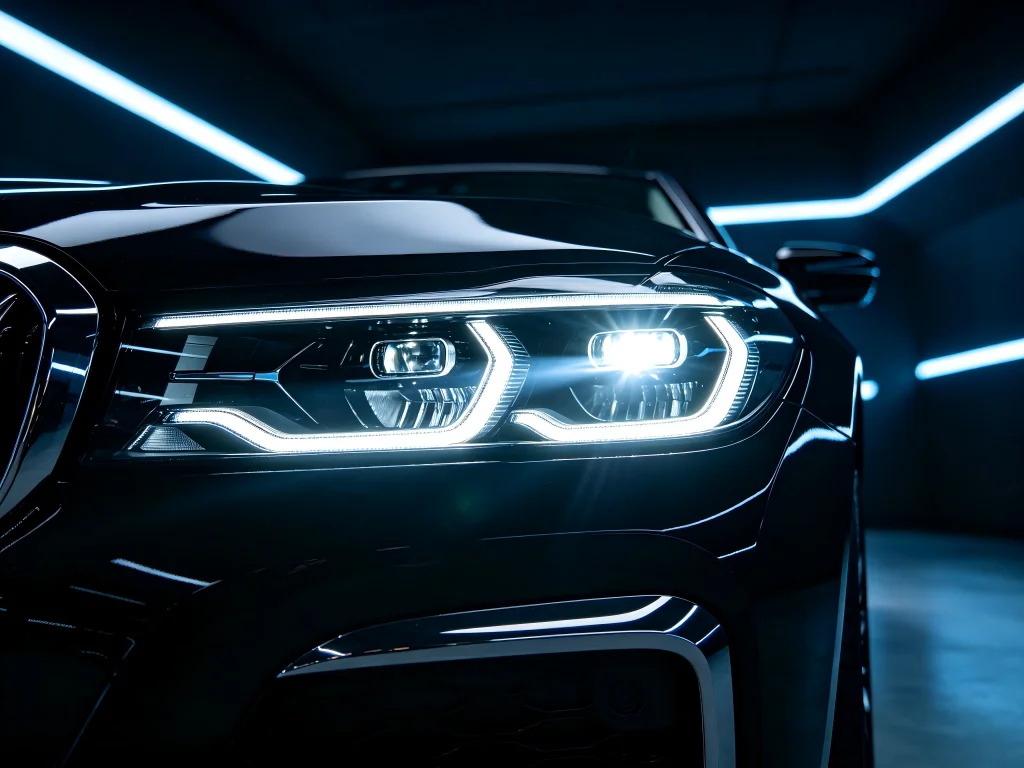
1. Low Beam vs High Beam: The Technical Foundation Every Buyer Must Understand
Low beams are designed for routine night driving. They illuminate the road 150 to 200 feet ahead and are angled downward to avoid blinding oncoming traffic. High beams project light 250 to 350 feet or more, aimed straight ahead for maximum visibility on unlit roads.
The engineering difference is significant. Low beams have a sharp horizontal cutoff in the beam pattern to prevent light from reaching other drivers’ eyes. High beams have no such restriction—they’re allowed to project light upward and forward.
This means you cannot simply “make your low beams brighter” and expect better results. The housing and reflector are calibrated to the specific beam pattern. Change the light source without matching the optics, and you’ll create glare for others while reducing your own usable light.
2. The Bulb Types: What's Actually Inside Your Headlights
Understanding bulb types is essential for any low beam vs high beam headlights comparison. Here’s what you need to know.
2.1. Dual-Filament Bulbs (H4 / 9003 / HB2)
These bulbs contain two filaments in a single housing—one for low beam, one for high beam. When you switch beams, the headlight switches which filament is active. The reflector is precisely adjusted to the position of each filament.
Pros: Simple, cost-effective, one bulb does both jobs.
Cons: The low beam turns off when high beam activates, creating a dark spot directly in front of the vehicle.
2.2. Single-Filament Systems (H7 / 9005 / 9006)
These use separate bulbs for low and high beams. Each bulb has one filament and is dedicated to a single beam pattern.
Pros: The low beam stays on when high beam activates, providing better near-field illumination. Higher light output because two lamps interact.
Cons: Requires four bulbs instead of two. Higher replacement cost over time.
2.3. The Truth About LED vs Halogen vs HID
The bulb type matters less than the beam pattern. But here’s how they compare:
| Fonctionnalité | Halogen | HID | LED |
|---|---|---|---|
| Durée de vie | 500-1,000 hours | 2,000-3,000 hours | 30 000+ heures |
| Efficacité énergétique | Low | Medium | Haut |
| Beam consistency | Degrades over time | Stable | Stable |
| Warm-up time | Instantané | Several seconds | Instantané |
LEDs offer clear advantages over halogen and xenon: they are more energy efficient and last significantly longer. But the critical factor is beam pattern consistency. A quality LED matches the filament position of the original bulb. A cheap LED doesn’t—and you’ll pay for that mistake every time you drive at night.
3. Low Beam vs High Beam in Fog: What the Regulations Don't Tell You
Every driver knows not to use high beams in fog. But few understand why—or what to do instead.
Water droplets suspended in fog scatter light. High beams push more light at a higher angle, causing back-glare that reflects into your eyes. Low beams are angled downward, so they light up the road surface instead of illuminating the fog ahead of you.
Fog lights are different from both. They cast a wide, low pattern that reduces glare. But they’re not a substitute for low beams—they’re a supplement. Use low beams et fog lights together for optimal visibility in adverse conditions.
AAA’s research confirms that low beams are the right tool in rain and fog, while high beams belong on dark, empty roads with no oncoming traffic.
4. The Low Beam vs High Beam Symbol: What Your Dashboard Is Trying to Tell You
Knowing the symbols is basic. Understanding what they don’t tell you is advanced.
The low beam indicator is green with lines pointing downward. The high beam indicator is blue with lines pointing straight out. These symbols tell you which beam is active. They don’t tell you:
- Whether your bulbs are degraded and producing less light
- Whether your headlights are properly aimed
- Whether your lenses are cloudy and reducing output
- Whether you should be using high beams at all in current conditions
In North America, “low” and “high” beam are the standard terms. In Europe, you’ll hear “dipped” and “main” beam. Same function, different terminology.
5. What the Top Search Results Get Wrong About Low Beam vs High Beam
We analyzed the top 20 articles ranking for “low beam vs high beam.” Here’s what they consistently miss.
They don’t address bulb degradation. Most guides treat bulbs as if they perform identically from day one until they burn out. They don’t. Halogen output drops significantly over time. By the time a bulb fails, it may have been producing half its rated output for months.
They ignore headlight aim. Your beams are only as good as their aim. Misaligned headlights reduce visibility and blind other drivers. Yet almost no guide mentions checking aim as part of regular maintenance.
They treat all LEDs as equal. They’re not. A cheap LED from an unknown brand may produce less usable light than a quality halogen, despite higher raw lumen numbers. The beam pattern matters more than the brightness rating.
They don’t address the low beam vs high beam bulb compatibility question. Some vehicles use different bulbs for each beam. Others use a single dual-filament bulb. Buying the wrong type means your new bulbs won’t work at all.
6. The GTR Advantage: Why Professional Installers Choose Our LEDs
Here’s what sets GTR Lighting apart in the low beam vs high beam headlights market.
Engineering precision. Our LEDs are designed to match the filament position of your factory bulbs. The beam goes exactly where it’s supposed to go. No scattered light. No glare for oncoming drivers. Just clean, usable illumination that works with your vehicle’s optics.
Thermal management that actually works. LED output drops as temperature rises. Our designs keep the diodes cool, maintaining consistent light output over hours of driving. Cheap LEDs overheat and dim—often within minutes of being turned on.
Real-world testing. We don’t just test in labs. We test on actual vehicles, on actual roads, in actual conditions. Rain. Fog. Snow. Extreme heat. Extreme cold. If it doesn’t perform in the real world, it doesn’t leave our facility.
Plug-and-play compatibility. Our bulbs install in minutes using your existing housings. No cutting. No splicing. No modifications. Just better light.
7. Low Beam vs High Beam: The Decision Framework
When you’re choosing between lighting options, ask yourself these questions:
- What bulb type does my vehicle use? Check your owner’s manual or look at your current bulbs. H4/9003 means dual-filament. H7/9005/9006 means separate bulbs for each beam.
- What’s my driving environment? Mostly city driving? Focus on low beam quality. Mostly rural highways? High beam performance matters more.
- What’s my budget? Quality LEDs cost more upfront but last longer and perform better. Cheap LEDs are a false economy.
- Am I willing to check my aim? Even the best bulbs won’t help if your headlights are misaligned.
8. Frequently Asked Questions About Low Beam vs High Beam Headlights
Q: Are high beams and low beams the same bulb?
It depends on your vehicle. Some use a single dual-filament bulb (H4). Others use separate single-filament bulbs.
Q: Can I use LED bulbs in my factory housings?
Yes, but only if they’re designed to match the filament position. Cheap LEDs often don’t, creating glare and reducing visibility.
Q: How often should I replace my headlight bulbs?
Halogen bulbs should be replaced every 2-3 years or when you notice dimming. LEDs last much longer—30,000+ hours.
Q: Why do my high beams seem dim?
Could be degraded bulbs, cloudy lenses, misaligned headlights, or a failing electrical connection. Check all four.
Q: What’s the legal difference between low and high beams?
Low beams must not dazzle oncoming drivers. High beams have no such restriction but must be dipped when other vehicles approach.
Q: Can I use high beams during the day?
You can, but there’s usually no need. Daytime running lights or low beams provide adequate visibility.
9. Make the Investment in Better Lighting
You’re researching low beam vs high beam headlights because you care about safety. You want to see better. You want to drive with confidence.
The difference between adequate lighting and great lighting isn’t measured in lumens. It’s measured in feet of stopping distance. In seconds of reaction time. In the difference between seeing the deer and hitting it.
Browse the GTR Lighting collection today and find the LED solution engineered for your vehicle. Because the best time to upgrade your headlights was yesterday. The second-best time is right now.