
1. Introduction: Illuminating the Road Ahead with H4 LED Lights
Driving at night or in poor weather conditions demands clear, reliable illumination. For decades, the yellowish glow of halogen bulbs was the standard, but it came with significant limitations in brightness, efficiency, and lifespan. Today, a transformative upgrade is within easy reach for millions of vehicle owners: the H4 LED light. This technology represents a direct, powerful replacement for the ubiquitous H4 halogen bulb, offering a quantum leap in performance. Upgrading to LED is not merely about changing a bulb; it’s about fundamentally enhancing safety, visibility, and vehicle aesthetics. This article will guide you through everything you need to know about H4 LED lights, from their technical underpinnings and undeniable advantages to selecting the perfect kit and installing it with confidence, ensuring you can truly illuminate the road ahead.
2. What is an H4 LED Light? A Technical and Historical Overview
To understand the H4 LED, one must first understand the H4 standard itself. The “H4” designation refers to a specific bulb fitting or base type, established as an international standard. Historically, an H4 bulb is a dual-filament halogen unit, most commonly used in vehicles for a combined headlight function: one filament for the low beam and a separate, often higher-powered filament for the high beam. This single bulb, through a clever design and reflector/lens system, provides both lighting modes from one housing.
The traditional halogen H4 operates by passing an electrical current through a tungsten filament enclosed in a halogen gas-filled glass capsule. The filament heats to incandescence, producing light. This process is inherently inefficient, as about 90% of the energy is wasted as heat. The advent of Light Emitting Diode (LED) technology presented a new paradigm. LEDs produce light through electroluminescence—the phenomenon of a material emitting light when an electric current passes through it. This process is far more efficient, cooler, and durable.
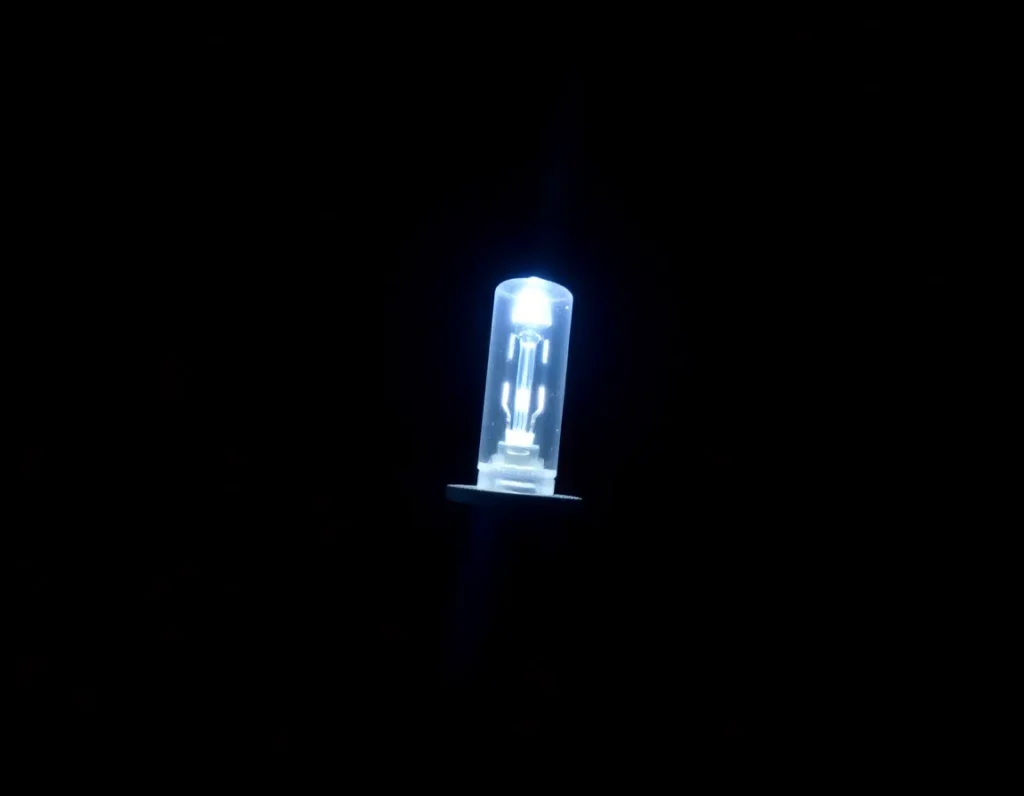
An H4 LED light is, therefore, a direct retrofit bulb designed to physically and electrically replace a standard H4 halogen bulb. However, instead of a fragile filament, it uses an array of high-power LED chips mounted on a circuit board, paired with a sophisticated driver (or ballast) that regulates voltage and current. Crucially, to replicate the dual-beam function, H4 LED bulbs employ a clever mechanical or, more commonly, an electronic solution. Many designs feature a movable internal shield or a second set of LEDs that are activated by the change in voltage when the driver switches from low to high beam. This allows the single LED unit to project the distinct beam patterns required for safe road illumination, matching the optical focal point of the original halogen bulb to work properly with the vehicle’s headlight housing.
3. The Core Advantages: Why Upgrade from Halogen to H4 LED Bulbs
The decision to upgrade is driven by a compelling set of advantages that directly impact driving safety and ownership experience.
3.1. Superior Brightness and Visibility
This is the most noticeable benefit. H4 LED bulbs produce a significantly higher luminous output (measured in lumens) than their halogen counterparts. They emit a crisp, white light that is closer to natural daylight. This color temperature, typically between 5000K and 6000K, reduces eye strain and dramatically improves contrast, making it easier to distinguish objects, road markings, and potential hazards at a greater distance. The road ahead is not just lit; it is illuminated with clarity.
3.2. Enhanced Energy Efficiency
LEDs are champions of efficiency. A typical H4 halogen bulb may draw 55-60 watts per filament. A high-performance H4 LED kit delivering far more light often consumes only 20-40 watts in total. This reduces the load on your vehicle’s electrical system and alternator, which can contribute to minor fuel savings and less strain on the battery, especially in older vehicles or when running multiple accessories.
3.3. Exceptional Longevity
While a halogen bulb’s lifespan is measured in hundreds of hours (often around 500-1,000), a quality H4 LED bulb is rated for tens of thousands of hours—typically 30,000 to 50,000 hours or more. This essentially translates to a “fit and forget” upgrade for the life of the vehicle for most drivers, eliminating the frequent replacement cycle associated with halogens.
3.4. Increased Durability and Reliability
With no fragile glass envelope or delicate filament, LED bulbs are vastly more resistant to vibration and shock. This makes them ideal for rough roads, off-roading, and motorcycles. Their solid-state construction is less susceptible to failure from physical impacts that would instantly destroy a halogen bulb.
3.5. Instant On and Stable Performance
LEDs reach full brightness instantly, with no warm-up time. This provides immediate full illumination when you switch on your lights. Furthermore, their performance is consistent regardless of external temperature or voltage fluctuations within their operating range, unlike halogens which dim as the battery voltage drops.
4. Key Specifications and Features to Understand Before Buying
Not all H4 LED kits are created equal. Understanding these key specifications will help you discern quality products from subpar ones.
- Lumens vs. Watts: Focus on lumens (lm), the measure of total visible light output, not watts (W), which measure power consumption. Seek kits with high, realistic lumen ratings (e.g., 4000lm per bulb or more for a true upgrade). Be wary of exaggerated claims.
- Color Temperature: Measured in Kelvins (K). 4300K-5000K offers a warm white light, 5500K-6000K is a pure, bright white (most popular), and 6500K+ trends toward a cooler, bluish tint. For optimal visibility and legal compliance, 5000K-6000K is recommended.
- Chip Type and Count: The LED chips themselves are critical. Look for reputable brands like CREE, OSRAM, or Philips Lumileds. More chips don’t always mean better light if they are low quality; a well-designed array with fewer high-quality chips often outperforms a crowded array of cheap ones.
- Heat Sink Design: LEDs are efficient but still generate heat at the chip level. Effective cooling is paramount for longevity. Look for large, finned aluminum heat sinks, and increasingly, fan-cooled (active) systems. A good heat sink will feel warm, not scorching hot, during operation.
- Driver/Canbus Compatibility: The driver is the brain of the LED bulb. A high-quality, waterproof driver ensures stable current and prevents flickering. For modern vehicles with computer-controlled electrical systems (CANBUS), you may need “CANBUS-ready” or “error-free” bulbs with built-in resistors or decoders to prevent dashboard warning lights.
- Beam Pattern Certification: This is crucial for legality and safety. The best kits are designed to mimic the exact filament position of a halogen bulb (often referred to as “1:1 filament placement”) and are tested to produce a compliant beam pattern (like ECE or SAE) that doesn’t scatter light and blind oncoming traffic.
5. How to Choose the Best H4 LED Kit: A Buyer's Guide
Armed with knowledge of the key features, follow this practical guide to select the right kit for your vehicle and needs.
5.1. Verify Your Bulb Type
First, confirm your vehicle uses H4 bulbs. Consult your owner’s manual, check the existing bulb, or use an online vehicle bulb lookup tool. Do not assume; an incorrect fitment will not work.
5.2. Prioritize Beam Pattern and Legal Compliance
This is the most important safety and legal factor. Seek out kits that explicitly state they are designed for a proper beam pattern. Look for phrases like “ECE R10 approved,” “SAE/DOT compliant,” or “projector-ready.” Read reviews that include photos of the beam cutoff on a wall. A kit with a perfect beam pattern is worth more than one with slightly higher lumens but poor pattern control.
5.3. Assess Your Vehicle's Headlight Housing
Is your headlight housing a reflector (bowl-shaped) or a projector (has a lens)? Reflector housings are more sensitive to bulb design. Many modern H4 LED kits are optimized for projectors, but good ones exist for reflectors too. Some kits may be too large to fit inside your headlight’s dust cover—check product dimensions and vehicle-specific fitment notes.
5.4. Consider Cooling Method
Passive (heat sink only) systems are silent and generally reliable. Active (fan-cooled) systems are excellent for compact spaces and intense heat dissipation but introduce a moving part that could potentially fail over a very long period. Both are valid; choose based on your space constraints and preference.
5.5. Check for Plug-and-Play Compatibility
Ensure the kit is truly plug-and-play. It should connect directly to your factory H4 wiring harness without splicing wires. Verify if you need a CANBUS decoder (often included or built-in for modern cars).
5.6. Brand Reputation and Warranty
Invest in a reputable brand known for quality and customer support. A solid warranty (2 years or more) is a good indicator of the manufacturer’s confidence in their product. Avoid no-name brands with unbelievable specs and rock-bottom prices.
6. Installation Guide: Step-by-Step Process and Common Challenges
Installing H4 LED bulbs is generally straightforward, but requires care and attention to detail.
6.1. Tools and Preparation
You will need: your new H4 LED kit, gloves (to avoid touching the bulb’s heat sink with skin oils), and possibly basic tools like a screwdriver or socket set. Park on a level surface, turn off the engine, and disconnect the negative terminal of your car battery for absolute safety.
6.2. Step-by-Step Installation
- Access the Headlight Assembly: Open the hood and locate the back of the headlight you are replacing. You may need to remove a dust cover, which typically unscrews or unclips.
- Remove the Old Bulb: Unplug the wiring connector from the back of the halogen bulb. Release the spring clip or metal retaining wire that holds the bulb in place. Carefully remove the old halogen bulb without shaking it (if it breaks, carefully extract all glass fragments).
- Prepare the New LED Bulb: Without touching the LED chips or heat sink with your fingers, unpack the new bulb. If it has a separate driver, connect the bulb to the driver first. Do not fully assemble everything until you test fit the bulb in the housing.
- Test Fit and Orientation: This is a critical step. Insert the LED bulb into the headlight socket, mimicking the position of the old halogen’s base. The LED array has a specific orientation (usually with the chips facing left and right, not up and down) to create the correct beam pattern. Many bulbs have a notch or tab to ensure proper alignment. Secure it with the original spring clip.
- Manage the Driver and Wiring: Once the bulb is seated and secured, you must find a safe, dry place to mount the driver box. Use zip ties (often provided) to secure it away from moving parts, heat sources, and moisture. Route the wires neatly to avoid pinching. Plug the driver into the vehicle’s factory H4 connector.
- Reassemble and Test: If everything fits without forcing, reattach the dust cover. It may need a small notch cut for the wires to pass through—some kits include a rubber grommet for this. Reconnect the car battery. Turn on the headlights and test both low and high beams. Check the beam pattern against a wall or garage door on level ground to ensure a sharp cutoff line.
6.3. Common Challenges and Solutions
- Bulb Doesn’t Fit/Dust Cover Won’t Close: This is the most common issue. The driver or heat sink can be too large. Solutions include using an extender ring (sometimes included), carefully modifying the dust cover, or in some cases, selecting a more compact bulb model.
- Flickering or Hyperflashing: This usually indicates a CANBUS error or incompatible driver. Ensure you are using CANBUS-ready bulbs for your vehicle. Some kits include additional decoders or allow you to switch the driver to a specific mode.
- One Side Doesn’t Work: Double-check all connections are fully seated. Ensure the polarity is correct—while H4 is generally not polarity-sensitive, some LED drivers are. Try swapping the left and right bulbs to isolate if the problem is with the bulb or the vehicle’s wiring.
- Poor Beam Pattern/Glare: This is almost always due to incorrect bulb orientation. Remove the bulb and rotate it 90 or 180 degrees, then resecure it. The LED chips must align horizontally in the housing.
7. Legal and Safety Considerations: Beam Patterns, MOT, and Roadworthiness
Upgrading to an H4 LED light is not just about performance; it’s a modification that carries significant legal and safety responsibilities. The primary concern for road use is ensuring your headlights produce a correct, safe beam pattern that does not blind other drivers. Halogen housings are designed to reflect and focus light from a small, cylindrical filament in a specific location. LED bulbs, with their differently shaped and positioned emitters, can scatter light incorrectly if not perfectly matched to the housing, creating dangerous glare and dark spots. This is why proper installation and bulb orientation, as discussed, are non-negotiable for road safety.
Legally, the standards vary by region but are generally strict. In the UK and many European countries, vehicles must pass an MOT test, which includes a headlight aim and pattern check. The official stance is that any headlight unit not type-approved for use with LED bulbs is technically illegal if such bulbs are fitted, regardless of beam quality. While a well-aligned, properly installed LED kit in a halogen housing may pass the beam pattern test on the MOT equipment, the tester can still fail the vehicle on the grounds of non-compliance with type-approval (ECE R37 for halogen, ECE R128 for LED). The risk of failure is real, and insurance companies may view non-compliant lights as a modification that invalidates a policy in the event of an accident.
In the United States, regulations are based on Federal Motor Vehicle Safety Standard (FMVSS) 108, which effectively requires any replacement bulb to be of the same type as originally installed. This makes most LED retrofits in halogen housings non-compliant at the federal level, though enforcement is typically a state-level issue. The key takeaway is universal: for guaranteed, worry-free road legality, the only definitive solution is to replace the entire headlight assembly with a unit that is type-approved and designed from the ground up for LED technology. For off-road or show use, these restrictions do not apply, but responsible users should always disable non-compliant lights when on public roads.
8. Troubleshooting Common H4 LED Issues
Even with careful selection and installation, you may encounter issues with your H4 LED conversion. Here’s a systematic guide to diagnosing and solving the most common problems.
8.1. Bulb Doesn't Fit or Dust Cover Won't Close
This is the most frequent physical challenge. The integrated driver or large heat sink on the back of the bulb can protrude too far into the engine bay, preventing the rubber dust cover from sealing. First, check if your kit included plastic extender rings. These widen the cover’s opening. If not, you can sometimes carefully trim the inside of the dust cover (avoid cutting the sealing lip). As a last resort, a small, breathable but waterproof cover can be sourced to replace the original. Selecting a bulb model known for a compact, low-profile driver is the best preventative measure.
8.2. Flickering, Hyperflashing, or Error Messages
Modern vehicles use a CANBUS system to monitor bulb health by detecting small electrical loads. LEDs draw significantly less power than halogens, which the car’s computer interprets as a “blown bulb,” causing flickering or dashboard warnings. The solution is to use “CANBUS-ready” bulbs, which have built-in load resistors or intelligent drivers that simulate a halogen’s electrical signature. If flickering persists, you may need to add an external decoder or capacitor kit. For turn signal hyperflashing, ensure the bulbs are CANBUS-compatible for turn signals specifically.
8.3. One Side Doesn't Work or Lights Intermittently
If one H4 LED light fails, first swap the bulbs from left to right. If the problem moves, the bulb or its driver is faulty. If the problem stays on the same side, the issue is with the vehicle’s wiring, socket, or ground connection. Ensure the plug is fully seated—some OEM connectors can be tight. Also, while the H4 base itself isn’t polarized, some LED drivers are. Try rotating the plug 180 degrees on the bulb’s connector. Check for corrosion or bent pins in the vehicle’s headlight socket.
8.4. Poor Beam Pattern, Excessive Glare, or Dark Spots
As emphasized, this is almost exclusively an installation error. The LED chips must be aligned horizontally (side-to-side) when installed in the housing. If the beam pattern is cut off incorrectly or throws light upward, the bulb is likely rotated 90 degrees. Remove the retaining clip or ring, rotate the bulb, and reseat it. View the pattern on a wall at night to confirm. If the pattern remains poor with perfect orientation, the specific bulb model may simply be optically incompatible with your vehicle’s reflector or lens design.
8.5. Overheating or Reduced Lifespan
While LEDs run cooler than halogens at the emitter, the driver and heat sink can get very hot. Permanent damage occurs if heat isn’t dissipated. Ensure the heat sink has ample free air space around it and isn’t resting against wiring or plastic. Never install LEDs in enclosed housings not designed for them, as stagnant heat will drastically shorten their life. If a bulb fails prematurely, overheating is a likely culprit.
9. Top Applications: From Daily Drivers to Off-Road and Motorcycles
The versatility of the H4 socket makes LED upgrades beneficial across a wide spectrum of vehicles, each with slightly different priorities.
9.1. Daily Driver Commuter Cars
For the average commuter, the primary motivation is enhanced safety and reduced strain. The whiter, brighter light of an H4 LED light improves contrast, making road edges, debris, and pedestrians more visible in low-light and rainy conditions. The instant-on capability and longer lifespan also mean greater reliability and less frequent, annoying bulb changes. For this application, prioritize bulbs with a proven, clean beam pattern to avoid glare for oncoming traffic and ensure a smooth, wide spread of light on low beam.
9.2. Long-Distance Highway and Night Driving
Those who frequently drive on unlit highways at night benefit immensely from the increased throw distance of a high-quality LED high beam. A good kit will provide a powerful, focused hotspot that illuminates road signs and potential hazards hundreds of feet ahead, reducing driver fatigue. Look for bulbs with a high, legitimate lumen output and a design optimized for distance. The combination of a wide low beam and a penetrating high beam creates an ideal safety package for touring.
9.3. Off-Road and Adventure Vehicles
In off-road applications, where legal beam patterns are often secondary to raw output, H4 LED conversions are a game-changer. They provide massive light to navigate trails, campsites, and work areas. The robust construction of good LED bulbs (no fragile filaments) better withstands the vibrations and shocks of rough terrain. For these users, maximum lumens, a durable build, and sometimes even bulbs with a dedicated “off-road only” mode that activates both high and low beam elements simultaneously are key attractions.
9.4. Motorcycles
For motorcyclists, being seen is as important as seeing. Upgrading a motorcycle’s often-weak halogen H4 to LED significantly increases the vehicle’s frontal presence to other drivers. The lower power draw also reduces load on the bike’s typically smaller charging system, freeing up watts for other accessories. The compact size of many LED bulbs is a major advantage in tight motorcycle headlight housings. Crucially, motorcyclists must ensure any upgrade does not create blinding glare, as they are often at eye level with car drivers.
9.5. Classic and Vintage Cars
Owners of classic cars are drawn to LED upgrades for reliability and safety, wanting to preserve the original look while gaining modern performance. The key here is finding bulbs that maintain a classic color temperature (closer to warm white than cool blue) if desired, and that fit within often-tight original housings without modification. It allows these vehicles to be driven more safely at night without altering their iconic appearance.
10. Maintenance and Care for Long-Lasting H4 LED Performance
While H4 LED bulbs are famously low-maintenance compared to halogens, a few simple practices will ensure they deliver peak performance for their entire, long lifespan.
First, handle the bulbs with care during installation and any subsequent handling. Avoid touching the silicone lens over the LED chips with bare fingers, as skin oils can create hot spots and degrade the material over time. If you do touch it, clean it gently with isopropyl alcohol. Ensure all electrical connections are tight and protected from moisture. The plug should click firmly into the bulb’s connector, and any aftermarket wiring (like for decoders) should be secured with zip ties away from moving parts or extreme heat sources.
Periodically inspect the bulbs and their surroundings. Check that the heat sink fins are free of accumulated dirt, dust, or debris, as this insulation can cause overheating. A quick blast of compressed air can help. Look at the rubber dust cover to ensure it is still sealed properly, preventing water and contaminants from entering the headlight assembly and potentially corroding the bulb’s contacts.
Unlike halogens that gradually dim, LEDs typically maintain consistent output until they fail. However, it’s a good idea every six months or so to visually check both headlights at night against a wall to confirm they are both working and the beam pattern remains level and correct. If you notice one light appearing significantly dimmer or changing color (a sign of emitter failure), it’s time for a replacement. Finally, always store spare bulbs or your original halogens in a clean, dry place. By following these simple steps, your H4 LED upgrade will provide years of reliable, brilliant illumination.
11. Summary of Key Points
Upgrading to H4 LED headlights represents a significant technological leap forward from traditional halogen bulbs. This conversion centers on replacing the dual-filament H4 bulb with a unit that uses light-emitting diodes, offering dramatically improved light output, a whiter color temperature, and vastly longer service life. The core advantages are compelling: you gain enhanced nighttime visibility and safety, reduced energy draw on your vehicle’s electrical system, and the convenience of not having to replace bulbs every year or two.
However, this upgrade is not a simple plug-and-play guarantee of success. Critical technical factors must be considered, such as lumens (true brightness), Kelvin (light color), and the all-important thermal management system—passive heat sinks are generally more reliable than noisy fans. The single biggest challenge is optical compatibility; a bulb must be installed with its LED chips perfectly horizontal to produce a legal, safe beam pattern in a halogen housing, and even then, legal roadworthiness can be a gray area depending on local type-approval regulations.
Choosing the right kit involves matching the bulb’s physical size to your vehicle’s headlight cavity, ensuring it is CANBUS-ready to prevent flickering, and selecting a reputable brand known for quality components. Installation requires patience to ensure proper orientation and fitment, often involving small modifications like extender rings. The applications are broad, benefiting daily drivers, long-distance travelers, off-road enthusiasts, motorcyclists, and classic car owners alike. With minimal maintenance—primarily keeping the assembly clean and connections secure—a well-chosen H4 LED light kit can transform your nighttime driving experience for many years to come.
12. Frequently Asked Questions (FAQ)
12.1. Are H4 LED bulbs legal for road use?
This is the most complex question. Technically, in most regions (including the UK/EU and the USA), replacing a halogen bulb with an LED bulb in a housing not specifically type-approved for LEDs is not compliant with vehicle lighting regulations. The legality often hinges on passing a beam pattern test. While a properly oriented, high-quality LED may pass the pattern check, it can still be deemed non-compliant by an inspector. For guaranteed legality, you must replace the entire headlight unit with an ECE R128 or SAE/DOT-approved LED assembly.
12.2. Why are my new H4 LED bulbs flickering?
Flickering is almost always a CANBUS or PWM (Pulse Width Modulation) issue. Your vehicle’s computer checks for bulbs by sending a small pulse of current. The low draw of an LED makes it appear dead. You need “CANBUS-ready” bulbs with built-in error cancellation or may need to install external decoders or capacitors to simulate a halogen’s electrical load.
12.3. Can I just plug H4 LED bulbs into my old halogen sockets?
Physically, yes—the base is identical. However, for reliable operation, you must consider three things: 1) Physical fitment (the driver may be too large), 2) Correct rotational orientation of the bulb for beam pattern, and 3) Whether your vehicle requires CANBUS-compatible bulbs to avoid error messages. It is rarely just a simple plug-in operation.
12.4. Do H4 LED bulbs get hot?
The LED chips themselves produce very little radiant heat compared to a halogen filament. However, the driver and heat sink at the back of the bulb get quite hot as they work to dissipate the heat generated at the semiconductor junction. This is why proper heat sinking and airflow are critical for longevity.
12.5. How long do H4 LED headlight bulbs actually last?
While many are rated for 30,000 to 50,000 hours, real-world lifespan in a vehicle depends heavily on thermal management, electrical stability, and build quality. A well-designed bulb in a suitable application can easily last 5-10 years of normal use, far outstripping the 500-1,000 hour typical lifespan of a halogen bulb.
12.6. Why is there a dark spot or strange pattern in my headlight beam now?
This is a clear sign of incorrect bulb orientation. The design of your reflector or projector bowl is engineered for light emanating from the specific position of a halogen filament. If the LED chips are not aligned exactly where that filament was, light will be scattered incorrectly. Remove the bulb and rotate it 90 degrees, then retest the pattern on a wall until it is correct.
12.7. Are fan-cooled or heat sink bulbs better?
Passive heat sink designs are generally considered more reliable for the long term because they have no moving parts to fail. Fans can become clogged with dirt or fail, leading to overheating. However, very high-power LEDs sometimes require active cooling. For most applications, a well-designed passive heat sink is preferable.