
Scegliere il giusto fari a led off road per il tuo veicolo non è semplice. Entra in qualsiasi negozio di off-road o scorri Amazon, e ti trovi di fronte a centinaia di opzioni — dimensioni diverse, fasci di luce diversi, fasce di prezzo diverse e affermazioni molto diverse su luminosità e durata.
Most of these claims are exaggerated. Many of these lights will fail within 18 months. And almost none of the buying guides available tell you what really matters.
This guide is different. We will break down everything you need to know — the technology, the specifications, the marketing tricks, and the real-world factors that separate lights that work from those that disappoint.
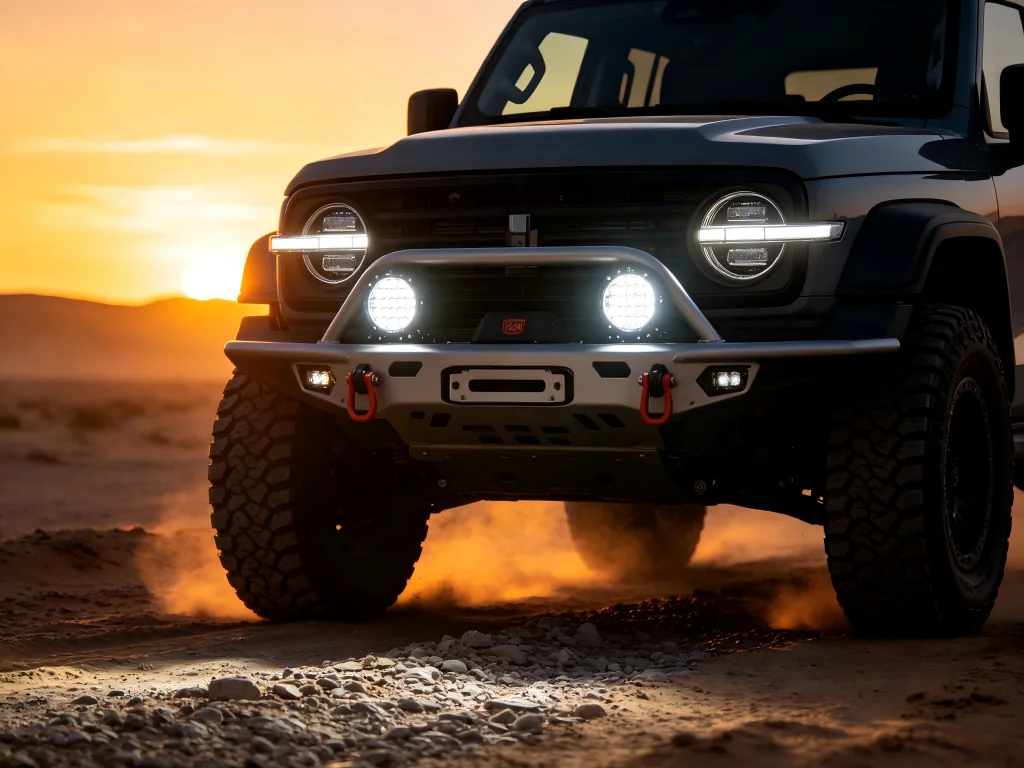
1. LED vs. Halogen vs. HID: Which Technology Wins?
Before we dive into specific products, let's settle the technology debate once and for all.
1.1. Halogen — The Old Standard
I fari alogeni usano un filamento riscaldato per produrre luce. Sono stati lo standard nell’illuminazione automobilistica per decenni.
Pros: Economici da acquistare. Facili da sostituire. Funzionali nella maggior parte delle condizioni.
Cons: Durata breve (400-1.000 ore). Scarsa efficienza. Producono luce giallastra e meno chiara. Assorbono più energia per una resa inferiore. Un alogeno standard da 55W produce circa 1.000-1.500 lumen.
1.2. HID (Scarica ad Alta Intensità) — Luminosi ma Complicati
I fari HID usano un arco elettrico per produrre luce. Sono estremamente luminosi — spesso l’opzione più brillante disponibile.
Pros: Resa molto elevata. Ampia gamma di temperature di colore.
Cons: Costosi. Richiedono tempo di riscaldamento. Possono abbagliare il traffico in arrivo. Installazione complessa.
1.3. LED — Il Chiaro Vincitore per l'Off-Road
I fari LED (diodo a emissione di luce) usano l’elettroluminescenza per produrre luce — non calore.
Risposta diretta: I LED sono la scelta superiore per l’illuminazione off-road perché offrono più luce per watt, durano 10-50 volte di più degli alogeni, resistono meglio a vibrazioni e urti e raggiungono la piena luminosità istantaneamente senza tempi di riscaldamento.
Pros:
- Durata di vita 5-10 volte superiore rispetto agli HID, 50 volte superiore rispetto agli alogeni
- Consumo energetico inferiore dell’80% rispetto alle luci alogene comparabili
- Accensione istantanea — piena luminosità immediata
- Alloggiamenti più robusti che resistono a vibrazioni, acqua e fango
- Design più compatto per un montaggio flessibile
Cons:
- Higher initial cost compared to halogens
- Quality varies greatly between manufacturers
| Fattore | Halogen | HID | LED |
|---|---|---|---|
| Durata della vita | 400-1,000 hours | 2,000-5,000 hours | 30,000-50,000 hours |
| Lumens per Watt | ~20-30 | ~80-100 | ~100-150+ |
| Tempo di riscaldamento | Immediato | 5-15 seconds | Immediato |
| Durata | Fragile filament | Moderate | Extremely robust |
| Cost | Low | High | Medium-High |
2. Light bars vs. pod lights: which should you choose?
This is one of the most common questions off-road enthusiasts ask. The answer depends on your vehicle, your terrain, and your driving style.
2.1. LED light bars — Maximum coverage
An LED light bar is a long, linear lighting solution designed to provide maximum forward illumination over a wide area.
Ideal for: Camion, SUV, UTV e veicoli da corsa che operano di notte o in condizioni di scarsa visibilità. Guida ad alta velocità nel deserto. Terreno aperto e ampio.
Vantaggi principali: Elevata emissione luminosa. Ampia copertura. Fascio uniforme e pulito. Una luce, un’installazione.
Considerazioni: Costo iniziale più elevato. L’ingombro maggiore limita le opzioni di montaggio. Fascio fisso — meno regolabile rispetto ai pod.
2.2. Luci a pod a LED — Precisione mirata
Le luci a pod sono luci compatte e modulari progettate per l’illuminazione mirata. Possono essere orientate con precisione dove serve più luce.
Ideal for: Terreno tecnico come il rock crawling. Guida su sentieri a bassa velocità. Integrazione con una barra luminosa. Veicoli con spazio di montaggio limitato.
Vantaggi principali: Altamente regolabili. Possono essere montate quasi ovunque. Modulari — inizia con poche e aggiungine altre secondo necessità.
Considerazioni: Produzione inferiore per unità. Potrebbero essere necessari più moduli per eguagliare la produzione di una singola barra.
La mossa da professionisti: Molti off-roadisti seri usano entrambi: una barra luminosa per una copertura ampia e frontale e luci a modulo per curve, illuminazione di fossati o esigenze specifiche del terreno.
3. Schemi di Fascio: Scegliere la Luce Giusta per il Tuo Terreno
Lo schema del fascio determina quanto sia utilizzabile la tua luce. Una luce da 10.000 lumen con scarsa messa a fuoco sarà sempre inferiore a una luce da 6.000 lumen correttamente focalizzata.
3.1. Fasci Flood
They spread light widely and at close range. Excellent for illuminating the ground right in front of you: rocks, ruts, and obstacles within 6-9 meters. Ideal for slow, technical driving.
3.2. Spot Beams
They project light far and narrow: over 30 meters along the trail. Ideal for high-speed driving where you need to see hazards in the distance and plan your trajectory well in advance.
3.3. Combo Beams
They combine both patterns. The center produces a narrow spot while the outer ring floods the sides. Most serious off-roaders use combo patterns because they handle varied terrain and speeds.
For most 4x4 and pickup applications, choose a combo beam with at least 40% spot content.
4. Color Temperature: Which Kelvin Rating Should You Choose?
Color temperature is measured in Kelvin (K) and affects how well you see details and how your eyes react.
- 3000K (Warm/Amber): Yellowish light. More restful for the eyes during long trips. Better in fog and dust because warm light scatters less. Essential for harsh environments like desert silt or thick fog.
- 4000-5000K (Neutral White): True white light with balanced visibility and eye comfort. Works well in most conditions. Around 5000K mimics natural daylight and reduces eye strain for long hours on the trail.
- 6000-6500K (Cool White): Blue-white light. Appears brighter at the same lumens but can cause more eye strain. Often used for aesthetic reasons but less practical for prolonged night driving.
Recommendation: For most off-road applications, choose 4000-5000K for balanced visibility and minimal eye strain. Keep amber lights (3000K) for fog and dust conditions.
5. IP Ratings: What They Mean and Why They Matter
IP (Ingress Protection) ratings indicate how well a light is sealed against dust and water.
- IP67: Dust-tight. Protected against immersion up to 1 meter for 30 minutes.
- IP68: Dust-tight. Protected against continuous immersion beyond 1 meter — depth and duration vary by manufacturer.
- IP69K: Dust-tight. Protected against high-pressure, high-temperature water jets — the highest rating available.
Risposta diretta: For serious off-road use, look for at least IP68 or IP69K. These ratings ensure your lights can handle deep water crossings, heavy mud, and pressure washing without failing.
But remember: The IP rating alone does not guarantee long-term sealing. Look for pressure compensation valves that prevent moisture ingress during temperature changes. Look for robust sealing materials that won't harden and crack over time.
6. The Hidden Costs of Cheap LED Lights
That $60 LED light bar on Amazon might seem like a bargain. But here's what you're actually buying:
- Exaggerated lumen claims — A $300 LED light bar might claim 5,000 lumens but only deliver 3,500.
- Poor thermal management — Il calore uccide i LED. Le luci economiche mancano di un adeguato dissipatore di calore, portando a un rapido degrado.
- Tenuta debole — L’ingresso di acqua è la seconda modalità di guasto più comune. Le guarnizioni economiche si guastano entro pochi mesi.
- Driver instabili — I picchi di tensione dell’alternatore possono uccidere istantaneamente le luci economiche.
- Fasci di luce dispersi — L’ottica economica produce luce irregolare con punti luminosi e punti scuri.
Quando si somma tutto, quel “affare da $60” ti costa più di una luce progettata correttamente — in sostituzioni, in frustrazione e in sicurezza.
7. Requisiti di lumen nel mondo reale in base allo stile di guida
Di quanta luce hai effettivamente bisogno? Ecco una ripartizione pratica:
- Guida su sentieri casuale: 5.000-10.000 lumen totali. Una singola barra LED da 20-30 pollici (120-180W) sul paraurti o sulla griglia fornisce questa potenza.
- Fuoristrada moderato: 10.000-20.000 lumen totali. Combina una barra luminosa con luci a pod per una copertura più ampia.
- Fuoristrada aggressivo (rocce, ostacoli ad alta velocità): 8.000-12.000 lumen da una singola barra o 15.000+ da un setup multi-luce.
- Arrampicata su roccia lenta (sotto i 10 mph): 3.000-5.000 lumen da fari e pod possono essere sufficienti.
8. Domande frequenti sulle luci LED fuoristrada
8.1. Le luci LED fuoristrada costose valgono i soldi?
Sì. Una barra luminosa premium di un produttore affidabile fornisce i lumen dichiarati perché i componenti elettronici interni e l’ottica sono progettati correttamente. Una luce economica può dichiarare la stessa potenza ma fornire solo il 60-70% di essa — e guastarsi molto prima.
8.2. Che dimensione di barra luminosa mi serve per il mio camion?
Una barra da 40-50 pollici si adatta alla maggior parte dei tetti dei camion a grandezza naturale. Una barra da 30-40 pollici è adatta ai camion di medie dimensioni. Una barra da 20 pollici si adatta a paraurti, griglie e spazi ristretti.
8.3. Posso mescolare barre luminose e luci pod sullo stesso veicolo?
Assolutamente. Molti off-roadisti seri usano entrambe: una barra luminosa per una copertura ampia e frontale e luci pod per curve, illuminazione laterale o esigenze specifiche del terreno.
8.4. Qual è la differenza tra lumen grezzi e lumen effettivi?
I lumen grezzi misurano l’emissione luminosa totale dei LED. I lumen effettivi misurano la luce utilizzabile che raggiunge effettivamente il suolo. Una luce di alta qualità avrà tipicamente una valutazione di lumen effettivi di circa il 65-75% della sua valutazione grezza.
8.5. Come faccio a sapere se una luce LED off-road è legale per la strada?
Cerca l’approvazione SAE (Society of Automotive Engineers). Le luci approvate SAE sono legali per la strada negli Stati Uniti, con modelli di fascio progettati per prevenire l’abbagliamento ed evitare di accecare altri conducenti. Le luci non SAE forniscono la massima emissione ma dovrebbero essere riservate solo all’uso fuoristrada.
8.6. Perché alcune luci off-road hanno lenti ambra o gialle?
Amber/yellow light cuts through fog, dust, and adverse weather conditions better than white light. It disperses less in particles, offering better visibility in difficult conditions.
9. Why GTR Stands Out from the Competition
At GTR, we have spent years designing lighting solutions for the toughest conditions on earth. Our off-road LED lights are built to a standard, not a price.
Here's what sets us apart:
- In-house production: We control quality from raw materials to finished product. No outsourcing. No shortcuts.
- CNC-machined aluminum housings: Maximum heat dissipation. Maximum durability. Minimum weight.
- Premium LED drivers: Constant current output. Overvoltage protection. Reverse polarity protection. Thermal regulation.
- IP68/IP69K certified: Tested and certified by independent laboratories. Not just claimed.
- Impact-resistant polycarbonate lenses: UV-stable. Scratch-resistant. Unbreakable.
- Precision optics: Clean, uniform light beams. No dark spots. No scattered light.
- Rated lifespan of over 30,000 hours: Years of reliable performance.
We don't just sell lights. We design solutions that get you home safely — night after night, trail after trail.
10. Ready to Upgrade Your Off-Road Lighting?
Stop guessing. Stop settling. Stop replacing failed lights every 18 months.
Choose lighting designed for the trail — not the shelf. Choose lighting that delivers what it promises. Choose lighting from a manufacturer that backs every product.
Explore our full range of off-road LED lighting solutions at https://www.rhgtr.com.
Whether you need a light bar for high-speed desert racing, spotlights for technical rock crawling, or a complete lighting system for your overland vehicle — we have the solution. And we have the engineering expertise to back it up.
Because when the trail gets dark, you need lights you can trust..