
Most bi pin led light bulb buying guides are polite. They list wattage equivalents, mention lumens, and suggest you “choose a reputable brand.” They don‘t tell you that the $1.79 bulb from the clearance bin will flicker on your halogen transformer. They don’t explain why two “20W equivalent” G4 bulbs can have completely different light quality. And they certainly don‘t walk you through the driver electronics that determine whether a bulb lasts two years or twenty. This guide does. It’s built for you — whether you‘re replacing under-cabinet lights, landscape path lights, RV interior bulbs, or chandelier capsules — and it’ll help you buy the right bulb once, not the wrong bulb three times. GTR has been manufacturing LED lighting since 2009, and the insights here come from thousands of compatibility tests, hundreds of transformer configurations, and the kind of hard-won knowledge you only get when you design the product yourself.
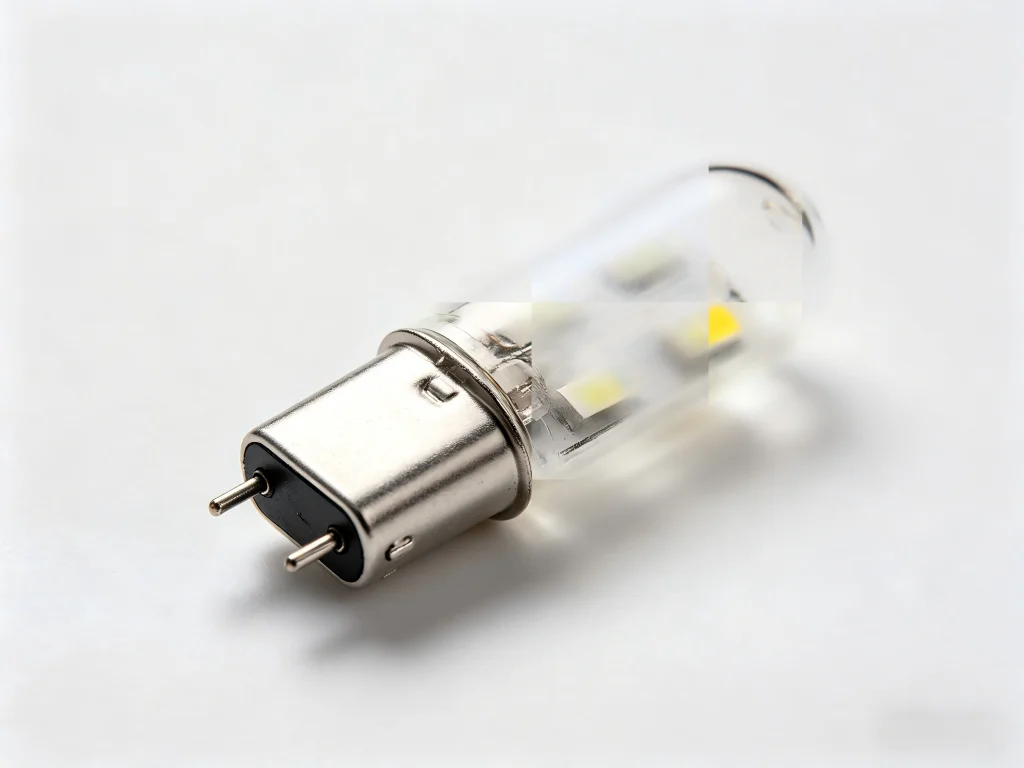
1. The Bi-Pin Landscape: Understanding What You‘re Actually Shopping
A bi pin led light bulb isn’t one product — it‘s a family of bulbs that share a two-pin base but diverge significantly in size, voltage, light output, and internal engineering. Understanding the landscape before you click “buy” is the single most effective way to avoid returns, flicker, and bulbs that don’t fit.
1.1. Base Types: G4, G9, and the Ones That Get Confused
The “G” in G4 or G9 stands for “glass” — a historical nod to the original halogen capsule design. The number is the pin spacing in millimeters. G4 means 4mm between pins. G9 means 9mm. Simple enough. But here‘s where it gets messy:
- G4 is the most common bi-pin base in low-voltage (12V) applications — under-cabinet puck lights, landscape path lights, RV ceiling fixtures, and some chandeliers. The pins are thin, straight, and spaced 4mm apart.
- G9 is primarily a line-voltage (120V–240V) base, found in chandeliers, pendant lights, and some bathroom fixtures. The pins are thicker and spaced 9mm apart. G9 bulbs almost never run on 12V.
- GY4, GZ4, GU4 are G4 variants with slightly different pin geometries or base shrouds. GY4 pins are slightly thicker (0.7mm vs. 0.65mm for G4). GU4 and GZ4 add a plastic base clip. They‘re less common but can cause confusion — a bulb that “looks” like G4 may not seat properly if it’s actually GY4 and your socket expects the thinner G4 pin diameter.
- T3 isn‘t a base type — it’s a shape code for the glass capsule (tubular, 3/8-inch diameter). T3 bulbs almost always have G4 bases. A t3 g4 bi pin led light bulb is simply a G4-based LED in a tubular T3 capsule form factor.
1.2. Voltage: The Fork in the Road
This is where most ordering mistakes happen. Bi-pin bulbs come in two voltage families, and they are not interchangeable:
- 12V (low voltage) — Used in landscape lighting, RV/boat fixtures, under-cabinet puck lights, and some track lighting. These fixtures have a transformer (magnetic or electronic) that steps 120V line voltage down to 12V. A 12V bulb plugged directly into a line-voltage fixture will explode — instant, dramatic, and dangerous.
- 120V (line voltage) — Used in chandeliers, some pendant lights, bathroom vanity bars, and most G9 fixtures. These bulbs connect directly to mains power with no transformer. A 120V bulb in a 12V socket will barely glow if at all.
Related to this is AC versus DC operation. A 12 volt led bi pin light bulbs system may supply AC (from a magnetic transformer), DC (from an electronic LED driver or battery system) — or the bulb needs to handle both. A bulb rated only for DC that‘s plugged into an AC circuit will flicker visibly at 60Hz. A bulb rated for AC/DC has internal rectification and handles either input without issue. In RV and marine applications where the power source flips between shore power AC and battery DC, AC/DC-rated bulbs are non-negotiable.
1.3. Lumens, Wattage, and the Equivalent Game
“20W equivalent” is the most abused phrase in LED marketing. A halogen G4 bulb draws 20 watts and produces roughly 250–300 lumens — that’s the baseline. Many LED bulbs labeled “20W equivalent” produce 180–220 lumens, significantly less. Others produce 350 lumens, significantly more. There‘s no standard, and the number on the box may reflect the manufacturer’s optimism more than the bulb‘s actual output.
The only number that counts is lumens. Here’s a quick reference for common bi-pin equivalents based on our photometric testing:
| Halogen wattage | Typical Halogen Lumens | LED Replacement Wattage | Equivalent LED Lumens to Match | Common Base |
|---|---|---|---|---|
| 10W | 100–140 lm | 1–1.5W | 120–160 lm | G4 |
| 20W | 250–300 lm | 2–3W | 250–350 lm | G4 |
| 35W | 400–500 lm | 3.5–5W | 400–550 lm | G4 |
| 50W | 600–800 lm | 5–7W | 600–850 lm | G4 |
| 25W G9 | 200–250 lm | 2.5–3W | 200–280 lm | G9 |
| 40W G9 | 400–500 lm | 4–5W | 400–550 lm | G9 |
| 60W G9 | 600–750 lm | 6–8W | 600–800 lm | G9 |
Source: GTR internal photometric testing. Individual product results may vary. Always check the bulb’s published lumen output before ordering — never rely on wattage-equivalent claims alone.
2. The Internal Engineering No One Discusses
2.1. Driver Quality: The PCB Inside Your Bulb
Pop open a premium bi pin led light bulb (destructively, in our lab), and you‘ll find a miniature PCB packed with surface-mount components. Pop open a generic one, and you might find a single diode, a resistor, and not much else. The driver circuitry determines everything about the bulb’s performance — flicker resistance, dimmer compatibility, voltage tolerance, and lifespan.
A well-engineered driver includes:
- Bridge rectifier — four diodes arranged to convert AC to DC regardless of input polarity. This is why the bulb works when plugged in either direction and doesn‘t flicker on AC transformers.
- Constant-current IC — a dedicated integrated circuit that regulates current to the LED emitter, maintaining consistent brightness across an input range (e.g., 8V–24V). Without this, brightness varies with supply voltage.
- Electrolytic capacitor — smooths rectified DC and eliminates residual ripple. In dimmable bulbs, this capacitor must be carefully sized to avoid visible flicker at low dimming levels.
- Thermal protection — a thermistor or dedicated thermal IC that reduces current if the PCB temperature exceeds safe limits, typically around 85–100°C at the LED junction.
Budget bulbs omit these components to hit a price point. A bulb with no bridge rectifier will flicker perceptibly on AC circuits. A bulb with no constant-current regulation will run dimmer on a long cable run where voltage drops, or brighter (and hotter) near the transformer where voltage runs high. A bulb with no thermal protection will overheat in an enclosed fixture and experience rapid lumen depreciation — it may still “work” after a year, but it‘ll be putting out half the light it did when new.
2.2. Emitter Type: COB, SMD, and Filament-Style LEDs
The LED emitter itself comes in several form factors, each with trade-offs:
- Chips-on-Board (COB) packs multiple LED dies onto a single substrate covered by a uniform phosphor layer. COB emitters produce an even, single-point light source similar to a halogen filament. They’re common in led bulb ic designs and produce good beam uniformity. The downside is that COB emitters can concentrate heat in a small area, requiring careful thermal management.
- SMD (Surface-Mount Device) uses individual LED chips soldered to the PCB, typically around the bulb‘s body for 360-degree light distribution. SMD designs offer better omnidirectional output — important in chandeliers and decorative fixtures where the bulb is visible — but can produce visible bright spots if the chip spacing is uneven.
- LED filament-style mimics the look of a traditional incandescent filament with a thin glass rod lined with micro-LEDs. These are popular in decorative G9 bulbs where appearance matters. The light distribution is excellent and the look is authentic, but the thin glass substrate is more fragile than a solid PCB and thermal management relies heavily on the inert gas fill inside the glass envelope.
2.3. Color Quality: CRI, R9, and Why Warm White Isn‘t Standardized
Two bulbs can both be labeled “warm white 3000K” and render colors completely differently. The reason is CRI — Color Rendering Index — and specifically R9, which measures how accurately the bulb renders deep red tones. Halogen bulbs have a perfect CRI of 100 and an R9 near 100. Most budget LEDs achieve CRI 70–80 and R9 values below 20, meaning reds, wood tones, and skin look dull or slightly off.
For under-cabinet task lighting where you‘re preparing food or reading labels, CRI 80+ is the floor. For retail display, gallery lighting, or applications where color accuracy matters, CRI 90+ with an R9 above 50 is worth the premium. The difference isn’t subtle once you know what to look for — a tomato under CRI 70 light looks brownish-red and unappetizing; under CRI 90+ light, it looks like a tomato.
GTR‘s bi-pin LED product line specifies CRI values explicitly in product documentation — not every manufacturer does, and a missing CRI value is usually explained by a low number the manufacturer would rather not advertise.
3. The Comparison Matrix: Head-to-Head Where It Counts
3.1. G4 vs. G9: Picking the Right Base for Your Fixture
The G4 vs. G9 decision isn’t a choice — it‘s dictated by your fixture. But understanding the differences helps you avoid ordering the wrong bulb:
| Characteristic | G4 Bi-Pin | G9 Bi-Pin |
|---|---|---|
| Pin Spacing | 4mm | 9mm |
| Typical Voltage | 12V (low voltage) | 120V–240V (line voltage) |
| Requires Transformer? | Yes — external 12V transformer or driver | No — direct mains connection |
| Common Applications | Landscape, under-cabinet, RV/boat, puck lights | Chandeliers, pendants, vanity bars, desk lamps |
| Typical LED Lifespan | 25,000–50,000 hours | 25,000–40,000 hours |
| Dimmable Options | Available; check transformer compatibility | Widely available; check dimmer compatibility |
| Key Caveat | Never plug into 120V — requires 12V transformer | 120V only — not for RV or landscape DC systems |
3.2. g4 bi pin led light bulb 20w equivalent: What the Entry-Level Gets Wrong
The 20W-equivalent G4 bi-pin LED is the most common retrofit bulb on the market — and the one with the widest quality spread. Cheap 20W-equivalent G4 LEDs often cut corners on:
- AC compatibility: No rectifier means flicker on magnetic transformers.
- Lumen output: 150–180 lumens instead of the 250–300 lumens a real 20W halogen produces.
- Color consistency: Poor emitter binning means “warm white” can vary from 2,700K to 3,200K between bulbs in the same pack.
- Build quality: Thin PCB substrates that warp under heat, cheap electrolytic capacitors that dry out and fail within two years.
A quality g4 bi pin led light bulb 20w equivalent should draw 2–3 watts, produce at least 250 lumens, specify 2700–3000K or your preferred color temperature, state whether it requires DC or accepts AC/DC, list its CRI (80+ minimum), and carry a warranty longer than the return window. If these specs aren‘t stated on the product page or packaging, assume they’re absent for a reason.
3.3. LED Bi-Pin vs. Halogen Bi-Pin: The Lifetime Cost Comparison
The upfront price difference between a $2 halogen G4 and a $12 LED G4 seems significant — until you calculate replacement and energy costs over a realistic lifespan. Here‘s the math for a single G4 fixture running 4 hours daily:
| Cost Factor | 20W Halogen G4 | 3W LED G4 (20W Eq.) |
|---|---|---|
| Initial bulb cost | $2.00 | $12.00 |
| Lifespan (Hours) | 2,000 | 30,000 |
| Replacements over 30,000 hrs | 15 bulbs | 0 (original bulb still running) |
| Total bulb cost over life | $30.00 | $12.00 |
| Energy cost over life (at $0.14/kWh) | $33.60 | $5.04 |
| Total cost of ownership — 30,000 hrs | $63.60 | $17.04 |
The LED saves over $46 per socket over its lifespan — and that’s before factoring in the labor of climbing a ladder fifteen times or the inconvenience of a dead bulb when you need the light. Multiply by ten fixtures, and the savings tip past $460.
4. Avoiding the Four Most Expensive Buying Mistakes
4.1. Mistake 1: Ordering Line-Voltage Bulbs for a Low-Voltage Fixture (or Vice Versa)
This is the mistake that literally burns. A 120V g9 led light bulb bi pin base will not fit a 12V G4 socket — the pin spacing is different — so physically forcing it is nearly impossible. But a 12V G4 LED plugged into a 120V fixture (through a miswired socket or an incorrectly identified fixture) will fail instantly, often with a pop, a flash, and sometimes damage to the socket itself.
The safe approach: test the voltage at the socket terminals with a multimeter before ordering replacement bulbs, especially in older homes or buildings where the fixture‘s voltage may not match what you assume. A 120V reading means line-voltage bulbs only. A 12V reading means a transformer is present — and you need low-voltage bulbs.
4.2. Mistake 2: Assuming All Dimmer-Compatible Bulbs Work With Your Dimmer
Dimmer compatibility is a two-sided equation. A bulb listed as “dimmable” has circuitry that responds to phase-cut dimming signals. But the dimmer switch itself must be compatible with LED loads. Older leading-edge dimmers designed for incandescent loads (60W minimum) often can’t regulate the tiny 3W–5W draw of an LED bulb, resulting in flicker, limited dimming range, or complete failure to dim.
If you‘re installing dimmable bi-pin LED bulbs, pair them with a trailing-edge LED-compatible dimmer. Some dimmable G9 bi-pin bulbs list compatible dimmer models in their documentation — if they don’t, and you have an existing dimmer, check the bulb‘s minimum load specification against the dimmer’s minimum load rating.
4.3. Mistake 3: Buying Based on Wattage-Equivalent Alone
“20W equivalent” told you something fifteen years ago when LED bulbs were new and the public needed a familiar reference point. Today it‘s more misleading than helpful. Two bulbs with the same wattage-equivalent claim can differ in actual lumen output by 40% or more. Always check lumens. 250–300 lumens is the real performance of a 20W halogen G4. If an LED “equivalent” lists 180 lumens, it’s not equivalent — it‘s dimmer, and you will notice.
4.4. Mistake 4: Overlooking Physical Fit in Enclosed Fixtures
LED bi-pin bulbs are almost always larger than the halogens they replace. The driver PCB, the heatsink body, the emitter array — these add millimeters in every dimension. In a fixture with tight clearance, those millimeters matter. Before ordering, measure the internal diameter and depth of the fixture housing with the lens or shade removed. Compare against the bulb’s published dimensions (including length — LED bulbs often extend further from the socket than halogens). If the fixture has a reflector that wraps close to the bulb, measure that clearance specifically.
For enclosed fixtures — sealed glass globes, waterproof landscape housings, RV ceiling pucks — confirm the LED bulb is rated for enclosed use. Bulbs not rated for enclosed fixtures will overheat internally, degrading lifespan and potentially triggering thermal protection that dims the bulb intermittently.
5. 用途別の推奨事項
5.1. Landscape and Outdoor: IP Rating, Waterproofing, and Beam Angle
Outdoor bi-pin fixtures expose bulbs to moisture, temperature swings from -20°F to +110°F, and direct rain or sprinkler contact. An IP65 rating is the minimum for wet-location landscape bulbs — IP65 means dust-tight and protected against water jets from any direction. For path lights buried in snow or subject to pooled water, IP67 or IP68 is advisable.
Beam angle matters more outdoors than indoors. A 360-degree omnidirectional bulb in a path light with a reflector directs more light upward than downward — not ideal for illuminating a walkway. Look for bulbs with a 120°–180° beam spread or directional designs that focus light where it‘s needed. Some t3 g4 bi pin led light bulb products designed specifically for landscape use emit light in a forward hemisphere, improving ground-level brightness without wasting lumens into the sky.
5.2. Under-Cabinet, RV, and Enclosed Spaces
These applications share tight spaces, heat sensitivity, and a preference for warm-to-neutral color temperatures. For under-cabinet task lighting, CRI 80+ at 3,000K–4,000K provides the best combination of color accuracy and visual comfort. For RV ceiling fixtures, bulbs must handle 12V DC battery power (and sometimes 12V AC from shore-power converters), so AC/DC compatibility is mandatory.
In all cases, verify the bulb is rated for enclosed use. RV ceiling pucks and under-cabinet housings trap heat, and a bulb not designed for that environment will fail prematurely — sometimes taking the fixture socket with it.
6. Questions at the Point of Purchase
6.1. How do I know if my transformer is compatible with LED bi-pin bulbs?
Magnetic transformers designed for halogen loads may not operate stably with the low current draw of LED bulbs. If your transformer hums audibly, or if your LED bulbs flicker after installation, the transformer is the likely issue. Electronic transformers and dedicated LED drivers (which output regulated DC) are compatible with all LED bi-pin bulbs. If you‘re unsure about your transformer type, try one LED bulb in the circuit before buying a full set — it will immediately reveal compatibility problems without a large upfront commitment.
6.2. What’s the warranty on GTR bi-pin LED bulbs?
GTR bi-pin LED bulbs carry our standard product warranty covering defects in materials and workmanship. For specific warranty terms on a particular product, visit https://www.rhgtr.com or contact our support team directly. The warranty is backed by a manufacturing defect rate below 0.1%, achieved through multi-point inspection at every production stage — from emitter binning to final burn-in testing.
6.3. Can I get GTR bi-pin LED bulbs in custom configurations?
Yes. For OEM and bulk distribution partners, we offer custom voltage configurations (including 24V AC/DC and wide-range input variants), private-label packaging, custom color temperature binning (e.g., consistent 3,000K ±50K across an entire order), and connector customization for specific fixture designs. Typical lead times for custom configurations run 15–30 working days for volume orders. Inquire through the contact channels on our site.
7. A Decision Sequence That Works
- Identify your base type. G4 (4mm pins, probably 12V) or G9 (9mm pins, probably 120V). Check with a caliper if you‘re unsure.
- Measure your voltage. Use a multimeter at the socket. 12V AC or DC means low-voltage G4 bulbs. 120V means line-voltage G9 bulbs (or 120V G4, less common).
- Match lumens, not wattage-equivalent claims. If your halogen was 20W producing ∼275 lumens, find an LED that lists 250+ actual lumens.
- Verify physical fit. Measure fixture clearance and compare to the LED bulb’s published dimensions.
- Check transformer and dimmer compatibility. AC/DC-rated bulbs work everywhere. Dimmable installations need LED-compatible dimmers.
- Buy from a brand that publishes its specs. Missing CRI, missing lumen output, missing input voltage range — these aren‘t oversights. They’re indicators.
If you‘ve absorbed this guide, you know more about bi-pin LED bulbs than most of the people selling them. You know which specs matter (lumens, CRI, voltage range, AC/DC compatibility), which ones are noise (wattage-equivalent alone), and where the real quality differences lie (driver electronics, emitter binning, thermal design). Now it’s a matter of matching the right bulb to your fixture and your priorities.
Explore GTR‘s full bi-pin LED product range at https://www.rhgtr.com. Need help confirming fitment or compatibility? Reach our technical support team through the site’s contact form with your fixture details. We answer technical questions within one business day — because the right advice before you order saves far more time than processing a return after.。