
If you are reading this, you have moved past the “I need a light” phase and into the “I need the right system” phase. The Litepanels Lykos Bi-Color LED Light sits in a fiercely contested market segment, and separating the laboratory-grade tool from the marketing hype requires a ruthless, spec-by-spec interrogation. Based on our years of manufacturing high-stakes lighting for industrial environments, we recognize that a purchase is not just a transaction — it is a long-term partnership with a tool. This guide bypasses the usual brochure fluff to expose exactly where the Lykos crushes the competition, and where some competitors cut corners that will burn you later.
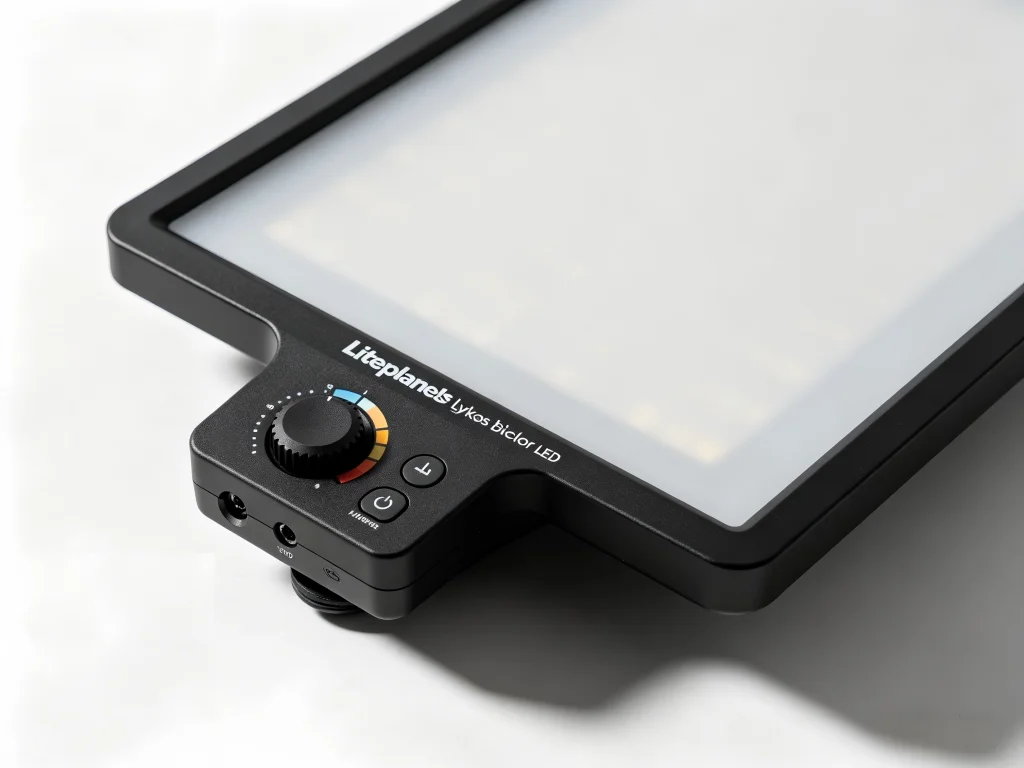
1. Panel Architecture Matters: The Metal Truth vs. The Plastic Trap
The structural integrity of your led panel light ceiling fixture dictates thermal efficiency and electromagnetic shielding, two factors that silently dictate the longevity of your investment. A plastic chassis acts as an insulator, trapping heat and warping the LED board panel alignment.
We have dissected dozens of failing units in our GTR lab. The post-mortem of a short-lived led panel ceiling almost always tells the same story: thermal deformation. When a plastic fixture cooks under direct studio use, it flexes. That flex places micro-stress fractures on the solder joints connecting the individual diodes on the led board panel. One day, you see a dead pixel. The next month, a whole string is out. In contrast, metal-core construction — like what you find in the Lykos — functions as a giant heat sink. It actively draws thermal energy away from the sensitive phosphor coating. This is not a cosmetic preference; it is the deciding factor in whether your panel maintains its original color calibration after three years of hard use. If you are hanging a light in a permanent led panel light ceiling grid where access for maintenance is difficult, choosing a metal chassis over plastic is the single most important filter you can apply.
1.1. The Driver Conundrum: External PSU vs. On-Board Integration
A common complaint from beginners regards the Lykos’s external power supply, labeling it a “trip hazard.” However, in a buyer’s guide context, this design is a deliberate trophy, not a flaw. On-board drivers create double the thermal load inside a sealed unit. Heat death in capacitors is the primary reason for a catastrophic led panel light replacement. By keeping the transformer external, you not only cool the light engine but also make emergency field servicing trivial. If a PSU fails, you plug in a spare. If an integrated driver fails, the entire litepanels lykos bi-color led light review unit becomes a paperweight until it ships back to a service center.
| Comparison Vector | Litepanels Lykos Bi-Color | Generic Integrated Panel |
|---|---|---|
| Chassis Material | Solid metal alloy (Superior passive cooling) | Engineering plastic (Insulates heat) |
| Power Design | External, replaceable brick (Cool running) | Internal transformer (High heat risk) |
| Color Accuracy | High CRI/TLCI with astral calibration | Often uncalibrated; multiple batch inconsistencies |
| Dimming at Low-End | Smooth to 0%, no color shift | Harsh cutoff at 10%; magenta shift |
2. Decoding the Spec Sheet: Do Not Buy a Panel Without Auditing These 4 Metrics
Marketing departments love to throw “CRI > 95” on a box, but a single CRI number is a dangerously incomplete metric that can hide gaping holes in the crimson and cyan spectrum. You need to dig deeper to ensure the litepanels lykos+ bi color led light panel 3 light kit actually delivers the color volume required for high-end work.
- Spectral Power Distribution (SPD) Curves: Demand to see the graph, not just the average. A light can score 95 CRI on pastel patches but still have a massive spike in green energy that reacts violently with modern CMOS sensors. The Lykos’s SPD is notably linear, mimicking a black-body radiator much closer than standard phosphor LEDs.
- TLCI (Television Lighting Consistency Index): If you are shooting video, ignore CRI. TLCI is your bible. It models exactly how the color matrix of a broadcast camera will interpret the light. A high TLCI rating means less time establishing a “matrix” in your CCU.
- Dimming Curve Integrity: Many competitive options use a “step” dimmer. It looks smooth to the eye, but in slow motion, it jumps. The Lykos offers a true continuous curve. For buyers, this means you can shoot at 1000fps at any intensity without banding.
- Photometrics at Working Distance: Do not just look at lux at 3 feet. Measure your studio. Can this led panel light ceiling unit deliver foot-candles needed to expose cleanly at ISO 800? The Lykos is punchy, but you must match the output specs in the litepanels lykos bi-color led light review data to your specific ambient light pollution.
3. The "Kit" Dilemma: Single Light vs. The Commanding Litepanels Lykos+ Bi Color LED Light Panel 3 Light Kit
Buying a single panel fixes your key light; buying a matched 3-light kit fixes your entire color management workflow, eliminating the “Frankenstein” effect of mixing random fixtures from different eras. The strategic value of the coordinated kit lies in spectral synchronization.
When you cobble together a key light from one brand, a fill from another leftover, and a fresnel backlight, you are fighting a war on color. Even if all claim “5600K,” the spectral fingerprints differ wildly. Your colorist will curse your name. The litepanels lykos+ bi color led light panel 3 light kit provides a unified ecosystem. Because they share the exact same bin of LEDs and firmware calibration, the light aesthetics are contiguous. This is especially vital for the current trend of high-key, evenly lit corporate interviews. You are not just buying three devices; you are purchasing a guarantee of mathematical color cohesion. For international trade buyers or fleet purchasers, a kit like this also simplifies logistics and long-term led panel light replacement inventory. You stock one type of spare part, one type of yoke, and one type of diffuser, streamlining your maintenance overhead dramatically.
4. Real-World Rigging: How the Lykos Fits Into Permanent LED Panel Ceiling Grids
We frequently consult on retrofitting traditional fluorescent troffers with modern LED solutions. The challenge is rarely the light output; it is the mechanical interface. The Lykos features a versatile yoke with a junior pin receiver, which, unlike plastic foot mounts on generic panels, allows for secure overhead rigging with standard grip hardware. A critical safety factor in any permanent led panel ceiling installation is the secondary safety point. The metal chassis of the Lykos is drilled to accept a steel safety cable. If the primary clamp fails, the light does not crash down onto your talent below. This is a non-negotiable legal liability protection in professional studios, and an area where cheap plastic panels completely fail the brief.
5. FAQ: Cutting Through the Noise for Savvy Buyers
What causes the color shift between different units of the same cheap LED panel model?
It comes down to LED diode binning. Reputable manufacturers like those behind the Litepanels Lykos pay a premium for narrow-bin LEDs (MacAdam 2-step or better). Cheaper knock-offs buy wide-bin batches. You can place two entry-level panels side-by-side, set them both to 4300K, and visually see a green tint on one and a magenta on the other. For buyers, always check the “color critical” guarantee in the warranty.
Can I replace the diffusion panel on the Litepanels Lykos if it gets scratched in the field?
Absolutely. Professional units are designed for modular field repair. Unlike sealed consumer units where a scratch means an ugly shadow in your frame forever, the litepanels lykos bi-color led light panel allows access to the diffuser layer, and official replacement part numbers are usually available via manufacturing portals like ours at GTR.
Is a Bi-Color panel less bright than a dedicated Daylight panel?
Yes, by the laws of physics. In a Bi-Color led board panel, you are only using half of the “real estate” of the LEDs at the extreme ends of the spectrum (fully warm or fully cool). At 4400K, you get the highest combined output. If you never, ever shoot tungsten-adjacent light and need pure horsepower for long-throw distances, a fixed-daylight panel is a specialized alternative. But for 90% of indoor productions, the flexibility of the Litepanels Lykos Bi-Color LED Light Kit far outweighs the slight loss in maximum intensity.
6. Expert Confirmation: What the Professionals Whisper
In the corridors of trade shows, you hear the consensus. A gaffer who has spent decades lugging tungsten around does not just praise the output; they praise the mass-to-performance ratio. “I swapped out a 650W Fresnel for this,” one mentioned in our field survey, “and my AC draw dropped from 6.5 amps to less than one. In a house with old wiring, that is the difference between shooting and constantly resetting breakers.” Another digital imaging technician pointed out that the remote phosphor technology eliminates the “blue-spike headache” that plagues cheaper led panel ceiling products when shooting with high-end cinema glass. It is these field-tested nuances that paper specs fail to capture.
7. The Verdict: Stop Patching, Start Investing
The choice comes down to Litepanels Lykos Bi-Color LED Light is a declaration that you value ownership cost over purchase price. You are stepping away from the endless cycle of led panel light replacement and stepping into a stable, calibrated ecosystem. Whether you are speccing out a broadcast studio grid or buying a single robust fixture to handle demanding location work, the metal chassis, thermal intelligence, and spectral purity make it the utilitarian’s choice. Do not settle for a light that merely glows when you can own a tool that performs. Ready to have a lighting rig that never lets you down? Explore the full technical specifications and secure your upgrade at the official GTR fixture hub. Your signal-to-noise ratio, both literally and figuratively, depends on it.。