
구매하기 바이핀 LED 전구 G4, G9, GY6.35, 12V, 120V, 2700K, 6000K, 200루멘, 500루멘, 디머블, 논디머블, 실리콘, 유리, 콘 스타일, 글로브 스타일 등 옵션의 벽을 마주할 때까지는 간단해 보입니다. $3 전구와 $12 전구의 차이는 포장에서 항상 명확하지 않습니다. 그러나 설치 후 발생하는 차이(전구가 5년 또는 5개월 지속되는지, 깨끗하고 균일한 빛을 비추는지 또는 고르지 않은 노란 빔을 비추는지)는 엄청납니다. 이 가이드는 처음부터 제대로 선택하려는 구매자를 위한 것입니다.
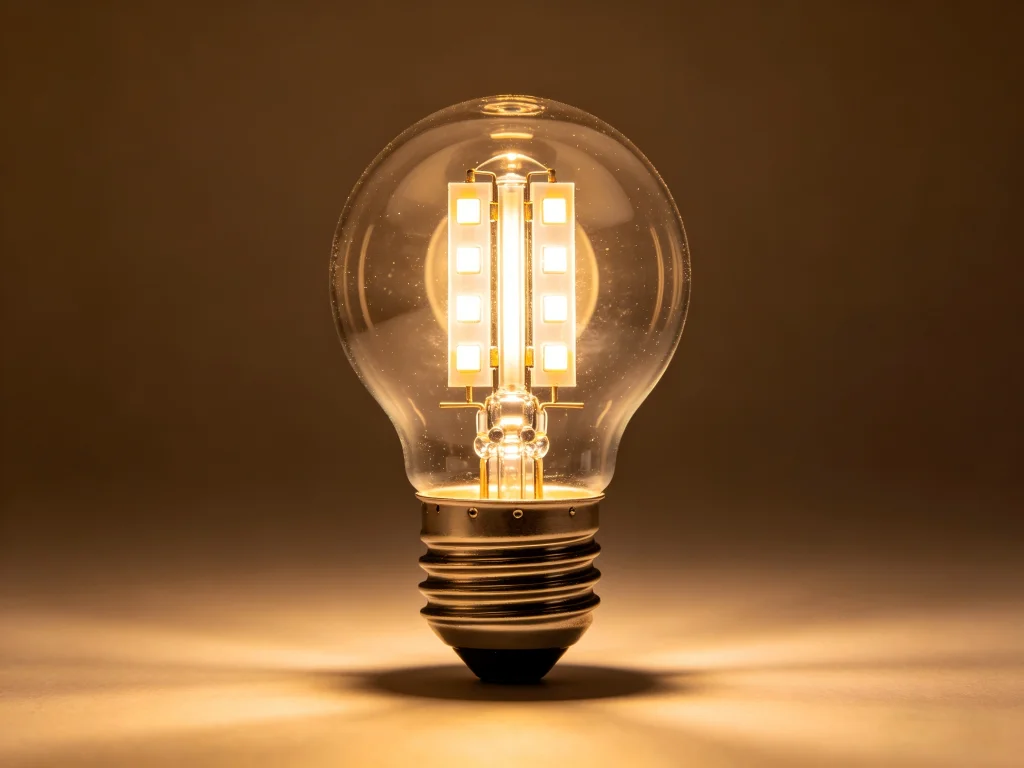
1. 바이핀 베이스 유형 이해: 맞춤을 결정하는 코드
바이핀 LED 전구는 핀 간격과 핀 직경이라는 두 가지 중요한 치수에서 소켓과 일치해야 합니다. 베이스 코드(G4, GY6.35, GU5.3, G8, G9)는 단순한 모델 번호가 아닙니다. 그것은 측정값입니다. 숫자는 두 핀 사이의 중심 간 거리를 밀리미터 단위로 알려줍니다. G4 베이스는 핀 간격이 4mm입니다. G9 베이스는 9mm 간격입니다. 1mm 차이만 있어도 전구가 맞지 않거나 제대로 전기 접촉이 되지 않습니다[reference:11]. 이것은 제안이 아니라 램프 캡과 홀더에 대한 국제 표준인 IEC 60061에 의해 관리되는 기계적 사양입니다[reference:12].
| 베이스 유형 | 핀 간격 | 일반 전압 | 일반적인 용도 | 핀 스타일 |
|---|---|---|---|---|
| G4 | 4.0mm | 12V AC/DC(저전압) | 캐비닛 아래 퍽, 조경, RV, 마린, 샹들리에 | Straight, thin pins |
| GU4 | 4.0mm | 12V | MR11, MR8 reflector lamps | Straight with small flange |
| GU5.3 | 5.3 mm | 12V | MR16 reflector lamps, track lighting, recessed cans | Straight, thicker pins |
| GY6.35 | 6.35 mm | 12V | Accent, display, landscape, some under-cabinet | Straight pins |
| G8 | 8.0 mm | 120V (line voltage) | Under-cabinet, decorative fixtures | Straight pins |
| G9 | 9.0 mm | 120V (US) / 230V (Europe) | Wall sconces, pendants, chandeliers, decorative | Loop pins |
The G9 base requires special attention because its loop pin design is unique among bi-pin types. Unlike the straight needle-like pins of G4, G9 pins are oval loops, providing a different mechanical connection[reference:13]. This loop design serves a functional purpose: G9 bulbs operate at line voltage, and the loop pins create a more secure connection for the higher currents involved. G4 and G9 are not interchangeable. They are completely different products for completely different electrical systems[reference:14].
2. V vs. 120V Bi-Pin LED Bulbs: The Choice That Determines Everything
The voltage issue is which 2-Pin LED Bulb. This is the first crossroads when purchasing. Choosing incorrectly can result in the bulb not turning on or immediate damage.
| 기능 | 12V Bi-Pin LED Bulbs (G4, GY6.35, GU5.3) | 120V Bi-Pin LED Bulbs (G8, G9) |
|---|---|---|
| Transformer/Driver Required | Yes — Fixture includes transformer | No — Direct connection to line voltage |
| Transformer Compatibility Concerns | High — Older transformers may not work with low LED loads | Not Applicable |
| Typical Wattage Range | 1W–5W (Replaces 10W–35W halogen) | 2W–7W (Replaces 20W–60W halogen) |
| Physical Size | Very compact — Check fit in narrow housings | Slightly larger - more room for driver components |
| Optimal applications | Landscaping, RV, marine, under-cabinet, display | Wall sconces, pendants, chandeliers, some under-cabinet |
| General retail distribution | Specialty lighting stores, online, RV suppliers | Large hardware stores, lighting showrooms |
Many Canadian homeowners search Bi-pin LED bulbs Canadian Tire When halogen bulbs burn out unexpectedly. Canadian Tire and similar retailers actually stock a limited selection of G4 and G9 LED replacement bulbs in their automotive and home lighting sections. These bulbs are suitable for simple replacements where the transformer is up-to-date and the fixture has ample space. However, it is not a universal solution. If the fixture's transformer is old, store-bought bulbs may flicker or fail regardless of brand.
A 12V LED installed in a 120V fixture will fail immediately. A 120V LED installed in a 12V fixture simply will not turn on. Always check the voltage requirements of the fixture before ordering replacement LEDs. Most fixtures have voltage information printed near the socket or on a label [ref:15].
3. 8 key factors for comparing bi-pin LED bulbs
After base type and voltage, these are what distinguish professional-grade bulbs from disposable ones. Based on testing and field experience, listed in order of importance.
- CRI (Color Rendering Index) - Can you see what you are actually looking at? CRI measures how accurately a light source renders colors of objects compared to natural light, on a scale of 0 to 100. Incandescent and halogen bulbs score 100. Quality LEDs should score at least 80. For kitchens, retail displays, vanities, or anywhere color accuracy matters, look for CRI 90+ [ref:16]. CRI 80 is sufficient for general lighting. Below 80, skin tones look dull, food looks unappetizing, and fabrics appear different from their true colors. Many low-cost bi-pin LED bulbs do not even list CRI on the packaging. This silence is telling.
- Actual lumen output vs. marketing claims. The lighting industry has a credibility problem with lumen ratings. Some manufacturers advertise “raw” or “chip” lumens, which is what the LED component produces in laboratory conditions before optical or thermal losses. Others advertise “effective” lumens, which is what actually comes out of the finished bulb after driver circuitry, lenses, and thermal management take their toll. The difference can be 30% or more. When comparing bulbs, ask whether the lumen figure represents measured output of the finished product or theoretical chip output. A 300-lumen bulb that actually delivers 300 lumens is better than a “500-lumen” bulb that delivers 285.
- Color temperature — the mood of the space. Color temperature, measured in Kelvin (K), defines whether light appears warm (yellowish) or cool (bluish). 2700K mimics traditional incandescent — warm, cozy, inviting. 3000K is a neutral warm white, excellent for kitchens and bathrooms. 4000K is a cool white, good for task lighting and workspaces. 5000K-6500K is daylight — crisp, cool, and invigorating. A 6500K bulb under kitchen cabinets will create harsh shadows and make food look unappetizing. Using 2700K in a workshop reduces contrast and makes precision detail work harder. Match color temperature to the function of the space[ref:17].
- Material: plastic vs. silicone vs. glass. Cheap LED bi-pin bulbs use thin plastic housings that yellow and become brittle over time, especially in fixtures that trap heat. Silicone-coated bulbs offer better durability and some water resistance — useful for landscape or marine applications, but unnecessary indoors. Glass bulbs provide the best light diffusion and the most premium appearance, but they are heavier and more fragile. For high-end residential and commercial applications, glass or high-grade polycarbonate is the standard.
- Driver circuit quality and dimming compatibility. The driver circuit converts incoming power to the constant current required by the LED chips. A poorly designed driver causes flicker, buzzing noise, and incompatibility with dimmers. A quality driver includes components that smooth out voltage fluctuations, suppress electromagnetic interference, and communicate reliably with leading-edge and trailing-edge dimmer switches. If dimming matters in your application, verify that both the bulb and the dimmer are explicitly rated for LED dimming. Even among “dimmable” bulbs, performance varies widely. Some dim smoothly from 100% to 5%, while others flicker below 20%.
- Wattage equivalence accuracy. Common claim: “A 3W LED replaces a 20W halogen.” This equivalence is based on lumen output, not wattage, so check the actual lumen figures. A quality 3W LED produces about 250-350 lumens. A 20W halogen produces about 200-300 lumens. However, a low-efficiency 3W LED may produce only 180 lumens, which is dimmer than the halogen it replaces. Compare lumen ratings with your existing bulb before assuming wattage equivalence means equal brightness.
- Beam angle — where does the light go? Bi-pin LED globes come in various beam patterns depending on the LED chip arrangement and lens design. Cone-style bulbs with LEDs arranged around a cylindrical core produce a wide 270-360 degree light distribution, ideal for chandelier globes and decorative fixtures where the bulb is visible and omnidirectional light is needed. Flat or disc-style bulbs focus light in one direction, better suited for puck lights and directional task lighting. If your fixture uses a reflector, choose a bulb with a forward-focused beam pattern rather than a 360-degree design that wastes light inside the housing.
- Certifications and safety marks. For North American markets, look for UL or ETL certification marks on the product or packaging. These indicate the bulb has been tested to recognized safety standards for electrical and fire safety. A CE mark alone is not equivalent to UL/ETL listing and does not meet North American electrical inspection requirements. If you are installing bi-pin LED bulbs in commercial facilities, rental properties, or anywhere electrical inspections may occur, use listed products.
4. Application-Specific Buying Guide: Choosing the Right Bulb for the Job
4.1. 주방 하부장 조명
G4 베이스의 퍽 라이트의 경우 우선 순위는 다음과 같습니다: 컴팩트한 크기(구매 전 하우징 깊이 측정), 따뜻한 색온도(주방 주거용 2700K-3000K), 변압기 호환성(6개 구매 전에 하나 테스트). G8 및 G9 베이스는 최신 하부장 조명기구에서도 일반적입니다. 이들은 직접 라인 전압을 사용하여 변압기 문제를 완전히 피합니다. 식품 준비 구역의 경우 CRI 90+가 프리미엄을 지불할 가치가 있습니다. 세척된 조명 아래에서 닭고기가 익었는지 추측하지 말고 확인하고 싶을 것입니다.
4.2. RV 및 해양 12V 조명
RV 소유자가 검색하는 2핀 LED 글로브 는 일반적으로 천장 돔 라이트, 독서등 및 외부 현관 조명기구에서 발견되는 표준 12V G4 할로겐 캡슐을 교체하는 것입니다. 여기서 핵심 고려 사항은 주거용과 다릅니다: 전압 범위 허용 오차(RV 배터리 시스템은 11V에서 14.5V까지 변동할 수 있음), 물리적 크기(RV 조명기구는 종종 매우 얕음), 색온도(3000K-4000K는 RV 실내 거주 공간에 적합). 해양 응용 분야는 내식성을 우려 사항으로 추가합니다. 고정 장치가 염분이 있는 공기나 습기에 노출되는 경우 밀봉된 전자 장치가 있는 전구를 찾으십시오.
4.3. 벽 스콘스 및 펜던트 조명 (G9 베이스)
G9 바이핀 LED 전구는 많은 현대적인 벽 스콘스와 펜던트 조명의 표준입니다. 이러한 조명기구는 일반적으로 120V 라인 전압에서 작동하므로 변압기 호환성 문제는 없습니다. 여기서 우선 순위는 광속(스콘스와 펜던트는 종종 방의 주요 광원임), 연색성(사람이 시간을 보내는 거실 공간에는 CRI 85+ 권장), 물리적 외관(전구가 투명한 유리 갓을 통해 보일 수 있으므로 의도적으로 보이고 산업적으로 보이지 않는 글로브 스타일을 선택)입니다. 조광 기능은 분위기 제어가 중요한 식당과 거실에 플러스입니다.
4.4. 조경 및 옥외 조명
저전압 조경 조명은 거의 독점적으로 G4, GY6.35 또는 GU5.3 바이핀 베이스를 사용합니다. 이러한 시스템은 자기식(오래되고 무겁고 LED에 더 안정적) 또는 전자식(새롭고 가볍고 최소 부하 문제가 발생할 가능성이 더 높음)일 수 있는 12V 변압기로 전원이 공급됩니다. 옥외 사용의 경우 전구의 IP 등급을 확인하거나 최소한 고정 장치 자체가 적절한 방수 밀봉을 제공하는지 확인하십시오. 실리콘 본체 전구는 베어 PCB 설계보다 습기에 더 강합니다. 여기서 색온도 선택은 매력을 좌우합니다. 2700K는 산책로와 정원에 따뜻하고 환영하는 빛을 만들고 4000K는 보안 조명에 더 좋습니다.
5. 바이핀 LED 소켓 유형: 신뢰성을 결정하는 연결 지점
그리고 바이핀 LED 전구 소켓 구매 결정 중 종종 간과되지만 전구와 전원 사이의 유일한 인터페이스입니다. 소켓 접촉 불량은 깜박임, 간헐적 작동, 아킹 및 조기 전구 고장을 유발합니다. 바이핀 소켓은 나사산이나 트위스트 잠금 대신 마찰 맞춤 연결을 사용하므로 컴팩트하고 단순하지만 시간이 지남에 따라 느슨해지기 쉬우며 특히 진동이 있는 고정 장치(RV, 보트, 천장 팬)에서 그렇습니다[reference:20].\r\n\r\nLED로 업그레이드하기 전에 기존 고정 장치를 검사할 때 소켓 접점을 확인하십시오. 깨끗하고 반짝입니까, 아니면 부식되고 칙칙합니까? 부식된 접점은 전기 저항을 생성하여 열을 발생시키고 전구에 도달하는 전압을 줄입니다. 12V 시스템에서 소켓의 작은 전압 강하도 총 공급량의 상당한 비율로 변환됩니다. 새 LED 전구를 설치하기 전에 전기 접점 세척제와 면봉으로 접점을 청소하십시오. 소켓이 전구 핀을 느슨하게 잡고 있거나(전구가 흔들리거나 최소한의 힘으로 빠지면) 소켓을 교체해야 할 수 있습니다. 간헐적으로 아킹되는 느슨한 연결은 정격 전압에서 연속 작동보다 훨씬 빠르게 LED 드라이버 회로를 파괴합니다.\r\n\r\nG4 소켓에는 정확히 4mm 간격으로 두 개의 작은 구멍이 있습니다. 전구 핀은 비틀거나 잠금 메커니즘 없이 곧바로 삽입됩니다. 이 설계는 수십 년 동안 표준화되었으며 두 핀이 단단하고 깨끗하게 접촉할 때 안정적으로 작동합니다. GU5.3 및 GY6.35 소켓은 유사하지만 각각의 핀 간격에 맞게 크기가 조정됩니다. G9 소켓은 G9 전구의 독특한 루프 핀을 수용하며 루프 설계의 더 큰 접촉 표면적으로 인해 약간 더 안전한 연결을 제공합니다.
6. GTR의 바이핀 LED 제품이 전문 설치에서 자리를 차지하는 이유
바이핀 LED 시장에 서비스를 제공하는 브랜드 중 GTR Lighting은 독특한 위치를 차지합니다: 특수 조명에 적용된 자동차 등급 엔지니어링. 우리의 제조 철학은 가능한 가장 낮은 단위 비용을 추구하지 않습니다. 그것은 총 소유 비용을 추구합니다 — 한 번 설치하고 수년간 안정적으로 작동하는 전구.\r\n\r\n우리 제품 사양은 실제 측정된 성능을 반영합니다. 광속을 명시할 때 이론적 칩 루멘이 아닌 완전히 조립된 전구의 유효 루멘을 의미합니다. CRI 등급을 인용할 때 그것은 야심찬 값이 아닌 측정된 값입니다. 전압 범위를 지정할 때 전구는 공칭 중간점뿐만 아니라 전체 범위에서 안정적으로 작동합니다.\r\n\r\n우리의 바이핀 LED 전구는 RV, 해양 및 오래된 주거용 전기 시스템에서 흔한 전압 변동을 견디는 광범위한 입력 드라이버 회로를 중심으로 구축되었습니다 — 이는 정상 주행 중에 발전기 전압이 몇 볼트씩 변할 수 있는 자동차 LED 라인에 사용하는 것과 동일한 엔지니어링 접근 방식입니다. 이 견고성은 우리 전구가 더 저렴한 대안이 조기에 고장나는 조건에서도 살아남는다는 것을 의미합니다.\r\n\r\n우리는 전구 본체를 교체하는 할로겐 캡슐의 치수 발자국과 일치하도록 설계하여 일반적인 LED 개조를 괴롭히는 맞춤 문제를 최소화합니다. 우리는 LED 접합 온도를 관리하고 수만 시간 동안 밝기와 색상 정확도를 유지하기 위해 플라스틱 쉘에 토큰 알루미늄 디스크가 아닌 품질의 방열판 재료를 사용합니다.\r\n\r\n방문 rhgtr.com G4 저전압, G9 라인 전압 및 특수 응용 전구를 포함한 완전한 바이핀 LED 글로브 선택을 탐색하십시오. 상업 및 대량 문의의 경우, ledcxr.com 맞춤 옵션, OEM 기능 및 볼륨 가격에 대한 추가 정보를 제공합니다. 우리 팀은 조명 디자이너, 전기 계약자 및 시설 관리자와 매일 협력합니다 — 우리는 단순히 전구를 판매하는 것이 아니라 설치에 적합한 제품을 지정하는 데 도움을 줄 수 있습니다.
7. FAQ: 구매자가 구매 전 검색하는 질문에 대한 답변
7.1. G4 및 G9 전구 코드에서 "G"는 무엇을 의미합니까?
“G”는 역사적으로 원래 전구가 유리 구조를 사용했음을 나타냈습니다. 오늘날에는 단순히 다중 핀 베이스 유형을 지정합니다. 숫자(4, 8, 9 등)는 핀 사이의 중심 간 거리(밀리미터)입니다[reference:21].
7.2. G4와 G9 전구는 서로 교체할 수 있습니까?
No. G4 bulbs have 4mm pin spacing and are almost always low-voltage (12V). G9 bulbs have 9mm pin spacing and operate at line voltage (120V or 230V). They have different pin styles (straight vs. looped), different voltage requirements, and different physical dimensions. They are completely incompatible[reference:22].
7.3. 기존 전구를 제거하지 않고 G4인지 G9인지 어떻게 알 수 있습니까?
If you can see the pins, measure the distance between them. 4mm = G4; 9mm = G9. If you cannot access the pins, check the fixture label for voltage: 12V almost certainly indicates G4; 120V could be G8 or G9. If there is a transformer in the ceiling or base of the fixture, you are dealing with a low-voltage G4 system[reference:23].
7.4. V LED 전구를 120V G9 소켓에 넣으면 어떻게 됩니까?
The bulb will be destroyed instantly — the internal driver receives ten times its rated voltage and fails. In some cases, this failure is accompanied by a pop, smoke, or a tripped circuit breaker. Never attempt to force a bulb into a socket it was not designed for[reference:24].
7.5. 일부 바이핀 LED 전구는 $3인 반면 다른 전구는 $15인 이유는 무엇입니까?
The price difference reflects component quality: the LED chips themselves (brand-name vs. generic), the driver circuit design (regulated vs. bare-minimum resistor-based), the heatsink material (aluminum vs. plastic), the CRI rating (80+ vs. unrated), and safety certifications (UL/ETL listed vs. uncertified). A $3 bulb may produce light when first installed, but it is likely to fail early, flicker, shift color, or create a fire hazard — especially in enclosed fixtures with limited ventilation.
7.6. 같은 12V 회로에서 할로겐 전구와 LED 전구를 혼합할 수 있습니까?
Yes, and in some cases adding a halogen bulb to a circuit of LEDs stabilizes the transformer and stops flickering by increasing the total load above the transformer’s minimum threshold. However, this is a troubleshooting workaround, not a recommended permanent solution. The halogen bulb still consumes significant power and needs replacement every 2,000 hours, partially defeating the purpose of the LED upgrade. Replacing the transformer with an LED-compatible driver is the proper long-term fix.
7.7. 바이핀 할로겐 전구를 LED로 교체하려면 전기 기술자가 필요합니까?
For most G9 line-voltage fixtures, no — the swap is plug-and-play. For G4 low-voltage systems where the transformer may need replacement, and for any installation involving mains wiring, an electrician is recommended. In rental properties and commercial buildings, electrical code may require a licensed electrician for any work beyond simply replacing a bulb in an existing socket.
References: Bi-pin base specifications are defined by IEC 60061 (International Electrotechnical Commission). Base type measurements and voltage classifications are based on industry standards and manufacturer specifications. Always verify your fixture’s specific requirements before purchasing replacement bulbs.