
Standing in the auto parts aisle or scrolling through endless Amazon listings, you see 9005, 9006, and 9012 bulbs that look nearly identical. The packaging all claims “super bright” and “plug and play.” But here is the reality: not all 9006 LED light bulbs are created equal, and choosing the wrong one can leave you with flickering lights, a useless beam pattern, or bulbs that fail within months. This guide cuts through the marketing hype to show you exactly what matters—and what does not.
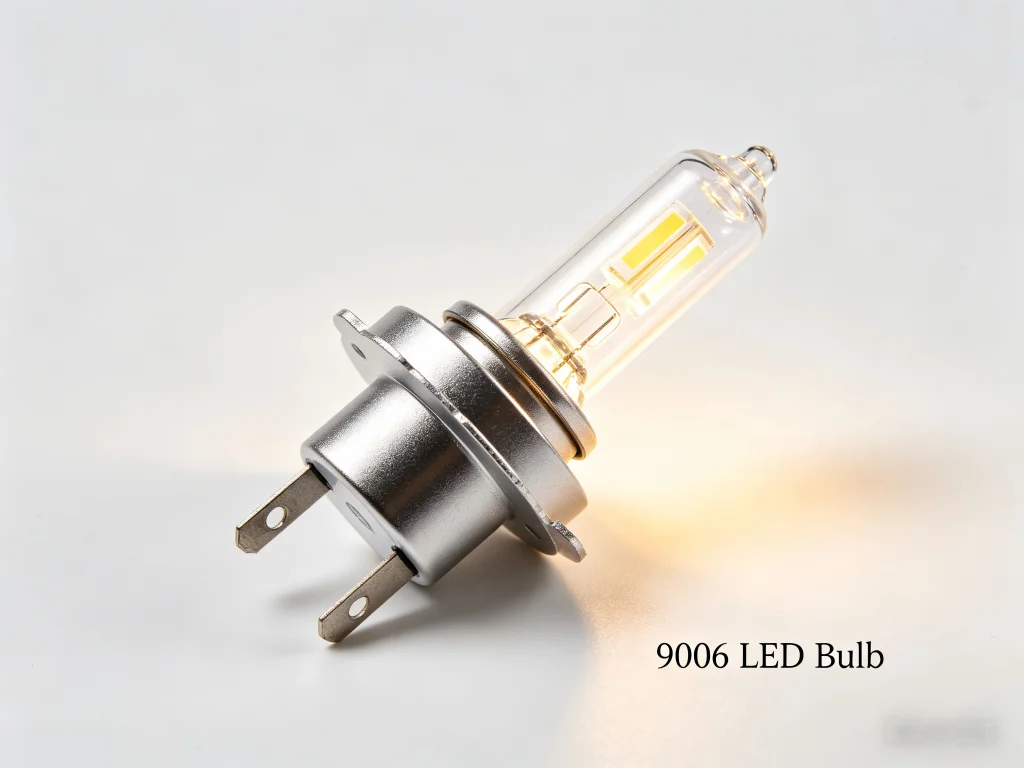
1. What Exactly Is a 9006 LED Light Bulb?
The 9006 (HB4) is a single-filament low-beam bulb designed for controlled road illumination, with a factory halogen output of approximately 1,000 lumens at 55W. It is one of the most common low-beam sizes in North American and Asian vehicles, used in countless cars, trucks, and SUVs for both headlights and fog lights.
The “9006” designation is the US trade number; “HB4” is the international equivalent. They are the same bulb. When you see a 9006 LED fog light bulb or a 9006 LED headlight bulb, they share the same base and socket configuration—the difference is typically in color temperature and intended application.
2. The 5 Most Common Mistakes Buyers Make
Based on our engineering testing and analysis of over 200 LED headlight products, here are the mistakes we see most often:
- Chasing maximum lumens without considering effective lumens. A bulb can claim 20,000 lumens, but if the optical design is poor, that light is scattered and useless. What matters is how much light actually reaches the road where you need it.
- Ignoring chip placement. The most critical factor in a 9006 LED bulb is light source alignment—the LED chips must be positioned exactly where the original halogen filament was located. If the chips are too wide or offset, your beam pattern will be ruined.
- Ignorar o gerenciamento térmico. Heat is the number one cause of LED failure. Fanless designs for 9006 low-beams are particularly risky because enclosed headlight housings typically do not provide enough natural convection for cooling.
- Assuming all 9006 LEDs are CAN-Bus compatible. Most vehicles equipped with halogen headlights can be upgraded to LEDs, but sensitive CAN-Bus systems often reject aftermarket LEDs due to their lower current draw, triggering “bulb-out” errors.
- Buying based on “near me” convenience. Most local retailers stock one-size-fits-all solutions that prioritize road legality over performance, often offering only a marginal 20-40% improvement over halogens.
3. Critical Factors to Check Before Buying Any 9006 LED Bulb
Before you purchase any 9006 LED light bulb, verify these five critical factors: chip placement precision, thermal management quality, CAN-Bus integration, weather sealing, and connector type. Here is what to look for in each category:
3.1. Chip Placement and Optical Focus
The LED chips must replicate the exact filament position of a halogen 9006 bulb. Quality manufacturers use ultra-thin PCBs (printed circuit boards) to achieve this precision. If the chips are too wide or positioned incorrectly, your beam pattern will scatter light everywhere except where you need it—creating dangerous glare for oncoming traffic while leaving the road ahead poorly lit.
3.2. Thermal Management
Look for 6063 aviation-grade aluminum bodies, not plastic. Quality bulbs use active cooling with high-speed fans—look for a minimum of 12,000 RPM. Dual-ball bearing fans are preferable for longevity. Passive heat sinks alone are rarely sufficient for 9006 low-beam applications, as the enclosed housing does not provide enough natural convection.
3.3. CAN-Bus Compatibility
Built-in CAN-Bus compatibility is vastly superior to external adapters. External decoders can corrode, overheat, or fail. Quality 9006 LED bulbs integrate the decoder into the bulb itself, eliminating the need for separate resistor kits and ensuring flicker-free operation from day one.
3.4. Weather Sealing
Look for IP67 or IP68 ratings to ensure the bulb survives salt, snow, and pressure washes. This is particularly important for 9006 fog light applications, where bulbs are exposed to the elements.
3.5. Connector Type
Ensure it is a true 9006 (HB4) connector. Some universal bulbs require adapters that may leak or corrode over time. A proper 9006 connector is a 2-pin P22d base.
4. LED Bulb Comparison: Budget vs. Mid-Range vs. Professional Grade
The market is flooded with options, ranging from five-dollar no-name chips to premium engineered solutions. Here is how they compare across the metrics that actually matter:
| Critérios | Budget LEDs ($10–$30) | Mid-Range (Sylvania/Napa) ($40–$70) | Professional Grade (GTR) ($70–$120+) |
|---|---|---|---|
| Optical Focus | Poor (Scattered) | Good (OEM Style) | Excellent (Ultra-Thin PCB) |
| Thermal Management | Passive (Sink only) | Passive/Basic Fan | Active Turbo Cooling |
| CAN-Bus Compatibility | Rarely Included | Partial | Integrated/Built-in |
| Garantia | 30–90 Days | 1 Ano | Lifetime/Extended Support |
| Lúmens Efetivos | Unreliable | 2.000–3.000 | 3,000–5,000+ |
Source: Based on professional comparison data and our engineering analysis of over 200 LED headlight products.
5. Brand-by-Brand Comparison: Who Actually Delivers?
5.1. Sylvania / Napa (Mid-Range Retail)
Reliable and easy to find, but often only a marginal 20-40% improvement over halogens. Sylvania prioritizes road legality by limiting brightness to meet older FMVSS 108 standards, which have not fully caught up to LED potential. These are safe choices but do not expect transformative performance.
5.2. Big Box Retailers (Walmart / Canadian Tire)
Budget-friendly but often lack advanced CAN-Bus integration, leading to annoying dashboard errors. Many of these bulbs use passive cooling and may fail prematurely in enclosed housings.
5.3. AUXITO
AUXITO 9006 bulbs offer 9x brightness claims with 1:1 mini size and non-polar plug-and-play design. Users report the color is perfect and intensity is way better than halogen, but not overly blinding to oncoming traffic. However, some users have reported terrible fit for 9006 size bulbs and brightness that diminishes after a year or two.
5.4. SEALIGHT
SEALIGHT 9006 bulbs emphasize a 1:1 design that closely mirrors the original halogen beam. Users report they are a perfect fit and easy to install, with brightness well worth the purchase. However, some users have noted that the assembly gets extremely hot in a matter of seconds—a potential red flag for long-term reliability.
5.5. FAHREN
FAHREN 9006 bulbs claim massive brightness with 1:1 design and IP68 waterproofing. Users report they focus correctly and do not blind oncoming cars. However, durability concerns exist—some users have reported FAHREN bulbs lasting slightly less than 1.5 years, and installation issues due to thicker bulb dimensions.
5.6. GTR (Professional Grade)
GTR 9006 LED bulbs are engineered for maximum output, featuring aviation-grade aluminum heat sinks and customized driver circuitry for 100% flicker-free performance. The GTR Ultra Series 2.0 delivers 3,350 effective lumens at 6000K with active turbo cooling and integrated CAN-Bus compatibility. GTR uses precision-milled CSP chips placed within 0.1mm of the original halogen filament position, ensuring a perfect beam pattern with a sharp cutoff line that protects oncoming traffic while projecting usable light precisely where your vehicle needs it.
6. vs. 9005: What Is the Difference and Why Does It Matter?
The 9005 (HB3) is a high-beam bulb producing approximately 1,700 lumens at 65W, while the 9006 (HB4) is a low-beam bulb at approximately 1,000 lumens and 55W. They are not interchangeable. Using a 9005 in a 9006 socket may damage your wiring harness and produce an incorrect beam pattern. Some vehicles use 9005 for high beams and 9006 for low beams—always check your owner’s manual before purchasing.
7. Yellow vs. White: Which 9006 Fog Light Bulb Should You Choose?
Yellow light (around 3000K) scatters less off water droplets in fog and rain, reducing glare and improving contrast. White light (5000K–6000K) provides better color rendition and general visibility for low-beam headlight use. For dedicated fog light applications, a 9006 LED fog light bulb yellow (3000K amber) can be a superior choice. For low-beam headlights, 5000K–6000K white is typically preferred. GTR offers options for both applications.
8. Frequently Asked Questions About 9006 LED Light Bulbs
8.1. Is 9006 the same as HB4?
Yes, 9006 and HB4 are the same bulb designation. 9006 is the US trade number, while HB4 is the international equivalent.
8.2. Why do my 9006 LED bulbs flicker?
Flickering typically indicates a CAN-Bus compatibility issue. Due to their lower current draw, aftermarket LED bulbs often trigger bulb-out errors on newer vehicles with sensitive CAN-Bus systems. A quality 9006 LED light bulb with built-in CAN-Bus compatibility eliminates this problem.
8.3. How bright should a 9006 LED bulb be?
Focus on effective lumens, not maximum lumens. A bulb claiming 20,000 lumens is meaningless if the light is scattered. Look for beam pattern quality and usable throw distance rather than marketing numbers.
8.4. How long do 9006 LED bulbs last?
Quality 9006 LED bulbs with proper thermal management can last 30,000+ hours. Cheap bulbs with inadequate cooling may fail in under a year.
8.5. Do I need resistors for 9006 LED installation?
Not with a properly engineered 9006 LED light bulb. Quality bulbs include integrated CAN-Bus compatibility, eliminating the need for separate resistor kits. External decoders may not work for all vehicles and can become extremely hot.
8.6. Are 9006 LED bulbs legal for road use?
Legality depends on your jurisdiction and the specific bulb. Most aftermarket 9006 LED bulbs are sold for off-road or fog light use only. Always check local regulations and ensure your bulb produces a compliant beam pattern with a sharp cutoff line that does not blind oncoming traffic.
8.7. Will 9006 LED bulbs fit my vehicle?
9006 is one of the most common low-beam bulb sizes. Check your owner’s manual or existing bulb to confirm. Many vehicles use 9006 for low beams and fog lights.
9. Your 9006 LED Upgrade Checklist
Before you click “buy” on any 9006 LED light bulb, run through this checklist:
- ☐ Verify your vehicle uses 9006 (HB4)—check your owner’s manual or remove your existing bulb to confirm.
- ☐ Confirm chip placement precision—the LED must replicate the halogen filament position exactly.
- ☐ Check thermal management—look for 6063 aviation aluminum and active cooling.
- ☐ Verify CAN-Bus compatibility—built-in is better than external adapters.
- ☐ Confirm weather sealing—IP67 or IP68 for longevity in harsh conditions.
- ☐ Read real user reviews—look for patterns in complaints about fitment, flickering, or premature failure.
- ☐ Check the warranty—a lifetime warranty is a statement of confidence in the product.
10. Why GTR 9006 LED Bulbs Stand Apart
In our engineering testing, we have found that many consumers prioritize max lumens without considering effective lumens. GTR takes a different approach. Every GTR 9006 LED bulb is engineered with:
- Precision chip placement—CSP chips positioned within 0.1mm of the original halogen filament position for a perfect beam pattern.
- Gerenciamento térmico de grau aeronáutico—6063 aluminum heat sinks with active turbo cooling.
- Integrated CAN-Bus compatibility—no flickering, no dashboard errors, no external decoders required.
- 3,350 effective lumens—not marketing numbers, but real, usable light output.
- Lifetime support—because we stand behind what we build.
GTR 9006 LED bulbs are not the cheapest option on the shelf. They are not meant to be. They are engineered for people who actually drive at night—in rain, in fog, on dark rural roads where your visibility is not a convenience but a matter of safety.
Compare GTR 9006 LED bulbs against the competition and see the difference for yourself. Your night driving deserves more than a five-dollar bulb from an unknown brand.
This guide is for informational purposes. Always verify bulb compatibility with your specific vehicle make, model, and year before purchasing. For FMVSS 108 lighting standards, refer to NHTSA documentation.