
Entre em qualquer loja de peças automotivas ou navegue na Amazon, e você encontrará lâmpadas automotivas de LED para $30, $40 ou $50. Os anúncios gritam sobre “50.000 lúmens” e “800% mais brilhantes”. Eles têm milhares de avaliações. Parecem uma pechincha.
Não são uma pechincha. São uma aposta com a sua segurança.
Este guia corta o exagero do marketing. Com base em nossos anos de experiência em fabricação de iluminação automotiva de LED, detalhamos exatamente o que separa um kit de LED $70 que dura 5 anos de um kit $15 que morre em 6 meses.
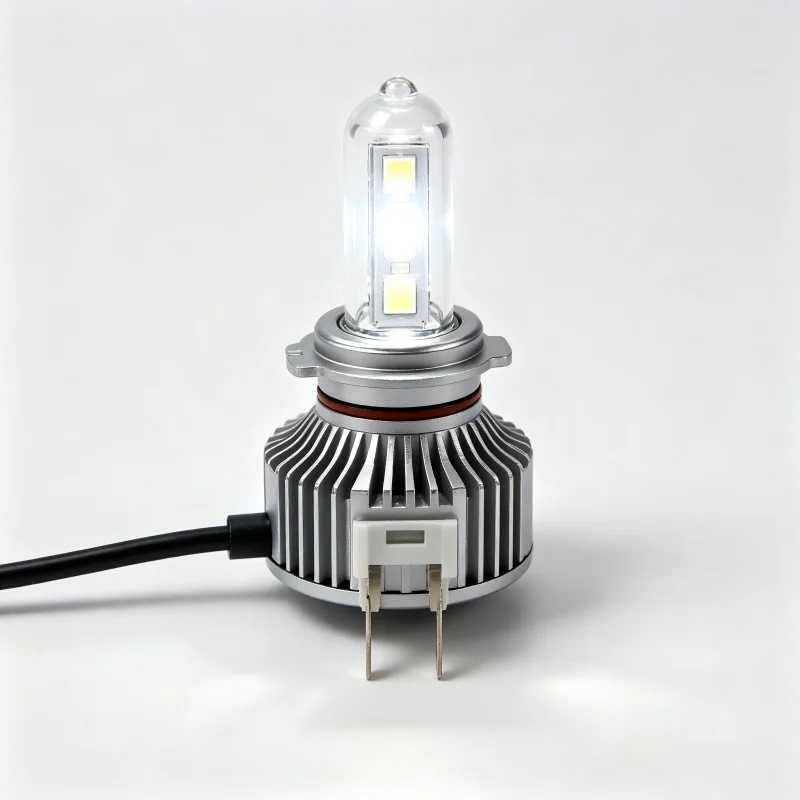
1. Por que a maioria dos artigos sobre "melhores LEDs" está errada
Todo artigo sobre “melhores lâmpadas automotivas de LED” na internet é escrito por alguém que nunca instalou uma lâmpada de farol. Eles classificam produtos da Amazon por comissão de afiliados, não por desempenho. Eles tratam todas as lâmpadas automotivas de LED como uma única categoria. Isso é como escrever “os melhores pneus” sem mencionar o tamanho do pneu.
Uma lâmpada de LED H11 tem desafios de engenharia completamente diferentes de uma lâmpada de feixe duplo H4. O alojamento em que ela entra — refletor versus projetor — muda qual layout de chip funciona melhor. O sistema elétrico do veículo determina se você precisa de compatibilidade CANbus ou não.
Aqui está o que realmente importa ao escolher lâmpadas automotivas de LED.
2. As Quatro Coisas Que Realmente Importam
2.1. Tipo e Posicionamento do Chip de LED
O chip de LED determina o brilho, o padrão do feixe e quão bem a lâmpada imita a posição do filamento halógeno — o que é crítico para um corte limpo em alojamentos de projetor e distribuição adequada de luz em refletores.
Os três tipos de chip que você verá em 2026:
| Chip Type | Best for | Prós | Contras |
|---|---|---|---|
| Philips ZES (Luxeon Z ES) | Caixas para projetores | Padrão ouro para precisão de feixe. Baixa taxa de defeitos. Excelente consistência de cor a 6000K | Brilho moderado por watt |
| CSP (Pacote em Escala de Chip) | Caixas de refletores | Maior brilho por watt que ZES. Mais compacto. Mais barato de fabricar | Mais suscetível a estresse térmico ao longo do tempo |
| Cree XHP / XPG | Aplicações de alta potência | Durabilidade excepcional | O pacote maior dificulta a correspondência da posição do filamento |
Mas o tipo de chip é apenas metade da história. A posição do chip importa tanto quanto — se não mais. Quanto mais os emissores de LED imitarem a posição do filamento halógeno original, melhor o seu alojamento poderá controlar o feixe. Uma melhor colocação geralmente significa melhor corte, iluminação de longa distância mais forte e menos dispersão.
2.2. Thermal Management
Os LEDs operam mais frios no feixe, mas o chip e o driver ainda geram calor. Lâmpadas melhores controlam esse calor com dissipadores de calor de qualidade, ventiladores ativos ou um sistema de resfriamento passivo bem projetado. Kits baratos muitas vezes cortam custos aqui, o que pode encurtar a vida útil ou reduzir a potência após uso prolongado.
Aproximadamente 70-80% da energia elétrica fornecida a um LED é convertida em calor. A dissipação de calor deficiente pode levar a um aumento na temperatura da junção, o que diminui drasticamente a vida útil do LED.
What to look for:
- Separação térmica — Lâmpadas automotivas de LED de qualidade colocam o chip de LED em um plano térmico separado do circuito do driver
- Design do dissipador de calor — Maior área de superfície significa melhor resfriamento passivo
- Com ventilador vs. sem ventilador — Lâmpadas com ventilador movem mais calor, mas alguns ventiladores ficam barulhentos com o tempo ou falham precocemente. Lâmpadas sem ventilador são mais simples, mas nem todo design dissipa calor suficientemente bem para aplicações de alta potência
- Driver de corrente constante — Recebe qualquer tensão de entrada, suaviza e regula
2.3. Compatibilidade CANbus
Veículos modernos usam sistemas CANbus que monitoram o status das lâmpadas medindo a resistência. As lâmpadas automotivas de LED consomem muito menos energia do que as halógenas. O sistema interpreta isso como uma lâmpada queimada e aciona códigos de erro ou pisca-pisca.
Suas opções:
- Integrated CANbus compatibility — A lâmpada tem um circuito integrado que se comunica corretamente com o computador do veículo. Plug and play. Sem peças extras. Esta é a solução ideal.
- Resistores externos — Aumentam o consumo de energia para enganar o sistema CANbus. Baratos e quase sempre funcionais, mas geram calor, exigem emenda na fiação original e podem falhar com o tempo.
- Decodificadores CANbus externos — Módulos plug-and-play que equilibram o circuito. Mais caros que os resistores, mas mais limpos de instalar.
Se o seu veículo é conhecido por problemas de CANbus, escolha lâmpadas automotivas de LED com compatibilidade integrada. Isso economiza tempo, dinheiro e frustração.
2.4. Ajuste e Dimensões Físicas
É aqui que muitos compradores se dão mal. Mesmo que a base da lâmpada esteja tecnicamente correta, o tamanho geral do corpo, a caixa do driver, o comprimento da fiação e a profundidade da ventoinha podem não funcionar com o alojamento original. Caminhões e carros mais antigos às vezes têm mais espaço. Alojamentos modernos e compactos geralmente não têm. Uma verificação de ajuste específica do veículo economiza tempo e evita que você compre um kit que acabe em devolução.
Verifique antes de comprar:
- A tampa de poeira fechará sobre a lâmpada?
- A ventoinha de resfriamento ou o dissipador de calor tem folga em relação ao alojamento?
- Is the wiring long enough to reach the connector?
- Does the locking mechanism match your housing?
3. LED vs. Halogen vs. HID: The Head-to-Head Comparison
| Característica | Halogénio | LED | HID (xénon) |
|---|---|---|---|
| Brightness (lumens) | 1,000 – 1,500 | 4,000 – 6,000 | 3,000 – 4,000 |
| Power consumption | 55W | 25 – 50W | 35W |
| Lifespan (realistic) | < 1,000 hours | 15,000 – 30,000 hours | 2,000 – 3,000 hours |
| Cost per kit | $10 – $30 | $40 – $80 | $50 – $150 |
| Installation | Simple | Simple to moderate | Often requires professional installation |
| Beam pattern in halogen housing | Optimal (designed for it) | Varies widely — depends on chip placement | Poor — HID bulbs scatter light in halogen reflectors |
| Tempo de aquecimento | Instantâneo | Instantâneo | Several seconds |
For most drivers upgrading from halogen, LED offers the best combination of brightness, lifespan, and simplicity. But not all LED automotive bulbs are created equal. The difference between a great LED bulb and a terrible one comes down to the four factors above.
4. Common Pitfalls to Avoid When Buying LED Automotive Bulbs
4.1. Pitfall #1: Chasing Raw Lumen Numbers
Plenty of LED automotive bulbs promise huge lumen numbers, but that does not guarantee better night driving. Beam pattern matters more than big claims. If the bulb does not place light in the housing the way the original halogen filament did, you can end up with bright foreground, dark distance, and a lot of glare for oncoming traffic.
4.2. Pitfall #2: Ignoring Color Temperature Trade-Offs
Most drivers want that clean white LED look, and the sweet spot lands around 5000K to 6500K. Go too blue and the light can look aggressive, but usable visibility in rain or fog may suffer. Whiter is not always better when road conditions turn bad.
4.3. Pitfall #3: Assuming "Plug and Play" Means No Compatibility Issues
“Plug and play” means the connector fits. It does not mean the bulb will work with your vehicle’s CANbus system, fit behind your dust cover, or produce a proper beam pattern. Always verify CANbus compatibility, physical dimensions, and housing type before buying.
4.4. Pitfall #4: Buying the Cheapest Option
A $15 set of LED automotive bulbs might save you money upfront. But when they fail in six months — or worse, when they cause an accident because you cannot see the road — that “savings” disappears fast. Quality LED automotive bulbs cost more upfront but save you money in the long run through longer lifespan and better performance.
5. What the Industry Experts Recommend
HID Nation, with 25+ years in automotive lighting, recommends the GTR Lighting Ultra 3 for premium H11 performance. Their March 2026 guide — based on real customer feedback from over 50,000 orders — places GTR at the top of the premium category.
Sanvicar’s January 2026 headlight shootout found that GTR Lighting’s Ultra 2 H11 bulbs outperformed every other set tested. They praised the aluminum housing and engineering quality.
Independent reviews confirm the results. BulbFacts called the Ultra 3 “bright, well-built, strong in a reflector housing, very good in a projector, and it has the kind of overall balance that is hard to find in the LED headlight world.”
6. Frequently Asked Questions About LED Automotive Bulbs
6.1. What is the difference between 5000K and 6000K LED automotive bulbs?
5000K produces a neutral white light often called “natural white”. 6000K produces a slightly cooler, crisper white light that mimics midday sun. Human eyes perceive 6000K as brighter, but both temperatures are equally bright in terms of lumens. The choice is largely personal preference, though some drivers find 5000K more comfortable for extended night driving.
6.2. Do I need CANbus-compatible LED automotive bulbs?
If your vehicle was manufactured after approximately 2005, it likely uses a CANbus or similar computer-controlled electrical system. These systems monitor bulb resistance and will trigger errors or flickering with standard LED bulbs. Choose LED automotive bulbs with built-in CANbus compatibility to avoid these issues.
6.3. Will LED automotive bulbs work in my reflector headlights?
Yes, but only if the LED chips are positioned correctly. Reflector housings are designed for a specific filament position. If the LED chips are even a few millimeters off, the beam pattern breaks down. Look for bulbs that advertise “1:1 filament-replica positioning” or similar engineering claims.
6.4. How many lumens do I actually need?
Factory halogen bulbs output roughly 1,000 to 1,500 lumens on low beam. Quality LED automotive bulbs typically produce 4,000 to 6,000 lumens. More lumens is not always better — a well-focused 4,000-lumen beam is more useful than a scattered 10,000-lumen beam. Focus on beam pattern quality, not raw lumen numbers.
6.5. Are expensive LED automotive bulbs worth the extra cost?
In most cases, yes. Cheap LED automotive bulbs cut corners on chip quality, thermal management, and driver circuitry. They may dim over time, fail early, or produce poor beam patterns. Quality bulbs like the GTR Ultra Series use premium components, proper thermal design, and precise chip positioning. They cost more upfront but deliver better performance and longer life.
6.6. How do I know which bulb size my vehicle needs?
Check your vehicle’s owner’s manual, look at the existing bulb’s base, or use an online bulb finder tool. Common sizes include H11 (low beams), 9005 (high beams), H7 (European vehicles), and H4 (dual-beam). Always confirm the exact size before purchasing.
6.7. Can I install LED automotive bulbs myself?
Most LED automotive bulbs are designed for DIY installation. However, some vehicles have tight engine bays or complex headlight assemblies that make installation more difficult. Watch installation videos for your specific vehicle model before starting. If you are unsure, professional installation is always an option.
7. Your Next Step: Choose LED Automotive Bulbs That Deliver
You now know what separates a great LED automotive bulb from a terrible one. You understand the importance of chip placement, thermal management, CANbus compatibility, and fitment. You have seen the numbers, the comparisons, and the expert recommendations.
Now it is time to make a choice. You can keep gambling on cheap LED automotive bulbs that flicker, blind other drivers, and fail within months. Or you can choose the bulbs that industry experts recommend — the bulbs engineered to work with your vehicle, not against it.
GTR Lighting delivers the engineering, the performance, and the reliability that cheap bulbs cannot match. Visit GTR Lighting today and upgrade to LED automotive bulbs that actually work.
Shop GTR Lighting Ultra Series — the LED automotive bulbs trusted by professionals.