
走進任何一家汽車零件店或瀏覽亞馬遜,你會發現適用於$30、$40或$50的LED汽車燈泡。這些商品列表大聲宣稱「50,000流明」和「亮800%」。它們有數千條評論。它們看起來很划算。\r\n\r\n但它們並不划算。它們是拿你的安全在賭博。.
本指南戳破行銷炒作。根據我們在汽車LED照明領域多年的製造專業,我們詳細分析是什麼讓$70 LED套件能使用5年,而$15套件卻在6個月內就壞掉。.
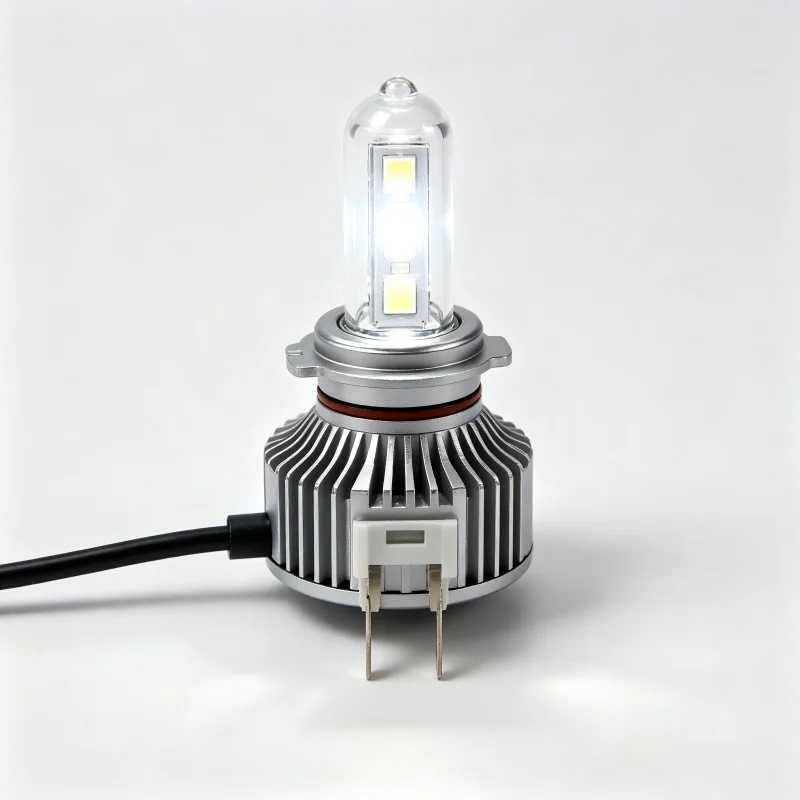
1. 為什麼大多數「最佳LED」文章是錯的
網路上每一篇「最佳LED汽車燈泡」文章都是由從未安裝過頭燈燈泡的人寫的。他們按聯盟佣金而非性能來排名亞馬遜產品。他們把所有LED汽車燈泡視為同一類別。這就像寫「最佳輪胎」卻不提及輪胎尺寸。\r\n\r\nH11 LED燈泡的工程挑戰與H4雙光束燈泡完全不同。它所安裝的外殼——反射式與投射式——決定了哪種晶片佈局效果最好。車輛的電氣系統決定了你是否需要CANbus相容性。\r\n\r\n以下是選擇LED汽車燈泡時真正重要的事。.
2. 真正重要的四件事
2.1. LED晶片類型與位置
LED晶片決定亮度、光束圖案,以及燈泡模擬鹵素燈絲位置的程度——這對於投射式燈具中的清晰截止線和反射式燈具中的正確光線分佈至關重要。.
2026年你會看到的三種晶片類型:
| 晶片類型 | 最適合 | Advantages | 缺點 |
|---|---|---|---|
| Philips ZES (Luxeon Z ES) | 投射式燈具 | 光束精準度的黃金標準。缺陷率低。6000K色溫下色彩一致性極佳 | 每瓦亮度中等 |
| CSP(晶片級封裝) | 反射器外殼 | 每瓦亮度高於ZES。更緊湊。製造成本更低 | 隨著時間推移更容易受到熱應力的影響 |
| Cree XHP / XPG | 高輸出應用 | 卓越的耐用性 | 較大的封裝使燈絲位置匹配更加困難 |
但晶片類型只是故事的一半。晶片的位置同樣重要——甚至更重要。LED發光體越接近原始鹵素燈絲的位置,您的燈殼就能更好地控制光束。更好的位置通常意味著更好的截止線、更強的遠光照明和更少的散射。.
2.2. 熱管理
LED在光束處運行溫度較低,但晶片和驅動器仍會產生熱量。更好的燈泡通過優質散熱器、主動風扇或設計良好的被動散熱方案來控制這些熱量。廉價套件通常在這裡偷工減料,這可能縮短使用壽命或降低長時間使用後的輸出。
輸入到LED的電能中約有70-80%轉化為熱量。散熱不良可能導致結溫升高,從而大幅縮短LED壽命。.
需要注意什麼:
- 熱分離 — 優質LED汽車燈泡將LED晶片置於與驅動電路分離的熱平面上
- 散熱器設計 — 更大的表面積意味著更好的被動散熱
- 有風扇與無風扇 — 風扇冷卻燈泡能散發更多熱量,但有些風扇會隨著時間變大聲或提前失效。無風扇燈泡更簡單,但並非每種設計都能在高輸出應用中充分散熱
- 恆定電流驅動器 — 接受任何輸入電壓,將其平滑化並進行調節
2.3. CANbus 相容性
現代車輛使用 CANbus 系統,透過測量電阻來監控燈泡狀態。LED 汽車燈泡的功耗遠低於鹵素燈泡。系統會將其解讀為燈泡燒毀,並觸發錯誤代碼或閃爍。.
您的選擇:
- 內建 CANbus 相容性 — 燈泡具有積體電路,可與車輛電腦正常通訊。即插即用。無需額外零件。這是理想的解決方案。.
- 外部電阻 — 增加功耗以欺騙 CANbus 系統。價格低廉且幾乎總是有效,但它們會產生熱量,需要接入原廠線路,且可能隨著時間而失效。.
- 外部 CANbus 解碼器 — 即插即用模組,可平衡電路。比電阻貴,但安裝更簡潔。.
If your vehicle is known for CANbus issues, choose LED car bulbs with built-in compatibility. This can save time, money, and frustration.
2.4. Installation and Physical Dimensions
This is where many buyers get burned. Even if the bulb base is technically correct, the overall body size, driver box, wire length, and fan depth may not be compatible with your original housing. Trucks and older cars sometimes have more space. Compact modern housings often do not. A vehicle-specific fitment check can save time and prevent you from buying a kit that ultimately needs to be returned.
Check before purchasing:
- Will the dust cover fit over the bulb?
- Will the cooling fan or heatsink touch the housing?
- Is the wire long enough to reach the connector?
- Does the locking mechanism match your housing?
3. LED vs. Halogen vs. HID: Head-to-Head Comparison
| 特點 | 鹵素 | LED | HID (Xenon) |
|---|---|---|---|
| Brightness (Lumens) | 1,000 – 1,500 | 4,000 – 6,000 | 3,000 – 4,000 |
| Power Consumption | 55W | 25 – 50W | 35W |
| Lifespan (Actual) | < 1,000 hours | 15,000 – 30,000 hours | 2,000 – 3,000 小時 |
| Cost per set | $10 – $30 | $40 – $80 | $50 – $150 |
| 安裝 | Simple | Simple to moderate | Usually requires professional installation |
| Beam pattern in halogen housings | Best (designed specifically for it) | Varies greatly—depends on chip position | Poor—HID bulbs scatter light in halogen reflectors |
| Warm-up time | 即時 | 即時 | Seconds |
For most drivers upgrading from halogen, LED offers the best combination of brightness, lifespan, and ease of use. But not all LED car bulbs are equal. The difference between a premium LED bulb and a poor one comes down to the four factors above.
4. Common pitfalls to avoid when buying LED car bulbs
4.1. Pitfall 1: Chasing raw lumen numbers
Many LED car bulbs promise huge lumen numbers, but this does not guarantee better nighttime driving. Beam pattern matters more than big numbers. If the bulb does not place light in the housing like the original halogen filament, you may get a bright foreground, dim distance, and lots of glare for oncoming traffic.
4.2. Pitfall 2: Ignoring color temperature trade-offs
Most drivers want that clean white LED look, with the optimal range being roughly between 5000K and 6500K. Light that is too blue can look harsh, and usable visibility in rain or fog may be compromised. When road conditions deteriorate, whiter isn't always better.
4.3. Pitfall 3: Assuming 'Plug-and-Play' Means No Compatibility Issues
“Plug-and-play' means the connector fits. It doesn't mean the bulb is compatible with your vehicle's CANbus system, fits behind the dust cover, or produces the correct beam pattern. Always verify CANbus compatibility, physical dimensions, and lamp type before purchasing.
4.4. Pitfall 4: Buying the Cheapest Option
A $15 set of LED car bulbs might save you money upfront. But when they fail within six months—or worse, when they cause an accident because you couldn't see the road—those 'savings' quickly disappear. Quality LED car bulbs cost more upfront but save you money in the long run through longer lifespan and better performance.
5. Industry Expert Recommendations
HID Nation, with over 25 years of experience in automotive lighting, recommends the GTR Lighting Ultra 3 as the top performance choice for H11. Their March 2026 guide—based on real customer feedback from over 50,000 orders—places GTR at the top of the premium category.
Sanvicar's January 2026 headlight review found that GTR Lighting's Ultra 2 H11 bulbs outperformed all other kits in testing. They praised the aluminum housing and engineering quality.
Independent reviews confirm these results. BulbFacts calls the Ultra 3 ”bright, well-built, performs strongly in reflector housings, excels in projector housings, and has an overall balance that's hard to find in the LED headlight world.'
6. Frequently Asked Questions About LED Car Bulbs
6.1. What's the difference between 5000K and 6000K LED car bulbs?
5000K produces a neutral white light, often called 'natural white.' 6000K produces a slightly cooler, crisper white that mimics midday sunlight. The human eye perceives 6000K as brighter, but both are equally bright in terms of lumens. The choice is largely personal preference, though some drivers find 5000K more comfortable for extended night driving.
6.2. Do I need LED car bulbs with CANbus compatibility?
If your vehicle was manufactured after roughly 2005, it likely uses CANbus or similar computer-controlled electrical systems. These systems monitor bulb resistance and can trigger errors or flickering with standard LED bulbs. Choose LED car bulbs with built-in CANbus compatibility to avoid these issues.
6.3. Will LED car bulbs work in my reflector headlights?
Yes, but only if the LED chip position is correct. Reflective housings are designed for a specific filament position. If the LED chip is off by even a few millimeters, the beam pattern will fall apart. Look for bulbs that advertise "1:1 filament replication positioning" or similar engineering claims.
6.4. How many lumens do I actually need?
Factory halogen bulbs output approximately 1,000 to 1,500 lumens on low beam. Quality LED car bulbs typically produce 4,000 to 6,000 lumens. More lumens isn't always better—a well-focused 4,000-lumen beam is more useful than a scattered 10,000-lumen beam. Focus on beam pattern quality, not just the lumen number.
6.5. Are expensive LED car bulbs worth the extra cost?
In most cases, yes. Cheap LED car bulbs cut corners on chip quality, thermal management, and driver circuitry. They may dim over time, fail prematurely, or produce poor beam patterns. Premium bulbs like the GTR Ultra series use high-grade components, proper thermal design, and precise chip positioning. They cost more upfront but offer better performance and longer lifespan.
6.6. How do I know which bulb size my vehicle needs?
Check your vehicle's owner's manual, look at the base of your existing bulb, or use an online bulb lookup tool. Common sizes include H11 (low beam), 9005 (high beam), H7 (European vehicles), and H4 (dual beam). Always confirm the exact size before purchasing.
6.7. Can I install LED car bulbs myself?
Most LED car bulbs are designed for DIY installation. However, some vehicles have tight engine bays or complex headlight assemblies that make installation more difficult. Watch installation videos for your specific vehicle model before starting. If unsure, professional installation is always an option.
7. Your Next Step: Choosing LED Car Bulbs That Actually Perform
You now know what separates excellent LED car bulbs from terrible ones. You understand the importance of chip positioning, thermal management, CANbus compatibility, and installation. You've seen the numbers, comparisons, and expert advice.
Now it's time to make a choice. You can continue gambling on cheap LED car bulbs that flicker, glare at other drivers, and fail within months. Or you can choose bulbs recommended by industry experts—bulbs designed to work with your vehicle, not against it.
GTR Lighting offers engineering, performance, and reliability that cheap bulbs can't match. Visit GTR Lighting today and upgrade to LED car bulbs that actually work.
Shop the GTR Lighting Ultra series—the LED car bulbs trusted by professionals.