
Вы стоите в отделе автозапчастей — или листаете бесконечные страницы товаров — и смотрите на три совершенно разные технологии фар. Галоген. Ксенон. Светодиод. Каждая обещает быть “лучшей”. У каждой есть страстные сторонники и столь же страстные противники. Как же на самом деле выбрать?
Direct answer: Xenon headlights provide 2-3 times more light output than halogen, with 35% energy savings and a lifespan of 2000-3000 hours. LED headlights have an even longer lifespan (up to 20,000 hours) and instant brightness, but at a significantly higher initial cost. The right choice depends on your car, your budget, and how much you drive at night.
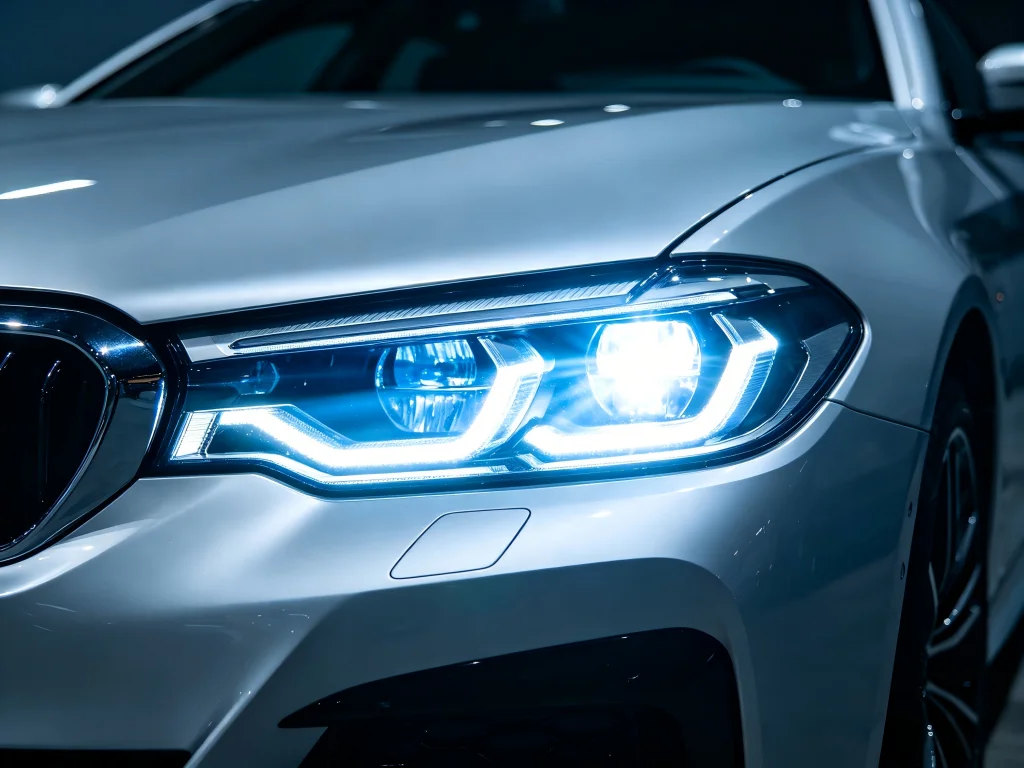
1. Understanding the Technology: How Each System Works
Before comparing, let's understand what actually happens inside each headlight. This is not just a trivial detail — it directly affects performance, reliability, and replacement cost.
1.1. Галоген: старая добрая классика
Галогенные лампы работают так же, как лампочка Томаса Эдисона. Электрический ток нагревает вольфрамовую нить внутри стеклянной колбы, заполненной галогенным газом. Нить накаляется, производя свет. Просто. Недорого. И неэффективно. Галогенные лампы преобразуют большую часть энергии в тепло, а не в свет. Они обычно служат от 250 до 1000 часов и дают теплый желтоватый свет с цветовой температурой около 3200K.
1.2. Ксенон HID: яркая золотая середина
Ксеноновые фары — также называемые лампами высокой интенсивности (HID) — не имеют нити накаливания, которая перегорает. Вместо этого они создают электрическую дугу между двумя электродами внутри кварцевой колбы, заполненной ксеноновым газом и парами ртути. Эта дуга генерирует интенсивный свет — от 3000 до 3500 люмен по сравнению с 1000-1500 люмен у галогена. Ксеноновый газ усиливает яркость и помогает лампе быстро достичь рабочей температуры.
Ксеноновые системы требуют балласта, который подает импульс зажигания 25 000 В для запуска дуги, а затем поддерживает дугу при напряжении около 85 В во время нормальной работы. Эта сложность является одновременно и сильной, и слабой стороной. Она обеспечивает превосходную производительность, но добавляет дополнительные компоненты, которые могут выйти из строя.
1.3. Светодиод: новый стандарт
Светодиодные (LED) фары используют полупроводники, которые излучают свет при прохождении через них тока. Нет нити накаливания. Нет газа. Нет времени на разогрев. Просто мгновенный яркий свет, который очень эффективен и невероятно долговечен. Светодиоды обычно служат до 20 000 часов и имеют цветовую температуру от 4000K до 6000K. Однако они требуют сложных систем управления теплом — радиаторов или вентиляторов — для предотвращения перегрева.
2. Сравнение один на один: ксеноновые фары против светодиодных против галогенных
| Характеристика | Галоген | Ксенон HID | Светодиод |
|---|---|---|---|
| Световой поток (люмены) | 1,000-1,500 | 3,000-3,500 | 3,000-5,000 |
| Цветовая температура | 3 200–5 000 К | 4 300–6 000 К | 4 000–6 000 К |
| Срок службы (часы) | 250-1,000 | 2,000-3,000 | 15,000-20,000 |
| Энергоэффективность | Низкая | Средняя (экономия 35% по сравнению с галогенными) | Высокая |
| Время разогрева | Мгновенно | 3–5 секунд | Мгновенно |
| Первоначальная стоимость | Низкая | Средняя | Высокая |
| Сложность замены | Простая замена своими руками | Умеренный (может потребоваться профессионал) | Сложный (часто требует замены модуля) |
Источники: PowerBulbs, HELLA, Repco Authorised Service
3. Преимущество ксенона: где технология HID сияет
Xenon headlights occupy a middle ground that neither halogen nor LED can fully fill. Here is where they excel:
3.1. Superior light quality for night driving
Xenon light is closer to natural daylight than halogen, with a color temperature from 4300K to 6000K. This improves contrast and reduces eye fatigue during long night drives. The beam of a xenon headlight spreads wider and farther than halogen, making it ideal for spotting hazards on poorly lit roads, especially at high speeds.
3.2. Better performance in adverse conditions
Xenon lamps appear whiter in rain and fog, improving visibility when it is needed most. The wider and more even light distribution limits glare scatter and provides a clearer view of the road. This is especially valuable for drivers who frequently travel on unlit highways or country roads.
3.3. Cost-effective premium lighting
While LED headlights offer better lifespan and efficiency, they come at a premium price. Xenon offers 80-90% of the benefits of LEDs in performance at 40-50% of the cost. For many drivers, xenon represents the optimal balance of performance, reliability, and value.
4. When xenon headlights may NOT be the right choice
Every technology has trade-offs. Here is when to consider alternatives:
4.1. You mostly drive in the city
If your trips are mostly urban with well-lit streets, the extra brightness of xenon may be unnecessary. Halogen may suit you fine — and save money upfront.
4.2. Your car uses halogen headlights
You can't just insert xenon bulbs into halogen headlights. Xenon bulbs have different bases (they start with “D”, not “H”) and require projector headlights to control the light beam. Installing xenon in reflector headlights creates dangerous glare for oncoming traffic and is often prohibited by law. You'll need a full HID conversion kit with new headlights, ballasts, and wiring.
4.3. You frequently flash your high beams
Xenon lamps reach full brightness in 3-5 seconds. Flashing high beams, commonly used to signal other drivers, produces barely visible light in the first second. If you frequently flash your headlights, the instant-on of LED lamps is a clear advantage.
5. Как выбрать правильные ксеноновые лампы для фар: чек-лист покупателя
Если вы решили, что ксенон вам подходит, или вы заменяете существующие ксеноновые фары, вот на что следует обратить внимание:
- Проверьте цоколь вашего автомобиля: Цоколи ксеноновых ламп начинаются с “D” (например, D1S, D2S, D3S, D4S). Проверьте руководство по эксплуатации или воспользуйтесь инструментом подбора ламп, чтобы подтвердить точную спецификацию.
- Выберите правильную цветовую температуру: 4 300K — стандарт OEM, желтовато-белый свет, разрешен везде. 5 000K дает чисто белый свет для современного вида. 6 000K создает холодный бело-голубой свет, но может снизить видимость в условиях влажности. Выше 6 000K светоотдача значительно снижается, и в некоторых регионах это может быть запрещено законом.
- Заменяйте парами: Ксеноновые лампы со временем тускнеют. Замена только одной лампы приводит к несоответствию светового потока и цвета. Всегда заменяйте обе лампы одновременно.
- Учитывайте бренд: Качество сильно различается между производителями. Лампы OEM-класса от известных брендов, таких как GTR, используют превосходные материалы электродов и проходят строгие испытания для обеспечения стабильной работы.
- Проверьте гарантиюКачественные ксеноновые лампы должны поставляться с гарантией, покрывающей производственные дефекты. Дешевые лампы часто не имеют гарантии или имеют гарантию, по которой невозможно предъявить претензию.
- Осмотрите упаковкуКачественные лампы упакованы для предотвращения загрязнения. Прикосновение к стеклу голыми пальцами может создать горячие точки, которые сокращают срок службы лампы. Ищите упаковку, включающую инструкции по обращению или защитные чехлы.
6. Скрытые затраты на дешевые ксеноновые фары
Let's be straightforward about what most guides gloss over. Cheap xenon bulbs aren't just less bright. They're more expensive in the long run.
A premium xenon bulb from a quality manufacturer lasts 2,500 hours. A cheap bulb lasts 500 hours and produces unstable light for most of that time. Over 10,000 hours of driving, you'll buy one set of premium bulbs or five sets of cheap bulbs. Premium bulbs cost $150. Cheap bulbs cost $50 per set — that's $250 total. You spend $100 more and get worse performance.
But the hidden cost is even worse. Cheap bulbs use low-quality electrode materials that degrade unevenly, creating arc instability that can damage your ballast. A damaged ballast costs $200–500 to replace. Suddenly, that “savings” has cost you $600.
This isn't speculation. It's the reality of automotive lighting that we've documented through thousands of customer interactions. Quality isn't expensive. It's actually the cheaper option.
7. What the experts say: automotive industry opinions
HELLA, one of the world's leading automotive lighting manufacturers, notes that xenon headlights provide “excellent illumination but are more expensive and require more maintenance” compared to halogen. They also emphasize that xenon systems require automatic headlight leveling to prevent glare. This isn't optional — it's a legal requirement in many jurisdictions.
PowerBulbs, a leading lighting retailer, advises that “you can only safely use xenon bulbs if your car is designed for them.” Attempting to use xenon bulbs in halogen housings without a proper conversion kit is dangerous and potentially illegal.
The consensus from industry experts is clear: xenon headlights deliver exceptional performance when properly specified and installed, but they're not a one-size-fits-all solution. Compatibility, quality, and proper installation matter immensely.
8. Xenon headlights by car brand: what fits your vehicle?
Xenon headlights are factory standard on many premium vehicles and available as an option on many others:
- BMW: Xenon headlights have been around for nearly 30 years, appearing on models from the 1 Series to the 7 Series, including the F30 3 Series with bi-xenon adaptive headlights
- Audi: The A1 Sportback uses bi-xenon/LED headlights with D3S bulbs
- Honda: Civic models from 2018 use D4S xenon bulbs in some trims
- PorscheModels like the 957 GTS use xenon low beams that require careful diagnosis when they fail
Always check compatibility with your specific vehicle before purchasing. A bulb that fits one BMW F30 may not fit another — it depends on whether your car has adaptive lighting, the specific model year, and trim level.
9. Frequently Asked Questions About Xenon Headlights
9.1. Are Xenon Headlights Better Than LED?
It depends on your priorities. Xenon provides superior light quality with a warmer, more natural beam that many drivers prefer for night driving. LEDs offer longer lifespan and instant on. Xenon is typically cheaper upfront; LEDs are more economical long-term.
9.2. How Much Do Xenon Headlights Cost?
Replacement bulbs typically cost between $50 and $150 per bulb, depending on brand and specification. Complete headlight assemblies can range from $500 to $2,000 or more. Installation adds $100 to $300 if you use a professional.
9.3. Can I Convert My Halogen Headlights to Xenon?
Да, но только с полным комплектом для переоборудования HID, который включает лампы, балласты, проводку и часто новые корпуса. Простая замена галогенных ламп на ксеноновые небезопасна, незаконна в большинстве мест и не будет работать, потому что разъемы разные.
9.4. Do Xenon Headlights Use More Power Than LED?
Yes. Xenon uses about 35% less power than halogen, but more than LEDs. LEDs are the most energy-efficient option, using roughly half the power of xenon for similar light output.
9.5. Why Do Xenon Headlights Take Time to Warm Up?
The arc inside a xenon bulb takes time to reach full operating temperature. During the first 3-5 seconds, light output is reduced. This is normal and not a sign of malfunction.
9.6. Are Xenon Headlights Legal in My Country?
Заводские ксеноновые системы законны во всем мире, если они включают автоматическое выравнивание и омыватели, как требуется. Вторичный тюнинг может быть незаконным в зависимости от местных правил. Всегда проверяйте местные законы перед модификацией фар.
10. Your Decision: Which Headlight Technology Is Right for You?
Here's the bottom line:
- Choose halogen if: you have a limited budget, you rarely drive at night, and your car has halogen headlights that you don't want to modify.
- Choose xenon if: you want premium lighting quality at a reasonable price, you often drive on unlit roads, and your car already has xenon headlights or you are willing to invest in a proper conversion.
- Choose LEDs if: you want the absolute best lifespan and efficiency, you're willing to pay more upfront, and your vehicle supports LED installation (or you're buying a new car with factory LEDs).
For most drivers — especially those who already have cars with factory xenon headlights — the right choice is obvious: invest in quality xenon replacements that will restore your headlights to their original performance. Don't switch to halogen. Don't pay a premium for LEDs unless you really need it. Get the performance your car was designed for.
11. GTR: the xenon headlight choice that makes sense
GTR understands what drivers really need: performance that doesn't compromise on quality, reliability, or value. Our xenon headlight solutions are designed to meet or exceed OEM specifications, with rigorous testing that ensures consistent performance over thousands of hours of use.
We don't cut corners on electrode materials. We don't supply bulbs with unstable color temperature. We don't leave you in the dark about compatibility. Every GTR xenon product is designed for specific car models, with clear installation instructions and support when you need it.
Whether you are replacing worn-out xenon headlights on your BMW, upgrading the lighting on your Audi, or converting your Honda to HID, GTR delivers the performance you expect and the reliability you deserve.
Explore GTR xenon headlight solutions today. Because the right light is not just about seeing better. It's about confidence behind the wheel.