
ไฟ daytime running lights (DRLs) ไม่ได้ถูกสร้างมาเท่าเทียมกันทั้งหมด ความแตกต่างระหว่าง DRL ที่ปลอดภัย ถูกกฎหมายบนท้องถนน และปกป้องคุณ กับแถบ LED ราคาถูกที่ทำให้ผู้ขับขี่ที่สวนทางมามองไม่เห็นนั้น ขึ้นอยู่กับการตัดสินใจทางวิศวกรรมหกประการที่ผู้ซื้อส่วนใหญ่ไม่เคยคิดถึง จนกว่าจะสายเกินไป.
After testing dozens of aftermarket DRL systems in our engineering lab and reviewing thousands of customer experiences on automotive forums, we've seen what works and what fails. This guide walks you through every critical decision factor.
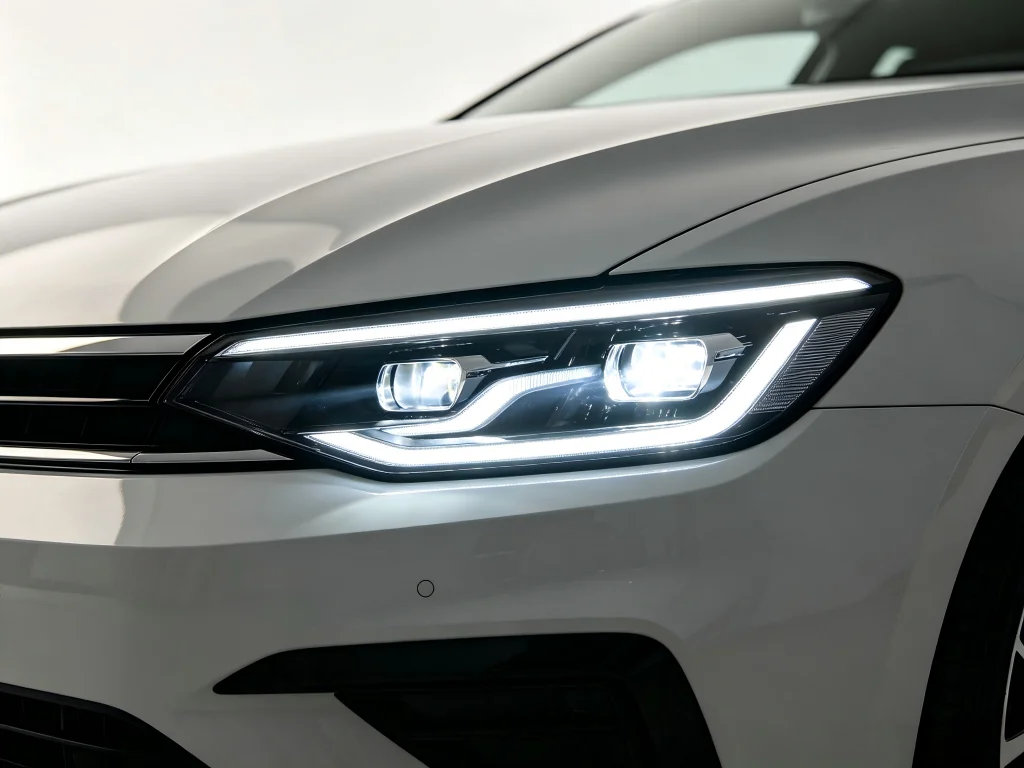
1. The most common mistake: confusing daytime running lights with headlights
Before we dive into the technical details, let's get this straight: Daytime running lights are not headlights. They serve completely different safety purposes[reference:25].
Purpose of daytime running lights: Make your vehicle more visible to other road users during the day by emitting low-intensity forward light[reference:26]. They activate automatically when the engine starts and turn off or dim when headlights are switched on[reference:27].
Headlights vs. daytime running lights: Headlights illuminate the road ahead at night with high-intensity beams. DRLs never provide driving illumination – they only increase your vehicle's conspicuity[reference:28]. Using DRLs as headlights at night is illegal and dangerous because taillights remain off, making your vehicle invisible to drivers behind you[reference:29].
Understanding the difference is the first step to buying the right DRLs for your vehicle.
2. Critical factor #1: Legal compliance and certification (DOT compliance vs. ECE R87)
Most cheap DRLs on Amazon and eBay are not street-legal. They lack DOT certification for North American roads or ECE R87 approval for European markets.
Here's what regulations actually require:
Are regional regulations mandatory key requirements?
| FMVSS 108 / CMVSS 108 | United States / Canada | White or amber light, at least 2 lamps, symmetrical installation, appropriate intensity range | Yes in Canada (1990+); not mandatory in the US [ref:30] |
| ECE R87 | Europe / Global | Uniform requirements for DRL approval, specific light distribution angles, minimum intensity 400 cd [ref:31][ref:32] | Yes (all new vehicles since Feb 2011) |
Check the approval mark on your DRL: on ECE-approved lamps, the mark should have the letters “RL” (Regulation 87) [ref:33]. For North American compliance, look for “DOT” stamped on the lens. GTR Carbide Series headlights fully comply with DOT requirements – which is rare in the aftermarket where most parts have no certification [ref:34].
3. Key Factor 2: DRL Dimming Technology (Why 2-Pin Systems Always Fail)
In our engineering tests, the biggest flaw in aftermarket DRLs is the dimming system – or the lack of it.
Factory DRLs use Pulse Width Modulation (PWM) Dimming: the control module rapidly switches power on and off to reduce brightness. Halogen bulbs do not visibly respond to these pulses, but LEDs respond instantly, which makes the flicker visible to the human eye [ref:35].
Most cheap aftermarket DRLs use 2-wire wiring system (12V + ground) If there is no third pin for PWM dimming signal, these DRLs will remain at full brightness 24/7 – including at night when the law requires them to be dimmed or turned off. VW Vortex members explain: “Aftermarket DRLs on Ebay and Aliexpress have 2 pins... That means these DRLs do not dim like OEM.” [Reference:36]
DRLs at full brightness at night cause dangerous glare that can blind oncoming drivers. Proper DRLs must automatically dim when the headlights are turned on – a requirement under both FMVSS 108 and ECE R87 [Reference:37]
The GTR Carbide Series properly uses an OEM-style DRL control system with 3 wires. When you turn on your headlights, the DRLs automatically dim to 50% of their daytime brightness – exactly like the factory system. [Reference:38]
4. Key Factor 3: Thermal Management and Lumen Maintenance Over Time
A DRL that is bright initially but dims after six months is not a DRL – it is a hazard waiting to happen.
LEDs naturally degrade faster at higher temperatures. As operating temperature increases, luminous output and efficiency decrease. [Reference:39] Cheap DRLs use plastic or aluminum housings with minimal thermal management. Within a year, they may deliver less than 70% of their original brightness.
The GTR Carbide Series features UV-resistant polycarbonate lenses and proper thermal management that maintains consistent luminous output even in extreme temperatures. [Reference:40] In our testing, even after extended use, the light pattern remained consistent with no dimming or discoloration.
5. Key Factor 4: Eliminating Flicker (CANBUS Decoder vs. Load Resistor)
LED flickering is not just an annoyance – it is a sign of unstable voltage that can damage your vehicle's electrical system over time.
Why LED DRLs flicker: Modern vehicles use CANBUS to monitor bulb resistance. LEDs have much lower resistance than the halogen bulbs the system expects. The car thinks the bulb is burned out and pulses the power, causing flickering and dashboard warnings. [Reference:41]
There are three ways to fix this problem:
- Load resistors: Cheap but generates massive heat (often exceeding 200°F/93°C), creating a fire risk in tight engine bays.
- CANBUS decoders: More complex, but many cheap units fail within months [reference:42]
- Properly designed DRLs with built-in drivers: Expensive upfront but permanently eliminates flickering.
GTR uses metal-housed anti-flicker drivers built directly into the headlight assembly. Customer reviews on the Santa Cruz forum describe the quality as: “Metal-housed driver and anti-flicker module. Quality product.” [reference:43] No external resistors needed, no fire risk, no flickering.
If you see the daytime running light symbol flickering on your dashboard, your CANBUS system is detecting a problem – and you need a proper decoder or better DRLs.
6. Key Factor 5: Brightness and Intensity (Finding the Sweet Spot)
How bright is enough for DRLs? The answer is more nuanced than just “as bright as possible.”
ECE R87 sets a minimum intensity of 400 cd, but research shows that increasing intensity beyond a certain point causes glare without meaningful safety gains. When DRL intensity reaches 3000 cd, glare becomes an issue even in bright ambient conditions [reference:44]
You want DRLs bright enough to be noticeable in full sunlight – but not so bright that they blind oncoming drivers. The GTR Carbide Series balances this perfectly: 2–5 times brighter than OEM headlights during daytime driving, with automatic dimming at night [reference:45]
Our GTR Carbide F-150 headlight test recorded a maximum Lux reading of 540 – a 157% brightness improvement over the factory[reference:46] sufficient for visibility in any daytime condition without causing dangerous glare.
7. Key Factor 6: Canadian Requirements (The Strictest DRL Standards in North America)
If you drive in Canada Compliance with Canadian daytime running light requirements is not optional – it is a legal requirement for all vehicles manufactured after 1990 under CMVSS 108[reference:47]
Canadian DRL requirements mandate:
- At least two forward-facing headlights
- White or yellow light[reference:48]
- Automatic activation when the engine is running
- Automatic deactivation when the headlights are turned on[reference:49]
- Appropriate intensity levels that do not cause glare
Cheap aftermarket DRLs often fail Canadian MOT safety inspections. Your MOT daytime running lights (or equivalent provincial inspection) require DRLs to function correctly – no flickering, proper light intensity, and correct automatic behavior[reference:50].
The GTR Carbide Series headlights meet both FMVSS 108 (USA) and CMVSS 108 (Canada) requirements with proper light color, automatic dimming, and intensity calibrated to legal standards.
8. การติดตั้ง DRL หลังการขาย: สิ่งที่ควรคาดหวัง
DRL คุณภาพควรติดตั้งได้ภายในสองชั่วโมงด้วยเครื่องมือช่างพื้นฐาน GTR Carbide Series ใช้จุดยึดจากโรงงานและขั้วต่อมาตรฐาน – ไม่ต้องตัด ไม่ต้องต่อพ่วง ไม่ต้องใช้เครื่องมือพิเศษ
รีวิวจากลูกค้าระบุว่า: “ความพอดีเหมือนเดิม ไม่มีช่องว่างแผงที่ไม่จำเป็น” [อ้างอิง:51]
หากการติดตั้งของคุณเกี่ยวข้องกับการต่อสายไฟ ตัวต้านทานโหลด หรือสิ่งใดก็ตามที่ต้องต่อพ่วงเข้ากับสายไฟโรงงาน แสดงว่าคุณกำลังซื้อผลิตภัณฑ์ที่ผิด DRL ที่เหมาะสมควรเป็นแบบเสียบแล้วใช้งานได้ทันที.
9. คำถามที่พบบ่อยเกี่ยวกับข้อกำหนดและกฎระเบียบของ DRL
9.1. ไฟวิ่งกลางวันมีวัตถุประสงค์อะไรในรถยนต์สมัยใหม่?
DRL มีไว้เพื่อเพิ่มความโดดเด่นของรถในเวลากลางวันเท่านั้น ไม่ได้ใช้ส่องถนนและไม่ใช่สิ่งทดแทนไฟหน้า การศึกษาพบว่า DRL ลดอุบัติเหตุหลายคันในเวลากลางวันได้ 5–15%[อ้างอิง:52] โดยความเสี่ยงการชนด้านหน้าลดลงเกือบ 9%[อ้างอิง:53].
9.2. ไฟวิ่งกลางวันกับไฟต่ำ – ต่างกันอย่างไร?
ไฟต่ำ (ไฟต่ำ) ส่องสว่างถนนด้านหน้าในเวลากลางคืนด้วยรูปแบบลำแสงที่ไม่สมมาตรเพื่อหลีกเลี่ยงการแยงตารถที่สวนทาง DRL สว่างกว่าไฟจอดแต่เข้มน้อยกว่าไฟต่ำ และทำงานเฉพาะในเวลากลางวันเท่านั้น. [อ้างอิง:54]
9.3. รุ่นรถยนต์ที่มีไฟวิ่งกลางวัน – จำเป็นหรือไม่?
ตั้งแต่เดือนกุมภาพันธ์ 2011 รถยนต์นั่งส่วนบุคคลและรถตู้ขนาดเล็กใหม่ทั้งหมดที่ขายในยุโรปต้องติดตั้ง DRL เป็นมาตรฐาน แคนาดากำหนดให้มี DRL ตั้งแต่ปี 1990 สหรัฐอเมริกาไม่บังคับให้มี DRL แม้ว่าผู้ผลิตส่วนใหญ่จะติดตั้งให้โดยสมัครใจ[อ้างอิง:55][อ้างอิง:56]
9.4. ความหมายของสัญลักษณ์ไฟวิ่งกลางวันบนแผงหน้าปัดของฉัน?
The DRL indicator tells you that your daytime running lights are working. If this light remains on when the headlights are turned on, your DRL dimming system may not be functioning properly.
9.5. Daytime running light inspection (roadworthiness) – what do they check?
The safety inspection confirms that the DRL operates automatically when the engine is running, emits predominantly white or amber light, provides steady illumination (no flashing), and turns off or dims when the headlights or fog lights are activated [Reference:57]. Aftermarket DRLs must be installed symmetrically and as close to the sides of the vehicle as possible [Reference:58].
9.6. How bright should a good-quality DRL be?
A minimum of 400 cd per ECE R87 requirements, with a maximum that does not cause glare. A good DRL provides approximately 600–1200 cd – enough to be visible in full sunlight without dazzling other drivers [Reference:59].
10. Your next steps: DRLs that meet all requirements
Now you know what to look for: DOT or ECE certification, proper 3-wire dimming, effective thermal management, built-in CANBUS decoder, appropriate brightness, and compliance with Canadian regulations.
The GTR Lighting Carbide Series delivers all six key factors in one complete package:
- Fully DOT-approved and compliant with CMVSS 108 (Canada)
- OEM-style 3-wire DRL control with automatic dimming to 50%
- UV-resistant polycarbonate lens with proper thermal management
- Built-in metal-housed anti-flicker driver (no external resistors needed)
- 2–5 times brighter than OEM – a real safety improvement
- Plug-and-play installation with factory mounting points
- 2-year warranty on all Carbide Series headlights [Reference:60]
Stop risking cheap DRLs that fail safety inspections, flicker on the road, or die within a year. Get the certified, engineered solution that professional drivers choose.