
No todas las luces de circulación diurna (DRL) son iguales. La diferencia entre una DRL segura y legal que te protege y una tira de LED barata que deslumbra al tráfico que viene en sentido contrario se reduce a seis decisiones de ingeniería que la mayoría de los compradores nunca consideran, hasta que es demasiado tarde.
After testing dozens of aftermarket DRL systems in our engineering lab and reviewing thousands of customer experiences on automotive forums, we have seen what works and what fails. This guide walks you through every critical decision factor.
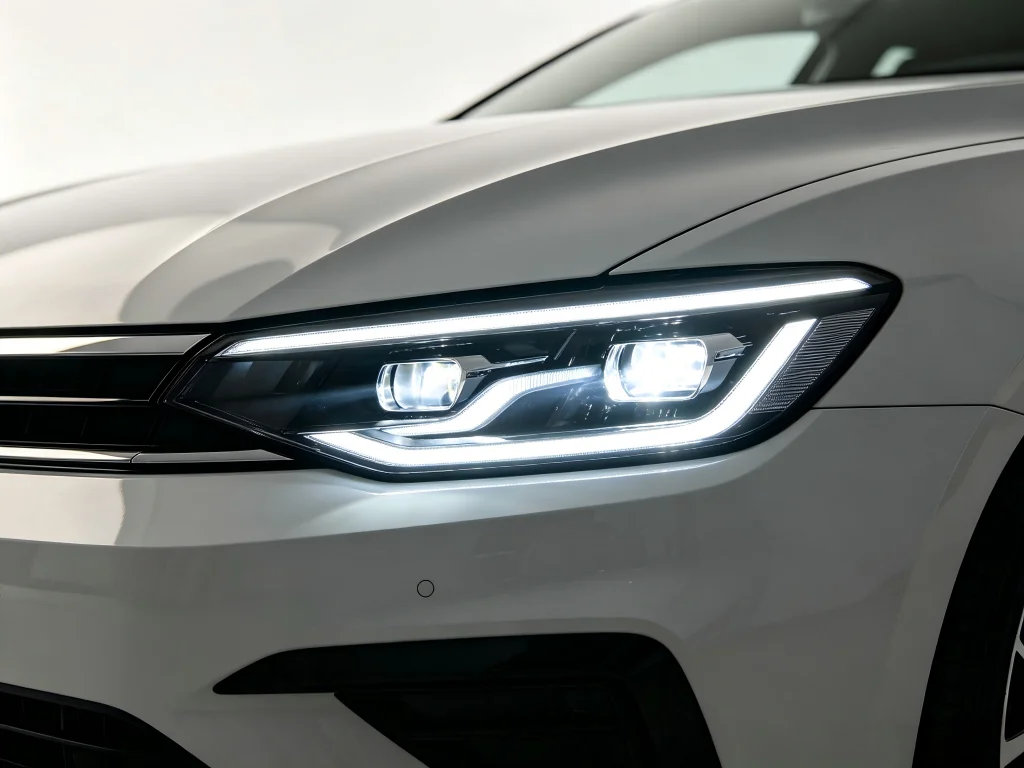
1. The most common mistake: confusing daytime running lights with headlights
Before diving into specifications, understand this: daytime running lights are not headlights. They serve completely different safety functions[reference:25].
Purpose of daytime running lights: They make your vehicle visible to other road users during daylight hours by emitting low-intensity forward lighting[reference:26]. They activate automatically when the engine starts and turn off or dim when the headlights are turned on[reference:27].
Headlights vs. daytime running lights: Headlights illuminate the road at night with high-intensity beams. DRLs never provide road illumination; they only increase your vehicle's conspicuity[reference:28]. Using DRLs as headlights at night is illegal and dangerous because the taillights remain off, leaving drivers behind you unable to see your vehicle[reference:29].
Understanding that distinction is the first step to buying the right DRLs for your vehicle.
2. Critical factor 1: Legal compliance and certification (DOT compliance vs. ECE R87)
Most cheap DRLs on Amazon and eBay are not street-legal. They lack DOT certification for North American roads or ECE R87 approval for European markets.
Here is what the regulations actually require:
RegulationRegionKey requirementsMandatory?
| FMVSS 108 / CMVSS 108 | EE. UU. / Canadá | Luz blanca o ámbar, mínimo 2 lámparas, montaje simétrico, rango de intensidad adecuado | Sí en Canadá (1990+); opcional en EE. UU.[referencia:30] |
| ECE R87 | Europa / Global | Disposiciones uniformes para la aprobación de DRL, ángulos específicos de distribución de luz, intensidad mínima de 400 cd[referencia:31][referencia:32] | Sí (todos los autos nuevos desde febrero de 2011) |
Verifique sus DRL para la marca de aprobación: En lámparas aprobadas por ECE, la marca debe contener las letras “RL” (Regulación 87)[referencia:33]. Para el cumplimiento en América del Norte, busque “DOT” estampado en la lente. Los faros GTR Carbide Series cumplen completamente con DOT, algo raro en el mercado de repuestos donde la mayoría de los conjuntos carecen de certificación[referencia:34].
3. Factor crítico 2: Tecnología de atenuación de DRL (por qué los sistemas de 2 pines siempre fallan)
En nuestras pruebas de ingeniería, el punto de falla más grande en los DRL de posventa es el sistema de atenuación, o la falta de este.
Los DRL de fábrica usan modulación por ancho de pulso (PWM) para atenuar: el módulo de control enciende y apaga rápidamente la energía para reducir el brillo. Las bombillas halógenas no reaccionan visiblemente a estos pulsos. Pero los LED responden instantáneamente, lo que hace que el parpadeo sea visible al ojo humano[referencia:35].
La mayoría de los DRL de posventa baratos usan un sistema de cableado de 2 pines (12V + tierra). Sin un tercer pin para la señal de atenuación PWM, estos DRL permanecen a pleno brillo 24/7, incluso de noche cuando legalmente deben atenuarse o apagarse. Un miembro de VW Vortex explicó: “Los DRL de posventa en Ebay y Aliexpress tienen 2 pines… eso significaría que estos DRL no se atenúan como los OEM.” [referencia:36]
Los DRL a pleno brillo de noche causan deslumbramiento peligroso que puede cegar a los conductores que vienen en sentido contrario. Los DRL adecuados deben atenuarse automáticamente cuando se activan los faros – un requisito tanto bajo FMVSS 108 como ECE R87.[referencia:37]
La Serie GTR Carbide utiliza un sistema de control DRL de estilo OEM de 3 cables. Cuando enciendes los faros, las DRL se atenúan automáticamente al 50% de su brillo diurno – exactamente como lo hacen los sistemas de fábrica.[referencia:38]
4. Factor Crítico 3: Gestión del Calor y Mantenimiento de Lúmenes con el Tiempo
Una DRL que comienza brillante pero se atenúa después de seis meses no es una DRL – es un peligro esperando a suceder.
Los LED se degradan naturalmente más rápido a temperaturas más altas. A medida que la temperatura de operación aumenta, la salida de luz y la eficiencia disminuyen[referencia:39]. Las DRL baratas utilizan carcasas de plástico o aluminio con gestión térmica mínima. En un año, pueden estar emitiendo menos del 70% de su brillo original.
La Serie GTR Carbide cuenta con lentes de policarbonato resistentes a los rayos UV y una gestión térmica adecuada que mantiene una salida constante en extremos de temperatura[referencia:40]. En nuestras pruebas, incluso después de una operación prolongada, el patrón de luz permanece consistente sin atenuación ni cambio de color.
5. Factor Crítico 4: Eliminación de Parpadeo (Decodificador CANBUS vs. Resistencia de Carga)
El parpadeo de los LED no solo es molesto – indica voltaje inestable que puede dañar el sistema eléctrico de tu vehículo con el tiempo.
Por qué parpadean las DRL LED: Los vehículos modernos utilizan sistemas CANBUS para monitorear la resistencia de las bombillas. Los LED tienen una resistencia mucho menor que las bombillas halógenas que el sistema espera. El vehículo cree que la bombilla está fundida y pulsa el suministro de energía, causando parpadeo y advertencias en el tablero[referencia:41].
Hay tres formas de solucionar esto:
- Load resistors: Cheap but generate massive heat (often exceeding 200°F/93°C), creating fire hazards in tight engine compartments
- CANBUS decoders: More sophisticated, but many cheap units fail within months[reference:42]
- Properly designed DRLs with integrated drivers: Costly upfront but permanently eliminate flickering
GTR uses metal-encapsulated anti-flicker drivers integrated directly into the headlight assembly. A customer review on a Santa Cruz forum described the quality: “The driver and anti-flicker module are metal-encapsulated. Quality material.” [reference:43] No external resistors. No fire risk. No flickering.
If you see the daytime running light symbol flashing on your dashboard, your CANBUS system is detecting a problem – and you need proper decoders or better DRLs.
6. Critical Factor 5: Brightness and Intensity (Finding the Sweet Spot)
How bright is bright enough for a DRL? The answer is more nuanced than simply “as bright as possible.”
ECE R87 requires a minimum intensity of 400 cd. But research shows that increasing intensity beyond a certain point creates glare without significant safety gains. When DRL intensity reaches 3000 cd, glare becomes a concern even in bright ambient light[reference:44].
You want DRLs bright enough to be noticed in full sunlight – but not so bright that they dazzle oncoming drivers. The GTR Carbide Series achieves this balance perfectly: 2–5 times brighter than OEM headlights during daytime operation, with automatic dimming at night[reference:45].
Our GTR Carbide F-150 headlight tests recorded 540 Lux maximum – a 157% brightness improvement over factory[reference:46]. That's enough to be seen in any daytime condition without creating dangerous glare.
7. Critical Factor 6: Canada's Requirements (The Strictest DRL Standards in North America)
If you drive in Canada, your Canada daytime running lights compliance is not optional – it is required by law for all vehicles manufactured after 1990 under CMVSS 108.[reference:47]
Canadian DRL regulations require:
- Minimum of two forward-facing lights
- White or yellow light output[reference:48]
- Automatic activation when the engine is running
- Automatic deactivation when the headlights are on[reference:49]
- Adequate intensity levels that do not cause glare
Cheap aftermarket DRLs often fail Canadian MOT-style safety inspections. Your ITV daytime running lights (or equivalent provincial inspection) requires that DRLs function correctly: no flickering, adequate intensity, and correct automatic behavior[reference:50].
The GTR Carbide series headlights meet FMVSS 108 (USA) and CMVSS 108 (Canada) requirements, with appropriate light color, automatic dimming, and calibrated intensity according to legal standards.
8. Aftermarket DRL Installation: What to Expect
Quality DRLs should be installed in less than two hours with basic hand tools. The GTR Carbide series uses factory mounting points and standard connectors: no cutting, no splicing, no special tools.
A customer review noted: “The fit is the same, without leaving unnecessary gaps in the panels.” [reference:51]
If your installation involves wire splicing, load resistors, or anything that requires cutting factory wiring, you are buying the wrong product. Proper DRLs are plug-and-play.
9. FAQ on DRL Specifications and Regulations
9.1. What is the purpose of daytime running lights in modern vehicles?
DRLs exist solely to increase vehicle visibility during daylight hours. They do not illuminate the road and are not substitutes for headlights. Studies show that DRLs reduce daytime multi-vehicle traffic accidents by 5–15%[reference:52], with the risk of frontal collisions decreasing by almost 9%[reference:53].
9.2. Daytime running lights vs. low beams: what is the difference?
Low beams (dipped lights) illuminate the road at night with asymmetric beam patterns that avoid dazzling oncoming traffic. DRLs are brighter than parking lights but less intense than low beams, and they only operate during the day. [reference:54]
9.3. Car models with daytime running lights: are they mandatory?
Since February 2011, all new passenger cars and light vans sold in Europe must have DRLs installed as standard. Canada has required DRLs since 1990. The USA does not require them, although most manufacturers include them voluntarily.[reference:55][reference:56]
9.4. Meaning of the daytime running lights symbol on my dashboard?
The DRL indicator light tells you that your daytime running lights are active. If this light stays on when your headlights are on, your DRL dimming system may not be working correctly.
9.5. Daytime running lights (inspection) – what do they check?
Safety inspections verify that DRLs operate automatically when the engine is running, emit substantially white or amber light, produce a steady output (no flicker), and turn off or dim when the headlights or fog lights are turned on[reference:57]. Aftermarket DRLs must also be mounted symmetrically as far to each side of the vehicle as practical[reference:58].
9.6. How bright should quality DRLs be?
Minimum 400 cd per ECE R87 requirements, with a maximum that does not cause glare. Good DRLs produce approximately 600–1200 cd – enough to be seen in full sunlight without blinding other drivers.[reference:59]
10. Your Next Step: DRLs That Meet Everything
Now you know exactly what to look for: DOT or ECE compliance, proper 3-wire dimming, effective thermal management, built-in CANBUS decoders, optimal brightness, and Canadian regulatory compliance.
The GTR Lighting Carbide Series offers all six critical factors in a complete package:
- Fully DOT compliant and meets CMVSS 108 (Canada) requirements
- OEM-style 3-wire DRL control with automatic dimming to 50%
- UV-resistant polycarbonate lenses with proper thermal management
- Built-in anti-flicker controllers with metal housing (no external resistors)
- 2–5 times brighter than OEM – real safety improvement
- Plug-and-play installation with factory mounting points
- 2-Year Warranty on All Carbide Series Headlights[reference:60]
Stop risking cheap DRLs that fail safety inspections, flicker on the road, or die within a year. Get the certified, engineered solution that professional drivers choose.