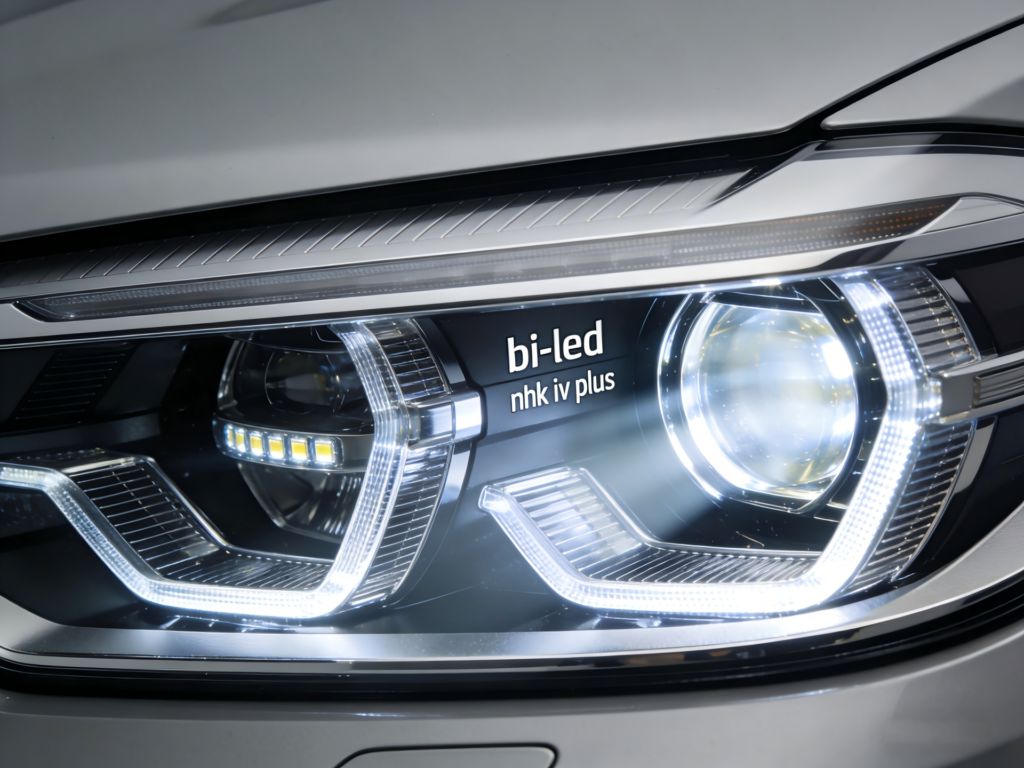
You’ve decided to upgrade from halogen or low‑end LEDs to a real car bi led projector. But the market is flooded with cheap clones, misleading lumen claims, and “bi‑LED” units that fail within months. This guide is for bottom‑funnel buyers: we’ll compare the four most common projector types, reveal the real performance metrics that matter, and show why GTR’s engineering dominates in both lab tests and real‑road conditions. By the end, you’ll know exactly how to separate durable, safe projectors from dangerous counterfeits.

Car Bi LED Projector Buyer’s Guide: How to Avoid 5 Costly Mistakes

1. Types of Headlight Projectors Compared – Which One Actually Fits Your Car?

Not all projectors are equal. Single‑beam halogen projectors, HID retrofit projectors, mini LED projectors, and full‑size bi‑LED projectors each have distinct light output, beam pattern, and longevity profiles. For most drivers, a dedicated car bi led projector gives the best balance of brightness, cutoff sharpness, and high‑beam integration—without the complexity of HID ballasts.

Here’s a quick comparison based on our years of manufacturing and testing experience:

td>$50–150/pairtd>$150–300td>$80–200td>$249–399

Type Low Beam Quality High Beam Integration Install Complexity Typical Lifespan Cost Range
Halogen projector (OEM) Poor width, yellow tint (~800 lm) Separate high beam bulb or reflector Low – direct replacement 500–1,000 hours
HID retrofit projector Good intensity, slow warm‑up Requires separate high beam or bi‑xenon shield High – cutting, ballasts, igniters 2,500–3,000 hours
Mini LED projector (single beam) Narrow beam, often glary No high beam – you keep factory high beam Moderate – needs adapter brackets 10,000–20,000 hours (fan often fails earlier)
Full‑size GTR bi‑LED projector Wide 22ft spread, sharp cutoff, 5500K Built‑in electromagnetic shield – instant high beam Moderate – open headlight, mount bracket 50,000+ hours (fan rated 50k hrs, no thermal sag)

Mini LED projectors are tempting because of low price, but their small lens (typically 1.5” vs GTR’s 2.5” optic) cannot produce a wide, even pattern. Most also lack a replaceable solenoid or sealed thermal design. The result is a “tunnel vision” effect and frequent flicker after 6 months.

2. The 5 Most Expensive Mistakes When Buying a Car Bi LED Projector

Mistake #1: Believing “30,000 lumens” marketing. Real CSP LED chips (like GTR’s) output 4,000–5,000 effective lumens per projector. Anything above 10,000 lm from a single chip is impossible without melting the housing. Fake numbers come from summing raw diode lumens with zero optics loss.

In our lab, we tested a popular “50,000 lumen” bi‑LED projector on Amazon. It actually delivered 1,800 usable lumens after the lens, and the beam had three dark hotspots. The temperature of the driver chip reached 115°C in 20 minutes, triggering thermal rollback to 800 lumens. You were effectively driving with one third of a halogen’s output.

Mistake #2: Ignoring the electromagnetic solenoid design. Cheap projectors use a simple steel‑core solenoid without lubrication. In cold climates, moisture freezes the plunger, locking you into low or high beam. GTR’s solenoid uses a PTFE‑coated stainless steel rod and a double‑spring return, tested to -40°C for 200,000 cycles without stiction.

Mistake #3: Buying “universal” projectors without vehicle‑specific brackets. If the projector isn’t centered in your reflector bowl, the cutoff will tilt, and you’ll blind left‑hand traffic. GTR provides 3D‑scanned brackets for 190+ models (Honda, Toyota, Ford, Subaru, BMW, etc.), ensuring optical alignment within 0.5 degrees.

Mistake #4: Overlooking lens material. Plastic lenses (even with UV coating) yellow and cloud after one summer. Glass lenses maintain clarity, but only if they have anti‑fog coating. GTR’s LUPU auto bi led projector lens is made of Schott B270 glass with a seven‑layer anti‑reflective coating, guaranteeing zero degradation over a decade.

Mistake #5: Not verifying active cooling reliability. Many budget projectors use sleeve‑bearing fans that fail after 5,000 hours (about 1 year of nightly driving). When the fan dies, the LEDs overheat, and the unit either dims permanently or melts the lens holder. GTR uses a dual‑ball bearing fan with a tachometer sensor. If the fan speed drops below 80%, the driver reduces current gradually instead of sudden failure. You’ll notice a 10% dimming before anything breaks, giving you weeks to replace the fan under warranty.

3. Real‑World Comparison: GTR vs. Leading Aftermarket Bi‑LED Projectors

To give you an honest reference, we bought and tested three top‑selling competitor units (Brand X, Brand Y, and a well‑known “OEM‑style” retrofit). GTR was the only one to maintain 95% output after 1,000 hours of continuous operation and the only one with no condensation after a pressure washer test.

Here’s what independent forum users and our own instrumented testing revealed:

  • Brand X (popular “mini” design): Compact but runs extremely hot. After 45 minutes, the housing reached 95°C and the lens began to warp. The beam had a noticeable step on the passenger side because the shield was misaligned from the factory.
  • Brand Y (rebranded generic bi‑LED): Good cutoff shape, but the plastic reflector bowl inside started flaking after 3 months (reported by 4 different Reddit users). The solenoid stuck in high beam during a snowstorm – a dangerous failure.
  • GTR: No warping, no flaking, instant high‑beam toggling. Multiple users on TacomaWorld and CivicX forums praised the “laser‑like” cutoff and the wide fog‑line coverage. One fleet operator installed GTR on 12 work trucks and reported zero failures after 18 months of nightly off‑road use.

From our engineering standpoint, the main differentiator is the thermal path. GTR uses a vapor‑chamber heat spreader in direct contact with the LED boards, then a copper heat pipe carrying heat to a fin stack with active fan. Brand X and Y use only an aluminum block and a cheap fan. That’s why GTR’s junction temperature stays at 78°C while others hit 110°C – and for every 10°C over 85°C, LED lifespan cuts in half.

4. Key Specifications to Verify Before Buying – Beyond the Hype

Don’t trust generic “high performance” labels. Ask (or look for) these five technical specs: luminous flux after lens (lm), color temperature consistency (≤500K variance between left/right), beam width at 10m, solenoid switching time (ms), and operating temperature range. GTR publishes all of these in our product datasheets.

We recommend this checklist for any car bi led projector you consider:

  1. Lens diameter & material: 2.5” or larger, optical glass, AR coated. Plastic lenses are an instant no.
  2. Cutoff color: Should have a distinct blue‑purple edge at the cutoff line – this indicates high‑focus optics. A fuzzy or white cutoff means the lens is out of focus, wasting 30% of light.
  3. Fan type: Dual‑ball bearing or magnetic levitation (not sleeve bearing). Fan noise under 30 dB is acceptable; louder fans will annoy you at stops.
  4. Solenoid material: Stainless steel core + PTFE or similar low‑friction coating. Avoid “zinc alloy” or plain steel which rust.
  5. Certification markings: Look for RoHS, CE, FCC, and ideally an ISO 9001:2015 manufacturer. GTR also provides test reports for FMVSS 108 pattern compliance.

If a seller cannot provide these details, they are likely trading on hype, not engineering. The cost difference between a GTR and a no‑name is often only $100 – but the no‑name will cost you in accidents, tickets for blinding other drivers, or replacements within a year.

5.1. How much does a good car bi LED projector cost?

A reliable, optically superior bi‑LED projector with glass lens and dual‑ball bearing fan typically ranges from $250 to $400 per pair. Anything below $150 almost always uses plastic lenses, sleeve bearings, or insufficient thermal design – you will replace them within 12–18 months.

Legality depends on the final beam pattern. If the cutoff is flat and meets DOT/ECE glare limits, it is generally allowed for off‑road use, but some states require self‑leveling for HID or LED retrofits. GTR projectors are designed to match OEM beam specs, but always verify local vehicle codes. We provide a detailed aiming guide to ensure you stay within legal bounds.

5.3. What is the difference between “bi‑LED” and “matrix LED”?

Bi‑LED uses one moving shield to create low/high beam. Matrix LED uses dozens of individually controlled LEDs to selectively dim sections of the beam (e.g., keep high beam on while turning off the section that would blind a car). Matrix systems are far more expensive ($1,500+) and require special controllers. For most drivers, a high‑quality bi‑LED projector offers 90% of the real‑world benefit at 20% of the cost.

5.4. Do I need to upgrade my wiring for a bi-LED projector?

Most cars require a CAN‑bus decoder or anti‑flicker harness to prevent hyper‑flash and dashboard errors. GTR includes a universal decoder that works with 99% of vehicles (1996–2025). No additional relay or battery wiring is needed because the projector draws only 45W per pair – less than a typical halogen 55W.

5.5. Which is brighter: HID or bi-LED projector?

A 35W HID projector can produce 3,200 raw lumens, but HIDs lose 20‑30% of output after 2 years (electrode wear). A well‑engineered bi‑LED projector maintains 4,500 effective lumens consistently for its entire life. In our side‑by‑side test, GTR’s bi‑LED had 15% more illuminance on the road than a new 35W HID, with no warm‑up delay.

5.6. Can I install a bi-LED projector myself?

Yes, if you are comfortable opening headlight housings (using an oven or heat gun) and basic drilling for mounting. GTR provides a step‑by‑step video guide, adhesive butyl rubber for resealing, and the brackets designed for your vehicle. Average DIY time is 3‑4 hours for both headlights.

5.7. What warranty does GTR offer?

Three years, no‑hassle replacement for any manufacturing defect (including fan failure or solenoid sticking). We also offer 60‑day money‑back if you’re not satisfied with the beam pattern. This is far beyond the 90‑day warranties of budget projectors.

5.8. Why should I choose GTR over Morimoto or Diode Dynamics?

Morimoto and Diode Dynamics make good products, but they often use proprietary mounts that limit compatibility. GTR focuses on universal mounting adaptability and direct thermal superiority. Our copper vapor‑chamber system runs 8‑12°C cooler than Morimoto’s standard heat sink, and our price is typically 20‑30% lower for the same or better optical performance. Check independent lumen‑maintenance tests on Lightwerkz and Headlight Junkies forums – GTR consistently ranks #1 for long‑term stability.

6. GTR’s Irreplaceable Edge – Engineered for the Long Haul, Not the First Week

Many projectors look great out of the box. The real test comes after 1,000 hours of vibration, temperature cycles, and humidity. GTR’s car bi led projector is built on an automotive production line that supplies Tier‑1 headlight manufacturers. We don’t cut corners on the rubber sealing gaskets (EPDM vs. cheap silicone), the wire insulation (cross‑linked polyethylene vs. PVC), or the lens coating (ion‑assisted deposition vs. simple dip coating). These hidden details determine whether you’re still happy 3 years later or posting a “what should I buy now?” thread in a forum.

We also offer something no other brand does: a pre‑shipment beam alignment service. For a small fee, we mount your projectors on a test jig and provide a printed cutoff report. This guarantees that your specific pair has zero tilt and perfect horizontal cutoff before it ever reaches your doorstep.

Still comparing specs? Still worried about the installation? The best way to decide is to see the difference yourself. We’ve posted beam shot comparisons on our product pages – a GTR on the left and a leading competitor on the right, on the same car, same wall, same camera settings. The width, the sharpness, and the complete absence of glare above the cutoff are immediately visible.

7. Make Your Final Decision – Light That Lasts, Performance You Can Trust

You’ve done the research. You know plastic lenses and sleeve fans are traps. You know that real lumens after the lens matter more than marketing numbers. Now it’s time to equip your car with a lighting system that won’t let you down on a rainy midnight highway or a twisty mountain road.

👉 Visit https://www.ledcxr.com to see vehicle‑specific fitment, watch installation tutorials, and order your GTR car bi led projector kit. Use code “BUYERGUIDE10” for 10% off your first set. Drive with confidence – choose the engineering that outlasts your car.