
Setiap merek mengklaim memiliki lampu LED untuk lampu depan mobil. yang paling terang. Setiap halaman produk menggunakan foto stok yang sama. Setiap situs “ulasan” merekomendasikan apa pun yang membayar komisi afiliasi tertinggi. Panduan ini mengambil pendekatan berbeda — satu yang didasarkan pada prinsip-prinsip teknik, pengujian independen, dan umpan balik pengemudi nyata. Inilah yang sebenarnya membedakan kit LED $70 yang bertahan 5 tahun dari kit $15 yang mati dalam 6 bulan.
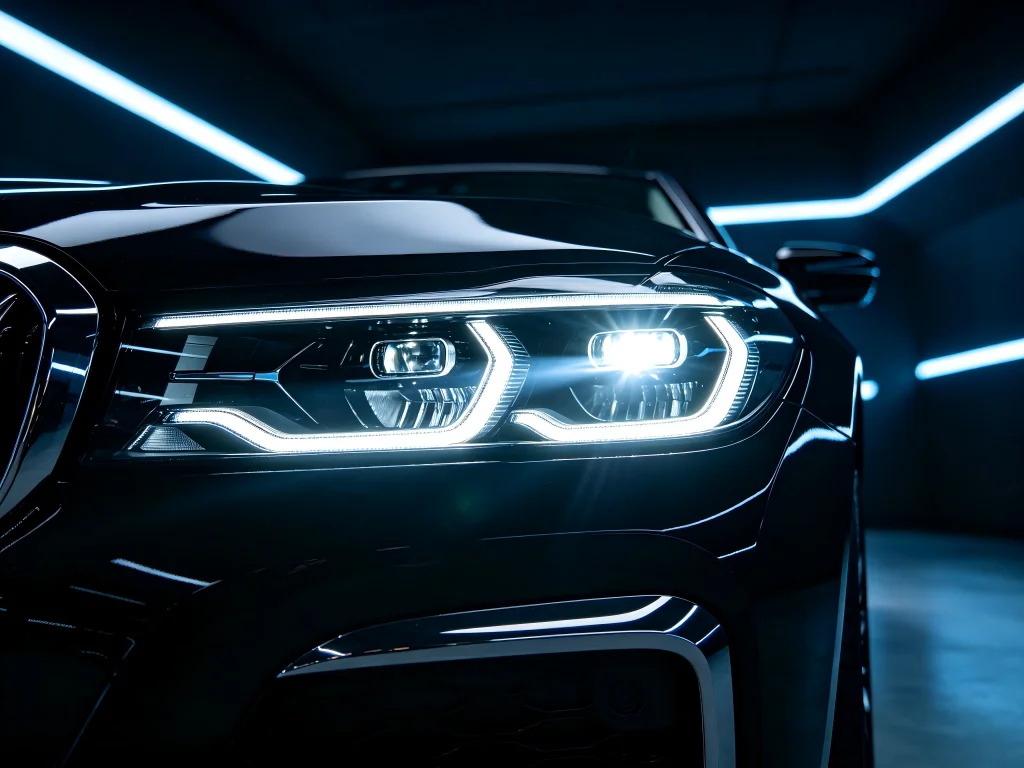
1. What Actually Makes a Good LED Headlight Bulb
Jawaban Langsung: Four things determine whether an LED headlight bulb works well in your vehicle: optical alignment (beam pattern), thermal management, LED chip quality, and electrical integration (CANBUS compatibility). Ignore any of these, and your “upgrade” will perform poorly — or fail completely.
Most buyers focus on lumens and price. That's like buying a car based only on horsepower and ignoring steering, brakes, and safety. Let's break down what really matters.
1.1. Optical Alignment: The Beam Pattern Test
Your headlight housing is an optical system designed around a specific light source position. Halogen bulbs emit 360-degree light from a single filament point. LED chips are flat surfaces that emit directional light. If the LED chip is not positioned exactly where the halogen filament is, the beam pattern becomes distorted.
Results of poor beam geometry:
- Dark spots appear directly in your driving path
- Light scatters above the cutoff line, blinding oncoming drivers
- The projected pattern becomes uneven and inconsistent
Testing has shown that cheap LED bulbs can produce beam patterns that are “worse than standard halogen”. In extreme cases, reviewers have reported bulbs where “there is no high/low beam, only high beam all the time, and the alignment is very poor”.
1.2. Thermal Management: The Hidden Performance Killer
LEDs generate heat at the semiconductor junction. If that heat is not efficiently removed, the bulb will derate — meaning it reduces output as it gets hotter. You might buy a 4,000-lumen bulb, but after 10 minutes of operation, you are actually getting 2,500 lumens.
Active Cooling vs. Passive Cooling:
| Fitur | Active Cooling (Fan) | Passive Cooling (No Fan) |
|---|---|---|
| Heat dissipation | Up to 51% more efficient | Less efficient per square inch |
| Sustained brightness | Maintains output when hot | May experience power derating under load |
| Risk of failure | Fan can fail over time | No moving parts |
| Terbaik untuk | High-output applications | Low wattage and low heat settings |
Technical reality: active cooling allows the bulb to maintain higher brightness for longer periods without thermal degradation. Passive cooling relies entirely on surface area to dissipate heat naturally, which means the bulb may dim as temperatures rise.
1.3. LED Chip Quality: What You're Really Paying For
The chip is the heart of every LED bulb. Here's what the three main types offer:
| Chip Type | Beam Accuracy | Brightness per Watt | Ketahanan | Terbaik untuk |
|---|---|---|---|---|
| Philips ZES | Excellent (1.6mm x 2.0mm matches halogen filaments) | Moderate | High (low defect rate) | Projector housing |
| CSP (Chip Scale Package) | Good (latest generation has closed the gap) | Higher than ZES | Moderate (risk of thermal stress) | Reflector housing |
| Cree XHP/XPG | Poor (larger package disturbs focus) | Very High | Sangat bagus | Off-road / special use |
Philips ZES chips are widely considered the gold standard for beam accuracy because their dimensions closely resemble halogen filament width. If you have a projector housing, prioritize ZES chips. If you have a reflector and want maximum raw output, CSP can work — but only with proper thermal management.
1.4. CANBUS Integration: No More Error Codes
Upgrading to LED lights often causes frustrating dashboard warnings or flickering lights. These issues stem from a fundamental electrical mismatch between LED technology and your vehicle's CANBUS monitoring system.
Common CANBUS issues:
- Power draw mismatch — LEDs draw less power than halogens, so the computer thinks the bulb is burned out
- Diagnostic pulse interference — Vehicle diagnostic pulses cause LEDs to flicker
- PWM signal complications — Pulse width modulation for DRLs can create visible flicker
Quality LED bulbs include integrated CANBUS decoders that simulate halogen bulb power draw. No external resistors. No dashboard warnings. No flicker.
2. LED vs. Halogen vs. HID: Direct Comparison
If you are still deciding which technology to choose, here is the data:
| Fitur | Halogen | HID (Xenon) | Basic LED | Premium LED |
|---|---|---|---|---|
| Masa pakai (jam) | 450-1,000 | 2,000-3,000 | 15,000-25,000 | 30,000-50,000+ |
| Brightness (lumens) | 700-1,200 | 3,000-4,000 | 3,000-5,000 | 4,000-6,000+ |
| Electrical power | 55 W | 35 W | 30-50W | 16-25W |
| Light beam quality | Factory standard | Good (factory) | Often inconsistent | Precision fit |
| CANBUS compatible | Yes (factory) | Requires ballast | Requires external decoder | Integrated solution |
Premium LED options provide much better performance than halogen and cheap LED alternatives. However, light beam quality and compatibility vary significantly even within the premium category.
3. Common Mistakes That Cost You Money
3.1. Kesalahan #1: Mengejar Lumen
Sebagian besar pembeli hanya fokus pada output lumen sementara mengabaikan kualitas pola pancaran cahaya. Bohlam yang lebih terang dengan fokus buruk memberikan cahaya yang kurang berguna dibandingkan bohlam yang cukup terang dengan geometri pancaran sempurna. Angka lumen mentah tidak berarti apa-apa jika cahaya tidak mengarah ke tempat yang Anda butuhkan.
3.2. Kesalahan #2: Mempercayai Klaim Wattage
Bohlam LED “300W” yang Anda lihat di Amazon? Itu tidak mengonsumsi 300 watt. Itu inflasi pemasaran — biasanya wattage “setara”, bukan daya aktual. Periksa spesifikasi sebenarnya. Bohlam lampu depan LED berkualitas biasanya mengonsumsi 16-25W per bohlam.
3.3. Kesalahan #3: Mengabaikan Kompatibilitas Rumah Lampu
Tidak semua LED bekerja baik di semua rumah lampu. Rumah lampu proyektor menuntut penempatan chip yang presisi untuk cutoff yang tajam. Rumah lampu reflektor mendapat manfaat dari distribusi cahaya yang lebih luas. Satu analisis industri mencatat bahwa “LED H11 yang baik menghasilkan 3.000-6.000 lumen … bertahan 30.000+ jam, dan mengonsumsi daya lebih sedikit daripada H11 halogen standar”. Tetapi hanya jika bohlam dirancang untuk jenis rumah lampu spesifik Anda.
3.4. Kesalahan #4: Melewatkan Pemeriksaan Pola Pancaran
Setelah memasang retrofit LED apa pun, lakukan pemeriksaan pola pancaran di malam hari terhadap dinding atau pintu garasi pada jarak 25 kaki. Pola yang tepat memiliki langkah naik tajam 15 derajat di tengah. Hamburan difus berarti ada yang salah.
4. Apa yang Dikatakan Para Pemimpin Industri
HID Nation — dengan lebih dari 25 tahun pengalaman di lampu otomotif dan lebih dari 50.000 pesanan terkirim — menunjuk GTR Lighting Ultra 3 sebagai pilihan performa premium untuk aplikasi H11. Morimoto 2Stroke 4.0 direkomendasikan untuk nilai terbaik, tetapi GTR Ultra 3 dianggap sebagai pemimpin performa.
Mengapa? Karena GTR tidak memotong jalan pintas. Chip Philips ZES asli dengan peringkat ketahanan panas lebih tinggi daripada alternatif standar. Penempatan presisi yang mereplikasi lokasi filamen tradisional. CANBUS terintegrasi yang menghilangkan kode kesalahan. Pendinginan aktif yang mempertahankan kecerahan di bawah beban.
5. Umpan Balik Pengemudi Nyata
“Saya telah memasang puluhan kit LED selama bertahun-tahun. GTR Ultra 3 adalah yang pertama di mana pola pancaran benar-benar terlihat benar langsung dari kotak. Tidak perlu penyesuaian. Tidak ada silau. Hanya cahaya sempurna.”
“Mencoba SEALIGHT, mencoba AUXITO, mencoba FAHREN. Semuanya punya masalah — berkedip, pola pancaran buruk, atau keduanya. GTR lebih mahal tetapi sepadan dengan setiap sen. Mereka hanya bekerja.”
6. FAQ: Your Purchase Questions Answered
6.1. What bulb size do I need?
Check your vehicle owner's manual or use a bulb finder tool. Common sizes include H11 (most common low beam), 9005/HB3 (high beam), 9006/HB4, H7, and H4/9003 (dual beam).
6.2. How many lumens do I actually need?
Quality LED headlight bulbs produce 3,000-6,000 lumens per pair. More importantly, the beam pattern must be precise. 6,000 lumens with poor focus is worse than 3,000 lumens with perfect focus.
6.3. Are 6000K LEDs legal?
Color temperature alone does not determine legality. In the US, aftermarket LED replacement bulbs in halogen housings generally do not comply with federal FMVSS 108. Many drivers use them successfully, but check your local regulations. Always prioritize safety over aesthetics.
6.4. What is the difference between 1:1 design and standard?
1:1 design means the LED bulb replicates the exact physical dimensions and light source position of the factory halogen bulb. This ensures proper beam pattern and fitment. Non-1:1 bulbs may not fit correctly or can scatter light.
6.5. Do I need CANBUS-compatible LEDs?
If your vehicle has a blown bulb monitoring system (most modern cars do), yes. CANBUS-compatible LEDs prevent error codes and flickering.
6.6. How do I adjust the beam pattern of LED headlights?
Park 25 feet from a flat wall on level ground. Use the vertical adjustment screws under the hood to raise or lower the beam until the cutoff line aligns with your tape marks. For horizontal adjustment, rotate the bulb so the LED chips are at the 9 and 3 o'clock positions.
6.7. Can I use LED headlights in fog or rain?
Yes, but choose the right color temperature. Warm white 4300K-5000K penetrates fog and rain better than blue-white 6000K+. Pure white or bluish light scatters more in bad weather.
6.8. Why do some LED headlights cost $150 while others cost $15?
A $15 kit uses cheap chips, poor thermal management, and no CANBUS integration. It will flicker, scatter light, and likely fail within months. A $150 kit uses premium chips like Philips ZES, active cooling, integrated CANBUS, and precision engineering — providing consistent performance for years.
7. Make a Smart Investment for Your Night Driving
You have two options. You can buy a cheap product from Amazon, deal with flickering and glare, replace it in six months, and still not see well at night. Or you can invest in a premium LED system that delivers precise beam patterns, consistent brightness, and reliable service for years.
GTR Lighting designed the Ultra 3 series for drivers who refuse to compromise. Genuine Philips ZES chips. Active cooling. Integrated CANBUS. Precision optical alignment. Everything cheap kits lack.
Don't let marketing hype ruin your night vision. Don't let cheap engineering compromise your safety.
Choose performance. Choose precision. Choose GTR.
See the full GTR Lighting Ultra 3 lineup at https://www.rhgtr.com and experience what properly engineered LED lights can do.