
これを読んでいるということは、おそらく新しい電球が必要な照明器具をお持ちで、従来の ハロゲン電球 を選ぶか、LEDにアップグレードするか迷っていることでしょう。ハロゲンが一部の国で禁止されていると聞いたことがあるかもしれません。友人がLEDは節約になると言ったが、光の質については確信が持てないかもしれません。あるいは、家を購入したばかりで、家中にハロゲンダウンライトがあり、最善の選択肢を見つける必要があるかもしれません。.
Understanding the differences between halogen and LED technology is the foundation of smart lighting purchases. Halogen bulbs generate light by heating a tungsten filament until it glows, while LEDs generate light through electroluminescence within a semiconductor. This fundamental difference drives every key performance metric between the two technologies.
This guide provides a complete, no-nonsense comparison based on real performance data, regulatory realities, and long-term ownership costs. No marketing hype. No cherry-picked numbers. Just what you need to know to make a confident decision.
1. How Halogen Bulbs Actually Work (And Why It Matters)
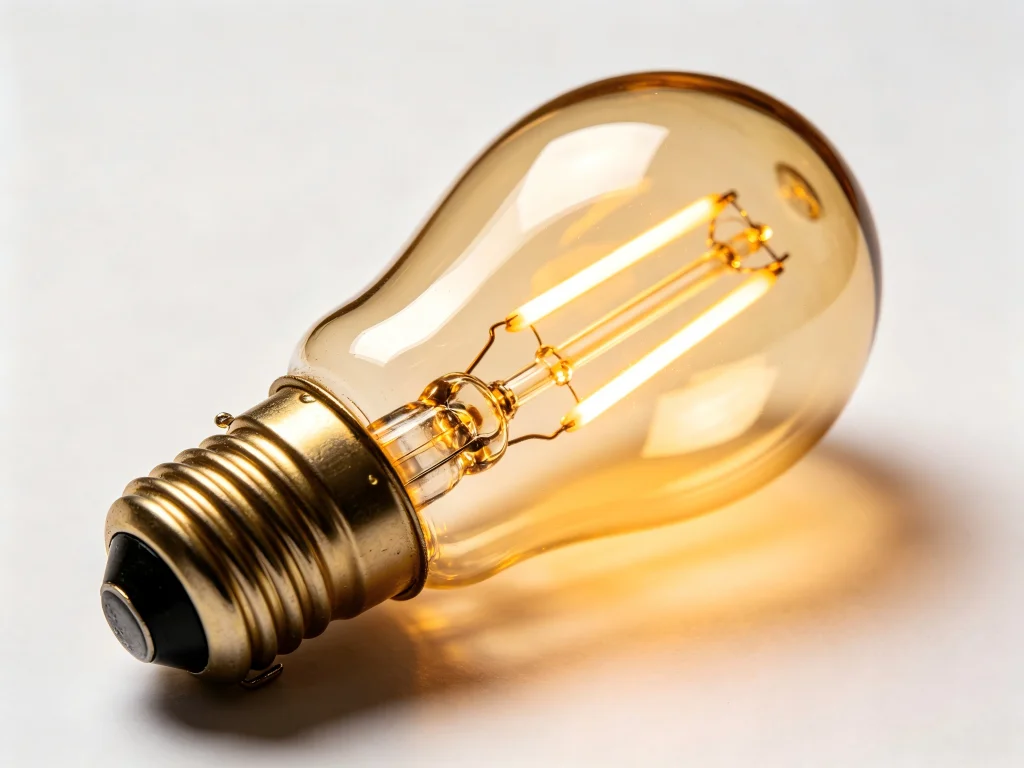
Halogen bulbs are technically an improved version of traditional incandescent bulbs. Inside a halogen bulb, a tungsten filament is placed within a small quartz envelope filled with a halogen gas, typically iodine or bromine.
When electricity flows through the filament, it heats to approximately 2,500°C and glows, producing light. But here's where halogen outperforms standard incandescent bulbs: as tungsten evaporates from the hot filament, the halogen gas chemically reacts with the tungsten vapor and redeposits it back onto the filament. This self-cleaning process, called the halogen cycle, allows the filament to operate at higher temperatures and last longer than standard incandescent bulbs.
This halogen cycle relies entirely on precise operating temperatures. If the bulb is too cold (dimmed) or too hot (overvolted), the cycle breaks down, accelerating filament failure rather than preventing it.
Despite this clever chemistry, halogen bulbs still convert about 90% of their electricity into heat. Only about 10% becomes visible light. Energy conversion data for incandescent lighting. That inefficiency is a fundamental limitation that halogen bulbs cannot overcome.
1.1. Common Halogen Base Types Encountered
- E26 (Medium Screw Base) — Standard household bulb, most common in North America
- GU10 (Two-Pin Twist Lock) — Popular for recessed downlights and track lighting
- G9 (Two Loops) — Small capsule bulb used in decorative fixtures, ovens, and small lamps
- MR16 (Multifaceted Reflector with GU5.3 Base) — For track lighting and landscape fixtures
- PAR20 / PAR30 / PAR38 — Floodlights for outdoor and accent lighting
- R7S (RSC, Double-Ended Linear) — For security lights, work lights, and floodlights
Knowing the base type is the first step before purchasing a replacement, whether halogen or LED. Installing a bulb with the wrong base (e.g., E11 in an E26 socket) simply won't work, regardless of wattage. Halogen Base Type Compatibility Guide
2. LED Technology: What's Different and What It Means for You
LED stands for light-emitting diode. Unlike halogen bulbs, which heat a filament to produce light, LEDs produce light when electrons move through a semiconductor material. There is no heating element. No glass tube is needed to contain gas. There is no filament that can break or shatter from vibration.
This solid-state design gives LEDs inherent advantages that halogen lacks:
- No filament Meaning no vibration sensitivity or thermal cycling fatigue
- Instant full brightness No warm-up delay
- Directional light output — LEDs naturally emit light in one direction, while halogen bulbs emit light in all directions and require reflectors to direct it
- Lower operating temperature — LED bulbs remain cool to the touch even after hours of operation
However, LEDs are not perfect. Heat degrades the LED chip over time, so proper thermal management is required. They may not work correctly with older dimmer switches designed for halogen. Also, low-quality LEDs can have poor color rendering or produce visible flicker.
A 5W LED GU10 provides the same brightness as a 50W halogen spotlight. This means a 90% reduction in power consumption for the same light output. A practical example of LED and halogen wattage equivalence
3. Direct Comparison: All Key Factors
3.1. Lifespan: The Most Dramatic Difference
A standard halogen bulb lasts about 2,000 hours. An LED bulb typically lasts 15,000 to 50,000 hours. LED vs halogen lifespan comparison This means one LED bulb lasts as long as 10 to 20 halogen bulbs. For a fixture used 3 hours a day, halogen needs replacement every 2 years. An LED in the same fixture could last over 20 years.
For automotive headlights, the difference is even greater due to vibration. Vehicle halogen headlight bulbs often last only 500 to 1,000 hours because of road vibration and thermal cycling. Automotive halogen lifespan data
3.2. Energy Efficiency: Where Halogen Falls Short
LEDs use up to 85% less power than halogen for the same brightness. Energy efficiency comparison LED vs. halogen This is not a small improvement; it means a complete change in the amount of light you get per dollar of electricity.
Lumen output quantifies actual visible light. A 50-watt halogen produces about 800 to 900 lumens. An 8 to 10-watt LED produces the same 800 to 900 lumens while consuming 80% less power. Halogen lumen output specifications
3.3. Heat Output: Safety and Comfort Implications
Halogen bulbs generate significant heat, with surface temperatures often exceeding 200°C. LEDs typically stay below 60°C during operation. Temperature comparison: halogen vs. LED
This temperature difference affects everything from safety (halogen bulbs can ignite nearby combustibles) to comfort (halogen bulbs can noticeably warm a small room) to air conditioning costs (one watt of heat from a bulb is one watt the air conditioner must remove).
3.4. Color Quality: The One Area Where Halogen Excels
Halogen bulbs achieve a Color Rendering Index (CRI) of 100, meaning colors appear exactly as they would under natural light. This is the theoretical maximum. For applications such as art galleries, retail displays, and photography lighting, this perfect color rendering remains a true advantage.
Modern high-CRI LEDs achieve CRI 95 to 98. For most people, in most situations, this difference is visually indistinguishable. However, low-cost LEDs with CRI below 80 can make colors appear noticeably duller and should be avoided in applications where light quality is important.
Color temperature is another consideration. Halogen bulbs typically produce a warm white light of about 2700K to 3000K. LEDs are available in all color temperatures from 1800K (candle warmth) to 6500K (daylight). They are not fixed to a single color.
3.5. Dimming Compatibility: Different Requirements
Halogen bulbs work fine with almost all standard dimmer switches. LEDs require dimmers specifically rated for LED loads. Using standard dimmers with LED bulbs often results in flickering, buzzing, or limited dimming range. Some LEDs do not light at all with incompatible dimmers.
If you are upgrading from halogen to LED with existing dimmers, plan to replace those dimmers with LED-compatible versions. This increases initial costs but eliminates ongoing issues.
3.6. Regulatory Landscape: Halogen Availability Is Shrinking
From September 2023, the UK banned the sale of most halogen light bulbs for general household use as part of its climate change efforts. The UK halogen ban takes effect September 2023 Similar restrictions are in place or planned in the EU, Australia, Canada, and some US states.
Specialty uses (automotive headlights, ovens, stage lighting, certain industrial equipment) are exempt for now. However, for general lighting, halogen bulbs are becoming increasingly difficult to find and will become even scarcer. The government estimates that 85% of bulbs sold by 2030 will be LED. LED market share forecast through 2030
3.7. Initial Cost and Total Cost of Ownership
Halogen bulbs are cheaper at the register. A standard halogen bulb costs $2-$5. A high-quality LED bulb costs $8-$15. This initial cost difference leads many shoppers to choose halogen.
However, the initial cost is only part of the picture. Consider one bulb used for 4 hours a day. Over 5 years: halogen requires 3 replacements (2,000-hour lifespan), costing about $10 for bulbs and about $40 for electricity. LED requires no replacements, with an initial cost of $12 and about $8 for electricity over the same period. Total cost: halogen $50, LED $20. LED saves $30 per bulb in just 5 years.
With 20 bulbs in a home, the savings over 5 years exceed $600. That's real money.
4. The Automotive Perspective: Special Considerations for Vehicle Lighting
Automotive lighting presents unique challenges that affect upgrade decisions. Halogen headlights remain standard on many vehicles, but upgrading to LED offers compelling benefits—with important caveats.
4.1. Key Differences in Automotive Applications
Brightness needs differ: Halogen bulbs produce a warm, yellowish light sufficient for most night driving. LEDs produce a whiter, brighter light that improves visibility and reduces eye strain. Independent tests show premium LED upgrades are 294% to 350% brighter than original halogen bulbs in the same housing. Brightness comparison: GTR LED vs Halogen
Vibration resistance becomes more critical: Vehicle lighting is subject to constant vibration from road surfaces, engine operation, and vehicle movement. Halogen bulbs with fragile filaments are more susceptible to vibration-induced failure. LEDs, with no filament, are inherently resistant to vibration damage.
The effects of cold weather differ: Halogen bulbs generate enough heat to melt snow and ice on the headlight lens, a useful feature in winter climates. LEDs operate at lower temperatures, so snow and ice can accumulate on the headlight lens unless a separate heating element is included in the housing. Halogen vs. LED: Winter Performance Comparison
Beam pattern accuracy is critical: The most important technical factor in automotive LED upgrades is the beam pattern. Halogen headlight housings are designed around the precise position and shape of the halogen filament. LED bulbs must place their light-emitting chips in exactly the same position as that filament; otherwise, the beam pattern will scatter, reducing visibility and causing dangerous glare for oncoming drivers. Technical Explanation of Beam Pattern Issues in Halogen Housings
CANbus compatibility affects functionality: Many modern vehicles monitor the electrical load of the bulb circuits. LED bulbs consume significantly less power than halogens, so the vehicle's computer interprets this as a burned-out bulb. This can cause dashboard warning lights, hyper-flashing turn signals, or complete malfunction. CANBUS Decoder Function for LED Headlights Upgrade
4.2. Legal Considerations for Automotive Lighting
Halogen bulbs with color temperatures above 4200K are not road-legal in many jurisdictions because the bluish light can be confused with emergency vehicle lighting. Legal Color Temperature Limits for Halogen Headlights This applies to both halogen and LED bulbs—excessively blue light is unsafe and illegal regardless of technology.
Especially for UK drivers, installing aftermarket LED bulbs in halogen housings can result in MOT failure if the beam pattern is incorrect. UK MOT Regulations on Aftermarket LED Bulbs
5. GTR Lighting as the Professional Choice for Halogen Replacement
When you're ready to go beyond halogen bulbs, choosing the right LED supplier is crucial. The market is flooded with cheap LEDs that cause flickering, premature failure, poor color quality, or dangerous light scatter. GTR stands out for several reasons.
5.1. Engineering Precision That Matters
GTR bulbs feature digitally precise LED chip placement that mirrors the exact position of the original halogen filament. This focus on engineering ensures that the beam pattern is sharp and properly aimed. GTR Beam Engineering Specifications
Independent testing confirms the results. GTR bulbs deliver up to 709% brighter output than original halogens while consuming only a fraction of the power. Brightness Test: GTR vs. Halogen Comparison
5.2. 実際の保証付きで長持ちする設計
数ヶ月で故障する一般的なLEDとは異なり、GTR製品には包括的な保証が付いています。Ultra 2シリーズには、メーカーの製品耐久性への自信を反映した生涯保証が含まれています。GTR保証範囲に関するユーザーフィードバック
5.3. CANbus対応のプラグアンドプレイインストール
GTRバルブは、純正ハロゲンランプの直接交換用として機能します。車両用途では、統合CANbus回路により、一般的な汎用LEDアップグレードでよくあるエラーコードやハイパーフラッシュの問題を排除します。GTR Canbus統合技術の詳細
5.4. 実際のユーザーによる実際の状況での実証
自動車フォーラムには、複数のブランドを試してGTRに落ち着いたユーザーが多数います。経験豊富なユーザーの一人は次のように述べています。「GTR Ultra Series 2.0は、手に入れられる最高のものです。昨年取り付けて満足しています。以前はMorimoto 2Stroke 2.0と、いくつかの無名ブランドのAmazon特価品を使用していました。」GTRと他のLEDブランドの比較ユーザーレビュー
別のドライバーは次のように共有しました。「GTR Mini LEDを使用していますが、非常に優れています。優れたビームと技術、低消費電力です。安くはありませんが、ハロゲンよりも優れています。」クラシックカーのオーナーによるGTR LEDのレビュー
6. 購入決定を下すための実践的なフレームワーク
特定の状況に適した照明を選択するための決定ガイドは次のとおりです。
- 器具のタイプとベースを特定する — 既存の電球にE26、G9、GU10、H4、H11などの番号がないか確認してください。これにより、物理的に適合する電球が決まります。.
- 使用パターンを考慮する — 毎日長時間使用する照明は、LEDのエネルギー節約効果を最も享受できます。めったに使用しない照明は、アップグレードコストをすぐに回収できない場合があります。.
- 調光器の互換性を確認する — 調光スイッチがあり、調光可能なLEDが必要な場合は、調光器の交換コストを考慮してください。.
- Evaluate color preference — Select color temperature. 2700K matches the warmth of traditional halogen. 3000K appears slightly brighter and whiter. 4000K-5000K provides daylight-like color for task lighting.
- For vehicles, check beam pattern compatibility — Not all LEDs work well in halogen housings. Choose bulbs designed with precise filament position matching, like GTR products.
- Compare total cost of ownership — Calculate 5-year costs including energy, replacement, and initial purchase. Decide based on numbers, not just initial price.
7. Frequently Asked Questions about Halogen and LED
Q1: Are halogen bulbs completely banned? Not completely, but general household halogen bulbs are banned in many countries including the UK and EU. Special applications (automotive, ovens, stage lighting) are still exempt, but availability is rapidly decreasing.
Q2: Can I install LED bulbs in any halogen fixture? For household fixtures, generally yes if the base matches and the LED bulb's wattage is within the fixture's rating. For automotive applications, proper beam pattern adjustment is critical. Not all LEDs work correctly in halogen housings.
Q3: Why do halogen bulbs burn out in weeks instead of years? Common causes include vibration (especially in vehicles), overheating in enclosed fixtures, voltage fluctuations, or dimming below the temperature required for the halogen cycle to function properly. Each of these accelerates filament failure at a rate significantly below rated lifespan.
Q4: How many lumens do I need to replace a halogen bulb? A standard 40W halogen produces about 450-500 lumens. A 60W halogen produces about 800 lumens, and a 100W halogen produces about 1,600 lumens. When choosing LED replacements, match these lumen values, not wattage.
Q5: LED電球はオーブンや冷蔵庫で動作しますか? 極端な温度に対応した定格のLED電球のみが動作します。標準的なLEDは、オーブンの熱(200°C以上)や冷凍庫の低温(-20°C)で急速に故障します。家電製品では、購入前に温度定格を確認してください。.
Q6: LED電球はなぜ初期費用が高いのですか? LED電球は、精密電子機器、熱管理システム、品質管理など、より複雑な製造を必要とします。しかし、初期費用の高さは、電気代の削減と交換回数の大幅な減少によって、時間の経過とともに回収できます。.
Q7: ハロゲン電球は紫外線を発生しますか? はい、標準的なハロゲン電球は少量の紫外線を放射します。石英の外管が通常ほとんどの紫外線を遮断しますが、特に肌や美術品の感度が高い場合は、至近距離での長時間の直接曝露は避けるべきです。.
Q8: 屋外防犯照明には、ハロゲンとLEDのどちらが優れていますか? 防犯照明には一般的にLEDの方が優れています。LEDは即座に最大輝度に達し(予熱不要)、常時点灯の用途では消費電力が少なく、寿命もはるかに長いため、手の届きにくい器具のメンテナンスを軽減します。人感センサー付きLED投光器は、現代の防犯システムの標準的な選択肢です。.
8. クイックリファレンス: ハロゲンとLEDの比較一覧
| 要素 | ハロゲン電球 | LED電球 |
|---|---|---|
| 標準的な寿命 | 2,000時間(1〜2年) | 25,000〜50,000時間(15〜20年以上) |
| Energy consumption for the same brightness | 100% (reference) | 15-20% (80-85% reduction) |
| Heat emitted | Very high (surface approx. 200°C or more) | Low (surface approx. 40-60°C) |
| Light quality (CRI) | 100 (perfect) | 80-98 (quality varies) |
| Dimmability | Compatible with all standard dimmers | Requires LED-compatible dimmer |
| 初期費用 | $2-$5 per unit | $8-$15 per unit (high-quality brands) |
| Cost per unit over 5 years (4 hours/day usage) | Approx. $50 (bulb + electricity) | 約$20(電球+電気代) |
| 規制状況 | 一般的な用途では段階的に廃止されつつある | 新規設置の標準 |
| Instant full brightness | Yes | Yes |
| 耐振動性 | 不良(もろいフィラメント) | 優れている(フィラメントなし) |
9. 次の購入:賢い選択をする
今日でもハロゲン電球を購入しているなら、実質的に規制当局が段階的に廃止している技術に投資しており、初期費用の節約以上にエネルギーコストがかかり、頻繁な交換が必要です。LEDへの切り替えは、もはやアーリーアダプターになることではなく、着実に悪化する製品カテゴリーを避けることです。
自動車用途では、アップグレードの根拠はさらに強力です。夜間の視認性が向上し、安全性が高まります。交換回数が減り、駐車場でのヘッドライト交換の手間がなくなります。そして、GTRのような現代のLEDは、純正のハロゲンハウジングで正しく機能するビームパターンを提供します。これは数年前には存在しなかった重要な進歩です。
アップグレードの準備ができたら、品質を選びましょう。Amazonで最も安いLEDは避けてください。ちらつき、故障、そしてビームパターンが危険なことがよくあります。代わりに、GTRのように精密さを追求するメーカーのバルブを選びましょう。当社のUltra 2およびUltra 3シリーズは、独立して検証された最も明るく、最も焦点の合ったオプションであり、純正ハロゲンよりも294%から709%多くの実用光を提供しながら、消費電力は少なくなります。GTR Ultra 3輝度テスト結果
数ヶ月ごとにバルブを交換するのはやめましょう。天井を暖めるためにお金を払うのはやめましょう。暗く散乱した光で安全性を妥協するのはやめましょう。https://www.ledcxr.com でGTRの全製品ラインナップをご覧いただき、照明のアップグレードを一度、正しく、長期的に行ってください。.。