
หากคุณยังคงติดตั้งหลอดไฟ LED ในโคมไฟแบบรีเฟลกเตอร์ให้ลูกค้า แสดงว่าคุณกำลังส่งมอบประสิทธิภาพเพียงครึ่งเดียวและสร้างแสงจ้าที่เป็นอันตราย เลนส์โปรเจกเตอร์ไบ LED ขนาด 3.0 นิ้วที่แท้จริง เลนส์โปรเจกเตอร์ไบ LED ขนาด 3.0 นิ้ว แก้ปัญหาที่หลอดไฟแบบเสียบแทนไม่สามารถทำได้: การควบคุมลำแสงที่แม่นยำโดยไม่ทำให้ผู้ขับขี่ที่สวนทางมามืดบอด
This is what every installer and shop owner needs to know before recommending another ‘LED bulb upgrade“
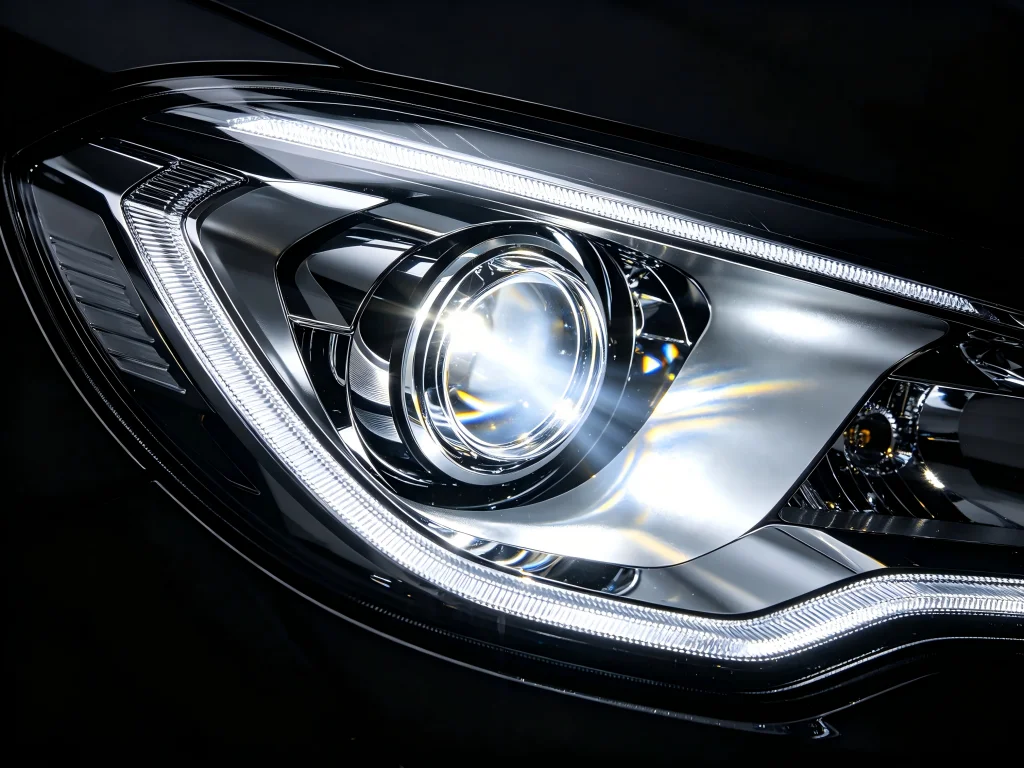
1. The Problem: The LED Glare Epidemic
LED bulbs in reflector housings create dangerous glare 80% of the time. The reason is simple physics. Reflector housings are designed for halogen filaments that emit light nearly 360 degrees from a small, precise focal point. The housing captures and reflects that omnidirectional light.
LED bulbs use flat chips mounted on a circuit board. No matter how well designed, they cannot perfectly mimic the spherical light source of a filament. The reflector cannot shape the LED's light pattern the way a projector lens can. The result: scattered light escapes above the intended beam cutoff—into trees, road signs, and the eyes of oncoming drivers.
Your customer may see a bright foreground and think the upgrade worked, but long-range visibility is worse, and the glare they create puts everyone at risk.
2. The Wake-Up Call: What Glare Means for Your Business
Glare isn't just annoying. It's a growing regulatory and liability issue. Authorities worldwide are tightening enforcement on aftermarket automotive lighting. In the US, FMVSS 108 sets specific candela limits. European ECE regulations are even stricter.
For your shop, recommending ‘LED bulb upgrades“ that create glare carries real risks:
- Customers complain about being flashed by other drivers
- Failed inspections that come back to you
- Potential liability if your customer's lights cause an accident
- Wasted labor when customers return for a real fix
Stop selling compromises. Start installing solutions.
3. The Solution: Why 3.0-Inch LED Projector Lenses Fix Everything
Bi-LED projector lenses are an integrated optical system—not a bulb replacement. The LED emitter, reflector cup, shield, and projector lens are factory-aligned with micro-level precision. The entire unit is designed as a single optical system, eliminating geometric misalignment that causes glare in bulb replacements.
3.1. The internal shield that changes everything
Inside every quality Bi-LED projector, a high-precision metal cutoff shield sits between the LED light source and the projection lens. This shield physically blocks the upper portion of the beam before it exits the housing. Only the lower half of the beam passes through the lens and onto the road surface.
The result is a sharp cutoff line—a clear boundary between light and darkness. This cutoff line prevents light from entering the eyes of oncoming drivers while precisely directing light where the driver needs it: on the road ahead.
3.2. How the dual high-low beam mechanism works
The term “Bi” in Bi-LED refers to a dual-function system—both high beam and low beam from the same unit. Here’s how it works:
- Low beam mode: A solenoid valve controls the internal shield to block part of the light, creating a sharp cutoff line that avoids shining into the eyes of oncoming traffic.
- High beam mode: An electromagnetic solenoid pulls the shield downward, revealing the full power of the LED for maximum forward projection.
- Mode switching happens instantly within the same optical system—no degradation of low-beam alignment, no backup bulb required.
This design maintains glare protection in low beam mode while providing powerful long-range illumination in high beam mode.
4. What to consider in quality Bi-LED projectors
4.1. Sharpness of the cutoff line
The low beam cutoff must be sharp and perfectly level, with a slight upward tilt on the passenger side. This pattern is a legal requirement for left-hand drive vehicles. Low-quality projectors will produce an unclear cutoff or uneven pattern—every unit should be tested before shipping.
4.2. Chip Configuration and Power Management
Quality manufacturers use multi-chip configurations. Mid-range units typically use 40-50W low beam / 60-70W high beam with 6 low beam chips and additional high beam chips. Premium hyperboloid designs incorporate dual lenses for superior performance and long-range illumination.
Always check the power distribution between low and high beam. Some budget units use the same power regardless of mode, which defeats the purpose of low beam control.
4.3. Cooling System Quality
LED performance degrades with heat. Quality projectors use full aluminum alloy housings with large surface area (passive cooling) or built-in fans with speeds of 10,000+ RPM (active cooling). For 100W+ pairs, active cooling is essential.
Key specifications to check:
- Operating temperature range (quality units: -40°C to +110°C)
- Fan speed and noise levels
- Heatsink material and surface area
4.4. Build Materials
Inspect material quality carefully. Quality projectors use:
- Metal mounting brackets—not plastic
- Glass projector lenses—not polycarbonate that yellows over time
- UV-resistant housing material
- Precision lead screw for universal mounting
4.5. Real-World Performance Testing
From forum feedback on similar 3-inch units, experienced users consistently emphasize beam pattern quality as a decisive factor. One owner stated, “Excellent light output as advertised,” with a sharp cutoff that “works perfectly without blind spots or dark areas.” Another confirmed the 500-meter high beam capability—far exceeding what any reflector LED bulb can achieve.
These real-world results align with our own engineering tests. A properly designed projector with moderate lumens will always outperform a poorly designed unit with high lumen claims, delivering precisely higher lux values where needed.
5. Installation Reality Check
Installing Bi-LED projectors requires a professional technician. The process involves opening the headlight housing, removing the original reflector or projector assembly, installing the Bi-LED kit, and resealing the housing.
This is not a job for weekend DIYers. As one user noted, professional installation is “strongly recommended to ensure optimal lighting performance and safety.” For your workshop, this means higher-value service tickets and customers who trust your expertise.
6. Compliance Considerations
Before stocking or installing Bi-LED projectors for on-road use, check your local compliance requirements. Different markets have different standards:
- United States: FMVSS 108 governs beam pattern and intensity. Products must be properly aimed after installation.
- European Union: ECE regulations are stricter—many high-intensity lighting systems require automatic leveling or lens cleaning systems to be road-legal.
- Australia and other markets: Local ADR standards apply.
Work with suppliers who understand these requirements and can provide documentation for the markets you serve.
7. Frequently Asked Questions
Q: Can I put an LED bulb in a projector housing instead of replacing the whole unit?
No. The projector optics are designed for a specific bulb shape. The different light source shape of an LED bulb means the projector cannot focus the light correctly. You will get poor beam quality and reduced light output. Replace the whole unit with a proper Bi-LED projector.
Q: How much brighter are Bi-LED projectors than halogen?
A quality Bi-LED projector provides 200-300% more effective road illumination than a standard halogen system, with instant full brightness and a wider beam coverage.
Q: Are these projectors compatible with CANbus systems?
Most newer Bi-LED projector models have built-in drivers that prevent error codes on CANbus-equipped vehicles. Check with your supplier before ordering for the specific model.
Q: How long does installation take for a typical vehicle?
Professional installation takes an average of 3-5 hours per vehicle, depending on the complexity of the headlight design and whether the housing uses permanent or butyl seals.
Q: What is the most common installation mistake?
Incorrect beam alignment after installation. Always re-aim the projector against a wall at 25 feet before delivering the vehicle. Even quality lenses perform poorly when misaligned.
Q: Can Bi-LED projectors be used for fog lights?
Yes. 3.0-inch units work effectively as fog lights. Some models offer a dual-color option—white low beam with lemon yellow high beam for superior fog penetration.
Q: What happens if the cooling fan fails?
High-quality units (rated -40°C to +110°C) have thermal protection that reduces power before damage occurs. Budget units may overheat and permanently damage the LED chips. This is why the quality of the cooling system is important.
8. Switch to proper lighting solutions
Stop selling LED bulbs that cause glare as an “upgrade”. Start installing genuine Bi-LED projector systems that deliver the performance your customers really need: controlled low beams that don't blind oncoming drivers, and powerful high beams that illuminate the road up to 500 meters away.
For professional 3.0-inch Bi-LED projector lenses designed with precision optics, robust cooling systems, and compliance considerations, เยี่ยมชม https://www.rhgtr.com To explore GTR Lighting's catalog. Contact the sales team to discuss wholesale pricing, sample orders, and technical specifications for your market.